

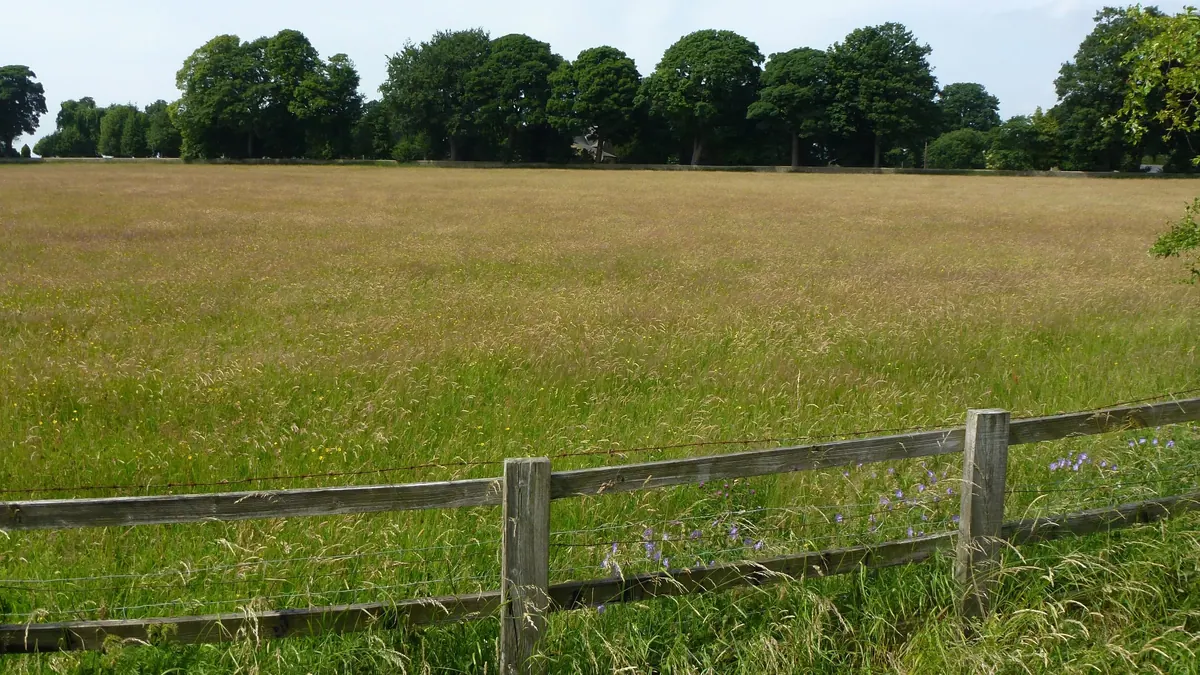
BMP-onderzoekGrassen, groenvoer en voedergewassen
Meadow hay — BMP: 16 onderzoeken, gewogen gemiddelde 279 m³ CH₄/t oDS
Meadow hay: 16 records aan BMP-gegevens uit 7 publicaties, gewogen gemiddelde 279 m³ CH₄/t oDS, bereik 180–380.
beoordeling: zeer goedCH₄ 53 %
Foto John H Darch / Wikimedia Commons, licentie CC BY-SA 2.0, bronbestand; wijzigingen: bijsnijding

- Gewogen gemiddelde
- 279m³ CH₄/t oDS
- Bereik
- 180–380m³ CH₄/t oDS
- Records
- 16onderzoeken
- Publicaties
- 7bronnen
- Temperaturen
- 35 °C, 36 °C, 37 °C, 38 °Cvan de test
Methaan in biogas
Gemiddeld methaangehalte · ≈ 5,3 kWh/m³ biogas
gemeten gemiddelde van 1 onderzoek BMP; in een batchtest is het CH₄-aandeel doorgaans hoger dan in een installatie.
Beoordeling voor biogasinstallaties
zeer goed — redactionele beoordeling voor biogasinstallatiesHet waard om te accepteren, zelfs gratis of tegen betaling aan de leverancier
Potentieel per ton vers materiaal: zeer hoog (213 m³ CH₄/t); geen bijzondere bedreigingen voor de stabiliteit. Verwerkingskosten: vezels, drijflaag.
Waarom? Beoordelingsfactoren
Potentieel per ton +3
- +3potentieel 213 m³ CH₄/t vers materiaal (BMP 279 × DS 82,4% × oDS 92,5%)
Processtabiliteit 0
- 0geen factoren
Verwerking en kosten −0,5
- −0,5vezels, drijflaag — versnipperen en intensief mengen
Totaal aantal punten: 2,5 · drempels: ≥ 2,5 zeer goed, ≥ 1 goed, daaronder — neutraal; negatief bij cumulatief procesrisico.
Toevoegen aan de covergistingsrekentool CSV-gegevens
BMP-curves uit 16 onderzoeken
Gewogen gemiddelde Afzonderlijke records
Gestippelde lijnen zijn een modelcurve (kinetiek van de eerste orde, B(t) = B₀·(1 − e−kt)); het eindpunt is afkomstig uit de publicatie. Alle curves zijn modelcurves.
Cumulatieve methaanproductie gedurende de test [m³ CH₄/t oDS]. De dikke lijn is het gewogen gemiddelde van alle records (279); punten markeren de in de publicaties vermelde eindwaarden. Wijs naar de grafiek om waarden af te lezen; klik op een item in de legenda om een record te verbergen of te tonen.
De overige records in de legenda tonen (4)
Records en bronnen
CSV downloaden| Bron | BMP m³ CH₄/t oDS | CH₄ in biogas % vol., gemeten | Temperatuur | Monster | Curve |
|---|---|---|---|---|---|
| Lehtomaki (2005) · 1 | 180 | — | 35 °C · mesofiel | Grass hay (75% thymothy 25% meadow fescue) | eindpunt (modelcurve) |
| Lehtomaki (2005) · 2 | 230 | — | 35 °C · mesofiel | Grass hay (75% thymothy 25% meadow fescue) | eindpunt (modelcurve) |
| Lehtomaki (2006) · 1 | 370 | — | 35 °C · mesofiel | Grass hay 67.5% timothy 22.5% meadow fescue 10% Red clover | eindpunt (modelcurve) |
| Lehtomaki (2006) · 2 | 380 | — | 35 °C · mesofiel | Grass hay 67.5% timothy 22.5% meadow fescue 10% Red clover | eindpunt (modelcurve) |
| Lehtomaki (2004) | 230 | — | 35 °C · mesofiel | Grass hay (75% thymothy 25% meadow fescue) | eindpunt (modelcurve) |
| Kaiser (2007) · 1 | 188 | — | 37 °C · mesofiel | grass hay | eindpunt (modelcurve) |
| Kaiser (2007) · 2 | 191 | — | 37 °C · mesofiel | grass hay | eindpunt (modelcurve) |
| Kaiser (2007) · 3 | 198 | — | 37 °C · mesofiel | grass hay | eindpunt (modelcurve) |
| Kaiser (2007) · 4 | 219 | — | 37 °C · mesofiel | grass hay | eindpunt (modelcurve) |
| Kaiser (2007) · 5 | 230 | — | 37 °C · mesofiel | grass hay | eindpunt (modelcurve) |
| Kaiser (2007) · 6 | 268 | — | 37 °C · mesofiel | grass hay | eindpunt (modelcurve) |
| Lallement et al. (2023) DOI | 289 | — | 38 °C · mesofiel | hay meadow | eindpunt (modelcurve) |
| Luna-delRisco et al. (2011) · 1 | 253 | — | 36 °C · mesofiel | hay | eindpunt (modelcurve) |
| Luna-delRisco et al. (2011) · 2 | 286 | — | 36 °C · mesofiel | hay | eindpunt (modelcurve) |
| Luna-delRisco et al. (2011) · 3 | 319 | — | 36 °C · mesofiel | hay | eindpunt (modelcurve) |
| Dubrovskis et al. (2018) DOI | 355 | 53,3 % | 38 °C · mesofiel | Grass hay pellets | eindpunt (modelcurve) |
| Gewogen gemiddelde | 279 | 53,3 % | rekenkundig gemiddelde 262, SD 66 | ||
Typische samenstelling
- Droge stof (DS)
- 82,4% (bereik 20,2–91,3)
- Organische droge stof (oDS)
- 92,5 % DS (bereik 91,4–94,2)
- Stikstof
- 2,6 % DS
- C/N-verhouding
- 26
Mediaan en bereik van de bepalingen die in de publicaties achter de BMP-records van dit substraat zijn vermeld (afgelezen uit: CROPGEN D4, MY-D); droge stof: 13 bepalingen, organische droge stof: 8 bepalingen. C/N is berekend als de verhouding van het C- en N-gehalte (% DS) uit dezelfde bron. Het DS-bereik omvat zowel verse monsters als monsters die vóór de test gedeeltelijk zijn gedroogd of gedroogd – voor vers materiaal geldt het onderste deel van het bereik, bij voorkeur uw eigen meting.
Bronnen: Lehtomaki (2005); Lehtomaki (2006); Lehtomaki (2004); Kaiser (2007); Lallement e.a. (2023); Luna-delRisco e.a. (2011).
De samenstelling van de grondstof verschilt per partij — gebruik voor berekeningen voor een installatie een analyse van uw eigen monster. De rekentool vult automatisch typische waarden in.
Proceseigenschappen
Covergisting — waarmee te combineren, waar op te letten
- combineert goed
Dosering
Bronnen van de procesgegevens
- Dubrovskis, V.; Plume, I.; Straume, I. (2018) Investigations of biogas production potential from grass hay pellets. Engineering for Rural Development
- Weiland, P. (2010) Biogas production: current state and perspectives. Applied Microbiology and Biotechnology
- Lehtomaki, A. Ronkainen, O.M. Rintala, J.A. (2005) Developing storage methods for optimised methane production from energy crops in northern conditions. ADSW 2005 Conference Proceedings Vol 1. 101-108
- Lehtomaki, A. Viinikainen, T.A. Rintala, J.A (2006) Screening boreal energy crops and crop residues for methane biofuel production. Submitted to Biomass and Bioenergy
- Lehtomaki, A. Viinikainen, T.A. Ronkainen, O.M. Alen, R. Rintala, J.A. (2004) Effect of pretreatments on methane production potential of energy crops and crop residues. Proceedings Anaerobic Digestion Conference 1016-1021
- Hendriks, A.T.W.M.; Zeeman, G. (2009) Pretreatments to enhance the digestibility of lignocellulosic biomass. Bioresource Technology
- Kaiser, F.L. (2007) Einfluss der stofflichen Zusammensetzung auf die Verdaulichkeit nachwachsender Rohstoffe beim anaeroben Abbau in Biogasreaktoren. Dissertation, Technische Universität München, Wissenschaftszentrum Weihenstephan
- Lallement, A.; Peyrelasse, C.; Lagnet, C.; Barakat, A.; Schraauwers, B.; Maunas, S.; Monlau, F. (2023) A Detailed Database of the Chemical Properties and Methane Potential of Biomasses Covering a Large Range of Common Agricultural Biogas Plant Feedstocks. Waste 1(1), 195–227
- Luna-delRisco, M.; Normak, A.; Orupõld, K. (2011) Biochemical methane potential of different organic wastes and energy crops from Estonia. Agronomy Research 9(1–2), 331–342
- FNR (2010). Guía sobre el Biogás – Desde la producción hasta el uso (hiszp. wydanie „Leitfaden Biogas”, GIZ 2013)
De covergistingsrekentool beoordeelt een specifiek mengsel dat dit substraat bevat.
Wat de compilatie laat zien
De compilatie omvat 16 records van het methaanpotentieel (BMP) voor het substraat “Meadow hay” uit 7 publicaties gepubliceerd in 2004–2023. De resultaten lopen uiteen van 180 tot 380 m³ CH₄/t oDS en het gewogen gemiddelde bedraagt 279 m³ CH₄/t oDS (rekenkundig gemiddelde 262, standaardafwijking 66).
De tests zijn uitgevoerd bij 35, 36, 37, 38 °C (regime: mesofiel). Verschillen in temperatuur, inoculum, testduur en monstervoorbereiding zijn typische oorzaken van de spreiding van resultaten tussen laboratoria.
Voor 16 records vermeldt de publicatie alleen de eindwaarde. De lijn in de grafiek is dan een modelcurve (kinetiek van de eerste orde) en dient alleen om vormen te vergelijken — alleen het eindpunt is afkomstig uit de publicatie.
Hoe u deze gegevens gebruikt
BMP beschrijft het potentieel dat in een batchtest onder laboratoriumomstandigheden wordt verkregen. In een installatie op ware grootte hangt het rendement bovendien af van de verblijftijd, de belasting van de vergister, de menging en de samenstelling van het voer. Gebruik voor voorlopige berekeningen het best het gewogen gemiddelde en voor risicobeoordeling het hele bereik van de resultaten. Bij de planning van een specifiek voer is het raadzaam een eigen BMP-test op een representatief monster te laten uitvoeren.
Methodologie in het kort
BMP is de hoeveelheid methaan die in een batchtest uit organische droge stof (oDS) wordt verkregen, uitgedrukt in m³ CH₄ per ton oDS (numeriek gelijk aan NmL CH₄/g oDS in de publicaties) en omgerekend naar normaalomstandigheden (0 °C, 101,325 kPa). Bij het gewogen gemiddelde krijgt elke publicatie een totaalgewicht van 1, gelijkmatig verdeeld over haar resultaten voor het substraat — een artikel dat twintig variëteiten test, weegt dus niet zwaarder dan een artikel met één monster. Bij interlaboratoriumprogramma’s is het laboratorium de eenheid (totaalgewicht 1), en binnen het laboratorium neemt het gewicht van een test toe met het aantal flessen (herhalingen). Resultaten na voorbehandeling (bijv. thermisch, chemisch, enzymatisch) worden apart getoond en tellen niet mee in het gemiddelde.
Doorgetrokken lijnen zijn in de tests gemeten curves. Wanneer een publicatie alleen het eindresultaat vermeldt, tekenen wij een kinetisch model van de eerste orde, B(t) = B₀·(1 − e−kt): alleen het eindpunt is afkomstig uit de publicatie en de vorm van de curve dient uitsluitend ter visualisatie — lees er niet de productie op een bepaalde dag uit af. Voor dit substraat is k = 0,091 d−1 aangenomen (geen kinetische gegevens voor de groep – de mediaan van alle beschikbare snelheidsconstanten k (93 waarden) is gebruikt).
De statistieken beschrijven de spreiding van gepubliceerde resultaten — een beschrijvende compilatie, geen meta-analyse en geen garantie voor het rendement van een installatie.
Resultaten na voorbehandeling (38) — uitgesloten van het gemiddelde
| Bron | BMP m³ CH₄/t oDS | Voorbehandeling | Monster |
|---|---|---|---|
| Lehtomaki (2004) | 270 | — | Grass hay (75% thymothy 25% meadow fescue) |
| Lehtomaki (2004) | 270 | — | Grass hay (75% thymothy 25% meadow fescue) |
| Lehtomaki (2004) | 260 | — | Grass hay (75% thymothy 25% meadow fescue) |
| Lehtomaki (2004) | 190 | — | Grass hay (75% thymothy 25% meadow fescue) |
| Lehtomaki (2004) | 130 | — | Grass hay (75% thymothy 25% meadow fescue) |
| Lehtomaki (2004) | 240 | — | Grass hay (75% thymothy 25% meadow fescue) |
| Lehtomaki (2004) | 100 | — | Grass hay (75% thymothy 25% meadow fescue) |
| Lehtomaki (2004) | 140 | — | Grass hay (75% thymothy 25% meadow fescue) |
| Lehtomaki (2004) | 130 | — | Grass hay (75% thymothy 25% meadow fescue) |
| Lehtomaki (2004) | 260 | — | Grass hay (75% thymothy 25% meadow fescue) |
| Lehtomaki (2004) | 250 | — | Grass hay (75% thymothy 25% meadow fescue) |
| Lehtomaki (2004) | 270 | — | Grass hay (75% thymothy 25% meadow fescue) |
| Lehtomaki (2004) | 230 | — | Grass hay (75% thymothy 25% meadow fescue) |
| Lehtomaki (2004) | 140 | — | Grass hay (75% thymothy 25% meadow fescue) |
| Lehtomaki (2004) | 210 | — | Grass hay (75% thymothy 25% meadow fescue) |
| Lehtomaki (2004) | 170 | — | Grass hay (75% thymothy 25% meadow fescue) |
| Lehtomaki (2004) | 240 | — | Grass hay (75% thymothy 25% meadow fescue) |
| Lehtomaki (2004) | 270 | — | Grass hay (75% thymothy 25% meadow fescue) |
| Lehtomaki (2004) | 200 | — | Grass hay (75% thymothy 25% meadow fescue) |
| Lehtomaki (2004) | 230 | — | Grass hay (75% thymothy 25% meadow fescue) |
| Lehtomaki (2004) | 250 | — | Grass hay (75% thymothy 25% meadow fescue) |
| Lehtomaki (2004) | 230 | — | Grass hay (75% thymothy 25% meadow fescue) |
| Lehtomaki (2005) | 280 | — | Grass hay (75% thymothy 25% meadow fescue) |
| Lehtomaki (2005) | 280 | — | Grass hay (75% thymothy 25% meadow fescue) |
| Lehtomaki (2005) | 310 | — | Grass hay (75% thymothy 25% meadow fescue) |
| Lehtomaki (2005) | 280 | — | Grass hay (75% thymothy 25% meadow fescue) |
| Lehtomaki (2005) | 240 | — | Grass hay (75% thymothy 25% meadow fescue) |
| Lehtomaki (2005) | 240 | — | Grass hay (75% thymothy 25% meadow fescue) |
| Lehtomaki (2005) | 260 | — | Grass hay (75% thymothy 25% meadow fescue) |
| Lehtomaki (2005) | 240 | — | Grass hay (75% thymothy 25% meadow fescue) |
| Lehtomaki (2005) | 170 | — | Grass hay (75% thymothy 25% meadow fescue) |
| Lehtomaki (2005) | 240 | — | Grass hay (75% thymothy 25% meadow fescue) |
| Lehtomaki (2005) | 240 | — | Grass hay (75% thymothy 25% meadow fescue) |
| Lehtomaki (2005) | 240 | — | Grass hay (75% thymothy 25% meadow fescue) |
| Lehtomaki (2005) | 270 | — | Grass hay (75% thymothy 25% meadow fescue) |
| Lehtomaki (2005) | 230 | — | Grass hay (75% thymothy 25% meadow fescue) |
| Lehtomaki (2005) | 230 | — | Grass hay (75% thymothy 25% meadow fescue) |
| Lehtomaki (2005) | 240 | — | Grass hay (75% thymothy 25% meadow fescue) |
Bibliografie
- Lehtomaki, A. Ronkainen, O.M. Rintala, J.A. (2005). Developing storage methods for optimised methane production from energy crops in northern conditions. ADSW 2005 Conference Proceedings Vol 1. 101-108.
- Lehtomaki, A. Viinikainen, T.A. Rintala, J.A (2006). Screening boreal energy crops and crop residues for methane biofuel production. Submitted to Biomass and Bioenergy.
- Lehtomaki, A. Viinikainen, T.A. Ronkainen, O.M. Alen, R. Rintala, J.A. (2004). Effect of pretreatments on methane production potential of energy crops and crop residues. Proceedings Anaerobic Digestion Conference 1016-1021.
- Kaiser, F.L. (2007). Einfluss der stofflichen Zusammensetzung auf die Verdaulichkeit nachwachsender Rohstoffe beim anaeroben Abbau in Biogasreaktoren. Dissertation, Technische Universität München, Wissenschaftszentrum Weihenstephan. https://mediatum.ub.tum.de/631394 bron
- Lallement, A.; Peyrelasse, C.; Lagnet, C.; Barakat, A.; Schraauwers, B.; Maunas, S.; Monlau, F. (2023). A Detailed Database of the Chemical Properties and Methane Potential of Biomasses Covering a Large Range of Common Agricultural Biogas Plant Feedstocks. Waste 1(1), 195–227. DOI: 10.3390/waste1010014 DOI
- Luna-delRisco, M.; Normak, A.; Orupõld, K. (2011). Biochemical methane potential of different organic wastes and energy crops from Estonia. Agronomy Research 9(1–2), 331–342. https://www.semanticscholar.org/paper/25cf2d7bba4758136830a9a02caf3ecd997173bb bron
- Dubrovskis, V.; Plume, I.; Straume, I. (2018). Investigations of biogas production potential from grass hay pellets. Engineering for Rural Development. DOI: 10.22616/erdev2018.17.n413 DOI
Alle bronnen van de site: bibliografie.
Andere substraten in de groep “Grassen, groenvoer en voedergewassen”
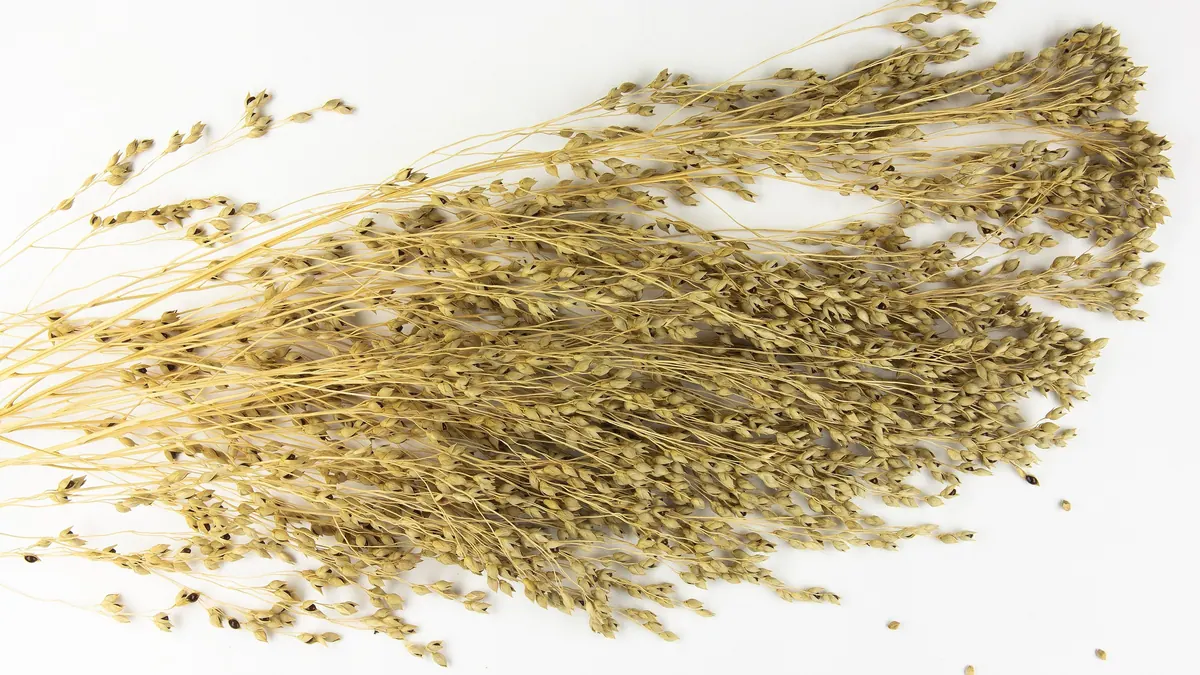
Proso millet, whole crop — BMP: 2 onderzoeken, gewogen gemiddelde 260 m³ CH₄/t oDS
260 m³ CH₄/t oDS gewogen gemiddelde uit 2 onderzoeken
goed — redactionele beoordeling voor biogasinstallaties≈52 %
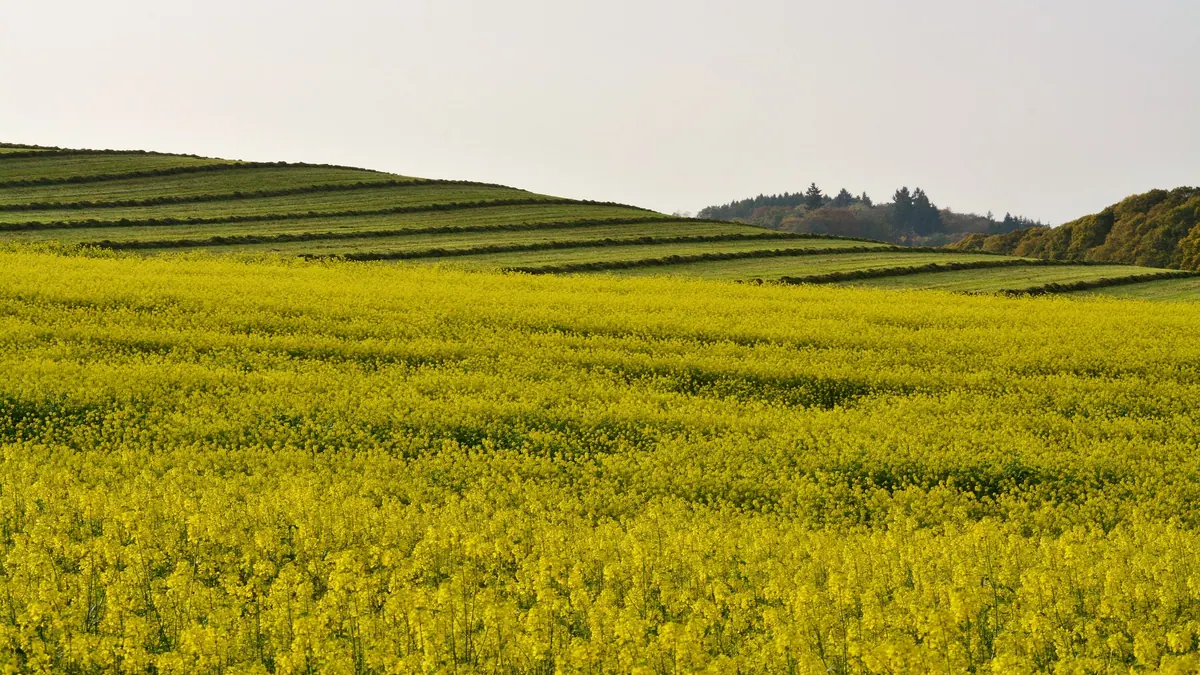
White mustard (tops) — BMP: 2 onderzoeken, gewogen gemiddelde 313 m³ CH₄/t oDS
313 m³ CH₄/t oDS gewogen gemiddelde uit 2 onderzoeken
goed — redactionele beoordeling voor biogasinstallaties68 %
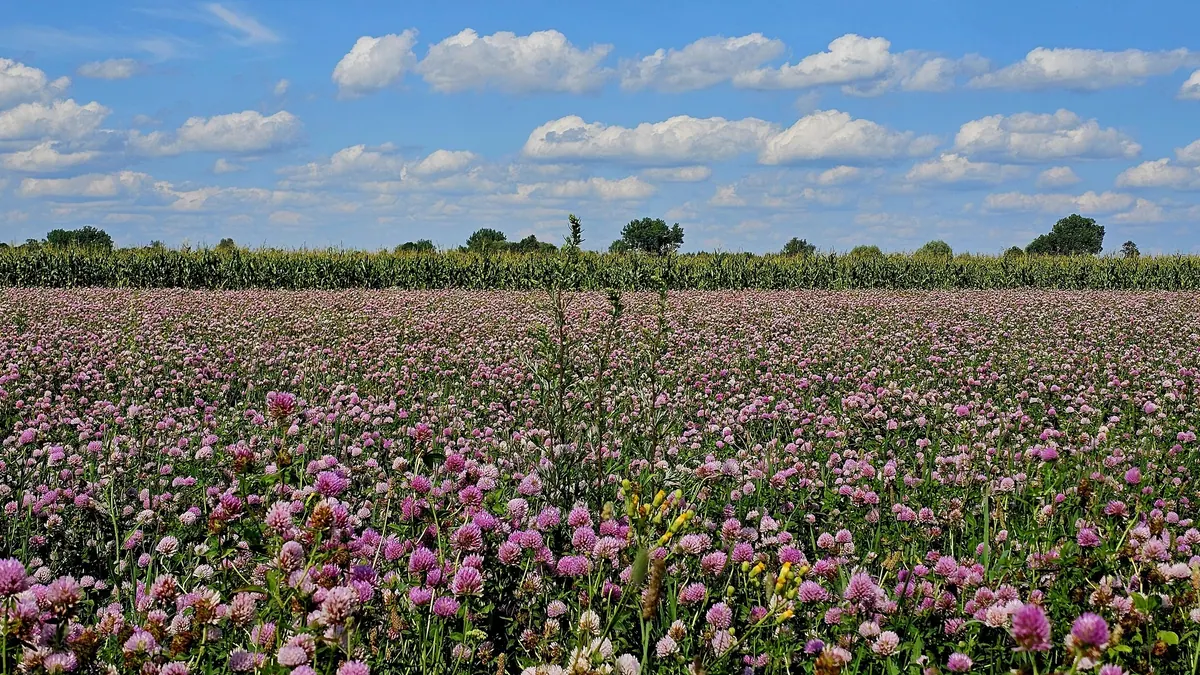
Millet/foxtail millet and clover mixtures — BMP: 5 onderzoeken, gewogen gemiddelde 304 m³ CH₄/t oDS
304 m³ CH₄/t oDS gewogen gemiddelde uit 5 onderzoeken
goed — redactionele beoordeling voor biogasinstallaties≈53 %
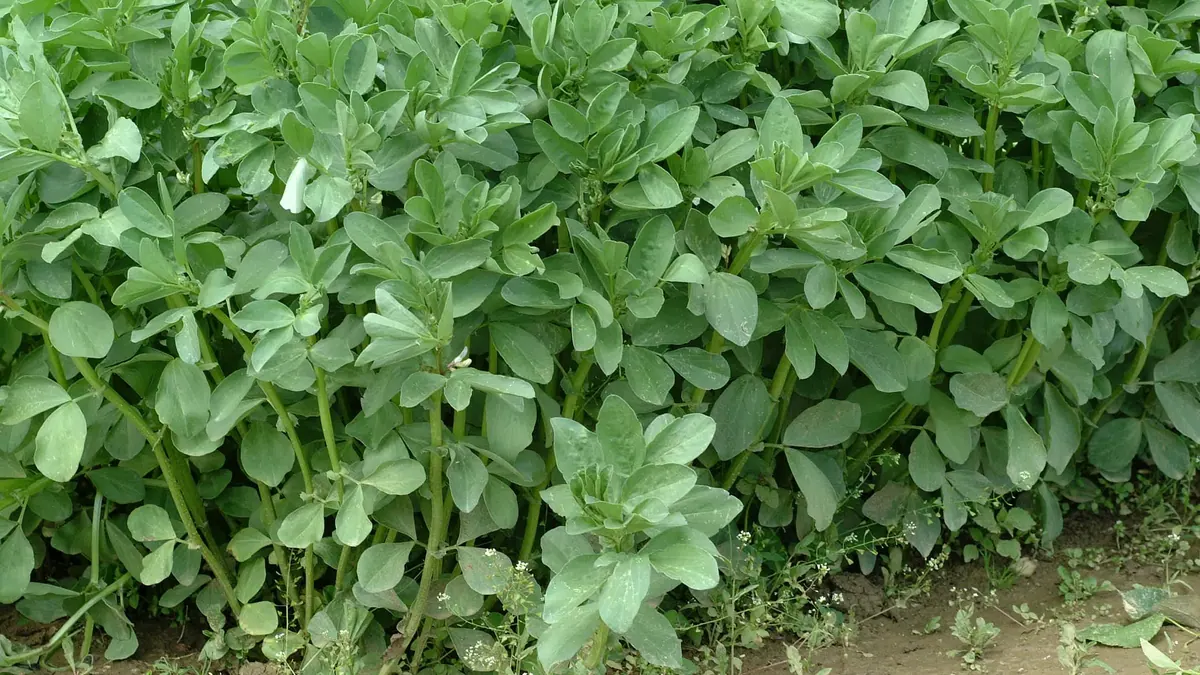
Faba bean, whole crop — BMP: 2 onderzoeken, gewogen gemiddelde 296 m³ CH₄/t oDS
296 m³ CH₄/t oDS gewogen gemiddelde uit 2 onderzoeken
≈52 %