

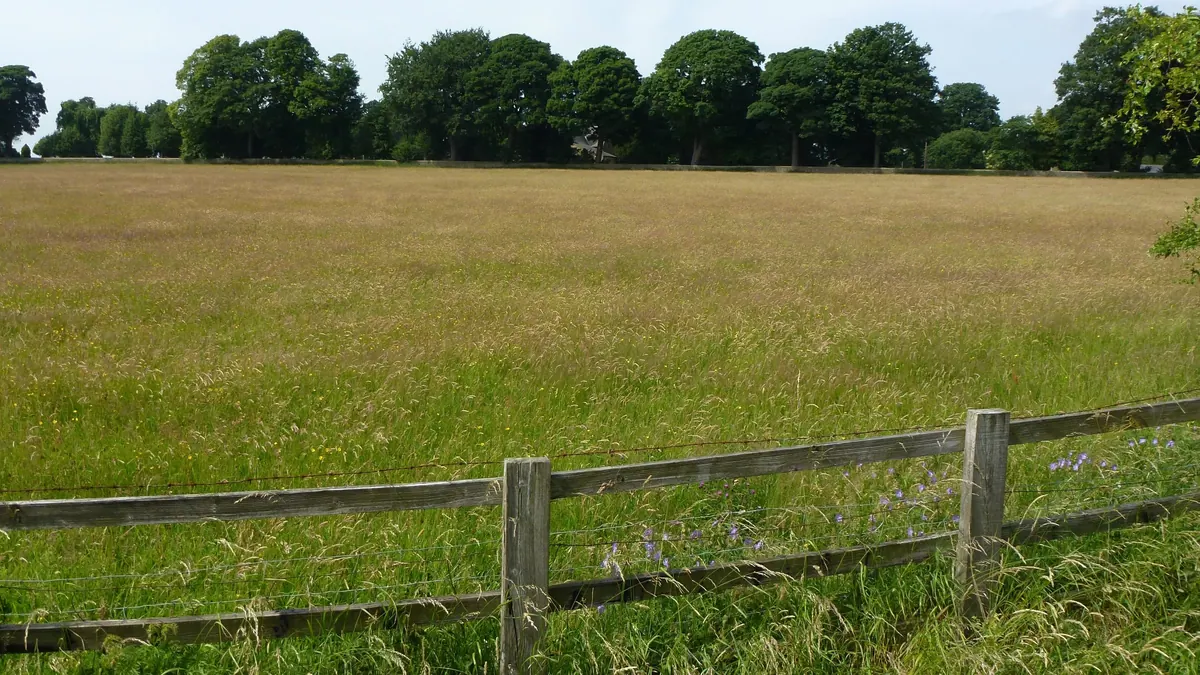
BMP-UntersuchungenGräser, Grünfutter und Futterpflanzen
Meadow hay — BMP: 16 Studien, gewichteter Mittelwert 279 m³ CH₄/t oTS
Meadow hay: 16 Datensätze an BMP-Daten aus 7 Publikationen, gewichteter Mittelwert 279 m³ CH₄/t oTS, Spanne 180–380.
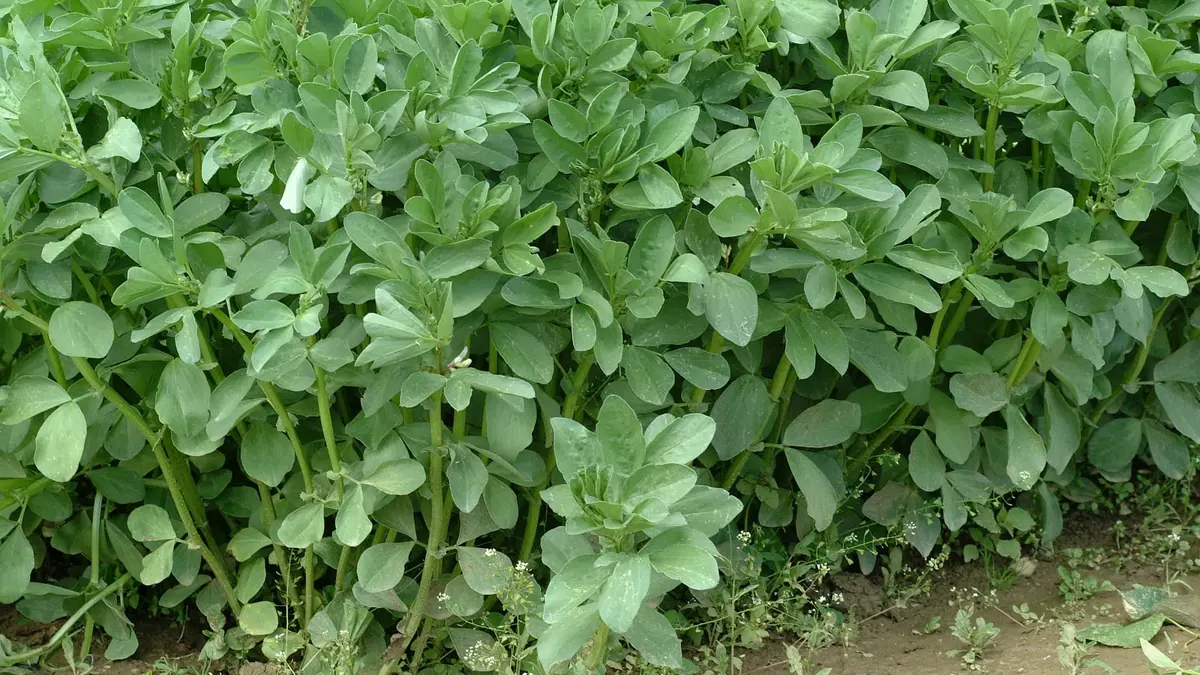
Foto John H Darch / Wikimedia Commons, Lizenz CC BY-SA 2.0, Quelldatei; Änderungen: Zuschnitt

- Gewichteter Mittelwert
- 279m³ CH₄/t oTS
- Spanne
- 180–380m³ CH₄/t oTS
- Datensätze
- 16Studien
- Publikationen
- 7Quellen
- Temperaturen
- 35 °C, 36 °C, 37 °C, 38 °Cdes Tests
Methan im Biogas
Mittlerer Methangehalt · ≈ 5,3 kWh/m³ Biogas
gemessen Mittelwert aus 1 Studie BMP; im Batch-Test fällt der CH₄-Anteil tendenziell höher aus als in einer Anlage.
Bewertung für Biogasanlagen
sehr gut — redaktionelle Bewertung für BiogasanlagenAuch kostenlos oder gegen Zuzahlung an den Lieferanten annehmenswert
Potenzial je Tonne Frischmasse: sehr hoch (213 m³ CH₄/t); keine besonderen Gefahren für die Stabilität. Handhabungskosten: Fasern, Schwimmschicht.
Warum? Bewertungsfaktoren
Potenzial je Tonne +3
- +3Potenzial 213 m³ CH₄/t Frischmasse (BMP 279 × TS 82,4 % × oTS 92,5 %)
Prozessstabilität 0
- 0keine Faktoren
Handhabung und Kosten −0,5
- −0,5Fasern, Schwimmschicht — Zerkleinerung und intensive Durchmischung
Punkte insgesamt: 2,5 · Schwellen: ≥ 2,5 sehr gut, ≥ 1 gut, darunter — neutral; negativ bei kumuliertem Prozessrisiko.
Zum Kofermentationsrechner hinzufügen CSV-Daten
BMP-Kurven aus 16 Studien
Gewichteter Mittelwert Einzelne Datensätze
Gestrichelte Linien sind eine Modellkurve (Kinetik erster Ordnung, B(t) = B₀·(1 − e−kt)); der Endpunkt stammt aus der Publikation. Alle Kurven sind Modellkurven.
Kumulierte Methanproduktion im Testverlauf [m³ CH₄/t oTS]. Die dicke Linie ist der gewichtete Mittelwert aller Datensätze (279); Punkte markieren die in den Publikationen angegebenen Endwerte. Fahren Sie mit der Maus über das Diagramm, um Werte abzulesen; ein Klick auf einen Legendeneintrag blendet einen Datensatz aus oder ein.
Übrige Datensätze in der Legende anzeigen (4)
Datensätze und Quellen
CSV herunterladen| Quelle | BMP m³ CH₄/t oTS | CH₄ im Biogas Vol.-%, gemessen | Temperatur | Probe | Kurve |
|---|---|---|---|---|---|
| Lehtomaki (2005) · 1 | 180 | — | 35 °C · mesophil | Grass hay (75% thymothy 25% meadow fescue) | Endpunkt (Modellkurve) |
| Lehtomaki (2005) · 2 | 230 | — | 35 °C · mesophil | Grass hay (75% thymothy 25% meadow fescue) | Endpunkt (Modellkurve) |
| Lehtomaki (2006) · 1 | 370 | — | 35 °C · mesophil | Grass hay 67.5% timothy 22.5% meadow fescue 10% Red clover | Endpunkt (Modellkurve) |
| Lehtomaki (2006) · 2 | 380 | — | 35 °C · mesophil | Grass hay 67.5% timothy 22.5% meadow fescue 10% Red clover | Endpunkt (Modellkurve) |
| Lehtomaki (2004) | 230 | — | 35 °C · mesophil | Grass hay (75% thymothy 25% meadow fescue) | Endpunkt (Modellkurve) |
| Kaiser (2007) · 1 | 188 | — | 37 °C · mesophil | grass hay | Endpunkt (Modellkurve) |
| Kaiser (2007) · 2 | 191 | — | 37 °C · mesophil | grass hay | Endpunkt (Modellkurve) |
| Kaiser (2007) · 3 | 198 | — | 37 °C · mesophil | grass hay | Endpunkt (Modellkurve) |
| Kaiser (2007) · 4 | 219 | — | 37 °C · mesophil | grass hay | Endpunkt (Modellkurve) |
| Kaiser (2007) · 5 | 230 | — | 37 °C · mesophil | grass hay | Endpunkt (Modellkurve) |
| Kaiser (2007) · 6 | 268 | — | 37 °C · mesophil | grass hay | Endpunkt (Modellkurve) |
| Lallement et al. (2023) DOI | 289 | — | 38 °C · mesophil | hay meadow | Endpunkt (Modellkurve) |
| Luna-delRisco et al. (2011) · 1 | 253 | — | 36 °C · mesophil | hay | Endpunkt (Modellkurve) |
| Luna-delRisco et al. (2011) · 2 | 286 | — | 36 °C · mesophil | hay | Endpunkt (Modellkurve) |
| Luna-delRisco et al. (2011) · 3 | 319 | — | 36 °C · mesophil | hay | Endpunkt (Modellkurve) |
| Dubrovskis et al. (2018) DOI | 355 | 53,3 % | 38 °C · mesophil | Grass hay pellets | Endpunkt (Modellkurve) |
| Gewichteter Mittelwert | 279 | 53,3 % | arithmetischer Mittelwert 262, SD 66 | ||
Typische Zusammensetzung
- Trockensubstanz (TS)
- 82,4% (Spanne 20,2–91,3)
- Organische Trockensubstanz (oTS)
- 92,5 % TS (Spanne 91,4–94,2)
- Stickstoff
- 2,6 % TS
- C/N-Verhältnis
- 26
Median und Spanne der Bestimmungen, die in den Publikationen zu den BMP-Datensätzen dieses Substrats angegeben sind (abgelesen aus: CROPGEN D4, MY-D); Trockensubstanz: 13 Bestimmungen, organische Trockensubstanz: 8 Bestimmungen. Das C/N-Verhältnis wurde als Quotient aus C- und N-Gehalt (% TS) aus derselben Quelle berechnet. Die TS-Spanne umfasst frische Proben sowie vor dem Test teilweise getrocknete oder getrocknete Proben – für Frischmaterial gilt der untere Teil der Spanne, idealerweise Ihre eigene Messung.
Quellen: Lehtomaki (2005); Lehtomaki (2006); Lehtomaki (2004); Kaiser (2007); Lallement et al. (2023); Luna-delRisco et al. (2011).
Die Zusammensetzung des Rohstoffs schwankt zwischen Chargen — für Anlagenberechnungen verwenden Sie die Analyse Ihrer eigenen Probe. Der Rechner trägt typische Werte automatisch ein.
Prozesseigenschaften
Kofermentation — womit kombinieren, worauf achten
- gut kombinierbar
Dosierung
Quellen der Prozessdaten
- Dubrovskis, V.; Plume, I.; Straume, I. (2018) Investigations of biogas production potential from grass hay pellets. Engineering for Rural Development
- Weiland, P. (2010) Biogas production: current state and perspectives. Applied Microbiology and Biotechnology
- Lehtomaki, A. Ronkainen, O.M. Rintala, J.A. (2005) Developing storage methods for optimised methane production from energy crops in northern conditions. ADSW 2005 Conference Proceedings Vol 1. 101-108
- Lehtomaki, A. Viinikainen, T.A. Rintala, J.A (2006) Screening boreal energy crops and crop residues for methane biofuel production. Submitted to Biomass and Bioenergy
- Lehtomaki, A. Viinikainen, T.A. Ronkainen, O.M. Alen, R. Rintala, J.A. (2004) Effect of pretreatments on methane production potential of energy crops and crop residues. Proceedings Anaerobic Digestion Conference 1016-1021
- Hendriks, A.T.W.M.; Zeeman, G. (2009) Pretreatments to enhance the digestibility of lignocellulosic biomass. Bioresource Technology
- Kaiser, F.L. (2007) Einfluss der stofflichen Zusammensetzung auf die Verdaulichkeit nachwachsender Rohstoffe beim anaeroben Abbau in Biogasreaktoren. Dissertation, Technische Universität München, Wissenschaftszentrum Weihenstephan
- Lallement, A.; Peyrelasse, C.; Lagnet, C.; Barakat, A.; Schraauwers, B.; Maunas, S.; Monlau, F. (2023) A Detailed Database of the Chemical Properties and Methane Potential of Biomasses Covering a Large Range of Common Agricultural Biogas Plant Feedstocks. Waste 1(1), 195–227
- Luna-delRisco, M.; Normak, A.; Orupõld, K. (2011) Biochemical methane potential of different organic wastes and energy crops from Estonia. Agronomy Research 9(1–2), 331–342
- FNR (2010). Guía sobre el Biogás – Desde la producción hasta el uso (hiszp. wydanie „Leitfaden Biogas”, GIZ 2013)
Der Kofermentationsrechner bewertet eine konkrete Mischung mit diesem Substrat.
Was die Zusammenstellung zeigt
Die Zusammenstellung umfasst 16 Datensätze zum Methanpotenzial (BMP) des Substrats „Meadow hay“ aus 7 Publikationen, veröffentlicht 2004–2023. Die Ergebnisse reichen von 180 bis 380 m³ CH₄/t oTS, der gewichtete Mittelwert beträgt 279 m³ CH₄/t oTS (arithmetischer Mittelwert 262, Standardabweichung 66).
Die Tests wurden bei 35, 36, 37, 38 °C (Temperaturbereich: mesophil) durchgeführt. Unterschiede bei Temperatur, Impfschlamm, Testdauer und Probenvorbereitung sind typische Ursachen für die Streuung der Ergebnisse zwischen Laboren.
Für 16 Datensätze gibt die Publikation nur den Endwert an. Die Linie im Diagramm ist dann eine Modellkurve (Kinetik erster Ordnung) und dient nur dem Vergleich der Kurvenformen — nur der Endpunkt stammt aus der Publikation.
So nutzen Sie diese Daten
BMP beschreibt das Potenzial, das im Batch-Test unter Laborbedingungen erzielt wird. In einer großtechnischen Anlage hängt der Ertrag zusätzlich von Verweilzeit, Fermenterbelastung, Durchmischung und Zusammensetzung der Einsatzstoffe ab. Für Vorberechnungen empfiehlt sich der gewichtete Mittelwert, für die Risikobewertung die gesamte Spanne der Ergebnisse. Bei der Planung eines konkreten Einsatzstoffs lohnt es sich, einen eigenen BMP-Test an einer repräsentativen Probe zu beauftragen.
Methodik in Kürze
BMP ist die Methanmenge, die im Batch-Test aus der organischen Trockensubstanz (oTS) gewonnen wird, angegeben in m³ CH₄ pro Tonne oTS (numerisch identisch mit NmL CH₄/g oTS in den Publikationen) und auf Normbedingungen (0 °C, 101,325 kPa) umgerechnet. Der gewichtete Mittelwert gibt jeder Publikation ein Gesamtgewicht von 1, das gleichmäßig auf ihre Ergebnisse für das Substrat verteilt wird — eine Arbeit, die zwanzig Sorten testet, wiegt also nicht schwerer als eine Arbeit mit einer einzigen Probe. Bei Ringversuchen ist die Einheit das Labor (Gesamtgewicht 1), und innerhalb des Labors steigt das Gewicht eines Tests mit der Zahl der Flaschen (Replikate). Ergebnisse nach einer Vorbehandlung (z. B. thermisch, chemisch, enzymatisch) werden gesondert ausgewiesen und gehen nicht in den Mittelwert ein.
Durchgezogene Linien sind in den Tests gemessene Kurven. Gibt eine Publikation nur das Endergebnis an, zeichnen wir ein kinetisches Modell erster Ordnung, B(t) = B₀·(1 − e−kt): Nur der Endpunkt stammt aus der Publikation, die Kurvenform dient ausschließlich der Visualisierung — die Produktion an einem bestimmten Tag lässt sich daraus nicht ablesen. Für dieses Substrat wurde k = 0,091 d−1 angenommen (keine kinetischen Daten für die Gruppe – verwendet wurde der Median aller verfügbaren Geschwindigkeitskonstanten k (93 Werte)).
Die Statistiken beschreiben die Streuung veröffentlichter Ergebnisse — eine deskriptive Zusammenstellung, keine Metaanalyse und keine Garantie für den Anlagenertrag.
Ergebnisse nach Vorbehandlung (38) — vom Mittelwert ausgeschlossen
| Quelle | BMP m³ CH₄/t oTS | Vorbehandlung | Probe |
|---|---|---|---|
| Lehtomaki (2004) | 270 | — | Grass hay (75% thymothy 25% meadow fescue) |
| Lehtomaki (2004) | 270 | — | Grass hay (75% thymothy 25% meadow fescue) |
| Lehtomaki (2004) | 260 | — | Grass hay (75% thymothy 25% meadow fescue) |
| Lehtomaki (2004) | 190 | — | Grass hay (75% thymothy 25% meadow fescue) |
| Lehtomaki (2004) | 130 | — | Grass hay (75% thymothy 25% meadow fescue) |
| Lehtomaki (2004) | 240 | — | Grass hay (75% thymothy 25% meadow fescue) |
| Lehtomaki (2004) | 100 | — | Grass hay (75% thymothy 25% meadow fescue) |
| Lehtomaki (2004) | 140 | — | Grass hay (75% thymothy 25% meadow fescue) |
| Lehtomaki (2004) | 130 | — | Grass hay (75% thymothy 25% meadow fescue) |
| Lehtomaki (2004) | 260 | — | Grass hay (75% thymothy 25% meadow fescue) |
| Lehtomaki (2004) | 250 | — | Grass hay (75% thymothy 25% meadow fescue) |
| Lehtomaki (2004) | 270 | — | Grass hay (75% thymothy 25% meadow fescue) |
| Lehtomaki (2004) | 230 | — | Grass hay (75% thymothy 25% meadow fescue) |
| Lehtomaki (2004) | 140 | — | Grass hay (75% thymothy 25% meadow fescue) |
| Lehtomaki (2004) | 210 | — | Grass hay (75% thymothy 25% meadow fescue) |
| Lehtomaki (2004) | 170 | — | Grass hay (75% thymothy 25% meadow fescue) |
| Lehtomaki (2004) | 240 | — | Grass hay (75% thymothy 25% meadow fescue) |
| Lehtomaki (2004) | 270 | — | Grass hay (75% thymothy 25% meadow fescue) |
| Lehtomaki (2004) | 200 | — | Grass hay (75% thymothy 25% meadow fescue) |
| Lehtomaki (2004) | 230 | — | Grass hay (75% thymothy 25% meadow fescue) |
| Lehtomaki (2004) | 250 | — | Grass hay (75% thymothy 25% meadow fescue) |
| Lehtomaki (2004) | 230 | — | Grass hay (75% thymothy 25% meadow fescue) |
| Lehtomaki (2005) | 280 | — | Grass hay (75% thymothy 25% meadow fescue) |
| Lehtomaki (2005) | 280 | — | Grass hay (75% thymothy 25% meadow fescue) |
| Lehtomaki (2005) | 310 | — | Grass hay (75% thymothy 25% meadow fescue) |
| Lehtomaki (2005) | 280 | — | Grass hay (75% thymothy 25% meadow fescue) |
| Lehtomaki (2005) | 240 | — | Grass hay (75% thymothy 25% meadow fescue) |
| Lehtomaki (2005) | 240 | — | Grass hay (75% thymothy 25% meadow fescue) |
| Lehtomaki (2005) | 260 | — | Grass hay (75% thymothy 25% meadow fescue) |
| Lehtomaki (2005) | 240 | — | Grass hay (75% thymothy 25% meadow fescue) |
| Lehtomaki (2005) | 170 | — | Grass hay (75% thymothy 25% meadow fescue) |
| Lehtomaki (2005) | 240 | — | Grass hay (75% thymothy 25% meadow fescue) |
| Lehtomaki (2005) | 240 | — | Grass hay (75% thymothy 25% meadow fescue) |
| Lehtomaki (2005) | 240 | — | Grass hay (75% thymothy 25% meadow fescue) |
| Lehtomaki (2005) | 270 | — | Grass hay (75% thymothy 25% meadow fescue) |
| Lehtomaki (2005) | 230 | — | Grass hay (75% thymothy 25% meadow fescue) |
| Lehtomaki (2005) | 230 | — | Grass hay (75% thymothy 25% meadow fescue) |
| Lehtomaki (2005) | 240 | — | Grass hay (75% thymothy 25% meadow fescue) |
Literaturverzeichnis
- Lehtomaki, A. Ronkainen, O.M. Rintala, J.A. (2005). Developing storage methods for optimised methane production from energy crops in northern conditions. ADSW 2005 Conference Proceedings Vol 1. 101-108.
- Lehtomaki, A. Viinikainen, T.A. Rintala, J.A (2006). Screening boreal energy crops and crop residues for methane biofuel production. Submitted to Biomass and Bioenergy.
- Lehtomaki, A. Viinikainen, T.A. Ronkainen, O.M. Alen, R. Rintala, J.A. (2004). Effect of pretreatments on methane production potential of energy crops and crop residues. Proceedings Anaerobic Digestion Conference 1016-1021.
- Kaiser, F.L. (2007). Einfluss der stofflichen Zusammensetzung auf die Verdaulichkeit nachwachsender Rohstoffe beim anaeroben Abbau in Biogasreaktoren. Dissertation, Technische Universität München, Wissenschaftszentrum Weihenstephan. https://mediatum.ub.tum.de/631394 Quelle
- Lallement, A.; Peyrelasse, C.; Lagnet, C.; Barakat, A.; Schraauwers, B.; Maunas, S.; Monlau, F. (2023). A Detailed Database of the Chemical Properties and Methane Potential of Biomasses Covering a Large Range of Common Agricultural Biogas Plant Feedstocks. Waste 1(1), 195–227. DOI: 10.3390/waste1010014 DOI
- Luna-delRisco, M.; Normak, A.; Orupõld, K. (2011). Biochemical methane potential of different organic wastes and energy crops from Estonia. Agronomy Research 9(1–2), 331–342. https://www.semanticscholar.org/paper/25cf2d7bba4758136830a9a02caf3ecd997173bb Quelle
- Dubrovskis, V.; Plume, I.; Straume, I. (2018). Investigations of biogas production potential from grass hay pellets. Engineering for Rural Development. DOI: 10.22616/erdev2018.17.n413 DOI
Alle Quellen des Portals: Literaturverzeichnis.
Weitere Substrate in der Gruppe „Gräser, Grünfutter und Futterpflanzen“
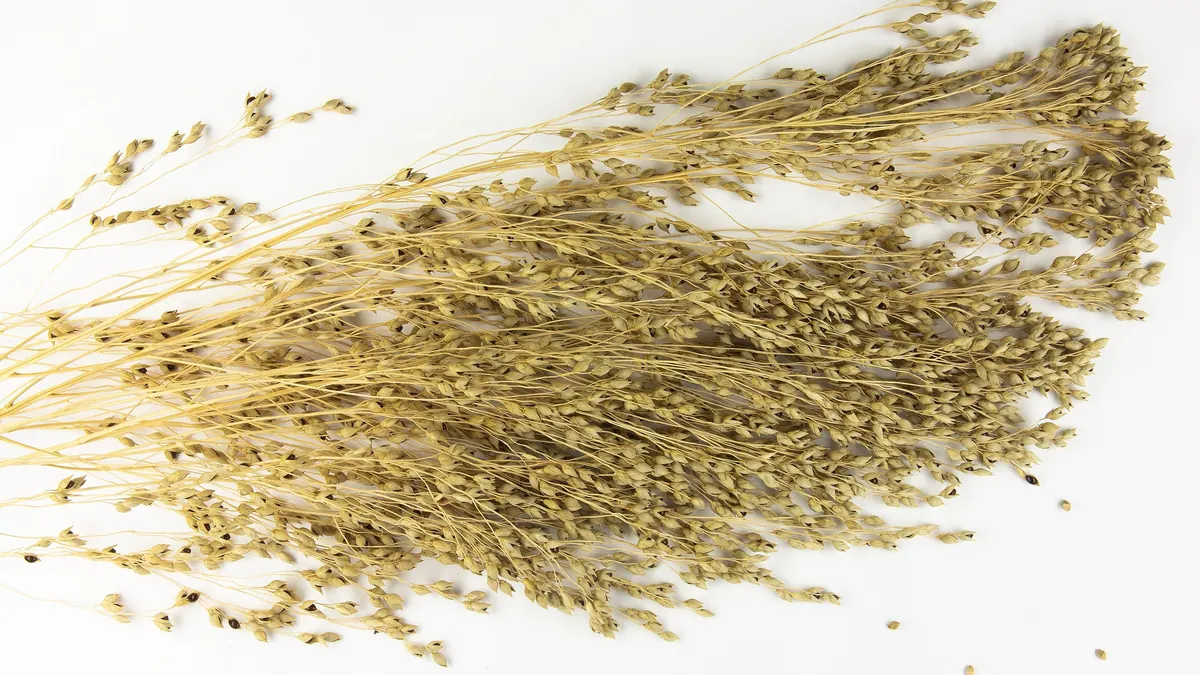
Proso millet, whole crop — BMP: 2 Studien, gewichteter Mittelwert 260 m³ CH₄/t oTS
260 m³ CH₄/t oTS gewichteter Mittelwert aus 2 Studien
gut — redaktionelle Bewertung für Biogasanlagen≈52 %
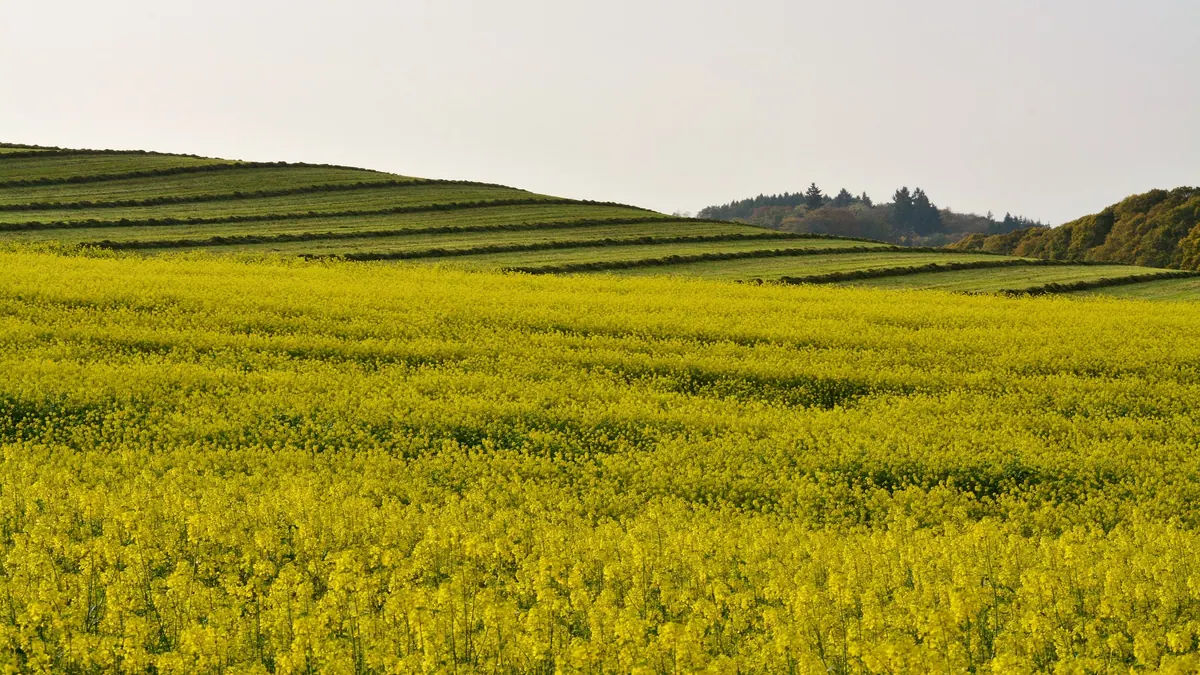
White mustard (tops) — BMP: 2 Studien, gewichteter Mittelwert 313 m³ CH₄/t oTS
313 m³ CH₄/t oTS gewichteter Mittelwert aus 2 Studien
gut — redaktionelle Bewertung für Biogasanlagen68 %
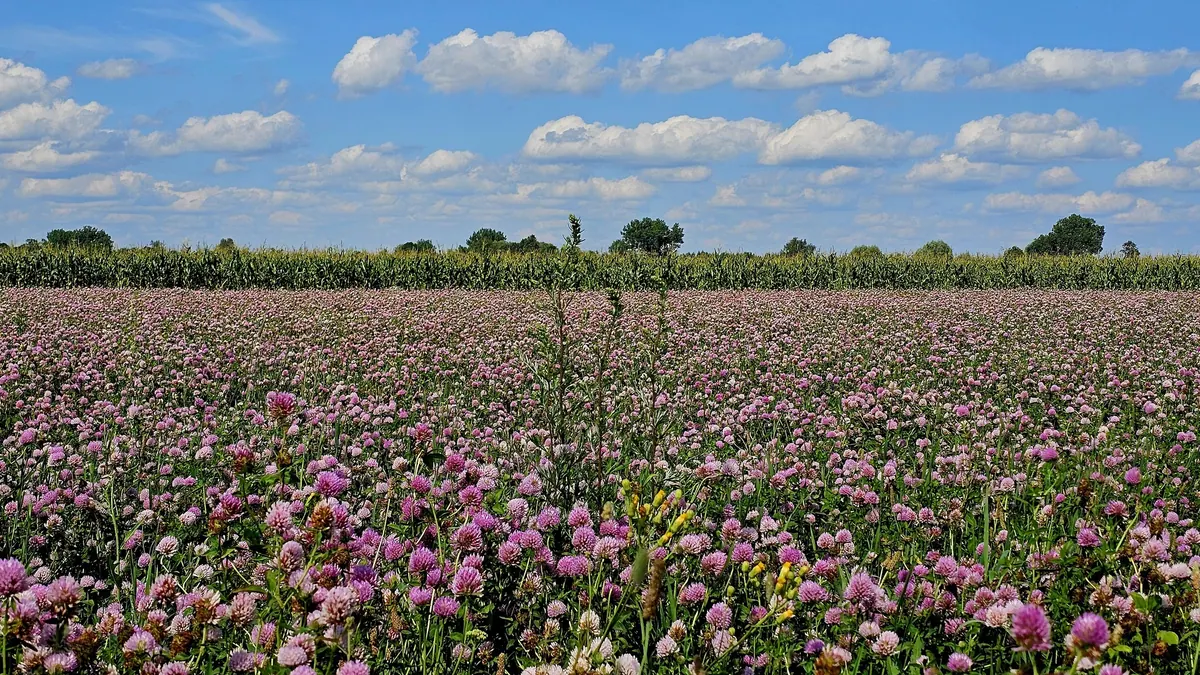
Millet/foxtail millet and clover mixtures — BMP: 5 Studien, gewichteter Mittelwert 304 m³ CH₄/t oTS
304 m³ CH₄/t oTS gewichteter Mittelwert aus 5 Studien
gut — redaktionelle Bewertung für Biogasanlagen≈53 %
Faba bean, whole crop — BMP: 2 Studien, gewichteter Mittelwert 296 m³ CH₄/t oTS
296 m³ CH₄/t oTS gewichteter Mittelwert aus 2 Studien
≈52 %