

BMP testingEnergy crops and whole-crop plants (WCS)single study (2 samples)
Pearl millet — BMP: 2 studies, weighted mean 280 m³ CH₄/t VS
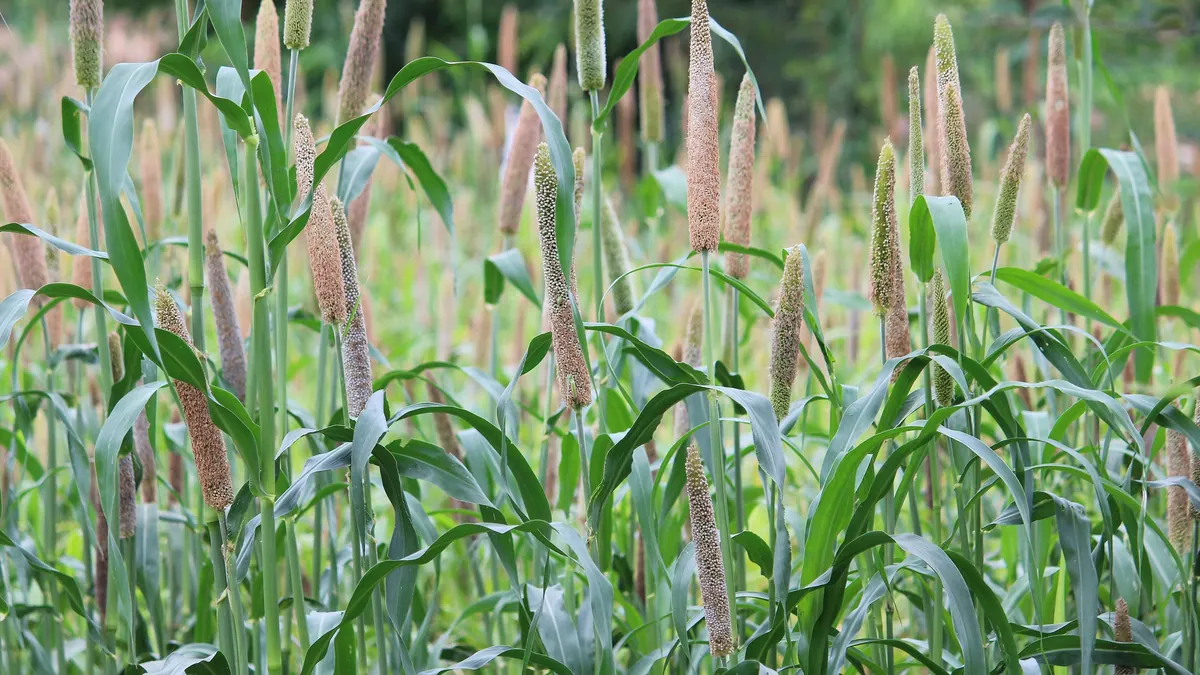
Pearl millet (Pennisetum glaucum) is a warmth-loving cereal and fodder grass resistant to drought. In the compilation it appears in a small number of records from a study of the 1990s.
Photo Shanmugamp7 / Wikimedia Commons, licence CC BY-SA 3.0, source file; changes: cropping

- Weighted mean
- 280m³ CH₄/t VS
- Range
- 257–304m³ CH₄/t VS
- Records
- 2single study (2 samples)
- Publications
- 1source
- Temperatures
- 35 °Cof the test
Methane in biogas
Medium methane content · ≈ 5.2 kWh/m³ of biogas
estimate from the substrate type The collected studies contain no measurement. The interval follows from the approximate composition (carbohydrate-dominated (no protein or fat characteristics)) and the yields of compound groups according to FNR.
Rating for biogas plants
not rated — editorial rating for biogas plants
Not rated: no dry matter or volatile solids in the data. We calculate the rating when the dry matter and volatile solids of the material are known.
Add to the co-digestion calculator CSV data
BMP curves from 2 studies
Weighted mean Individual records
Dashed lines are a model curve (first-order kinetics, B(t) = B₀·(1 − e−kt)); the end point comes from the publication. All curves are model curves.
Cumulative methane production over the test [m³ CH₄/t VS]. The thick line is the weighted mean of all records (280); dots mark the end values given in the publications. Point at the chart to read values; click a legend item to hide or show a record.
Records and sources
Download CSV| Source | BMP m³ CH₄/t VS | Temperature | Sample | Curve |
|---|---|---|---|---|
| Chynoweth et al. (1993) · 1 DOI | 257 | 35 °C · mesophilic | Pearl millet | end point (model curve) |
| Chynoweth et al. (1993) · 2 DOI | 304 | 35 °C · mesophilic | Pearl millet · pretreatment: Ensiled | end point (model curve) |
| Weighted mean | 280 | arithmetic mean 280, SD 33 | ||
Process properties
Low confidence: the description is based on general characteristics of the substrate group, not on studies of this material. Treat it as a hint to be verified.
No published process studies
The literature we use does not describe the advantages or drawbacks of digesting this substrate beyond the BMP test results. Below are process characteristics assigned on the basis of the type of material — an editorial classification, not a study result.
- seasonal
- seasonal availability — requires storage
- fibrous
- lignocellulose, long fibres → floating layer, harder mixing, slow degradation
Co-digestion — what to combine it with, what to watch out for
- combines well
group: Animal excreta (slurry, manure, poultry litter)
Co-digestion with excreta (slurry/solid manure) is the standard arrangement for plant biomass: they supply alkalinity and microflora.[1][2]
Dosing
Practical requirements
- Ensiling makes it possible to store seasonal biomass; properly ensiled plants (in the study maize, sorghum, forage rye, triticale) can be stored for up to a year without loss of methane production (Herrmann et al. 2011).
Sources of the process data
- Chynoweth, D.; Turick, C.; Owens, J.; Jerger, D.; Peck, M. (1993) Biochemical methane potential of biomass and waste feedstocks. Biomass and Bioenergy 5(1), 95–111
- Weiland, P. (2010) Biogas production: current state and perspectives. Applied Microbiology and Biotechnology
- Chynoweth, D.; Turick, C.; Owens, J.; Jerger, D.; Peck, M. (1993) Biochemical methane potential of biomass and waste feedstocks. Biomass and Bioenergy 5(1), 95–111
- Hendriks, A.T.W.M.; Zeeman, G. (2009) Pretreatments to enhance the digestibility of lignocellulosic biomass. Bioresource Technology
- Herrmann et al. (2011). Effects of ensiling, silage additives and storage period on methane formation of biogas crops. Bioresour. Technol.
The co-digestion calculator will assess a specific mixture containing this substrate.
What it is and where it comes from
Pearl millet (Pennisetum glaucum, now also Cenchrus americanus) is an annual grass of warm and dry regions, grown as a cereal in Africa and Asia and as fodder and green manure. It tolerates drought and poor soils well. In biogas research it was tested as an energy crop in American programmes of the 1990s. The compilation is based on a small number of records from one study, under mesophilic conditions.
Properties relevant to digestion
The green biomass of pearl millet is a typical C4 grass: it has low protein, a high fibre share and a wide C-to-N ratio. Digestibility depends on the developmental stage and is higher before heading. Ensiling is possible with an appropriate sugar content. The material requires size reduction, and co-digestion with a nitrogen-rich substrate, for example slurry, improves the nutrient balance. The plant tolerates low temperatures poorly, so in Poland it is not an energy crop.
How to read the spread of results
The records come from one older study and give no information on variability between laboratories. The result depends on the variety, harvest date, fertilisation, form of the material and the test methodology used in the 1990s, when BMP protocols had not yet been standardised. The age of the publication means that the way of determining standard conditions and conversions may have differed from the present. These data should therefore be treated as a historical reference point.
In biogas plant practice
Under Polish conditions pearl millet is not a practical substrate. It matters as part of the knowledge about energy crops in a warm climate and as a component of hybrids with elephant grass. If it were considered, it would require size reduction and ensiling, and cost-effectiveness would have to be assessed on the basis of local yield. In every case a BMP test of your own is needed. For comparisons with other energy grasses it is worth remembering that this species is also an important parent of hybrids used in the tropics, so results for it help to understand where the properties of later hybrid varieties come from. For Polish practice the most important conclusion is that this species serves as background knowledge, not as an available raw material. The data concern material from warmer regions and older research protocols.
Methodology in brief
BMP is the amount of methane obtained from volatile solids (VS) in a batch test, given in m³ CH₄ per tonne of VS (numerically the same as NmL CH₄/g VS in the publications) and converted to normal conditions (0 °C, 101.325 kPa). The weighted mean gives each publication a total weight of 1, split equally between its results for the substrate — a paper testing twenty varieties does not outweigh a paper with a single sample. In inter-laboratory programmes the unit is the laboratory (total weight 1), and within it the weight of a test grows with the number of bottles (replicates). Results after pretreatment (e.g. thermal, chemical, enzymatic) are shown separately and are not included in the mean.
Solid lines are curves measured in the tests. Where a publication gives only the final result, we draw a first-order kinetic model, B(t) = B₀·(1 − e−kt): only the end point comes from the publication, and the shape of the curve serves purely as visualisation — do not read the production on a particular day from it. For this substrate k = 0.085 d−1 was assumed (median of rate constants k reported in the sources and/or fitted to the mean measured curves).
The statistics describe the spread of published results — a descriptive compilation, not a meta-analysis or a guarantee of plant yield.
Bibliography
- Chynoweth, D.; Turick, C.; Owens, J.; Jerger, D.; Peck, M. (1993). Biochemical methane potential of biomass and waste feedstocks. Biomass and Bioenergy 5(1), 95–111. DOI: 10.1016/0961-9534(93)90010-2 DOI
All sources of the site: bibliography.
Other substrates in the group “Energy crops and whole-crop plants (WCS)”
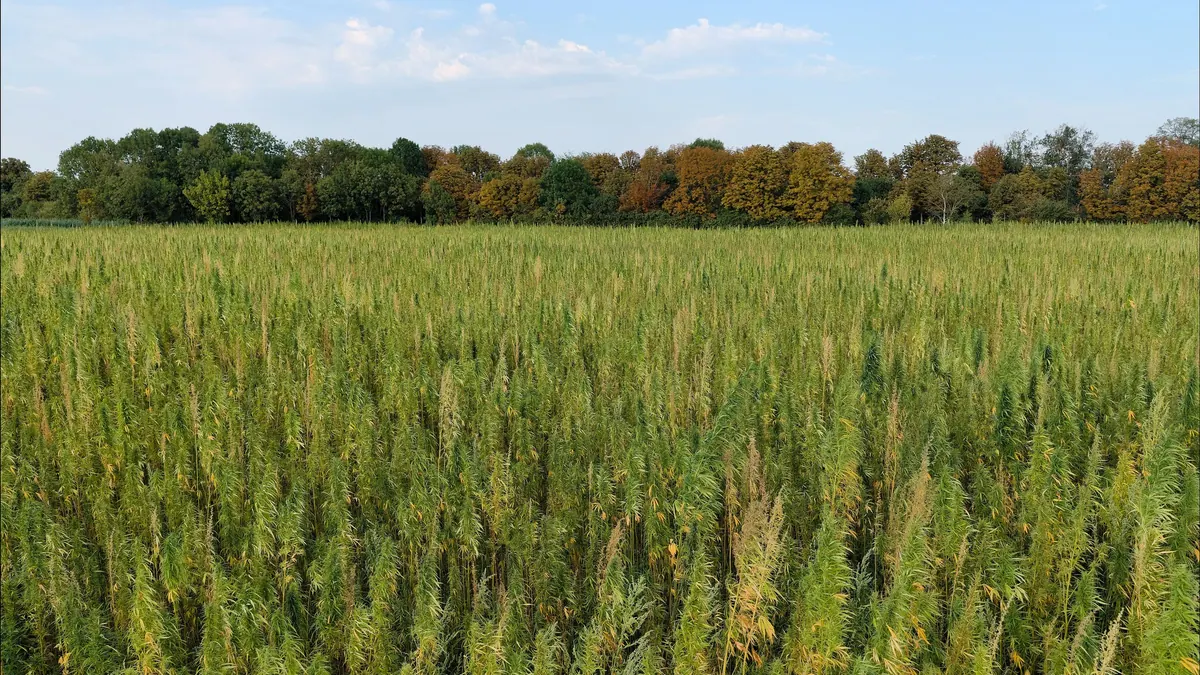
Hemp, stalks and whole plant — BMP: 3 studies, weighted mean 242 m³ CH₄/t VS
242 m³ CH₄/t VS weighted mean from 3 studies
≈52 %
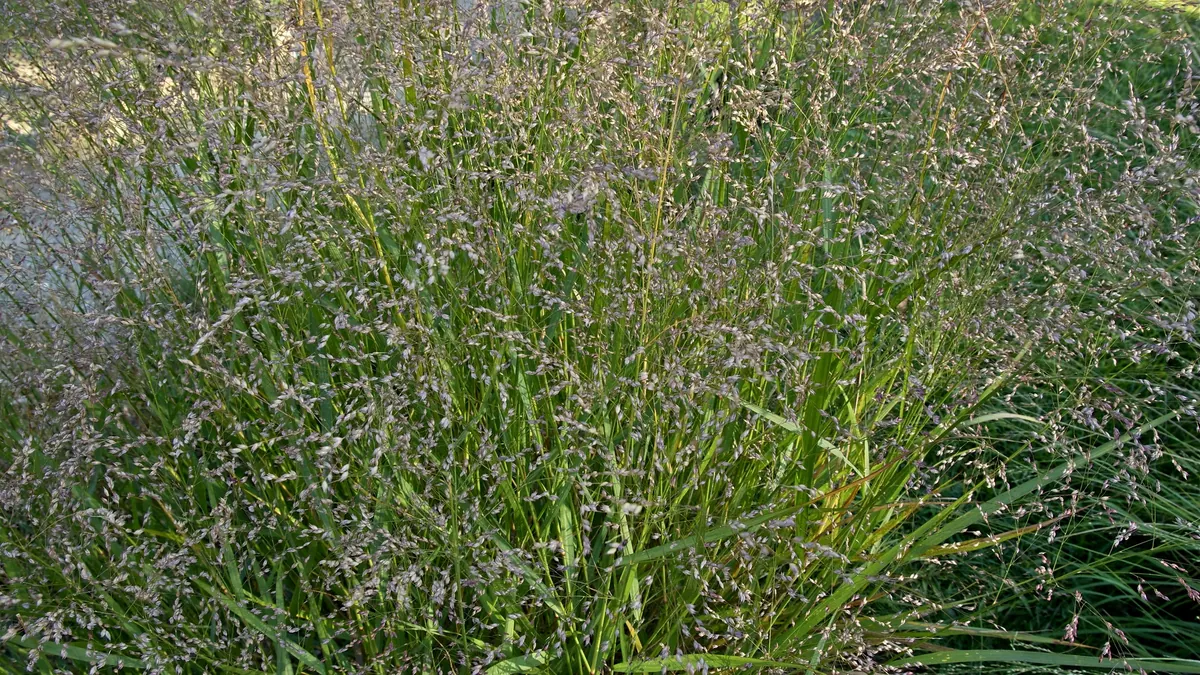
Switchgrass — BMP: 3 studies, weighted mean 180 m³ CH₄/t VS
180 m³ CH₄/t VS weighted mean from 3 studies
≈52 %
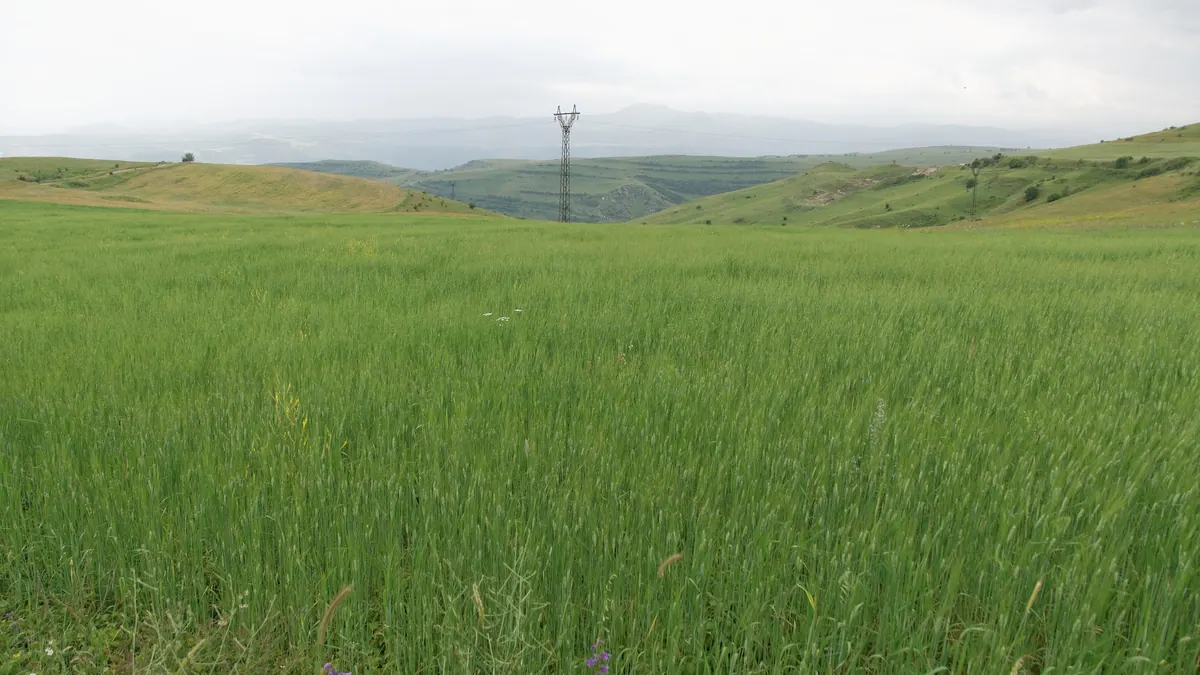
Wheat, whole crop — BMP: 13 studies, weighted mean 332 m³ CH₄/t VS
332 m³ CH₄/t VS weighted mean from 13 studies
very good — editorial rating for biogas plants59 %

Sunflower, whole crop — BMP: 15 studies, weighted mean 287 m³ CH₄/t VS
287 m³ CH₄/t VS weighted mean from 15 studies
very good — editorial rating for biogas plants≈52 %