

Test BMPPaglie e residui colturali
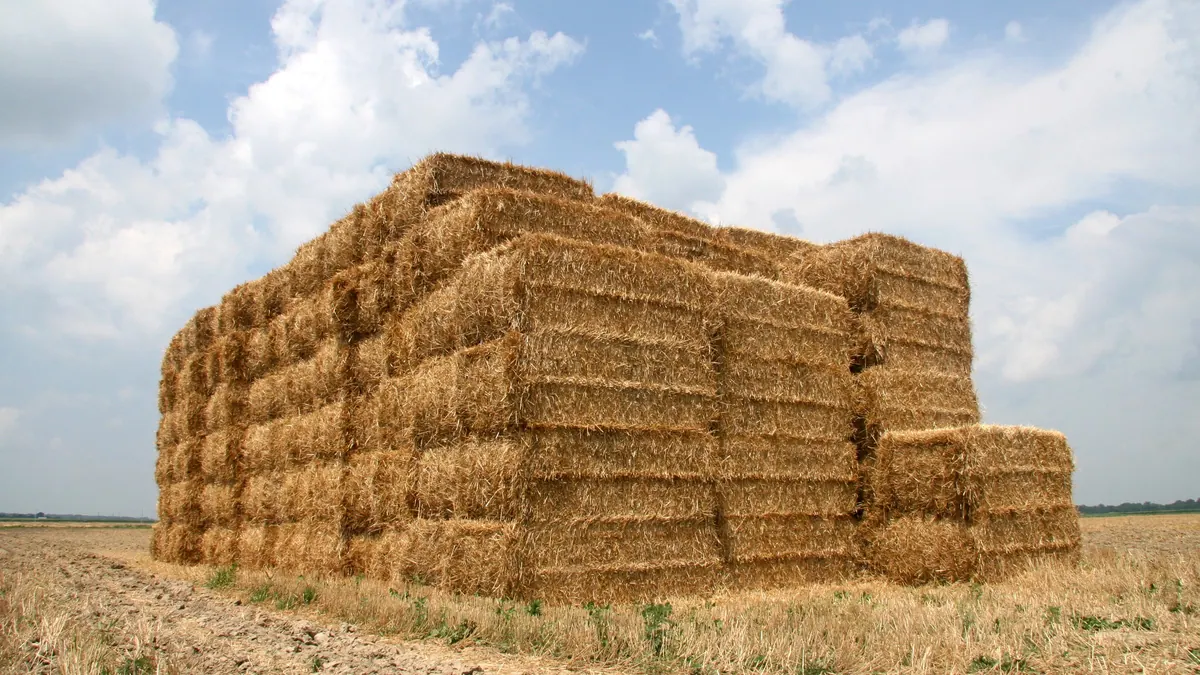
Wheat straw — BMP: 92 studi, media ponderata 261 m³ CH₄/t SV
Wheat straw: 92 record di dati BMP tratti da 17 pubblicazioni, media ponderata 261 m³ CH₄/t SV, intervallo 162–490.
valutazione: buonaCH₄ ≈ 52 % (stima)
Foto Huw Williams (Huwmanbeing) / Wikimedia Commons, pubblico dominio, file di origine; modifiche: ritaglio

- Media ponderata
- 261m³ CH₄/t SV
- Intervallo
- 162–490m³ CH₄/t SV
- Record
- 92studi
- Pubblicazioni
- 17fonti
- Temperature
- 35 °C, 37 °C, 38 °C, 40 °Cdel test
Metano nel biogas
Basso contenuto di metano · ≈ 5,2 kWh/m³ di biogas
stima in base al tipo di substrato Gli studi raccolti non contengono misurazioni. L’intervallo deriva dalla composizione approssimativa (proteine dall’azoto totale (N 0,7 % SS × 6,25)) e dalle rese dei gruppi di composti secondo la FNR.
Valutazione per gli impianti di biogas
buona — valutazione redazionale per gli impianti di biogasStabile, di solito accettato senza tariffa
Potenziale per tonnellata di sostanza fresca: molto alto (218 m³ CH₄/t); nessuna minaccia particolare per la stabilità. Costi di gestione: fibre, strato galleggiante, degradazione lenta.
Perché? Fattori della valutazione
Potenziale per tonnellata +3
- +3potenziale 218 m³ CH₄/t di sostanza fresca (BMP 261 × SS 92 % × SV 90,6 %)
Stabilità del processo 0
- 0nessun fattore
Gestione e costi −1
- −0,5fibre, strato galleggiante — triturazione e miscelazione intensa
- −0,5degradazione lenta — lungo tempo di ritenzione
Punteggio totale: 2 · soglie: ≥ 2,5 molto buona, ≥ 1 buona, sotto — neutra; negativa in caso di rischio di processo cumulativo.
Aggiungi al calcolatore di codigestione Dati CSV
Curve BMP da 92 studi
Media ponderata Singoli record
Le linee tratteggiate sono una curva del modello (cinetica del primo ordine, B(t) = B₀·(1 − e−kt)); il punto finale proviene dalla pubblicazione. Le linee continue sono misurazioni (67).
Produzione cumulata di metano nel corso del test [m³ CH₄/t SV]. La linea spessa è la media ponderata di tutti i record (261); i punti indicano i valori finali riportati nelle pubblicazioni. Posizionare il puntatore sul grafico per leggere i valori; fare clic su una voce della legenda per nascondere o mostrare un record.
Mostra i restanti record nella legenda (80)
Record e fonti
Scarica il CSV| Fonte | BMP m³ CH₄/t SV | Temperatura | Campione | Curva |
|---|---|---|---|---|
| Hafner et al. (2022) · lab. 1 · test 273 DOI | 178 | — · mesofilo | — | misurazione (31 punti) |
| Hafner et al. (2022) · lab. 16 · test 235 DOI | 178 | — · mesofilo | — | misurazione (31 punti) |
| Hafner et al. (2022) · lab. 15 · test 268 DOI | 199 | — · mesofilo | — | misurazione (31 punti) |
| Hafner et al. (2022) · lab. 15 · test 217 DOI | 214 | — · mesofilo | — | misurazione (31 punti) |
| Hafner et al. (2022) · lab. 18 · test 242 DOI | 222 | — · mesofilo | — | misurazione (31 punti) |
| Hafner et al. (2022) · lab. 1 · test 253 DOI | 226 | — · mesofilo | — | misurazione (31 punti) |
| Hafner et al. (2022) · lab. 31 · test 224 DOI | 227 | — · mesofilo | — | misurazione (31 punti) |
| Hafner et al. (2022) · lab. 35 · test 216 DOI | 232 | — · mesofilo | — | misurazione (31 punti) |
| Hafner et al. (2022) · lab. 18 · test 258 DOI | 232 | — · mesofilo | — | misurazione (31 punti) |
| Hafner et al. (2022) · lab. 2 · test 244 DOI | 238 | — · mesofilo | — | misurazione (31 punti) |
| Hafner et al. (2022) · lab. 21 · test 255 DOI | 243 | — · mesofilo | — | misurazione (31 punti) |
| Hafner et al. (2022) · lab. 31 · test 233 DOI | 244 | — · mesofilo | — | misurazione (31 punti) |
| Hafner et al. (2022) · lab. 21 · test 263 DOI | 247 | — · mesofilo | — | misurazione (31 punti) |
| Hafner et al. (2022) · lab. 9 · test 214 DOI | 247 | — · mesofilo | — | misurazione (31 punti) |
| Hafner et al. (2022) · lab. 39 · test 220 DOI | 249 | — · mesofilo | — | misurazione (31 punti) |
| Hafner et al. (2022) · lab. 11 · test 202 DOI | 249 | — · mesofilo | — | misurazione (31 punti) |
| Hafner et al. (2022) · lab. 10 · test 249 DOI | 250 | — · mesofilo | — | misurazione (31 punti) |
| Hafner et al. (2022) · lab. 31 · test 245 DOI | 253 | — · mesofilo | — | misurazione (31 punti) |
| Hafner et al. (2022) · lab. 37 · test 208 DOI | 253 | — · mesofilo | — | misurazione (31 punti) |
| Hafner et al. (2022) · lab. 39 · test 264 DOI | 254 | — · mesofilo | — | misurazione (31 punti) |
| Hafner et al. (2022) · lab. 8 · test 219 DOI | 254 | — · mesofilo | — | misurazione (31 punti) |
| Hafner et al. (2022) · lab. 35 · test 222 DOI | 258 | — · mesofilo | — | misurazione (31 punti) |
| Hafner et al. (2022) · lab. 13 · test 262 DOI | 264 | — · mesofilo | — | misurazione (31 punti) |
| Hafner et al. (2022) · lab. 34 · test 254 DOI | 266 | — · mesofilo | — | misurazione (31 punti) |
| Hafner et al. (2022) · lab. 3 · test 257 DOI | 266 | — · mesofilo | — | misurazione (31 punti) |
| Hafner et al. (2022) · lab. 5 · test 259 DOI | 269 | — · mesofilo | — | misurazione (31 punti) |
| Hafner et al. (2022) · lab. 3 · test 228 DOI | 270 | — · mesofilo | — | misurazione (31 punti) |
| Hafner et al. (2022) · lab. 32 · test 203 DOI | 270 | — · mesofilo | — | misurazione (31 punti) |
| Hafner et al. (2022) · lab. 20 · test 266 DOI | 272 | — · mesofilo | — | misurazione (31 punti) |
| Hafner et al. (2022) · lab. 39 · test 274 DOI | 272 | — · mesofilo | — | misurazione (31 punti) |
| Hafner et al. (2022) · lab. 25 · test 234 DOI | 272 | — · mesofilo | — | misurazione (31 punti) |
| Hafner et al. (2022) · lab. 29 · test 237 DOI | 272 | — · mesofilo | — | misurazione (31 punti) |
| Hafner et al. (2022) · lab. 38 · test 223 DOI | 273 | — · mesofilo | — | misurazione (31 punti) |
| Hafner et al. (2022) · lab. 8 · test 270 DOI | 274 | — · mesofilo | — | misurazione (31 punti) |
| Hafner et al. (2022) · lab. 11 · test 252 DOI | 275 | — · mesofilo | — | misurazione (31 punti) |
| Hafner et al. (2022) · lab. 36 · test 215 DOI | 275 | — · mesofilo | — | misurazione (31 punti) |
| Hafner et al. (2022) · lab. 3 · test 265 DOI | 278 | — · mesofilo | — | misurazione (31 punti) |
| Hafner et al. (2022) · lab. 36 · test 232 DOI | 280 | — · mesofilo | — | misurazione (31 punti) |
| Hafner et al. (2022) · lab. 4 · test 205 DOI | 282 | — · mesofilo | — | misurazione (31 punti) |
| Hafner et al. (2022) · lab. 30 · test 271 DOI | 283 | — · mesofilo | — | misurazione (31 punti) |
| Hafner et al. (2022) · lab. 37 · test 226 DOI | 283 | — · mesofilo | — | misurazione (31 punti) |
| Hafner et al. (2022) · lab. 19 · test 225 DOI | 283 | — · mesofilo | — | misurazione (31 punti) |
| Hafner et al. (2022) · lab. 29 · test 238 DOI | 285 | — · mesofilo | — | misurazione (31 punti) |
| Hafner et al. (2022) · lab. 14 · test 230 DOI | 288 | — · mesofilo | — | misurazione (31 punti) |
| Hafner et al. (2022) · lab. 39 · test 211 DOI | 288 | — · mesofilo | — | misurazione (31 punti) |
| Hafner et al. (2022) · lab. 19 · test 272 DOI | 290 | — · mesofilo | — | misurazione (31 punti) |
| Hafner et al. (2022) · lab. 37 · test 207 DOI | 291 | — · mesofilo | — | misurazione (31 punti) |
| Hafner et al. (2022) · lab. 40 · test 260 DOI | 293 | — · mesofilo | — | misurazione (31 punti) |
| Hafner et al. (2022) · lab. 12 · test 267 DOI | 293 | — · mesofilo | — | misurazione (31 punti) |
| Hafner et al. (2022) · lab. 10 · test 246 DOI | 296 | — · mesofilo | — | misurazione (31 punti) |
| Hafner et al. (2022) · lab. 27 · test 212 DOI | 297 | — · mesofilo | — | misurazione (31 punti) |
| Hafner et al. (2022) · lab. 24 · test 206 DOI | 299 | — · mesofilo | — | misurazione (31 punti) |
| Hafner et al. (2022) · lab. 24 · test 221 DOI | 304 | — · mesofilo | — | misurazione (31 punti) |
| Hafner et al. (2022) · lab. 13 · test 236 DOI | 305 | — · mesofilo | — | misurazione (31 punti) |
| Hafner et al. (2022) · lab. 14 · test 240 DOI | 490 | — · mesofilo | — | misurazione (31 punti) |
| Hafner et al. (2026) · lab. E27 DOI | 220 | — · mesofilo | Wheat straw | misurazione (31 punti) |
| Hafner et al. (2026) · lab. E20 DOI | 247 | — · mesofilo | Wheat straw | misurazione (31 punti) |
| Hafner et al. (2026) · lab. E18 DOI | 254 | — · mesofilo | Wheat straw | misurazione (31 punti) |
| Hafner et al. (2026) · lab. R04 DOI | 264 | — · mesofilo | Wheat straw | misurazione (31 punti) |
| Hafner et al. (2026) · lab. E08 DOI | 266 | — · mesofilo | Wheat straw | misurazione (31 punti) |
| Hafner et al. (2026) · lab. E11 DOI | 270 | — · mesofilo | Wheat straw | misurazione (31 punti) |
| Hafner et al. (2026) · lab. R02 DOI | 274 | — · mesofilo | Wheat straw | misurazione (31 punti) |
| Hafner et al. (2026) · lab. R06 DOI | 289 | — · mesofilo | Wheat straw | misurazione (31 punti) |
| Hafner et al. (2026) · lab. E13 DOI | 300 | — · mesofilo | Wheat straw | misurazione (31 punti) |
| Hafner et al. (2026) · lab. R01 DOI | 308 | — · mesofilo | Wheat straw | misurazione (31 punti) |
| Hafner et al. (2026) · lab. R05 DOI | 341 | — · mesofilo | Wheat straw | misurazione (31 punti) |
| Hafner et al. (2026) · lab. E24 DOI | 410 | — · mesofilo | Wheat straw | misurazione (31 punti) |
| Prajapati et al. (2018) DOI | 225 | — | wheat straw (WS) | punto finale (curva del modello) |
| ÖZBAYRAM i İNCE (2021) DOI | 164 | 37 °C · mesofilo | wheat straw | punto finale (curva del modello) |
| Amon et al. (2007) DOI | 189 | 38 °C · mesofilo | winter Wheat (Straw) | punto finale (curva del modello) |
| Shen et al. (2019) DOI | 204 | — | Wheat straw (Triticum aestivum) | punto finale (curva del modello) |
| Sharma et al. (1988) · 1 DOI | 162 | 37 °C · mesofilo | Wheat · pretrattamento: Material were first dried in the sun and then in an oven at 90oC | punto finale (curva del modello) |
| Sharma et al. (1988) · 2 DOI | 227 | 37 °C · mesofilo | Wheat · pretrattamento: Material were first dried in the sun and then in an oven at 90oC | punto finale (curva del modello) |
| Sharma et al. (1988) · 3 DOI | 241 | 37 °C · mesofilo | Wheat · pretrattamento: Material were first dried in the sun and then in an oven at 90oC | punto finale (curva del modello) |
| Sharma et al. (1988) · 4 DOI | 248 | 37 °C · mesofilo | Wheat · pretrattamento: Material were first dried in the sun and then in an oven at 90oC | punto finale (curva del modello) |
| Sharma et al. (1988) · 5 DOI | 249 | 37 °C · mesofilo | Wheat · pretrattamento: Material were first dried in the sun and then in an oven at 90oC | punto finale (curva del modello) |
| Tong et al. (1990) · 1 DOI | 302 | 35 °C · mesofilo | Wheat straw 1 · pretrattamento: air dried | punto finale (curva del modello) |
| Tong et al. (1990) · 2 DOI | 333 | 35 °C · mesofilo | Wheat straw 2 · pretrattamento: air dried | punto finale (curva del modello) |
| Klavins et al. (2020) DOI | 246 | 38 °C · mesofilo | Wheat straw (shredded, milled) | punto finale (curva del modello) |
| Ferreira et al. (2014) · 1 DOI | 232 | 35 °C · mesofilo | wheat straw | punto finale (curva del modello) |
| Ferreira et al. (2014) · 2 DOI | 239 | 35 °C · mesofilo | wheat straw | punto finale (curva del modello) |
| Ferreira et al. (2014) · 3 DOI | 245 | 35 °C · mesofilo | wheat straw | punto finale (curva del modello) |
| Kouas et al. (2017) DOI | 201 | 35 °C · mesofilo | wheat straw | punto finale (curva del modello) |
| Li et al. (2013) DOI | 245 | 37 °C · mesofilo | Wheat Straw | punto finale (curva del modello) |
| Menardo et al. (2012) · 1 DOI | 182 | 40 °C · mesofilo | Wheat Straw | punto finale (curva del modello) |
| Menardo et al. (2012) · 2 DOI | 285 | 40 °C · mesofilo | Wheat Straw | punto finale (curva del modello) |
| Menardo et al. (2012) · 3 DOI | 334 | 40 °C · mesofilo | Wheat Straw | punto finale (curva del modello) |
| Chevalier et al. (2023) DOI | 249 | — | Wheat straw (WS), milled control (CM) | punto finale (curva del modello) |
| Naji et al. (2023) DOI | 176 | — | Wheat straw (WS) | punto finale (curva del modello) |
| Meneses Quelal i Pilamunga Hurtado (2023) · 1 DOI | 265 | — | Wheat straw (RR:WS 0:4), I:S 1:1 | punto finale (curva del modello) |
| Meneses Quelal i Pilamunga Hurtado (2023) · 2 DOI | 275 | — | Wheat straw (RR:WS 0:4), I:S 2:1 | punto finale (curva del modello) |
| Sambusiti et al. (2013) DOI | 204 | 35 °C · mesofilo | Wheat Straw | punto finale (curva del modello) |
| Media ponderata | 261 | media aritmetica 261, SD 47 | ||
Composizione tipica
- Sostanza secca (SS)
- 92% (intervallo 86,6–94)
- Solidi volatili (SV)
- 90,6 % SS (intervallo 86,1–95,7)
- Azoto
- 0,7 % SS
- Rapporto C/N
- 66
Mediana e intervallo delle determinazioni riportate nelle pubblicazioni alla base dei record BMP di questo substrato (lette da: BCBPD, CROPGEN D4, MY-D); sostanza secca: 4 determinazioni, solidi volatili: 7 determinazioni. Il rapporto C/N è stato calcolato come rapporto tra il contenuto di C e di N (% SS) dalla stessa fonte. I campioni sono stati testati essiccati/seccati all’aria: la SS si riferisce al materiale nel test, non al materiale fresco.
Fonti: Shen et al. (2019); Sharma et al. (1988); Tong et al. (1990); Li et al. (2013); Menardo et al. (2012); Sambusiti et al. (2013).
La composizione della materia prima varia da un lotto all’altro: per i calcoli dell’impianto utilizzare l’analisi di un campione proprio. Il calcolatore inserisce automaticamente valori tipici.
Proprietà di processo
Codigestione — con che cosa abbinarlo, a che cosa prestare attenzione
- si abbina bene
- si abbina bene
substrati: ricco di proteine — ad es. Food waste, Municipal sewage sludge (mixed), Poultry manure, Organic fraction of municipal solid waste, Grass clippings
- cautela
substrati: facilmente degradabile — ad es. Maize silage (whole crop), Food waste, Sorghum, whole crop, Whey, Beet leaves and tops
Dosaggio
Fonti dei dati di processo
- Saha, C.K.; Nime, J.; Khatun, M.L.; Sharna, T.H.; Alam, M.M. (2025) Rice straw co-digestion potential with cow dung and poultry droppings for maximizing biogas production in Bangladesh. Heliyon 11(4), e42687
- Weiland, P. (2010) Biogas production: current state and perspectives. Applied Microbiology and Biotechnology
- Meneses Quelal, O.; Pilamunga Hurtado, D. (2023) Anaerobic Fermentation of Slaughterhouse Waste—Codigestion with Wheat Straw to Determine Methane Biochemical Potential and Kinetic Analysis. Fermentation 9(8), 726
- Chen, Y.; Cheng, J.J.; Creamer, K.S. (2008) Inhibition of anaerobic digestion process: A review. Bioresource Technology
- Prajapati, K.K.; Pareek, N.; Vivekanand, V. (2018) Pretreatment and Multi-Feed Anaerobic Co-digestion of Agro-Industrial Residual Biomass for Improved Biomethanation and Kinetic Analysis. Frontiers in Energy Research 6, 111
- ÖZBAYRAM, E.G.; İNCE, O. (2021) Comparative Assessment of Biogas Production Potential of the Most Abundant Agro-residues in Turkey. Deu Muhendislik Fakultesi Fen ve Muhendislik 23(68), 547–555
- Amon, T.; Amon, B.; Kryvoruchko, V.; Machmüller, A.; Hopfner-Sixt, K.; Bodiroza, V.; Hrbek, R.; Friedel, J.; Pötsch, E.; Wagentristl, H.; Schreiner, M.; Zollitsch, W. (2007) Methane production through anaerobic digestion of various energy crops grown in sustainable crop rotations. Bioresource Technology 98(17), 3204–3212
- Arthur, R. et al. (2022) Mesophilic and Thermophilic Anaerobic Digestion of Wheat Straw in a CSTR System with Synthetic Manure: Impact of Nickel and Tungsten on Methane Yields, Cell Count, and Microbiome. Bioengineering
- Shen, J.; Zheng, Q.; Zhang, R.; Chen, C.; Liu, G. (2019) Co-pretreatment of wheat straw by potassium hydroxide and calcium hydroxide: Methane production, economics, and energy potential analysis. Journal of Environmental Management 236, 720–726
- Sharma, S.K.; Mishra, I.; Sharma, M.; Saini, J. (1988) Effect of particle size on biogas generation from biomass residues. Biomass 17(4), 251–263
- Tong, X.; Smith, L.H.; McCarty, P.L. (1990) Methane fermentation of selected lignocellulosic materials. Biomass 21(4), 239–255
- Klavins, A.; Dubrovskis, V.; Plume, I. (2020) Effectiveness of usage of straw and oak leave pellets for biogas production. Engineering for Rural Development 19
- Ferreira, L.; Nilsen, P.; Fdz-Polanco, F.; Pérez-Elvira, S. (2014) Biomethane potential of wheat straw: Influence of particle size, water impregnation and thermal hydrolysis. Chemical Engineering Journal 242, 254–259
- Hafner, S.D.; Astals, S.; Holliger, C.; Koch, K.; Nielsen, L.; Refsahl, L.; Weinrich, S. (2022) Assessing the value of kinetic results from biochemical methane potential tests: Reproducibility from a large inter-laboratory study. Cleaner Chemical Engineering 4, 100065
- Hafner, S.D.; Leca, E.; Sambusiti, C.; Astals, S.; Azam, O.; Koch, K.; Liu, J.; Møller, H.B.; Nistor, M.; Olaya-Rincon, M.; Peyrelasse, C.; Ward, A.J.; Zennaro, B.; Monlau, F. (2026) Reliable biochemical methane potential testing: insights and recommendations from global interlaboratory study. Bioresource Technology 446, 134136
- Hendriks, A.T.W.M.; Zeeman, G. (2009) Pretreatments to enhance the digestibility of lignocellulosic biomass. Bioresource Technology
- Kouas, M.; Torrijos, M.; Sousbie, P.; Steyer, J.P.; Sayadi, S.; Harmand, J. (2017) Robust assessment of both biochemical methane potential and degradation kinetics of solid residues in successive batches. Waste Management 70, 59–70
- Li, Y.; Zhang, R.; Liu, G.; Chen, C.; He, Y.; Liu, X. (2013) Comparison of methane production potential, biodegradability, and kinetics of different organic substrates. Bioresource Technology 149, 565–569
- Menardo, S.; Airoldi, G.; Balsari, P. (2012) The effect of particle size and thermal pre-treatment on the methane yield of four agricultural by-products. Bioresource Technology 104, 708–714
- Chevalier, A.; Evon, P.; Monlau, F.; Vandenbossche, V.; Sambusiti, C. (2023) Twin-Screw Extrusion Mechanical Pretreatment for Enhancing Biomethane Production from Agro-Industrial, Agricultural and Catch Crop Biomasses. Waste 1(2), 497–514
- Naji, A.; Rechdaoui, S.G.; Jabagi, E.; Lacroix, C.; Azimi, S.; Rocher, V. (2023) Horse Manure and Lignocellulosic Biomass Characterization as Methane Production Substrates. Fermentation 9(6), 580
- Sambusiti, C.; Monlau, F.; Ficara, E.; Carrère, H.; Malpei, F. (2013) A comparison of different pre-treatments to increase methane production from two agricultural substrates. Applied Energy 104, 62–70
- FNR (2010). Guía sobre el Biogás – Desde la producción hasta el uso (hiszp. wydanie „Leitfaden Biogas”, GIZ 2013)
Il calcolatore di codigestione valuterà una specifica miscela contenente questo substrato.
Che cosa mostra la raccolta
La raccolta comprende 92 record del potenziale metanigeno (BMP) per il substrato “Wheat straw” tratti da 17 pubblicazioni relativi al periodo 1988–2026. I risultati vanno da 162 a 490 m³ CH₄/t SV e la media ponderata è 261 m³ CH₄/t SV (media aritmetica 261, deviazione standard 47).
I test sono stati condotti a 35, 37, 38, 40 °C (regime: mesofilo). Le differenze di temperatura, inoculo, durata del test e preparazione del campione sono cause tipiche della dispersione dei risultati tra i laboratori.
Per 25 record la pubblicazione riporta solo il valore finale. La linea nel grafico è allora una curva del modello (cinetica del primo ordine) e serve solo a confrontare le forme: dalla pubblicazione proviene soltanto il punto finale.
Come utilizzare questi dati
Il BMP descrive il potenziale ottenuto in un test in batch in condizioni di laboratorio. In un impianto a scala reale la resa dipende inoltre dal tempo di ritenzione, dal carico del digestore, dalla miscelazione e dalla composizione dell’alimentazione. Per i calcoli preliminari conviene utilizzare la media ponderata, mentre per la valutazione del rischio l’intero intervallo dei risultati. Nella pianificazione di una specifica alimentazione conviene commissionare un proprio test BMP su un campione rappresentativo.
La metodologia in breve
Il BMP è la quantità di metano ottenuta dai solidi volatili (SV) in un test in batch, espressa in m³ CH₄ per tonnellata di SV (numericamente uguale a NmL CH₄/g SV nelle pubblicazioni) e convertita in condizioni normali (0 °C, 101,325 kPa). La media ponderata attribuisce a ogni pubblicazione un peso complessivo pari a 1, ripartito in parti uguali tra i suoi risultati per il substrato: un articolo che testa venti varietà non pesa più di un articolo con un solo campione. Nei programmi interlaboratorio l’unità è il laboratorio (peso complessivo 1) e, al suo interno, il peso di una prova cresce con il numero di bottiglie (repliche). I risultati dopo pretrattamento (ad es. termico, chimico, enzimatico) sono presentati separatamente e non rientrano nella media.
Le linee continue sono curve misurate nei test. Quando una pubblicazione riporta solo il risultato finale, tracciamo un modello cinetico del primo ordine, B(t) = B₀·(1 − e−kt): dalla pubblicazione proviene soltanto il punto finale e la forma della curva serve unicamente come visualizzazione: da essa non si deve ricavare la produzione di un determinato giorno. Per questo substrato si è assunto k = 0,136 d−1 (mediana delle costanti di velocità k riportate nelle fonti e/o adattate alle curve medie misurate).
Le statistiche descrivono la dispersione dei risultati pubblicati: una raccolta descrittiva, non una meta-analisi né una garanzia della resa dell’impianto.
Risultati dopo pretrattamento (12) — esclusi dalla media
| Fonte | BMP m³ CH₄/t SV | Pretrattamento | Campione |
|---|---|---|---|
| Menardo et al. (2012) | 295 | unspecified | Wheat Straw |
| Menardo et al. (2012) | 299 | unspecified | Wheat Straw |
| Sambusiti et al. (2013) | 291 | chemical-unspecified | Wheat Straw |
| Sambusiti et al. (2013) | 302 | chemical-unspecified | Wheat Straw |
| Gunaseelan (2004) | 341 | chemical-unspecified | Wheat Straw |
| Ferreira et al. (2014) | 291 | physical-unspecified | wheat straw |
| Ferreira et al. (2014) | 304 | physical-unspecified | wheat straw |
| Ferreira et al. (2014) | 301 | physical-unspecified | wheat straw |
| Ferreira et al. (2014) | 316 | unspecified | wheat straw |
| Ferreira et al. (2014) | 315 | unspecified | wheat straw |
| Ferreira et al. (2014) | 293 | unspecified | wheat straw |
| Ferreira et al. (2014) | 323 | unspecified | wheat straw |
Bibliografia
- Hafner, S.D.; Astals, S.; Holliger, C.; Koch, K.; Nielsen, L.; Refsahl, L.; Weinrich, S. (2022). Assessing the value of kinetic results from biochemical methane potential tests: Reproducibility from a large inter-laboratory study. Cleaner Chemical Engineering 4, 100065. DOI: 10.1016/j.clce.2022.100065 DOI
- Hafner, S.D.; Leca, E.; Sambusiti, C.; Astals, S.; Azam, O.; Koch, K.; Liu, J.; Møller, H.B.; Nistor, M.; Olaya-Rincon, M.; Peyrelasse, C.; Ward, A.J.; Zennaro, B.; Monlau, F. (2026). Reliable biochemical methane potential testing: insights and recommendations from global interlaboratory study. Bioresource Technology 446, 134136. DOI: 10.1016/j.biortech.2026.134136 DOI
- Prajapati, K.K.; Pareek, N.; Vivekanand, V. (2018). Pretreatment and Multi-Feed Anaerobic Co-digestion of Agro-Industrial Residual Biomass for Improved Biomethanation and Kinetic Analysis. Frontiers in Energy Research 6, 111. DOI: 10.3389/fenrg.2018.00111 DOI
- ÖZBAYRAM, E.G.; İNCE, O. (2021). Comparative Assessment of Biogas Production Potential of the Most Abundant Agro-residues in Turkey. Deu Muhendislik Fakultesi Fen ve Muhendislik 23(68), 547–555. DOI: 10.21205/deufmd.2021236817 DOI
- Amon, T.; Amon, B.; Kryvoruchko, V.; Machmüller, A.; Hopfner-Sixt, K.; Bodiroza, V.; Hrbek, R.; Friedel, J.; Pötsch, E.; Wagentristl, H.; Schreiner, M.; Zollitsch, W. (2007). Methane production through anaerobic digestion of various energy crops grown in sustainable crop rotations. Bioresource Technology 98(17), 3204–3212. DOI: 10.1016/j.biortech.2006.07.007 DOI
- Shen, J.; Zheng, Q.; Zhang, R.; Chen, C.; Liu, G. (2019). Co-pretreatment of wheat straw by potassium hydroxide and calcium hydroxide: Methane production, economics, and energy potential analysis. Journal of Environmental Management 236, 720–726. DOI: 10.1016/j.jenvman.2019.01.046 DOI
- Sharma, S.K.; Mishra, I.; Sharma, M.; Saini, J. (1988). Effect of particle size on biogas generation from biomass residues. Biomass 17(4), 251–263. DOI: 10.1016/0144-4565(88)90107-2 DOI
- Tong, X.; Smith, L.H.; McCarty, P.L. (1990). Methane fermentation of selected lignocellulosic materials. Biomass 21(4), 239–255. DOI: 10.1016/0144-4565(90)90075-u DOI
- Klavins, A.; Dubrovskis, V.; Plume, I. (2020). Effectiveness of usage of straw and oak leave pellets for biogas production. Engineering for Rural Development 19. DOI: 10.22616/erdev.2020.19.tf529 DOI
- Ferreira, L.; Nilsen, P.; Fdz-Polanco, F.; Pérez-Elvira, S. (2014). Biomethane potential of wheat straw: Influence of particle size, water impregnation and thermal hydrolysis. Chemical Engineering Journal 242, 254–259. DOI: 10.1016/j.cej.2013.08.041 DOI
- Kouas, M.; Torrijos, M.; Sousbie, P.; Steyer, J.P.; Sayadi, S.; Harmand, J. (2017). Robust assessment of both biochemical methane potential and degradation kinetics of solid residues in successive batches. Waste Management 70, 59–70. DOI: 10.1016/j.wasman.2017.09.001 DOI
- Li, Y.; Zhang, R.; Liu, G.; Chen, C.; He, Y.; Liu, X. (2013). Comparison of methane production potential, biodegradability, and kinetics of different organic substrates. Bioresource Technology 149, 565–569. DOI: 10.1016/j.biortech.2013.09.063 DOI
- Menardo, S.; Airoldi, G.; Balsari, P. (2012). The effect of particle size and thermal pre-treatment on the methane yield of four agricultural by-products. Bioresource Technology 104, 708–714. DOI: 10.1016/j.biortech.2011.10.061 DOI
- Chevalier, A.; Evon, P.; Monlau, F.; Vandenbossche, V.; Sambusiti, C. (2023). Twin-Screw Extrusion Mechanical Pretreatment for Enhancing Biomethane Production from Agro-Industrial, Agricultural and Catch Crop Biomasses. Waste 1(2), 497–514. DOI: 10.3390/waste1020030 DOI
- Naji, A.; Rechdaoui, S.G.; Jabagi, E.; Lacroix, C.; Azimi, S.; Rocher, V. (2023). Horse Manure and Lignocellulosic Biomass Characterization as Methane Production Substrates. Fermentation 9(6), 580. DOI: 10.3390/fermentation9060580 DOI
- Meneses Quelal, O.; Pilamunga Hurtado, D. (2023). Anaerobic Fermentation of Slaughterhouse Waste—Codigestion with Wheat Straw to Determine Methane Biochemical Potential and Kinetic Analysis. Fermentation 9(8), 726. DOI: 10.3390/fermentation9080726 DOI
- Sambusiti, C.; Monlau, F.; Ficara, E.; Carrère, H.; Malpei, F. (2013). A comparison of different pre-treatments to increase methane production from two agricultural substrates. Applied Energy 104, 62–70. DOI: 10.1016/j.apenergy.2012.10.060 DOI
Tutte le fonti del sito: bibliografia.
Altri substrati del gruppo “Paglie e residui colturali”
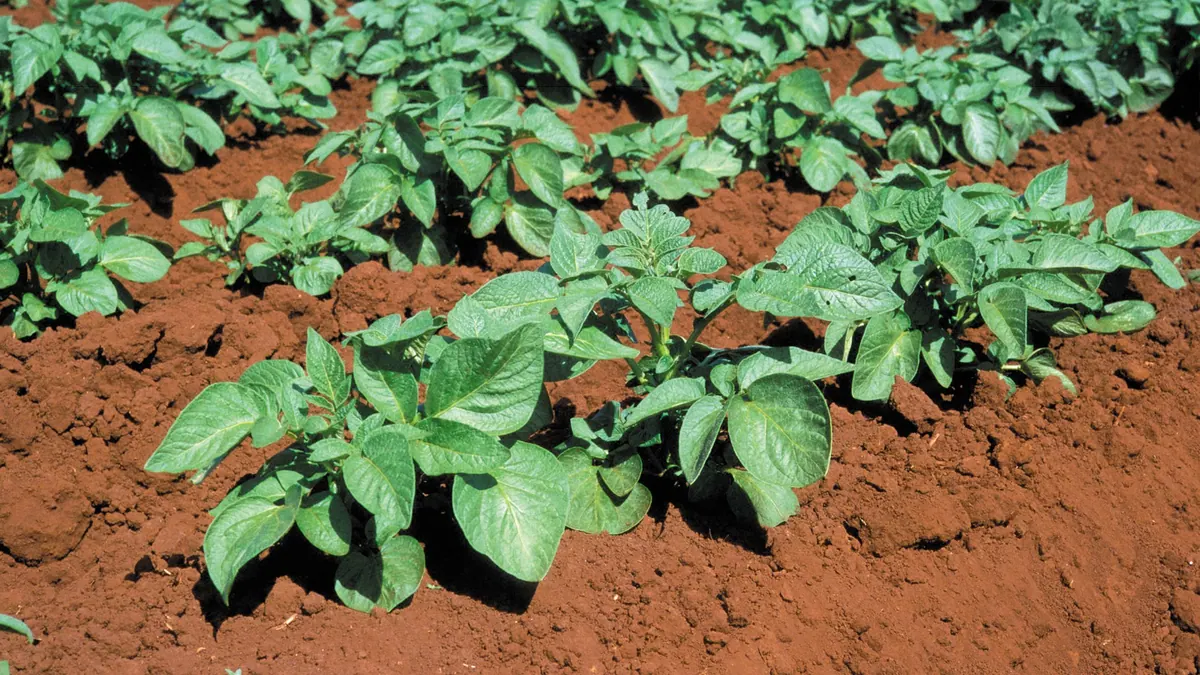
Potato haulm (leaves and stems) — BMP: 2 studi, media ponderata 217 m³ CH₄/t SV
217 m³ CH₄/t SV media ponderata da 2 studi
≈60 %
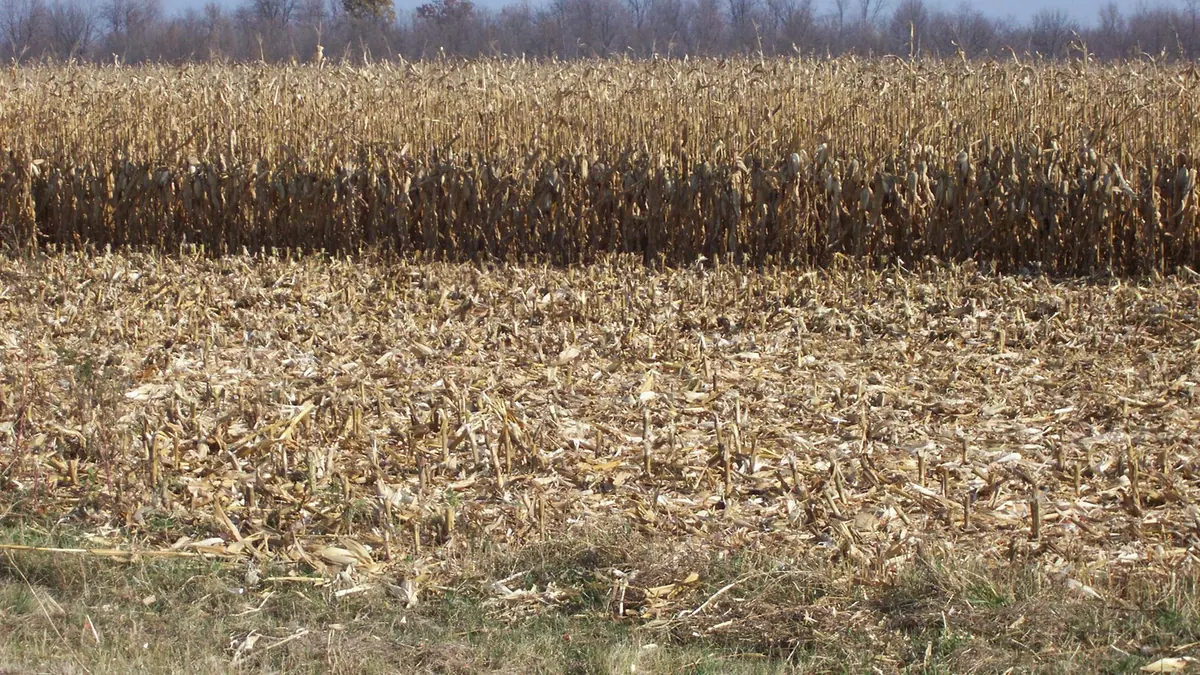
Maize stover — BMP: 10 studi, media ponderata 298 m³ CH₄/t SV
298 m³ CH₄/t SV media ponderata da 10 studi
buona — valutazione redazionale per gli impianti di biogas≈52 %
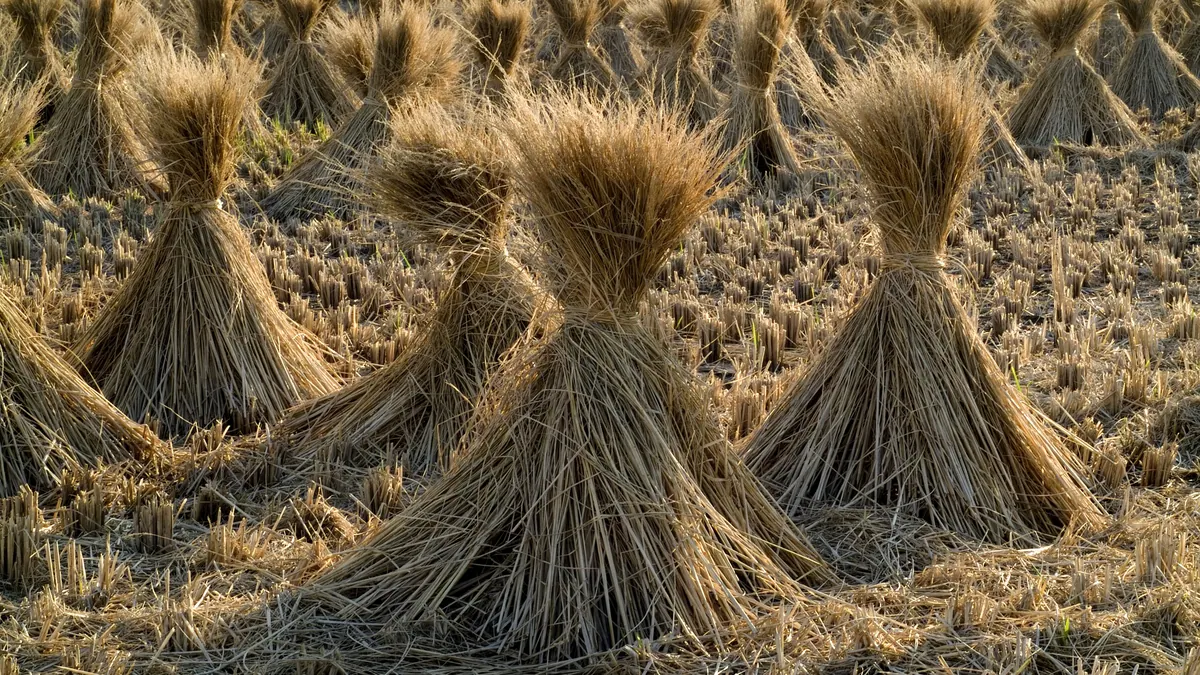
Rice straw — BMP: 12 studi, media ponderata 262 m³ CH₄/t SV
262 m³ CH₄/t SV media ponderata da 12 studi
buona — valutazione redazionale per gli impianti di biogas≈52 %
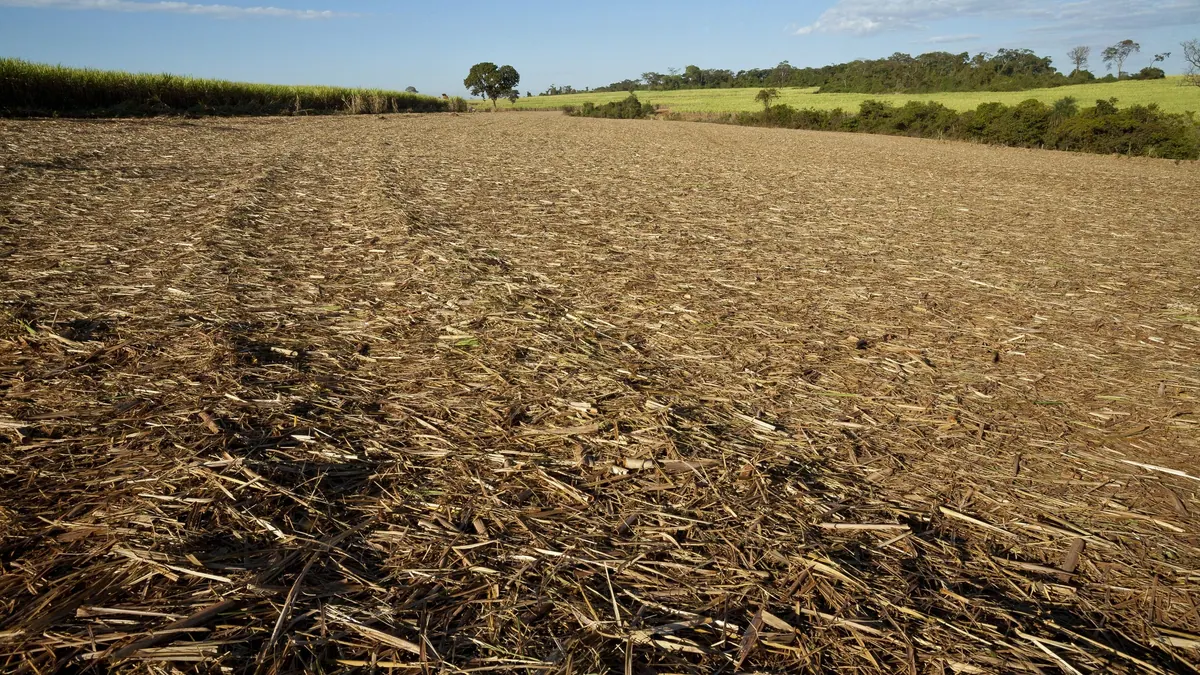
Sugarcane straw — BMP: 3 studi, media ponderata 300 m³ CH₄/t SV
300 m³ CH₄/t SV media ponderata da 3 studi
≈52 %