

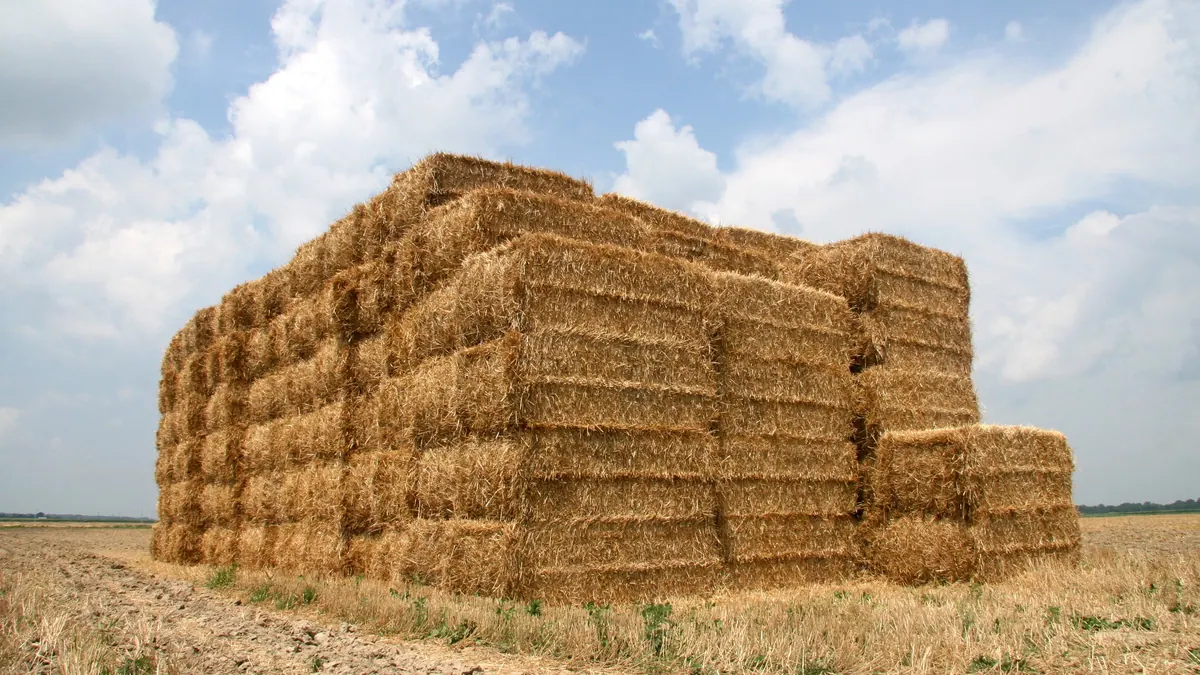
BMP testingStraws and crop residues
Wheat straw — BMP: 92 studies, weighted mean 261 m³ CH₄/t VS
Wheat straw is the best-studied straw in the compendium, including in inter-laboratory tests. Lignocellulosic, hard to degrade, with a high C/N ratio, it requires chopping.
rating: goodCH₄ ≈ 52 % (estimate)
Photo Huw Williams (Huwmanbeing) / Wikimedia Commons, public domain, source file; changes: cropping

- Weighted mean
- 261m³ CH₄/t VS
- Range
- 162–490m³ CH₄/t VS
- Records
- 92studies
- Publications
- 17sources
- Temperatures
- 35 °C, 37 °C, 38 °C, 40 °Cof the test
Methane in biogas
Low methane content · ≈ 5.2 kWh/m³ of biogas
estimate from the substrate type The collected studies contain no measurement. The interval follows from the approximate composition (protein from total nitrogen (N 0.7 % DM × 6.25)) and the yields of compound groups according to FNR.
Rating for biogas plants
good — editorial rating for biogas plantsStable, usually accepted without a fee
Potential per tonne of fresh matter: very high (218 m³ CH₄/t); no particular threats to stability. Handling costs: fibres, floating layer, slow degradation.
Why? Rating factors
Potential per tonne +3
- +3potential 218 m³ CH₄/t fresh matter (BMP 261 × DM 92 % × VS 90.6 %)
Process stability 0
- 0no factors
Handling and costs −1
- −0.5fibres, floating layer — shredding and intensive mixing
- −0.5slow degradation — long retention time
Total points: 2 · thresholds: ≥ 2.5 very good, ≥ 1 good, below — neutral; negative with cumulative process risk.
Add to the co-digestion calculator CSV data
BMP curves from 92 studies
Weighted mean Individual records
Dashed lines are a model curve (first-order kinetics, B(t) = B₀·(1 − e−kt)); the end point comes from the publication. Solid lines are measurements (67).
Cumulative methane production over the test [m³ CH₄/t VS]. The thick line is the weighted mean of all records (261); dots mark the end values given in the publications. Point at the chart to read values; click a legend item to hide or show a record.
Show the remaining records in the legend (80)
Records and sources
Download CSV| Source | BMP m³ CH₄/t VS | Temperature | Sample | Curve |
|---|---|---|---|---|
| Hafner et al. (2022) · lab. 1 · test 273 DOI | 178 | — · mesophilic | SD sample of the interlaboratory programme (SMP on day 30) (orig.: “Wheat straw, SD sample”) | measurement (31 pts) |
| Hafner et al. (2022) · lab. 16 · test 235 DOI | 178 | — · mesophilic | SD sample of the interlaboratory programme (SMP on day 30) (orig.: “Wheat straw, SD sample”) | measurement (31 pts) |
| Hafner et al. (2022) · lab. 15 · test 268 DOI | 199 | — · mesophilic | SD sample of the interlaboratory programme (SMP on day 30) (orig.: “Wheat straw, SD sample”) | measurement (31 pts) |
| Hafner et al. (2022) · lab. 15 · test 217 DOI | 214 | — · mesophilic | SD sample of the interlaboratory programme (SMP on day 30) (orig.: “Wheat straw, SD sample”) | measurement (31 pts) |
| Hafner et al. (2022) · lab. 18 · test 242 DOI | 222 | — · mesophilic | SD sample of the interlaboratory programme (SMP on day 30) (orig.: “Wheat straw, SD sample”) | measurement (31 pts) |
| Hafner et al. (2022) · lab. 1 · test 253 DOI | 226 | — · mesophilic | SD sample of the interlaboratory programme (SMP on day 30) (orig.: “Wheat straw, SD sample”) | measurement (31 pts) |
| Hafner et al. (2022) · lab. 31 · test 224 DOI | 227 | — · mesophilic | SD sample of the interlaboratory programme (SMP on day 30) (orig.: “Wheat straw, SD sample”) | measurement (31 pts) |
| Hafner et al. (2022) · lab. 35 · test 216 DOI | 232 | — · mesophilic | SD sample of the interlaboratory programme (SMP on day 30) (orig.: “Wheat straw, SD sample”) | measurement (31 pts) |
| Hafner et al. (2022) · lab. 18 · test 258 DOI | 232 | — · mesophilic | SD sample of the interlaboratory programme (SMP on day 30) (orig.: “Wheat straw, SD sample”) | measurement (31 pts) |
| Hafner et al. (2022) · lab. 2 · test 244 DOI | 238 | — · mesophilic | SD sample of the interlaboratory programme (SMP on day 30) (orig.: “Wheat straw, SD sample”) | measurement (31 pts) |
| Hafner et al. (2022) · lab. 21 · test 255 DOI | 243 | — · mesophilic | SD sample of the interlaboratory programme (SMP on day 30) (orig.: “Wheat straw, SD sample”) | measurement (31 pts) |
| Hafner et al. (2022) · lab. 31 · test 233 DOI | 244 | — · mesophilic | SD sample of the interlaboratory programme (SMP on day 30) (orig.: “Wheat straw, SD sample”) | measurement (31 pts) |
| Hafner et al. (2022) · lab. 21 · test 263 DOI | 247 | — · mesophilic | SD sample of the interlaboratory programme (SMP on day 30) (orig.: “Wheat straw, SD sample”) | measurement (31 pts) |
| Hafner et al. (2022) · lab. 9 · test 214 DOI | 247 | — · mesophilic | SD sample of the interlaboratory programme (SMP on day 30) (orig.: “Wheat straw, SD sample”) | measurement (31 pts) |
| Hafner et al. (2022) · lab. 39 · test 220 DOI | 249 | — · mesophilic | SD sample of the interlaboratory programme (SMP on day 30) (orig.: “Wheat straw, SD sample”) | measurement (31 pts) |
| Hafner et al. (2022) · lab. 11 · test 202 DOI | 249 | — · mesophilic | SD sample of the interlaboratory programme (SMP on day 30) (orig.: “Wheat straw, SD sample”) | measurement (31 pts) |
| Hafner et al. (2022) · lab. 10 · test 249 DOI | 250 | — · mesophilic | SD sample of the interlaboratory programme (SMP on day 30) (orig.: “Wheat straw, SD sample”) | measurement (31 pts) |
| Hafner et al. (2022) · lab. 31 · test 245 DOI | 253 | — · mesophilic | SD sample of the interlaboratory programme (SMP on day 30) (orig.: “Wheat straw, SD sample”) | measurement (31 pts) |
| Hafner et al. (2022) · lab. 37 · test 208 DOI | 253 | — · mesophilic | SD sample of the interlaboratory programme (SMP on day 30) (orig.: “Wheat straw, SD sample”) | measurement (31 pts) |
| Hafner et al. (2022) · lab. 39 · test 264 DOI | 254 | — · mesophilic | SD sample of the interlaboratory programme (SMP on day 30) (orig.: “Wheat straw, SD sample”) | measurement (31 pts) |
| Hafner et al. (2022) · lab. 8 · test 219 DOI | 254 | — · mesophilic | SD sample of the interlaboratory programme (SMP on day 30) (orig.: “Wheat straw, SD sample”) | measurement (31 pts) |
| Hafner et al. (2022) · lab. 35 · test 222 DOI | 258 | — · mesophilic | SD sample of the interlaboratory programme (SMP on day 30) (orig.: “Wheat straw, SD sample”) | measurement (31 pts) |
| Hafner et al. (2022) · lab. 13 · test 262 DOI | 264 | — · mesophilic | SD sample of the interlaboratory programme (SMP on day 30) (orig.: “Wheat straw, SD sample”) | measurement (31 pts) |
| Hafner et al. (2022) · lab. 34 · test 254 DOI | 266 | — · mesophilic | SD sample of the interlaboratory programme (SMP on day 30) (orig.: “Wheat straw, SD sample”) | measurement (31 pts) |
| Hafner et al. (2022) · lab. 3 · test 257 DOI | 266 | — · mesophilic | SD sample of the interlaboratory programme (SMP on day 30) (orig.: “Wheat straw, SD sample”) | measurement (31 pts) |
| Hafner et al. (2022) · lab. 5 · test 259 DOI | 269 | — · mesophilic | SD sample of the interlaboratory programme (SMP on day 30) (orig.: “Wheat straw, SD sample”) | measurement (31 pts) |
| Hafner et al. (2022) · lab. 3 · test 228 DOI | 270 | — · mesophilic | SD sample of the interlaboratory programme (SMP on day 30) (orig.: “Wheat straw, SD sample”) | measurement (31 pts) |
| Hafner et al. (2022) · lab. 32 · test 203 DOI | 270 | — · mesophilic | SD sample of the interlaboratory programme (SMP on day 30) (orig.: “Wheat straw, SD sample”) | measurement (31 pts) |
| Hafner et al. (2022) · lab. 20 · test 266 DOI | 272 | — · mesophilic | SD sample of the interlaboratory programme (SMP on day 30) (orig.: “Wheat straw, SD sample”) | measurement (31 pts) |
| Hafner et al. (2022) · lab. 39 · test 274 DOI | 272 | — · mesophilic | SD sample of the interlaboratory programme (SMP on day 30) (orig.: “Wheat straw, SD sample”) | measurement (31 pts) |
| Hafner et al. (2022) · lab. 25 · test 234 DOI | 272 | — · mesophilic | SD sample of the interlaboratory programme (SMP on day 30) (orig.: “Wheat straw, SD sample”) | measurement (31 pts) |
| Hafner et al. (2022) · lab. 29 · test 237 DOI | 272 | — · mesophilic | SD sample of the interlaboratory programme (SMP on day 30) (orig.: “Wheat straw, SD sample”) | measurement (31 pts) |
| Hafner et al. (2022) · lab. 38 · test 223 DOI | 273 | — · mesophilic | SD sample of the interlaboratory programme (SMP on day 30) (orig.: “Wheat straw, SD sample”) | measurement (31 pts) |
| Hafner et al. (2022) · lab. 8 · test 270 DOI | 274 | — · mesophilic | SD sample of the interlaboratory programme (SMP on day 30) (orig.: “Wheat straw, SD sample”) | measurement (31 pts) |
| Hafner et al. (2022) · lab. 11 · test 252 DOI | 275 | — · mesophilic | SD sample of the interlaboratory programme (SMP on day 30) (orig.: “Wheat straw, SD sample”) | measurement (31 pts) |
| Hafner et al. (2022) · lab. 36 · test 215 DOI | 275 | — · mesophilic | SD sample of the interlaboratory programme (SMP on day 30) (orig.: “Wheat straw, SD sample”) | measurement (31 pts) |
| Hafner et al. (2022) · lab. 3 · test 265 DOI | 278 | — · mesophilic | SD sample of the interlaboratory programme (SMP on day 30) (orig.: “Wheat straw, SD sample”) | measurement (31 pts) |
| Hafner et al. (2022) · lab. 36 · test 232 DOI | 280 | — · mesophilic | SD sample of the interlaboratory programme (SMP on day 30) (orig.: “Wheat straw, SD sample”) | measurement (31 pts) |
| Hafner et al. (2022) · lab. 4 · test 205 DOI | 282 | — · mesophilic | SD sample of the interlaboratory programme (SMP on day 30) (orig.: “Wheat straw, SD sample”) | measurement (31 pts) |
| Hafner et al. (2022) · lab. 30 · test 271 DOI | 283 | — · mesophilic | SD sample of the interlaboratory programme (SMP on day 30) (orig.: “Wheat straw, SD sample”) | measurement (31 pts) |
| Hafner et al. (2022) · lab. 37 · test 226 DOI | 283 | — · mesophilic | SD sample of the interlaboratory programme (SMP on day 30) (orig.: “Wheat straw, SD sample”) | measurement (31 pts) |
| Hafner et al. (2022) · lab. 19 · test 225 DOI | 283 | — · mesophilic | SD sample of the interlaboratory programme (SMP on day 30) (orig.: “Wheat straw, SD sample”) | measurement (31 pts) |
| Hafner et al. (2022) · lab. 29 · test 238 DOI | 285 | — · mesophilic | SD sample of the interlaboratory programme (SMP on day 30) (orig.: “Wheat straw, SD sample”) | measurement (31 pts) |
| Hafner et al. (2022) · lab. 14 · test 230 DOI | 288 | — · mesophilic | SD sample of the interlaboratory programme (SMP on day 30) (orig.: “Wheat straw, SD sample”) | measurement (31 pts) |
| Hafner et al. (2022) · lab. 39 · test 211 DOI | 288 | — · mesophilic | SD sample of the interlaboratory programme (SMP on day 30) (orig.: “Wheat straw, SD sample”) | measurement (31 pts) |
| Hafner et al. (2022) · lab. 19 · test 272 DOI | 290 | — · mesophilic | SD sample of the interlaboratory programme (SMP on day 30) (orig.: “Wheat straw, SD sample”) | measurement (31 pts) |
| Hafner et al. (2022) · lab. 37 · test 207 DOI | 291 | — · mesophilic | SD sample of the interlaboratory programme (SMP on day 30) (orig.: “Wheat straw, SD sample”) | measurement (31 pts) |
| Hafner et al. (2022) · lab. 40 · test 260 DOI | 293 | — · mesophilic | SD sample of the interlaboratory programme (SMP on day 30) (orig.: “Wheat straw, SD sample”) | measurement (31 pts) |
| Hafner et al. (2022) · lab. 12 · test 267 DOI | 293 | — · mesophilic | SD sample of the interlaboratory programme (SMP on day 30) (orig.: “Wheat straw, SD sample”) | measurement (31 pts) |
| Hafner et al. (2022) · lab. 10 · test 246 DOI | 296 | — · mesophilic | SD sample of the interlaboratory programme (SMP on day 30) (orig.: “Wheat straw, SD sample”) | measurement (31 pts) |
| Hafner et al. (2022) · lab. 27 · test 212 DOI | 297 | — · mesophilic | SD sample of the interlaboratory programme (SMP on day 30) (orig.: “Wheat straw, SD sample”) | measurement (31 pts) |
| Hafner et al. (2022) · lab. 24 · test 206 DOI | 299 | — · mesophilic | SD sample of the interlaboratory programme (SMP on day 30) (orig.: “Wheat straw, SD sample”) | measurement (31 pts) |
| Hafner et al. (2022) · lab. 24 · test 221 DOI | 304 | — · mesophilic | SD sample of the interlaboratory programme (SMP on day 30) (orig.: “Wheat straw, SD sample”) | measurement (31 pts) |
| Hafner et al. (2022) · lab. 13 · test 236 DOI | 305 | — · mesophilic | SD sample of the interlaboratory programme (SMP on day 30) (orig.: “Wheat straw, SD sample”) | measurement (31 pts) |
| Hafner et al. (2022) · lab. 14 · test 240 DOI | 490 | — · mesophilic | SD sample of the interlaboratory programme (SMP on day 30) (orig.: “Wheat straw, SD sample”) | measurement (31 pts) |
| Hafner et al. (2026) · lab. E27 DOI | 220 | — · mesophilic | Wheat straw | measurement (31 pts) |
| Hafner et al. (2026) · lab. E20 DOI | 247 | — · mesophilic | Wheat straw | measurement (31 pts) |
| Hafner et al. (2026) · lab. E18 DOI | 254 | — · mesophilic | Wheat straw | measurement (31 pts) |
| Hafner et al. (2026) · lab. R04 DOI | 264 | — · mesophilic | Wheat straw | measurement (31 pts) |
| Hafner et al. (2026) · lab. E08 DOI | 266 | — · mesophilic | Wheat straw | measurement (31 pts) |
| Hafner et al. (2026) · lab. E11 DOI | 270 | — · mesophilic | Wheat straw | measurement (31 pts) |
| Hafner et al. (2026) · lab. R02 DOI | 274 | — · mesophilic | Wheat straw | measurement (31 pts) |
| Hafner et al. (2026) · lab. R06 DOI | 289 | — · mesophilic | Wheat straw | measurement (31 pts) |
| Hafner et al. (2026) · lab. E13 DOI | 300 | — · mesophilic | Wheat straw | measurement (31 pts) |
| Hafner et al. (2026) · lab. R01 DOI | 308 | — · mesophilic | Wheat straw | measurement (31 pts) |
| Hafner et al. (2026) · lab. R05 DOI | 341 | — · mesophilic | Wheat straw | measurement (31 pts) |
| Hafner et al. (2026) · lab. E24 DOI | 410 | — · mesophilic | Wheat straw | measurement (31 pts) |
| Prajapati et al. (2018) DOI | 225 | — | wheat straw (WS) | end point (model curve) |
| ÖZBAYRAM i İNCE (2021) DOI | 164 | 37 °C · mesophilic | wheat straw | end point (model curve) |
| Amon et al. (2007) DOI | 189 | 38 °C · mesophilic | winter Wheat (Straw) | end point (model curve) |
| Shen et al. (2019) DOI | 204 | — | Wheat straw (Triticum aestivum) | end point (model curve) |
| Sharma et al. (1988) · 1 DOI | 162 | 37 °C · mesophilic | Wheat · pretreatment: Material were first dried in the sun and then in an oven at 90oC | end point (model curve) |
| Sharma et al. (1988) · 2 DOI | 227 | 37 °C · mesophilic | Wheat · pretreatment: Material were first dried in the sun and then in an oven at 90oC | end point (model curve) |
| Sharma et al. (1988) · 3 DOI | 241 | 37 °C · mesophilic | Wheat · pretreatment: Material were first dried in the sun and then in an oven at 90oC | end point (model curve) |
| Sharma et al. (1988) · 4 DOI | 248 | 37 °C · mesophilic | Wheat · pretreatment: Material were first dried in the sun and then in an oven at 90oC | end point (model curve) |
| Sharma et al. (1988) · 5 DOI | 249 | 37 °C · mesophilic | Wheat · pretreatment: Material were first dried in the sun and then in an oven at 90oC | end point (model curve) |
| Tong et al. (1990) · 1 DOI | 302 | 35 °C · mesophilic | Wheat straw 1 · pretreatment: air dried | end point (model curve) |
| Tong et al. (1990) · 2 DOI | 333 | 35 °C · mesophilic | Wheat straw 2 · pretreatment: air dried | end point (model curve) |
| Klavins et al. (2020) DOI | 246 | 38 °C · mesophilic | Wheat straw (shredded, milled) | end point (model curve) |
| Ferreira et al. (2014) · 1 DOI | 232 | 35 °C · mesophilic | wheat straw · pretreatment: particle size reduction/sample preparation (MY-D: physical treatment) | end point (model curve) |
| Ferreira et al. (2014) · 2 DOI | 239 | 35 °C · mesophilic | wheat straw · pretreatment: particle size reduction/sample preparation (MY-D: physical treatment) | end point (model curve) |
| Ferreira et al. (2014) · 3 DOI | 245 | 35 °C · mesophilic | wheat straw · pretreatment: particle size reduction/sample preparation (MY-D: physical treatment) | end point (model curve) |
| Kouas et al. (2017) DOI | 201 | 35 °C · mesophilic | wheat straw | end point (model curve) |
| Li et al. (2013) DOI | 245 | 37 °C · mesophilic | Wheat Straw | end point (model curve) |
| Menardo et al. (2012) · 1 DOI | 182 | 40 °C · mesophilic | Wheat Straw | end point (model curve) |
| Menardo et al. (2012) · 2 DOI | 285 | 40 °C · mesophilic | Wheat Straw · pretreatment: particle size reduction/sample preparation (MY-D: physical treatment) | end point (model curve) |
| Menardo et al. (2012) · 3 DOI | 334 | 40 °C · mesophilic | Wheat Straw · pretreatment: particle size reduction/sample preparation (MY-D: physical treatment) | end point (model curve) |
| Chevalier et al. (2023) DOI | 249 | — | Wheat straw (WS), milled control (CM) | end point (model curve) |
| Naji et al. (2023) DOI | 176 | — | Wheat straw (WS) | end point (model curve) |
| Meneses Quelal i Pilamunga Hurtado (2023) · 1 DOI | 265 | — | Wheat straw (RR:WS 0:4), I:S 1:1 | end point (model curve) |
| Meneses Quelal i Pilamunga Hurtado (2023) · 2 DOI | 275 | — | Wheat straw (RR:WS 0:4), I:S 2:1 | end point (model curve) |
| Sambusiti et al. (2013) DOI | 204 | 35 °C · mesophilic | Wheat Straw | end point (model curve) |
| Weighted mean | 261 | arithmetic mean 261, SD 47 | ||
Typical composition
- Dry matter (DM)
- 92% (range 86.6–94)
- Volatile solids (VS)
- 90.6 % DM (range 86.1–95.7)
- Nitrogen
- 0.7 % DM
- C/N ratio
- 66
Median and range of the determinations reported in the publications behind this substrate's BMP records (read from: BCBPD, CROPGEN D4, MY-D); dry matter: 4 determinations, volatile solids: 7 determinations. C/N was calculated as the ratio of C and N content (% DM) from the same source. Samples were tested dried/air-dry – the DM refers to the material in the test, not to fresh material.
Sources: Shen et al. (2019); Sharma et al. (1988); Tong et al. (1990); Li et al. (2013); Menardo et al. (2012); Sambusiti et al. (2013).
The composition of the raw material varies between batches — for plant calculations use an analysis of your own sample. The calculator inserts typical values automatically.
Process properties
Advantages
- Methane potential in the database: weighted mean 261 m³ CH₄/t VS (median 264; range 162–490; 92 records from 17 sources).
- The best-studied straw in the dataset (92 records); available in large quantities in Poland.
- Size reduction, alkaline treatments and extrusion improve the result (Ferreira 2014, Sambusiti 2013, Chevalier 2023).
- Co-digestion with slaughterhouse residues (RR:WS 3:1) gave 289 m³ CH₄/t VS and 66.9% biodegradability (Meneses Quelal 2023).
Drawbacks and risks
- Lignin limits conversion; long HRT; floating crust (review by Hendriks 2009).
- In a CSTR with "artificial slurry" a deficiency of nickel and tungsten was found in the wheat straw suspension, which affected the methane yield — mono-digestion of straw requires trace element monitoring (Arthur 2022).
Co-digestion — what to combine it with, what to watch out for
- combines well
group: Animal excreta (slurry, manure, poultry litter)
Manure/slurry supplies N and buffer; straw stabilises the structure.[1][2]
- combines well
substrates: protein-rich — e.g. Food waste, Municipal sewage sludge (mixed), Poultry manure, Organic fraction of municipal solid waste, Grass clippings
Slaughterhouse waste supplies N, straw supplies carbon (Meneses Quelal 2023).[3]
- caution
substrates: easily degradable — e.g. Maize silage (whole crop), Food waste, Sorghum, whole crop, Whey, Beet leaves and tops
Readily degradable co-substrates without a buffer will accelerate acidification, and straw will not offset it.[4]
Dosing
The sources do not give a share limit. In the only co-digestion experiment in the dataset (Meneses Quelal 2023) the best result was obtained at an inoculum-to-substrate ratio of 1:2 (RR:WS 3:1) — this is the optimum of the mix in a batch test, not a maximum for a plant.
Practical requirements
- Shred: shredding increases the surface available for degradation and speeds it up, but does not necessarily raise the final gas yield (FNR 2010, Ch. 3 “Triturado”).
- Control floating crust and sediment: when solids are fed directly into the digester, the risk of their formation depends on the substrate (FNR 2010, Ch. 3).
- Size reduction (Ferreira 2014: effect of particle size)
Sources of the process data
- Saha, C.K.; Nime, J.; Khatun, M.L.; Sharna, T.H.; Alam, M.M. (2025) Rice straw co-digestion potential with cow dung and poultry droppings for maximizing biogas production in Bangladesh. Heliyon 11(4), e42687
- Weiland, P. (2010) Biogas production: current state and perspectives. Applied Microbiology and Biotechnology
- Meneses Quelal, O.; Pilamunga Hurtado, D. (2023) Anaerobic Fermentation of Slaughterhouse Waste—Codigestion with Wheat Straw to Determine Methane Biochemical Potential and Kinetic Analysis. Fermentation 9(8), 726
- Chen, Y.; Cheng, J.J.; Creamer, K.S. (2008) Inhibition of anaerobic digestion process: A review. Bioresource Technology
- Prajapati, K.K.; Pareek, N.; Vivekanand, V. (2018) Pretreatment and Multi-Feed Anaerobic Co-digestion of Agro-Industrial Residual Biomass for Improved Biomethanation and Kinetic Analysis. Frontiers in Energy Research 6, 111
- ÖZBAYRAM, E.G.; İNCE, O. (2021) Comparative Assessment of Biogas Production Potential of the Most Abundant Agro-residues in Turkey. Deu Muhendislik Fakultesi Fen ve Muhendislik 23(68), 547–555
- Amon, T.; Amon, B.; Kryvoruchko, V.; Machmüller, A.; Hopfner-Sixt, K.; Bodiroza, V.; Hrbek, R.; Friedel, J.; Pötsch, E.; Wagentristl, H.; Schreiner, M.; Zollitsch, W. (2007) Methane production through anaerobic digestion of various energy crops grown in sustainable crop rotations. Bioresource Technology 98(17), 3204–3212
- Arthur, R. et al. (2022) Mesophilic and Thermophilic Anaerobic Digestion of Wheat Straw in a CSTR System with Synthetic Manure: Impact of Nickel and Tungsten on Methane Yields, Cell Count, and Microbiome. Bioengineering
- Shen, J.; Zheng, Q.; Zhang, R.; Chen, C.; Liu, G. (2019) Co-pretreatment of wheat straw by potassium hydroxide and calcium hydroxide: Methane production, economics, and energy potential analysis. Journal of Environmental Management 236, 720–726
- Sharma, S.K.; Mishra, I.; Sharma, M.; Saini, J. (1988) Effect of particle size on biogas generation from biomass residues. Biomass 17(4), 251–263
- Tong, X.; Smith, L.H.; McCarty, P.L. (1990) Methane fermentation of selected lignocellulosic materials. Biomass 21(4), 239–255
- Klavins, A.; Dubrovskis, V.; Plume, I. (2020) Effectiveness of usage of straw and oak leave pellets for biogas production. Engineering for Rural Development 19
- Ferreira, L.; Nilsen, P.; Fdz-Polanco, F.; Pérez-Elvira, S. (2014) Biomethane potential of wheat straw: Influence of particle size, water impregnation and thermal hydrolysis. Chemical Engineering Journal 242, 254–259
- Hafner, S.D.; Astals, S.; Holliger, C.; Koch, K.; Nielsen, L.; Refsahl, L.; Weinrich, S. (2022) Assessing the value of kinetic results from biochemical methane potential tests: Reproducibility from a large inter-laboratory study. Cleaner Chemical Engineering 4, 100065
- Hafner, S.D.; Leca, E.; Sambusiti, C.; Astals, S.; Azam, O.; Koch, K.; Liu, J.; Møller, H.B.; Nistor, M.; Olaya-Rincon, M.; Peyrelasse, C.; Ward, A.J.; Zennaro, B.; Monlau, F. (2026) Reliable biochemical methane potential testing: insights and recommendations from global interlaboratory study. Bioresource Technology 446, 134136
- Hendriks, A.T.W.M.; Zeeman, G. (2009) Pretreatments to enhance the digestibility of lignocellulosic biomass. Bioresource Technology
- Kouas, M.; Torrijos, M.; Sousbie, P.; Steyer, J.P.; Sayadi, S.; Harmand, J. (2017) Robust assessment of both biochemical methane potential and degradation kinetics of solid residues in successive batches. Waste Management 70, 59–70
- Li, Y.; Zhang, R.; Liu, G.; Chen, C.; He, Y.; Liu, X. (2013) Comparison of methane production potential, biodegradability, and kinetics of different organic substrates. Bioresource Technology 149, 565–569
- Menardo, S.; Airoldi, G.; Balsari, P. (2012) The effect of particle size and thermal pre-treatment on the methane yield of four agricultural by-products. Bioresource Technology 104, 708–714
- Chevalier, A.; Evon, P.; Monlau, F.; Vandenbossche, V.; Sambusiti, C. (2023) Twin-Screw Extrusion Mechanical Pretreatment for Enhancing Biomethane Production from Agro-Industrial, Agricultural and Catch Crop Biomasses. Waste 1(2), 497–514
- Naji, A.; Rechdaoui, S.G.; Jabagi, E.; Lacroix, C.; Azimi, S.; Rocher, V. (2023) Horse Manure and Lignocellulosic Biomass Characterization as Methane Production Substrates. Fermentation 9(6), 580
- Sambusiti, C.; Monlau, F.; Ficara, E.; Carrère, H.; Malpei, F. (2013) A comparison of different pre-treatments to increase methane production from two agricultural substrates. Applied Energy 104, 62–70
- FNR (2010). Guía sobre el Biogás – Desde la producción hasta el uso (hiszp. wydanie „Leitfaden Biogas”, GIZ 2013)
The co-digestion calculator will assess a specific mixture containing this substrate.
What it is and where it comes from
Wheat straw is the stalks left after the threshing of wheat. It is the largest stream of cereal straw in Poland, because wheat is one of the main crops. The straw is baled and used as bedding, roughage and fuel; some is ploughed in to replenish organic matter in the soil. Use at biogas plants is possible, but limited by competition from other uses and by the costs of harvesting and logistics.
Properties relevant to digestion
Wheat straw is a lignocellulosic material with a high dry matter content and a very low protein content, so it has a wide C/N ratio. Lignin and the crystalline structure of cellulose limit the rate of hydrolysis, and the waxy surface of the stalks hinders wetting. The consequence is the need for a long retention time and the formation of scum. Chopping improves availability, and on an industrial scale pretreatments (thermal, chemical, enzymatic) are sometimes applied, which in this dataset are not included in the statistics. Straw requires supplementation with nitrogen and macronutrients, which is made easier by co-digestion with animal excreta.
How to read the spread of results
For wheat straw an exceptionally large number of measurements is available, including records from an inter-laboratory programme in which several dozen laboratories examined the same material. The spread between them shows the influence of methodology, such as inoculum, S/I ratio, the method of gas measurement and test length, and not the influence of the material itself. The remaining records come from studies in which different varieties, chopping and conditions were examined. Under the adopted weighting rule, the laboratories of the inter-laboratory programme together carry a large weight in the mean. The measured curves additionally make it possible to assess kinetics, and not only the end point.
In biogas plant practice
Wheat straw can supplement a mix based on slurry and manure, increasing the dry matter content and supplying fibre. Chopping, dry storage in bales and protection against contamination are necessary. Its share in the ration is limited by scum and mixing requirements. Before considering pretreatment it is worth calculating the energy and cost balance, because the benefit is often small relative to the outlay. The price of straw changes seasonally and depends on local demand for bedding.
Methodology in brief
BMP is the amount of methane obtained from volatile solids (VS) in a batch test, given in m³ CH₄ per tonne of VS (numerically the same as NmL CH₄/g VS in the publications) and converted to normal conditions (0 °C, 101.325 kPa). The weighted mean gives each publication a total weight of 1, split equally between its results for the substrate — a paper testing twenty varieties does not outweigh a paper with a single sample. In inter-laboratory programmes the unit is the laboratory (total weight 1), and within it the weight of a test grows with the number of bottles (replicates). Results after pretreatment (e.g. thermal, chemical, enzymatic) are shown separately and are not included in the mean.
Solid lines are curves measured in the tests. Where a publication gives only the final result, we draw a first-order kinetic model, B(t) = B₀·(1 − e−kt): only the end point comes from the publication, and the shape of the curve serves purely as visualisation — do not read the production on a particular day from it. For this substrate k = 0.136 d−1 was assumed (median of rate constants k reported in the sources and/or fitted to the mean measured curves).
The statistics describe the spread of published results — a descriptive compilation, not a meta-analysis or a guarantee of plant yield.
Results after pretreatment (12) — excluded from the mean
| Source | BMP m³ CH₄/t VS | Pretreatment | Sample |
|---|---|---|---|
| Menardo et al. (2012) | 295 | unspecified | Wheat Straw |
| Menardo et al. (2012) | 299 | unspecified | Wheat Straw |
| Sambusiti et al. (2013) | 291 | chemical-unspecified | Wheat Straw |
| Sambusiti et al. (2013) | 302 | chemical-unspecified | Wheat Straw |
| Gunaseelan (2004) | 341 | chemical-unspecified | Wheat Straw |
| Ferreira et al. (2014) | 291 | physical-unspecified | wheat straw |
| Ferreira et al. (2014) | 304 | physical-unspecified | wheat straw |
| Ferreira et al. (2014) | 301 | physical-unspecified | wheat straw |
| Ferreira et al. (2014) | 316 | unspecified | wheat straw |
| Ferreira et al. (2014) | 315 | unspecified | wheat straw |
| Ferreira et al. (2014) | 293 | unspecified | wheat straw |
| Ferreira et al. (2014) | 323 | unspecified | wheat straw |
Bibliography
- Hafner, S.D.; Astals, S.; Holliger, C.; Koch, K.; Nielsen, L.; Refsahl, L.; Weinrich, S. (2022). Assessing the value of kinetic results from biochemical methane potential tests: Reproducibility from a large inter-laboratory study. Cleaner Chemical Engineering 4, 100065. DOI: 10.1016/j.clce.2022.100065 DOI
- Hafner, S.D.; Leca, E.; Sambusiti, C.; Astals, S.; Azam, O.; Koch, K.; Liu, J.; Møller, H.B.; Nistor, M.; Olaya-Rincon, M.; Peyrelasse, C.; Ward, A.J.; Zennaro, B.; Monlau, F. (2026). Reliable biochemical methane potential testing: insights and recommendations from global interlaboratory study. Bioresource Technology 446, 134136. DOI: 10.1016/j.biortech.2026.134136 DOI
- Prajapati, K.K.; Pareek, N.; Vivekanand, V. (2018). Pretreatment and Multi-Feed Anaerobic Co-digestion of Agro-Industrial Residual Biomass for Improved Biomethanation and Kinetic Analysis. Frontiers in Energy Research 6, 111. DOI: 10.3389/fenrg.2018.00111 DOI
- ÖZBAYRAM, E.G.; İNCE, O. (2021). Comparative Assessment of Biogas Production Potential of the Most Abundant Agro-residues in Turkey. Deu Muhendislik Fakultesi Fen ve Muhendislik 23(68), 547–555. DOI: 10.21205/deufmd.2021236817 DOI
- Amon, T.; Amon, B.; Kryvoruchko, V.; Machmüller, A.; Hopfner-Sixt, K.; Bodiroza, V.; Hrbek, R.; Friedel, J.; Pötsch, E.; Wagentristl, H.; Schreiner, M.; Zollitsch, W. (2007). Methane production through anaerobic digestion of various energy crops grown in sustainable crop rotations. Bioresource Technology 98(17), 3204–3212. DOI: 10.1016/j.biortech.2006.07.007 DOI
- Shen, J.; Zheng, Q.; Zhang, R.; Chen, C.; Liu, G. (2019). Co-pretreatment of wheat straw by potassium hydroxide and calcium hydroxide: Methane production, economics, and energy potential analysis. Journal of Environmental Management 236, 720–726. DOI: 10.1016/j.jenvman.2019.01.046 DOI
- Sharma, S.K.; Mishra, I.; Sharma, M.; Saini, J. (1988). Effect of particle size on biogas generation from biomass residues. Biomass 17(4), 251–263. DOI: 10.1016/0144-4565(88)90107-2 DOI
- Tong, X.; Smith, L.H.; McCarty, P.L. (1990). Methane fermentation of selected lignocellulosic materials. Biomass 21(4), 239–255. DOI: 10.1016/0144-4565(90)90075-u DOI
- Klavins, A.; Dubrovskis, V.; Plume, I. (2020). Effectiveness of usage of straw and oak leave pellets for biogas production. Engineering for Rural Development 19. DOI: 10.22616/erdev.2020.19.tf529 DOI
- Ferreira, L.; Nilsen, P.; Fdz-Polanco, F.; Pérez-Elvira, S. (2014). Biomethane potential of wheat straw: Influence of particle size, water impregnation and thermal hydrolysis. Chemical Engineering Journal 242, 254–259. DOI: 10.1016/j.cej.2013.08.041 DOI
- Kouas, M.; Torrijos, M.; Sousbie, P.; Steyer, J.P.; Sayadi, S.; Harmand, J. (2017). Robust assessment of both biochemical methane potential and degradation kinetics of solid residues in successive batches. Waste Management 70, 59–70. DOI: 10.1016/j.wasman.2017.09.001 DOI
- Li, Y.; Zhang, R.; Liu, G.; Chen, C.; He, Y.; Liu, X. (2013). Comparison of methane production potential, biodegradability, and kinetics of different organic substrates. Bioresource Technology 149, 565–569. DOI: 10.1016/j.biortech.2013.09.063 DOI
- Menardo, S.; Airoldi, G.; Balsari, P. (2012). The effect of particle size and thermal pre-treatment on the methane yield of four agricultural by-products. Bioresource Technology 104, 708–714. DOI: 10.1016/j.biortech.2011.10.061 DOI
- Chevalier, A.; Evon, P.; Monlau, F.; Vandenbossche, V.; Sambusiti, C. (2023). Twin-Screw Extrusion Mechanical Pretreatment for Enhancing Biomethane Production from Agro-Industrial, Agricultural and Catch Crop Biomasses. Waste 1(2), 497–514. DOI: 10.3390/waste1020030 DOI
- Naji, A.; Rechdaoui, S.G.; Jabagi, E.; Lacroix, C.; Azimi, S.; Rocher, V. (2023). Horse Manure and Lignocellulosic Biomass Characterization as Methane Production Substrates. Fermentation 9(6), 580. DOI: 10.3390/fermentation9060580 DOI
- Meneses Quelal, O.; Pilamunga Hurtado, D. (2023). Anaerobic Fermentation of Slaughterhouse Waste—Codigestion with Wheat Straw to Determine Methane Biochemical Potential and Kinetic Analysis. Fermentation 9(8), 726. DOI: 10.3390/fermentation9080726 DOI
- Sambusiti, C.; Monlau, F.; Ficara, E.; Carrère, H.; Malpei, F. (2013). A comparison of different pre-treatments to increase methane production from two agricultural substrates. Applied Energy 104, 62–70. DOI: 10.1016/j.apenergy.2012.10.060 DOI
All sources of the site: bibliography.
Other substrates in the group “Straws and crop residues”
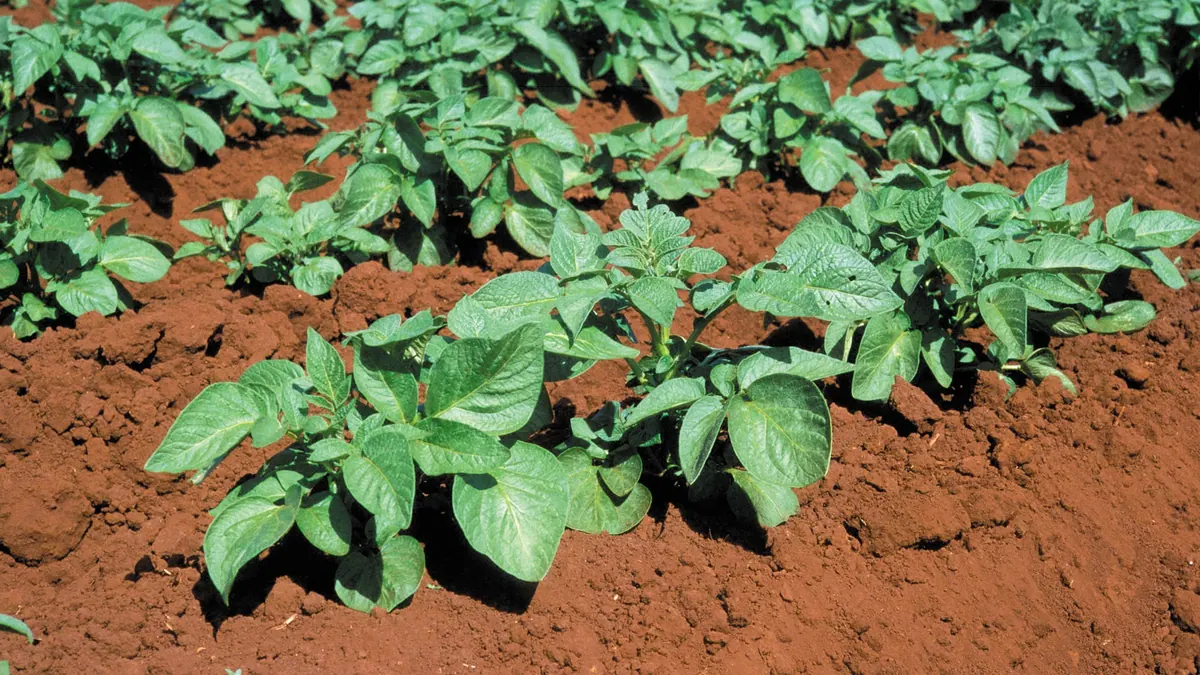
Potato haulm (leaves and stems) — BMP: 2 studies, weighted mean 217 m³ CH₄/t VS
217 m³ CH₄/t VS weighted mean from 2 studies
≈60 %
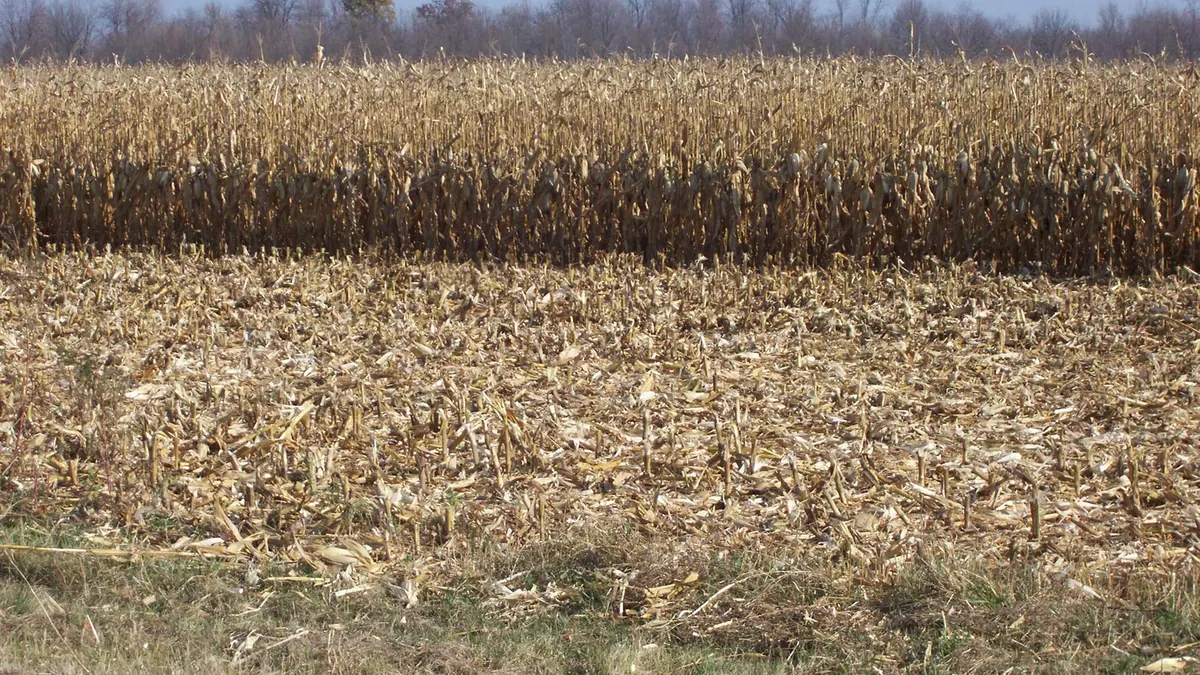
Maize stover — BMP: 10 studies, weighted mean 298 m³ CH₄/t VS
298 m³ CH₄/t VS weighted mean from 10 studies
good — editorial rating for biogas plants≈52 %
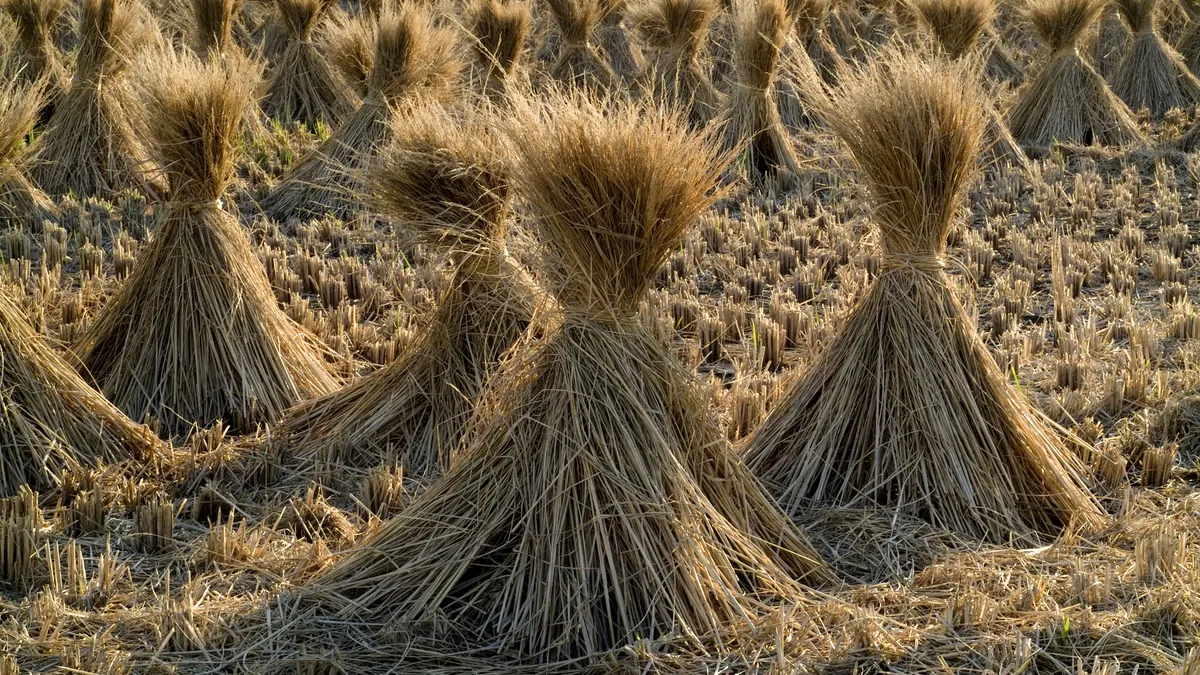
Rice straw — BMP: 12 studies, weighted mean 262 m³ CH₄/t VS
262 m³ CH₄/t VS weighted mean from 12 studies
good — editorial rating for biogas plants≈52 %
Sugarcane straw — BMP: 3 studies, weighted mean 300 m³ CH₄/t VS
300 m³ CH₄/t VS weighted mean from 3 studies
≈52 %