

BMP testingStraws and crop residuessingle study (2 samples)
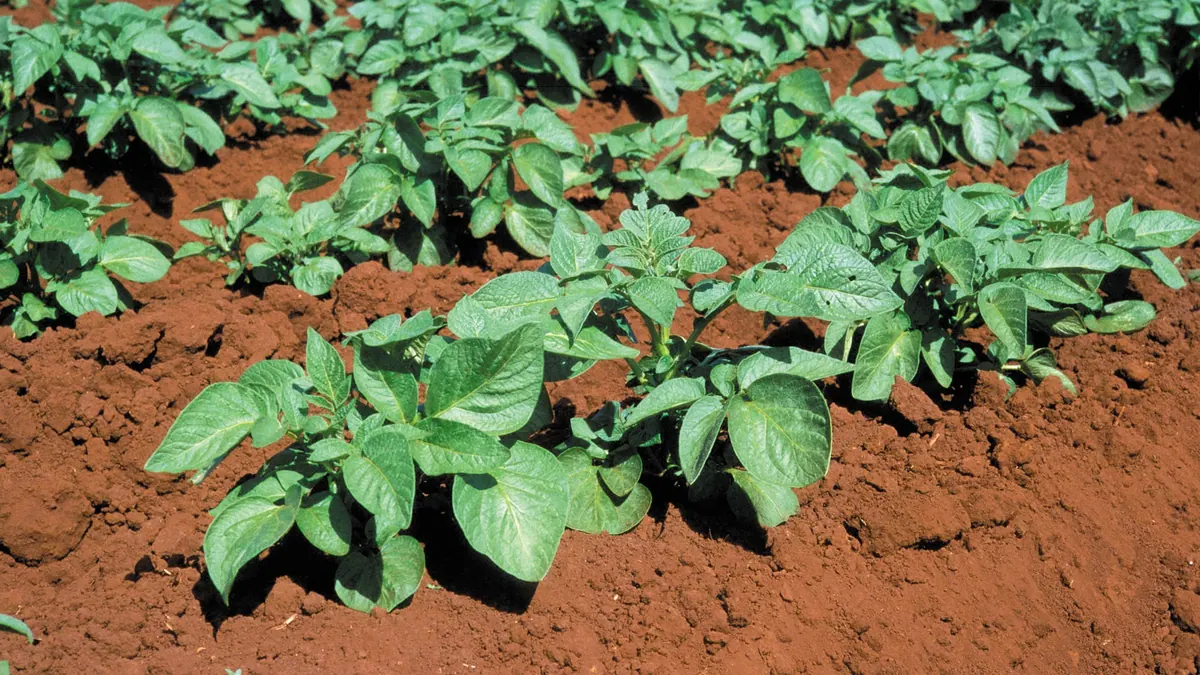
Potato haulm (leaves and stems) — BMP: 2 studies, weighted mean 217 m³ CH₄/t VS
Potato haulm consists of the leaves and stems left after the tubers are harvested, usually removed quickly in the field. In the dataset it is described by a single study with separate records for leaves and stems.
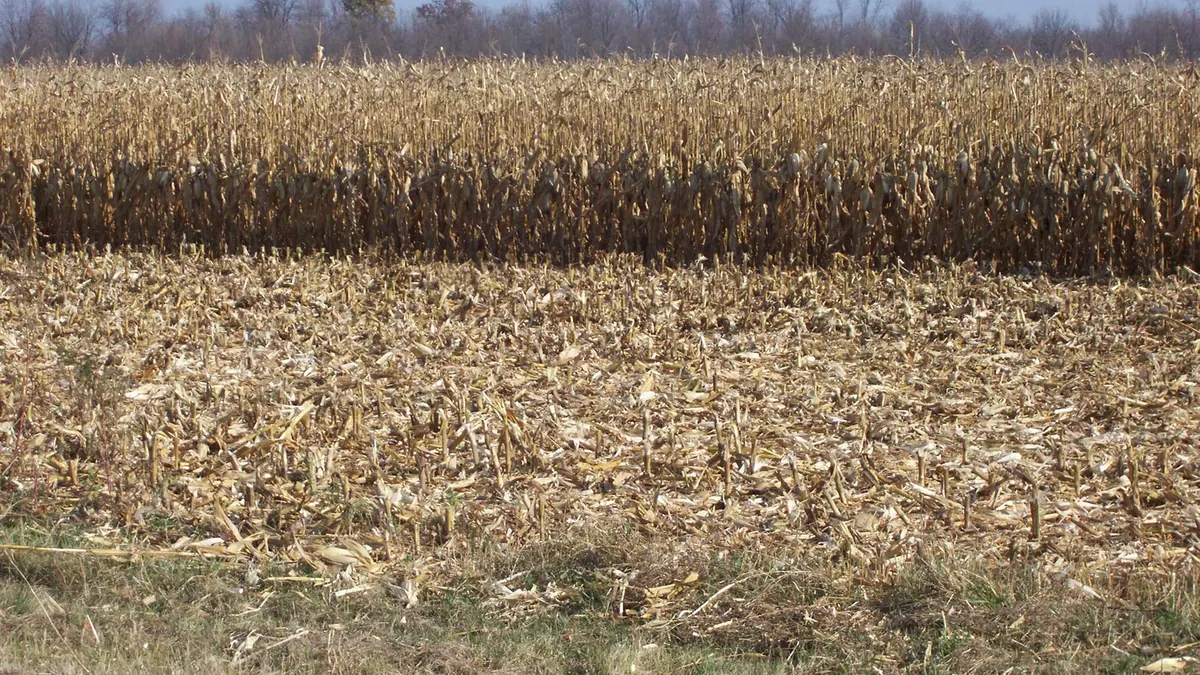
Photo Willem van Aken, CSIRO / Wikimedia Commons, licence CC BY 3.0, source file; changes: cropping

- Weighted mean
- 217m³ CH₄/t VS
- Range
- 177–256m³ CH₄/t VS
- Records
- 2single study (2 samples)
- Publications
- 1source
- Temperatures
- —of the test
Methane in biogas
Medium methane content · ≈ 6.0 kWh/m³ of biogas
estimate from the substrate type The collected studies contain no measurement. The interval follows from the approximate composition (protein from total nitrogen (N 5.6 % DM × 6.25)) and the yields of compound groups according to FNR.
Rating for biogas plants
not rated — editorial rating for biogas plants
Not rated: no dry matter or volatile solids in the data. We calculate the rating when the dry matter and volatile solids of the material are known.
Add to the co-digestion calculator CSV data
BMP curves from 2 studies
Weighted mean Individual records
Dashed lines are a model curve (first-order kinetics, B(t) = B₀·(1 − e−kt)); the end point comes from the publication. All curves are model curves.
Cumulative methane production over the test [m³ CH₄/t VS]. The thick line is the weighted mean of all records (217); dots mark the end values given in the publications. Point at the chart to read values; click a legend item to hide or show a record.
Records and sources
Download CSV| Source | BMP m³ CH₄/t VS | Temperature | Sample | Curve |
|---|---|---|---|---|
| Cai et al. (2019) · 1 DOI | 177 | — | Potato (Solanum tuberosum) – Stem | end point (model curve) |
| Cai et al. (2019) · 2 DOI | 256 | — | Potato (Solanum tuberosum) – Leaf | end point (model curve) |
| Weighted mean | 217 | arithmetic mean 217, SD 56 | ||
Typical composition
- Volatile solids (VS)
- 74.7 % DM (range 69.6–79.7)
- Nitrogen
- 5.6 % DM
- C/N ratio
- 6
Median and range of the determinations reported in the publications behind this substrate's BMP records (read from: BCBPD); dry matter: 0 determinations, volatile solids: 2 determinations. C/N was calculated as the ratio of C and N content (% DM) from the same source. No DM in the sources – the calculator has to ask for a value.
Sources: Cai et al. (2019).
The composition of the raw material varies between batches — for plant calculations use an analysis of your own sample. The calculator inserts typical values automatically.
Process properties
Low confidence: the description is based on general characteristics of the substrate group, not on studies of this material. Treat it as a hint to be verified.
Advantages
- Methane potential in the database: weighted mean 217 m³ CH₄/t VS (median 217; range 177-256; 2 records from 1 source).
Drawbacks and risks
- Spread of results in the database: standard deviation 56 at a mean of 217 m³ CH₄/t VS (2 records from 1 source).
Dosing
No source dose limits; treat as a poor, wet green additive.
Practical requirements
- Ensiling makes it possible to store seasonal biomass; properly ensiled plants (in the study maize, sorghum, forage rye, triticale) can be stored for up to a year without loss of methane production (Herrmann et al. 2011).
Sources of the process data
- Cai, F.; 1. Biomass Energy and Environmental Engineering Research Center, College of Chemical Engineering, Beijing University of Chemical Technology, Beijing 100029, China; Yan, H.; Zhang, R.; Liu, G.; Chen, C.; 2. Department of Biological and Agricultural Engineering, University of California, Davis, CA 95616, USA (2019) Prediction of methane production performances based on determination of organic components for different vegetable wastes. International Journal of Agricultural and Biological Engineering 12(3), 154–159
- Weiland, P. (2010) Biogas production: current state and perspectives. Applied Microbiology and Biotechnology
- Herrmann et al. (2011). Effects of ensiling, silage additives and storage period on methane formation of biogas crops. Bioresour. Technol.
The co-digestion calculator will assess a specific mixture containing this substrate.
What it is and where it comes from
Potato haulm is the above-ground part of the potato plant (Solanum tuberosum): the stems with their leaves. Before the tubers are harvested, the haulm is often destroyed chemically or mechanically, which makes lifting easier and limits tuber diseases. It usually stays in the field and decomposes there. The potato is an important crop in Poland, so the stream of this biomass is considerable, but collecting it in a condition suitable for digestion is difficult.
Properties relevant to digestion
Haulm has a high moisture content and a relatively low dry matter content; the leaves are readily digestible, whereas the stems are more fibrous. Compared with straws, the material has a lower C/N ratio and less lignin. After harvest it quickly undergoes aerobic decomposition, so ensiling is the suitable method of storage, preferably together with drier material. Because of plant protection requirements, one must bear in mind pesticide residues, the risk of spreading diseases (for example potato blight) and possible soil contamination. Solanaceous plants contain glycoalkaloids; their effect on digestion at typical shares is usually small, but it is a characteristic of this material.
How to read the spread of results
The dataset contains several records from one publication: stems and leaves separately. The difference between them reflects the effect of the fraction, not measurement uncertainty. In real batches, the ratio of leaves to stems depends on the variety, the harvest date and the method used to destroy the haulm. The degree of soil contamination, moisture content, sample preparation and test parameters also have an effect. The absence of a stated temperature in the source makes comparison with other substrates difficult.
In biogas plant practice
Haulm is a seasonal substrate, available only during the potato harvest, and it is rarely worth collecting specifically for a biogas plant. However, if a producing farm has a larger quantity, it is best ensiled together with straw or another dry material to limit leachate. The dose should be moderate and soil contamination kept under control. The energy yield is worth confirming with a BMP test on a batch from the specific farm. If haulm collection is planned, timing must also be taken into account: there is only a short period between destroying the haulm and lifting the tubers, and during that time the material quickly loses its value, which makes it difficult to organise regular deliveries.
Methodology in brief
BMP is the amount of methane obtained from volatile solids (VS) in a batch test, given in m³ CH₄ per tonne of VS (numerically the same as NmL CH₄/g VS in the publications) and converted to normal conditions (0 °C, 101.325 kPa). The weighted mean gives each publication a total weight of 1, split equally between its results for the substrate — a paper testing twenty varieties does not outweigh a paper with a single sample. In inter-laboratory programmes the unit is the laboratory (total weight 1), and within it the weight of a test grows with the number of bottles (replicates). Results after pretreatment (e.g. thermal, chemical, enzymatic) are shown separately and are not included in the mean.
Solid lines are curves measured in the tests. Where a publication gives only the final result, we draw a first-order kinetic model, B(t) = B₀·(1 − e−kt): only the end point comes from the publication, and the shape of the curve serves purely as visualisation — do not read the production on a particular day from it. For this substrate k = 0.136 d−1 was assumed (median of rate constants k reported in the sources and/or fitted to the mean measured curves).
The statistics describe the spread of published results — a descriptive compilation, not a meta-analysis or a guarantee of plant yield.
Bibliography
- Cai, F.; 1. Biomass Energy and Environmental Engineering Research Center, College of Chemical Engineering, Beijing University of Chemical Technology, Beijing 100029, China; Yan, H.; Zhang, R.; Liu, G.; Chen, C.; 2. Department of Biological and Agricultural Engineering, University of California, Davis, CA 95616, USA (2019). Prediction of methane production performances based on determination of organic components for different vegetable wastes. International Journal of Agricultural and Biological Engineering 12(3), 154–159. DOI: 10.25165/j.ijabe.20191203.4705 DOI
All sources of the site: bibliography.
Other substrates in the group “Straws and crop residues”
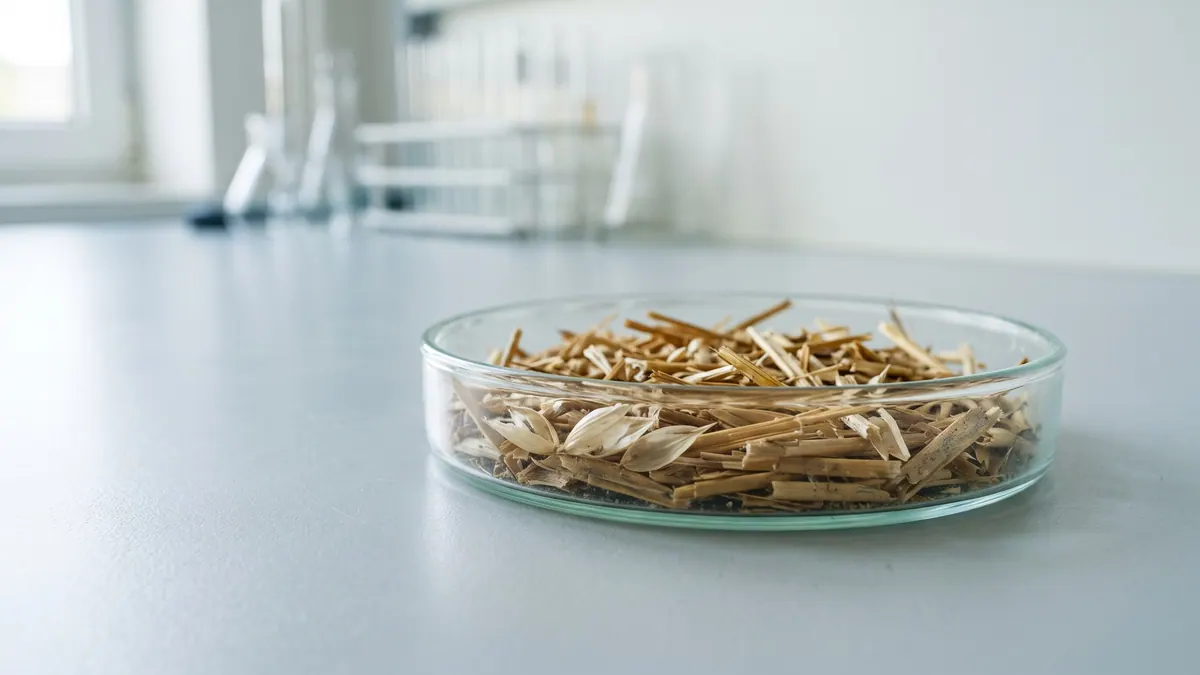
Oat straw — BMP: 2 studies, weighted mean 275 m³ CH₄/t VS
275 m³ CH₄/t VS weighted mean from 2 studies
≈52 %
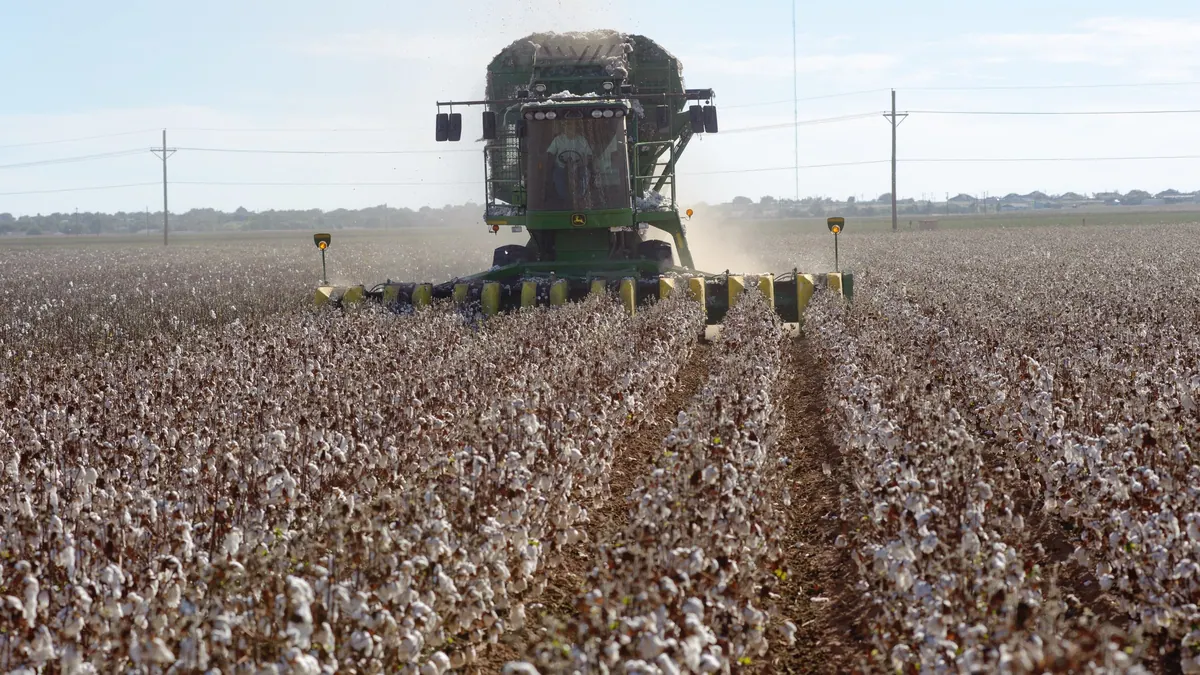
Cotton stalks — BMP: 2 studies, weighted mean 82 m³ CH₄/t VS
82 m³ CH₄/t VS weighted mean from 2 studies
≈51 %
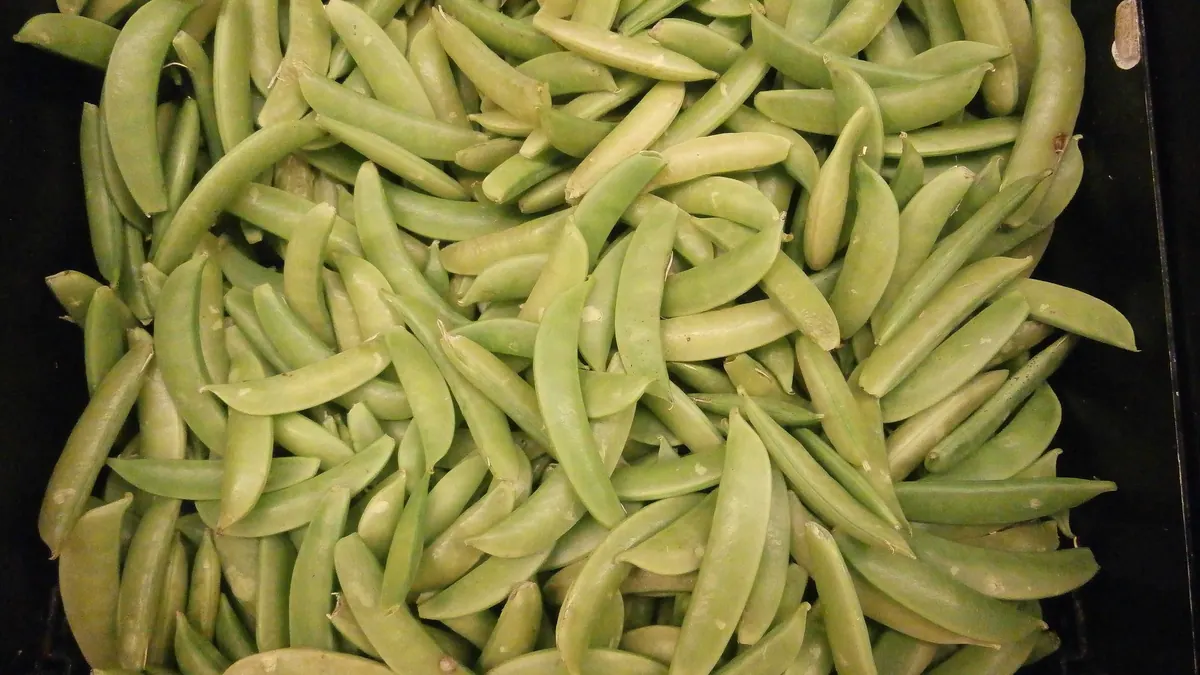
Legume crop and processing residues (pea pods, bean haulm and husks, pea leaves) — BMP: 5 studies, mean 264 m³ CH₄/t VS
264 m³ CH₄/t VS weighted mean from 5 studies
58 %
Maize stover — BMP: 10 studies, weighted mean 298 m³ CH₄/t VS
298 m³ CH₄/t VS weighted mean from 10 studies
good — editorial rating for biogas plants≈52 %