

BMP testingAlgae and aquatic plants
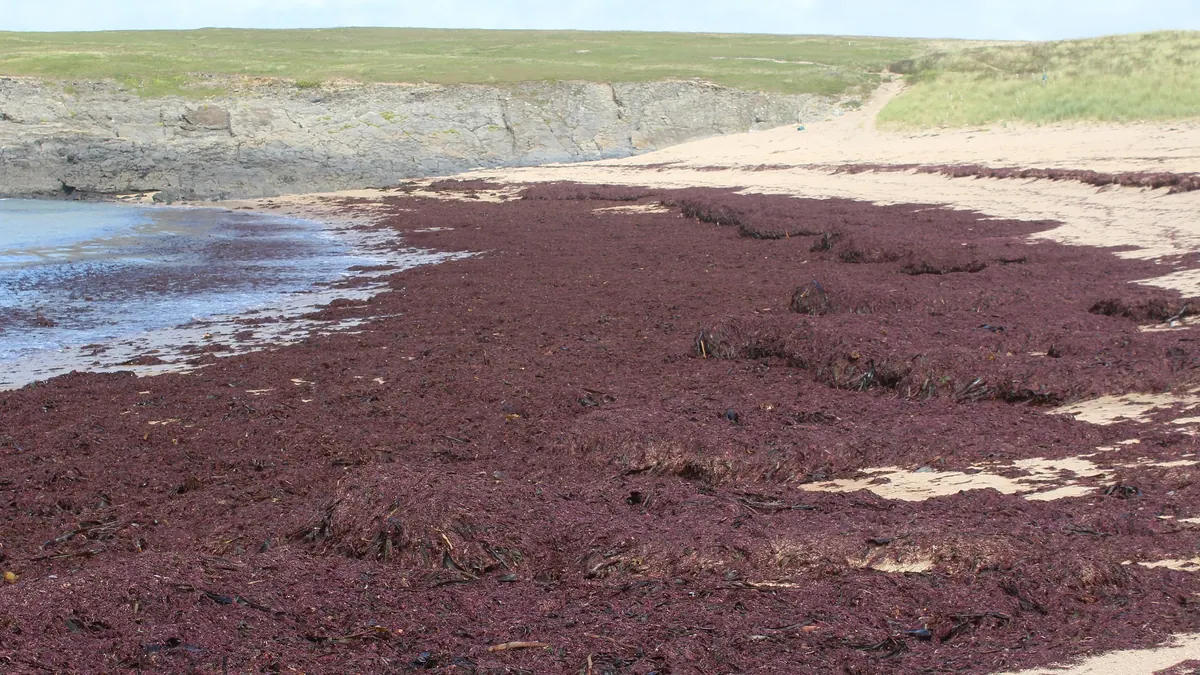
Beach-cast macroalgae (mix) — BMP: 5 studies, weighted mean 70 m³ CH₄/t VS
Macroalgae washed up on beaches are a mixture of species with sand and salt; the dataset includes untreated samples of a mixture from beaches on the island of Rügen.
Photo M J Roscoe / Wikimedia Commons, licence CC BY-SA 2.0, source file; changes: cropping

- Weighted mean
- 70m³ CH₄/t VS
- Range
- 27–96m³ CH₄/t VS
- Records
- 5studies
- Publications
- 2sources
- Temperatures
- 37 °C, 38 °Cof the test
Methane in biogas
Medium methane content · ≈ 5.5 kWh/m³ of biogas
estimate from the substrate type The collected studies contain no measurement. The interval follows from the approximate composition (nitrogen-rich (process classification)) and the yields of compound groups according to FNR.
Rating for biogas plants
not rated — editorial rating for biogas plants
Not rated: no dry matter or volatile solids in the data. We calculate the rating when the dry matter and volatile solids of the material are known.
Add to the co-digestion calculator CSV data
BMP curves from 5 studies
Weighted mean Individual records
Dashed lines are a model curve (first-order kinetics, B(t) = B₀·(1 − e−kt)); the end point comes from the publication. All curves are model curves.
Cumulative methane production over the test [m³ CH₄/t VS]. The thick line is the weighted mean of all records (70); dots mark the end values given in the publications. Point at the chart to read values; click a legend item to hide or show a record.
Records and sources
Download CSV| Source | BMP m³ CH₄/t VS | Temperature | Sample | Curve |
|---|---|---|---|---|
| Dubrovskis et al. (2020) · 1 DOI | 27 | 38 °C · mesophilic | Red algae, washed ashore (Gulf of Riga) | end point (model curve) |
| Dubrovskis et al. (2020) · 2 DOI | 46 | 38 °C · mesophilic | Brown algae, washed ashore (Gulf of Riga) | end point (model curve) |
| Dubrovskis et al. (2020) · 3 DOI | 71 | 38 °C · mesophilic | Green algae, washed ashore (Gulf of Riga) | end point (model curve) |
| Barbot et al. (2015) · 1 DOI | 87 | 37 °C · mesophilic | RM untreated (Rugen-Mix beach macroalgae blend, sample U) | end point (model curve) |
| Barbot et al. (2015) · 2 DOI | 96 | 37 °C · mesophilic | RM untreated (Rugen-Mix beach macroalgae blend, sample RM-U) | end point (model curve) |
| Weighted mean | 70 | arithmetic mean 65, SD 29 | ||
Process properties
Advantages
- Methane yield in the compendium: median 71 (range 27-96) m³ CH₄/t VS, 5 records from 2 studies (weighted mean 70).
- Thermo-acid treatment (0.2 M HCl, 80 °C, 2 h) increased methane recovery by 39%, and flue gas condensate gave +24% (Barbot et al. (2015))
- Mono-digestion of a macroalgae mixture from Rügen proved possible in continuous mode (mesophilically and thermophilically) (Barbot et al. (2015))
Drawbacks and risks
- The macroalgae mixture from Rügen had a low C/N and an elevated content of sulphur compounds (Barbot et al. (2015))
- Improvement required thermo-acid treatment (0.2 M HCl or flue gas condensate, 80 °C for 2 h) (Barbot et al. (2015))
Co-digestion — what to combine it with, what to watch out for
- caution
substrates: sulphur-rich — e.g. Pulp and paper mill biosludge, Pig slurry, Municipal sewage sludge (mixed), Pig manure (solid), Distillery stillage and vinasse
The biomass had an elevated content of sulphur compounds; beach-cast Ulva sp. gave 3.5% H2S in the biogas in co-digestion.[1][2]
Dosing
The sources do not give a safe share of this substrate in the feed.
Introduce gradually, starting with a small dose and monitoring the process (e.g. FOS/TAC, pH, gas composition).
Practical requirements
- Beach-cast Ulva sp. gave biogas with 3.5% H2S in co-digestion with pig slurry — plan for desulphurisation; the Peu et al. model indicates a C:S ratio of at least 40 for H2S below 2% (Peu et al. (2011); Peu et al. (2012))
Sources of the process data
- Thermo-Acidic Pretreatment of Beach Macroalgae from Rügen to Optimize Biomethane Production—Double Benefit with Simultaneous Bioenergy Production and Improvement of Local Beach and Waste Management
- Sulphur fate and anaerobic biodegradation potential during co-digestion of seaweed biomass (Ulva sp.) with pig slurry
- Potential of biomethane from washed ashore algae in gulf of Riga
- Prediction of hydrogen sulphide production during anaerobic digestion of organic substrates
The co-digestion calculator will assess a specific mixture containing this substrate.
What it is and where it comes from
Beach macroalgae (in Polish also known as kidzina) are marine algal biomass thrown onto the shore by wind and waves. The composition depends on the local species: in the Baltic these include brown algae, red algae and green algae. The dataset includes samples of a mixture from beaches on the island of Rügen, tested without pretreatment. Resort beaches are regularly cleaned of this material, which usually contains sand, shells and litter.
Properties relevant to digestion
The biomass is rich in cell-wall polysaccharides and in mineral salts and has a low dry matter content. It contains no lignin, but some species have complex sulphonated polysaccharides, which decompose more slowly. The main risks are: sand, which settles in the tank and wears out equipment; salinity, which inhibits methanogens; sulphur content (hydrogen sulphide); and heavy metals, including cadmium, which can restrict the use of the digestate. Biomass decomposing on the beach loses some of its readily available components, so the longer it has lain there, the poorer the feedstock.
How to read the spread of results
Samples from a single study are close, but they do not represent the variability of the mixture. The composition of beach macroalgae differs between beaches, seasons and after storms, and also changes with the time it has lain and the washing out of salt by rain. Washing, drying, sand removal and comminution matter, as do the test temperature and the inoculum. The result for a mixture from one place may differ considerably from the value for another coast.
In biogas plant practice
Beach macroalgae are considered as an additional feedstock in coastal regions, where their removal is an obligation of beach managers. Conditions for cost-effectiveness are sand removal, desalination (washing) and a steady supply. When working with such material, salinity, hydrogen sulphide and metal levels must be monitored. Legal issues, including the classification of the biomass as waste and the rules for obtaining it from coastal areas, require confirmation with the competent authorities.
For comparison with cultivated algae, beach feedstock is available free of charge, but its quality is much less predictable. This explains why results from the literature must be treated with caution when planning a new installation.
Methodology in brief
BMP is the amount of methane obtained from volatile solids (VS) in a batch test, given in m³ CH₄ per tonne of VS (numerically the same as NmL CH₄/g VS in the publications) and converted to normal conditions (0 °C, 101.325 kPa). The weighted mean gives each publication a total weight of 1, split equally between its results for the substrate — a paper testing twenty varieties does not outweigh a paper with a single sample. In inter-laboratory programmes the unit is the laboratory (total weight 1), and within it the weight of a test grows with the number of bottles (replicates). Results after pretreatment (e.g. thermal, chemical, enzymatic) are shown separately and are not included in the mean.
Solid lines are curves measured in the tests. Where a publication gives only the final result, we draw a first-order kinetic model, B(t) = B₀·(1 − e−kt): only the end point comes from the publication, and the shape of the curve serves purely as visualisation — do not read the production on a particular day from it. For this substrate k = 0.102 d−1 was assumed (median of rate constants k reported in the sources and/or fitted to the mean measured curves).
The statistics describe the spread of published results — a descriptive compilation, not a meta-analysis or a guarantee of plant yield.
Bibliography
- Dubrovskis, V.; Bisters, V.; Burlakovs, J. (2020). Potential of biomethane from washed ashore algae in gulf of Riga. Engineering for Rural Development 19. DOI: 10.22616/erdev.2020.19.tf450 DOI
- Barbot, Y.; Thomsen, L.; Benz, R. (2015). Thermo-Acidic Pretreatment of Beach Macroalgae from Rügen to Optimize Biomethane Production—Double Benefit with Simultaneous Bioenergy Production and Improvement of Local Beach and Waste Management. Marine Drugs 13(9), 5681–5705. DOI: 10.3390/md13095681 DOI
All sources of the site: bibliography.
Other substrates in the group “Algae and aquatic plants”
Nannochloropsis salina — BMP: 8 studies, weighted mean 417 m³ CH₄/t VS
417 m³ CH₄/t VS weighted mean from 8 studies
≈58 %
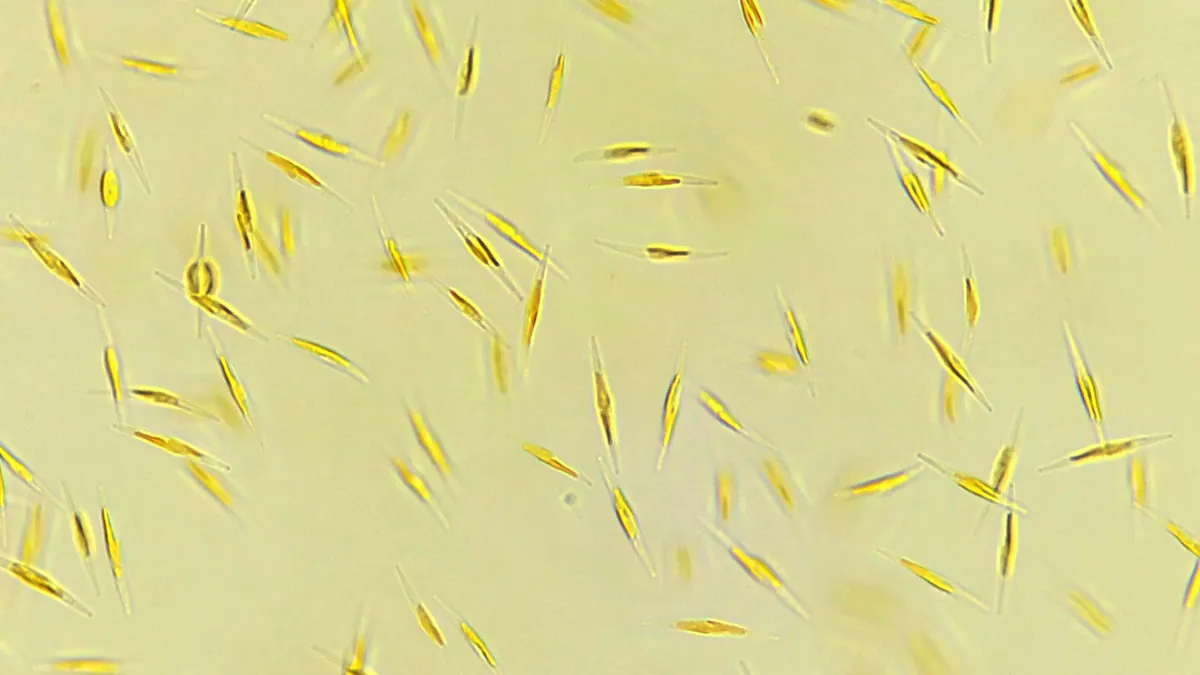
Phaeodactylum tricornutum — BMP: 3 studies, weighted mean 299 m³ CH₄/t VS
299 m³ CH₄/t VS weighted mean from 3 studies
≈58 %
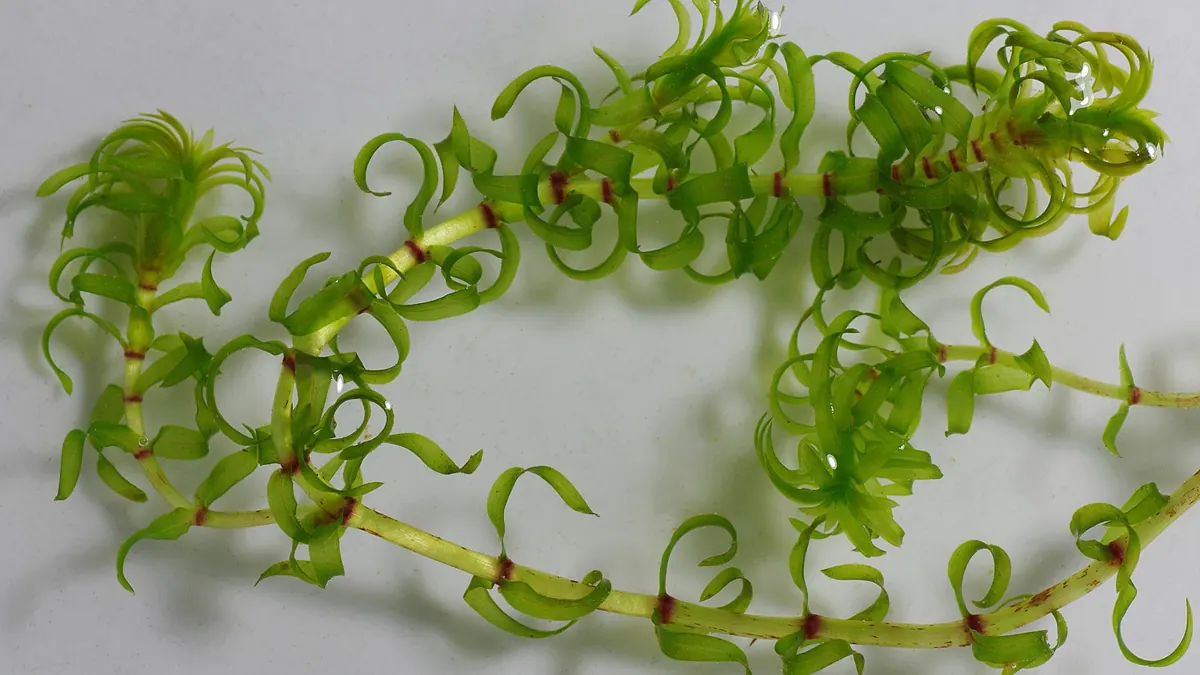
Western waterweed — BMP: 2 studies, weighted mean 218 m³ CH₄/t VS
218 m³ CH₄/t VS weighted mean from 2 studies
≈52 %
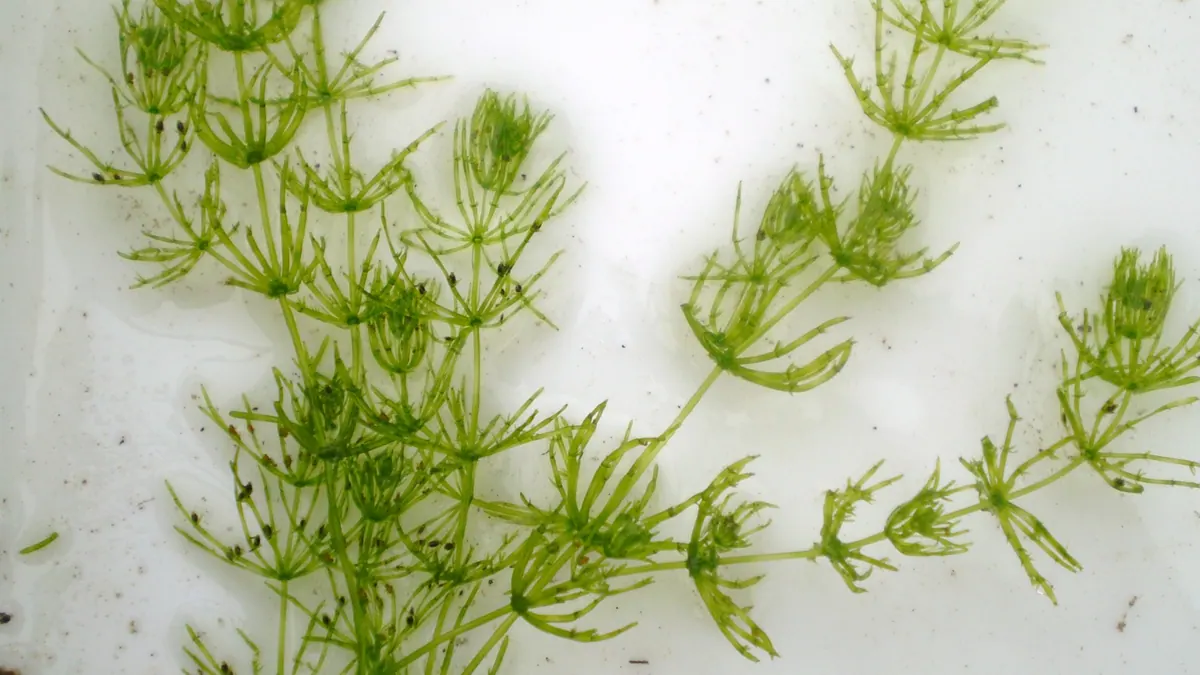
Submerged lake macrophytes (Chara, water celery) — BMP: 2 studies, weighted mean 385 m³ CH₄/t VS
385 m³ CH₄/t VS weighted mean from 2 studies
≈52 %