

BMP testingAlgae and aquatic plantssingle study (3 samples)
Phaeodactylum tricornutum — BMP: 3 studies, weighted mean 299 m³ CH₄/t VS
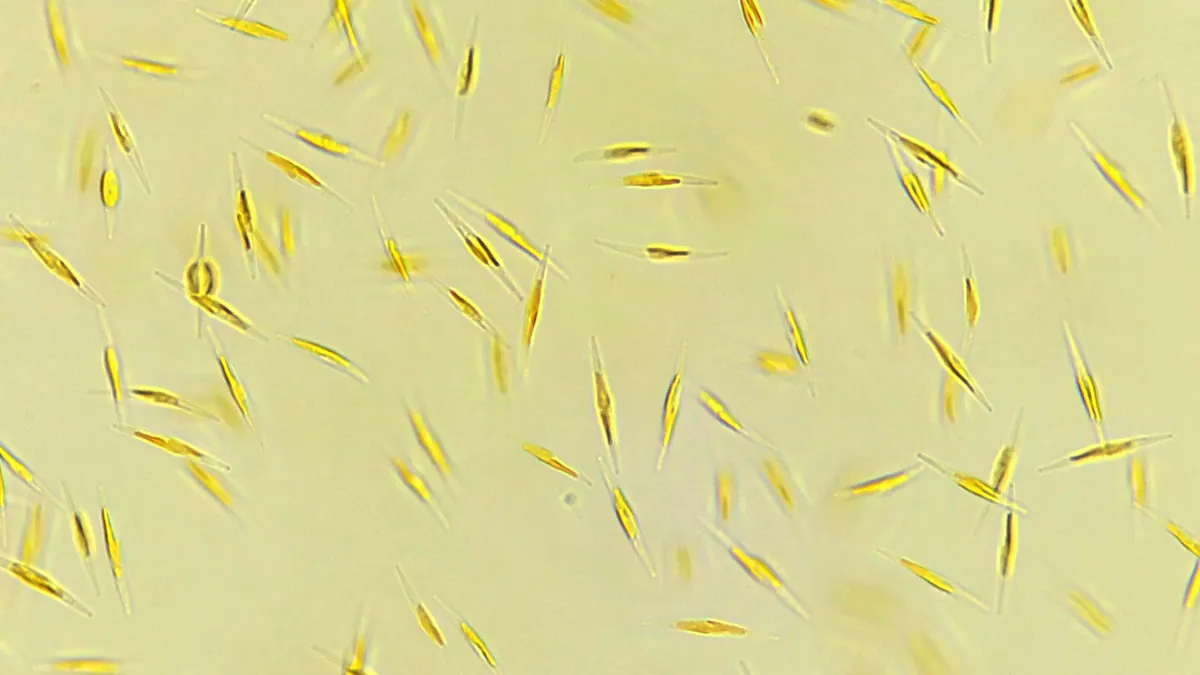
Phaeodactylum tricornutum is a marine diatom, a model alga for research on lipids and fucoxanthin; the dataset contains several values from a single literature review.
Photo R monteil / Wikimedia Commons, licence CC BY-SA 4.0, source file; changes: cropping

- Weighted mean
- 299m³ CH₄/t VS
- Range
- 270–337m³ CH₄/t VS
- Records
- 3single study (3 samples)
- Publications
- 1source
- Temperatures
- 33 °C, 35 °C, 54 °Cof the test
Methane in biogas
Medium methane content · ≈ 5.8 kWh/m³ of biogas
estimate from the substrate type The collected studies contain no measurement. The interval follows from the approximate composition (protein-rich (process classification)) and the yields of compound groups according to FNR.
Rating for biogas plants
not rated — editorial rating for biogas plants
Not rated: no dry matter or volatile solids in the data. We calculate the rating when the dry matter and volatile solids of the material are known.
Add to the co-digestion calculator CSV data
BMP curves from 3 studies
Weighted mean Individual records
Dashed lines are a model curve (first-order kinetics, B(t) = B₀·(1 − e−kt)); the end point comes from the publication. All curves are model curves.
Cumulative methane production over the test [m³ CH₄/t VS]. The thick line is the weighted mean of all records (299); dots mark the end values given in the publications. Point at the chart to read values; click a legend item to hide or show a record.
Records and sources
Download CSV| Source | BMP m³ CH₄/t VS | Temperature | Sample | Curve |
|---|---|---|---|---|
| Jankowska et al. (2017) · 1 DOI | 270 | 33 °C · mesophilic | (orig.: “Phaeodactylum tricornutum”): value quoted in a literature review | end point (model curve) |
| Jankowska et al. (2017) · 2 DOI | 290 | 54 °C · thermophilic | (orig.: “Phaeodactylum tricornutum”): value quoted in a literature review | end point (model curve) |
| Jankowska et al. (2017) · 3 DOI | 337 | 35 °C · mesophilic | (orig.: “Phaeodactylum tricornutum”): value quoted in a literature review | end point (model curve) |
| Weighted mean | 299 | arithmetic mean 299, SD 34 | ||
Process properties
Low confidence: the description is based on general characteristics of the substrate group, not on studies of this material. Treat it as a hint to be verified.
Advantages
- Methane yield in the compendium: median 290 (range 270–337) m³ CH₄/t VS, 3 records from 1 papers (weighted mean 299).
Drawbacks and risks
- The high protein content of the cells causes release of ammonia, which can be toxic to the process (Sialve et al. (2009); Rajagopal et al. (2013))
- The presence of sodium in marine species may impair digester operation (Sialve et al. (2009))
Co-digestion — what to combine it with, what to watch out for
- combines well
substrates: carbon-rich — e.g. Wheat straw, Maize silage (whole crop), Cereal straw (unspecified), Willow (short rotation), Cardboard and paperboard
The low C/N of algal sludge was balanced by the addition of paper: 50-60% VS of paper increased the rate of methane production, optimum C/N 20-25.[1][2]
- caution
substrates: nitrogen-rich — e.g. Pig slurry, Poultry manure, Waste activated sludge (secondary sludge), Chlorella vulgaris, Nannochloropsis salina
Algal protein releases ammonia; additional nitrogen sources increase the risk of ammonia inhibition.[2][3]
- caution
substrates: saline — e.g. Food waste, Whey, Sargassum biomass, Poultry manure, Nannochloropsis salina
Sodium from marine species may impair digester operation: do not combine with other salty substrates without monitoring salinity.[2]
Dosing
No source limits on the dose for this substrate.
Introduce gradually, starting with a small dose and monitoring the process (e.g. FOS/TAC, pH, gas composition).
Practical requirements
- Do not dry the biomass before feeding: drying lowered biogas production to about 80% (Mussgnug et al. (2010))
- Monitor ammonia (high protein) and, for marine species, sodium (Sialve et al. (2009))
Sources of the process data
- Anaerobic co-digestion of algal sludge and waste paper to produce methane
- Anaerobic digestion of microalgae as a necessary step to make microalgal biodiesel sustainable
- A critical review on inhibition of anaerobic digestion process by excess ammonia
- Biogas from microalgae: Review on microalgae's cultivation, harvesting and pretreatment for anaerobic digestion
- Microalgae as substrates for fermentative biogas production in a combined biorefinery concept
The co-digestion calculator will assess a specific mixture containing this substrate.
What it is and where it comes from
Phaeodactylum tricornutum is a unicellular marine diatom occurring in coastal waters. It is a model organism in diatom research: genetic tools have been developed for it, and its biomass contains lipids, including omega-3 fatty acids, and the pigment fucoxanthin. It is grown in photobioreactors. The dataset contains several values from one literature review, including tests at mesophilic temperature and one at thermophilic.
Properties relevant to digestion
Unlike most diatoms, which have a heavy siliceous shell, this species produces weakly silicified cells, which reduces the barrier to enzymes. The biomass contains lipids, protein and carbohydrates in proportions depending on the growing conditions. Lipids increase the methane potential, but in excess favour VFA inhibition. Protein may release ammonia, and the marine origin means possible presence of salt if the biomass was not washed. Diatoms may also contain silica, which does not degrade and ends up in the digestate.
How to read the spread of results
The records from one review differ in temperature and probably in strain or growing conditions. The variability of diatom biomass composition is large: it depends on the availability of nitrogen and silicon, light, the growth phase and the method of harvesting. The form of the sample (fresh suspension, freeze-dried), cell disruption, the substrate-to-inoculum ratio, the adaptation of the inoculum to salt and the length of the test also matter. With such a small dataset and a sparse description of conditions the results should be treated as indicative.
In biogas plant practice
Phaeodactylum tricornutum is not a biogas plant substrate; it is an interesting subject of research into the cascading use of algal biomass, where valuable compounds are obtained first and the residue is sent to digestion. In such an application salinity, ammonia and the presence of silica must be taken into account. Legal requirements depend on the origin of the biomass and the plant's permits; as a non-invasive organism grown under controlled conditions, it is not subject to special restrictions.
It is also worth noting that results from literature reviews are difficult to compare with each other without knowing the substrate-to-inoculum ratio, and in such compilations it is usually not given.
Given these limitations, a sensible practice is to run a BMP test of your own on the specific batch of biomass before taking technological decisions.
Methodology in brief
BMP is the amount of methane obtained from volatile solids (VS) in a batch test, given in m³ CH₄ per tonne of VS (numerically the same as NmL CH₄/g VS in the publications) and converted to normal conditions (0 °C, 101.325 kPa). The weighted mean gives each publication a total weight of 1, split equally between its results for the substrate — a paper testing twenty varieties does not outweigh a paper with a single sample. In inter-laboratory programmes the unit is the laboratory (total weight 1), and within it the weight of a test grows with the number of bottles (replicates). Results after pretreatment (e.g. thermal, chemical, enzymatic) are shown separately and are not included in the mean.
Solid lines are curves measured in the tests. Where a publication gives only the final result, we draw a first-order kinetic model, B(t) = B₀·(1 − e−kt): only the end point comes from the publication, and the shape of the curve serves purely as visualisation — do not read the production on a particular day from it. For this substrate k = 0.102 d−1 was assumed (median of rate constants k reported in the sources and/or fitted to the mean measured curves).
The statistics describe the spread of published results — a descriptive compilation, not a meta-analysis or a guarantee of plant yield.
Bibliography
- Jankowska, E.; Sahu, A.K.; Oleskowicz-Popiel, P. (2017). Biogas from microalgae: Review on microalgae's cultivation, harvesting and pretreatment for anaerobic digestion. Renewable and Sustainable Energy Reviews 75, 692–709. DOI: 10.1016/j.rser.2016.11.045 DOI
All sources of the site: bibliography.
Other substrates in the group “Algae and aquatic plants”
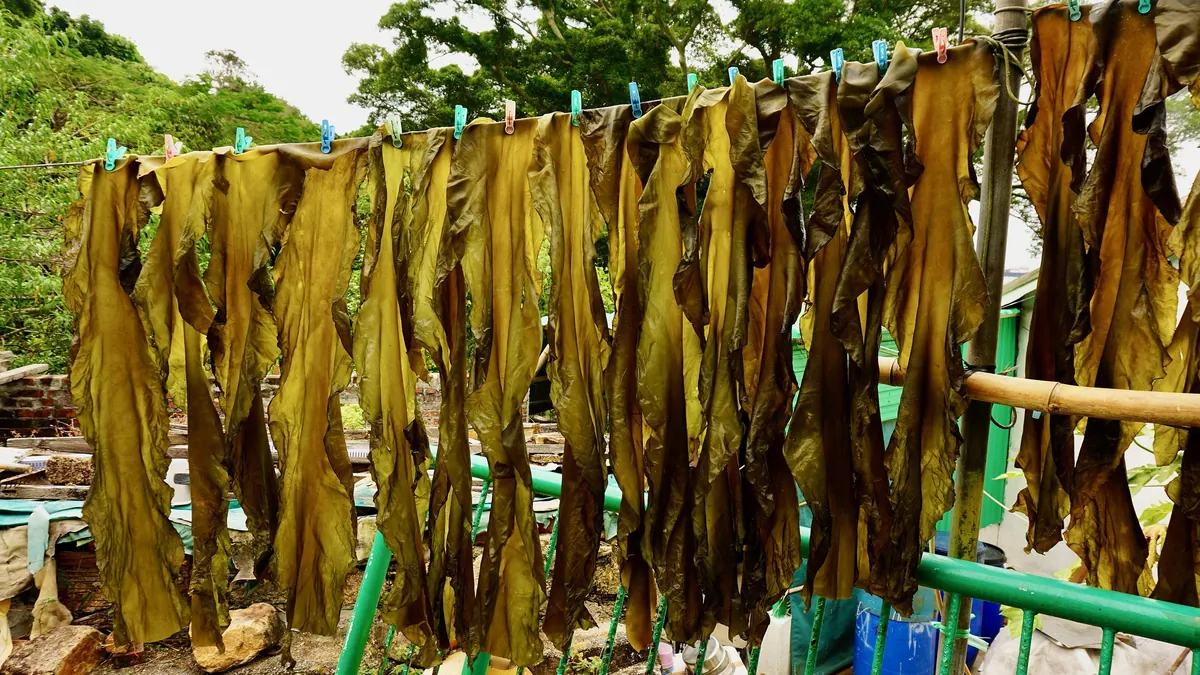
Laminaria kelp (incl. L. japonica waste) — BMP: 3 studies, weighted mean 188 m³ CH₄/t VS
188 m³ CH₄/t VS weighted mean from 3 studies
≈52 %
Chlorella kessleri — BMP: 2 studies, weighted mean 193 m³ CH₄/t VS
193 m³ CH₄/t VS weighted mean from 2 studies
≈58 %
Nannochloropsis salina — BMP: 8 studies, weighted mean 417 m³ CH₄/t VS
417 m³ CH₄/t VS weighted mean from 8 studies
≈58 %
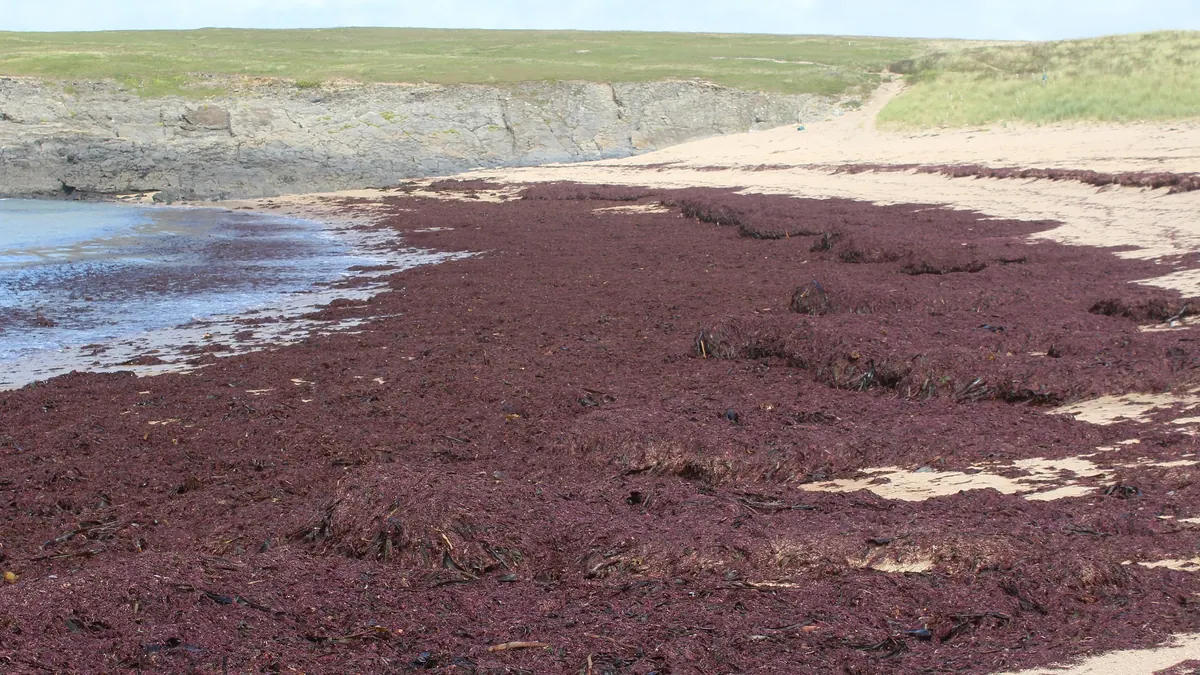
Beach-cast macroalgae (mix) — BMP: 5 studies, weighted mean 70 m³ CH₄/t VS
70 m³ CH₄/t VS weighted mean from 5 studies
≈56 %