

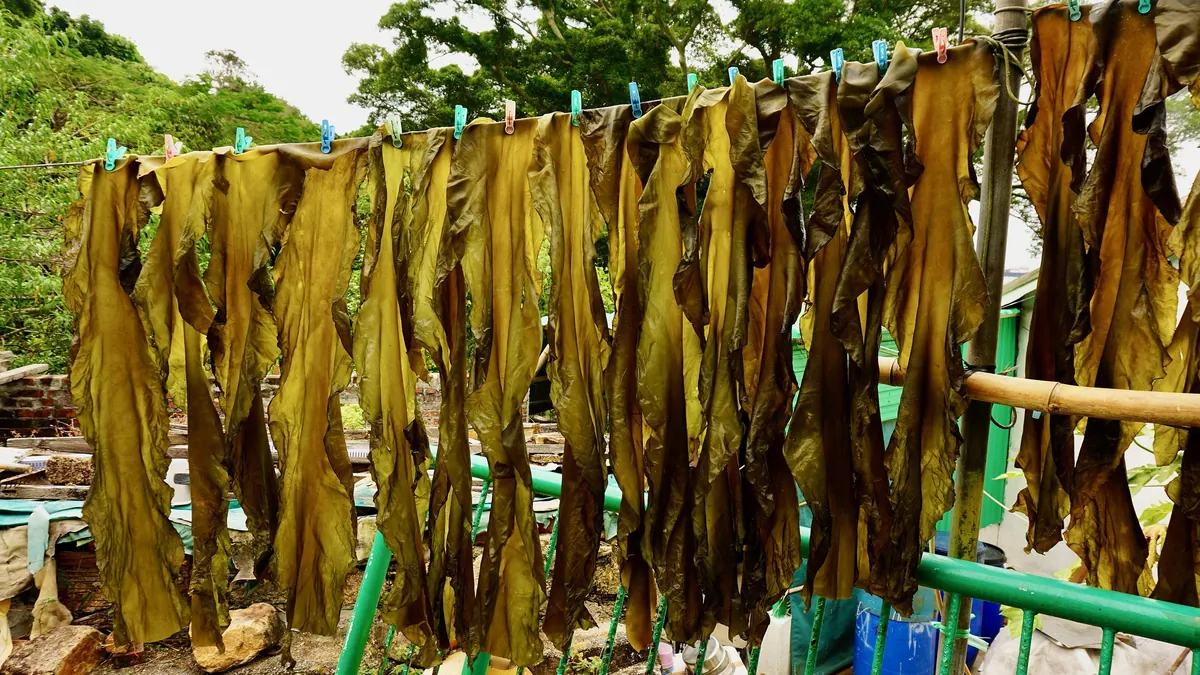
BMP testingAlgae and aquatic plantssingle study (3 samples)
Laminaria kelp (incl. L. japonica waste) — BMP: 3 studies, weighted mean 188 m³ CH₄/t VS
Kelps (Laminaria, Saccharina) are brown algae grown mainly in Asia; the waste from their processing has a low lignin content, but a lot of salt and alginates.
Photo 方畢可 / Wikimedia Commons, licence CC0 1.0, source file; changes: cropping

- Weighted mean
- 188m³ CH₄/t VS
- Range
- 172–214m³ CH₄/t VS
- Records
- 3single study (3 samples)
- Publications
- 1source
- Temperatures
- 37 °Cof the test
Methane in biogas
Medium methane content · ≈ 5.2 kWh/m³ of biogas
estimate from the substrate type The collected studies contain no measurement. The interval follows from the approximate composition (carbohydrate-dominated (no protein or fat characteristics)) and the yields of compound groups according to FNR.
Rating for biogas plants
not rated — editorial rating for biogas plants
Not rated: no dry matter or volatile solids in the data. We calculate the rating when the dry matter and volatile solids of the material are known.
Add to the co-digestion calculator CSV data
BMP curves from 3 studies
Weighted mean Individual records
Dashed lines are a model curve (first-order kinetics, B(t) = B₀·(1 − e−kt)); the end point comes from the publication. All curves are model curves.
Cumulative methane production over the test [m³ CH₄/t VS]. The thick line is the weighted mean of all records (188); dots mark the end values given in the publications. Point at the chart to read values; click a legend item to hide or show a record.
Records and sources
Download CSV| Source | BMP m³ CH₄/t VS | Temperature | Sample | Curve |
|---|---|---|---|---|
| Barbot et al. (2015) · 1 DOI | 172 | 37 °C · mesophilic | Laminaria japonica waste, untreated (U-1, experiment E1) | end point (model curve) |
| Barbot et al. (2015) · 2 DOI | 178 | 37 °C · mesophilic | Laminaria japonica waste, untreated (U-2, experiment E2) | end point (model curve) |
| Barbot et al. (2015) · 3 DOI | 214 | 37 °C · mesophilic | Laminaria japonica waste, untreated (U-3, experiment E3) | end point (model curve) |
| Weighted mean | 188 | arithmetic mean 188, SD 23 | ||
Process properties
Advantages
- Methane yield in the compendium: median 178 (range 172-214) m³ CH₄/t VS, 3 records from 1 study (weighted mean 188).
- Long-term continuous digestion of Laminaria japonica waste as the sole substrate was demonstrated at laboratory and pilot scale, and the digestate was suitable as a biofertiliser with elevated potassium, sulphur and iron content (Barbot et al. (2015))
Drawbacks and risks
- Thermo-acid treatment (HCl or flue gas condensate) did not improve methane recovery from Laminaria waste (Barbot et al. (2015))
- Co-digestion with maize silage did not improve methane recovery relative to mono-digestion (Barbot et al. (2015))
Co-digestion — what to combine it with, what to watch out for
- caution
substrates: saline — e.g. Food waste, Whey, Sargassum biomass, Poultry manure, Nannochloropsis salina
For salty brown algae, an inoculum without adaptation to salinity needed up to two months to reach the methane production rate of an adapted inoculum; sodium inhibits acetoclastic methanogens, and at high ammonia even a low sodium level is dangerous.[1][2]
- caution
group: Energy crops and whole-crop plants (WCS)
Co-digestion of Laminaria waste with maize silage did not improve methane recovery relative to mono-digestion.[3]
Dosing
The sources do not give a share in the feed. Laminaria japonica waste was digested as the sole substrate in continuous mode and at pilot scale (Mar. Drugs 2015); addition of maize silage did not improve the result.
Introduce gradually, starting with a small dose and monitoring the process (e.g. FOS/TAC, pH, gas composition).
Sources of the process data
The co-digestion calculator will assess a specific mixture containing this substrate.
What it is and where it comes from
Kelps (genus Laminaria, including Laminaria japonica, now often Saccharina japonica) are large marine brown algae, grown in East Asia as food (kombu), and as a source of alginates and iodine. The dataset contains waste from the processing of Laminaria japonica, tested without pretreatment in replicates of the experiment. In Europe kelps occur naturally in the Atlantic, and in Poland algae of this type are not harvested on an industrial scale.
Properties relevant to digestion
Brown algae contain no lignin, and their cell walls consist of alginates, cellulose and fucoidan. The storage carbohydrates are mannitol and laminarin, which are readily fermentable. The biomass has a low C/N ratio compared with land plants, but less protein than microalgae. The greatest challenge is salt: marine biomass contains sodium and potassium, which at high concentrations inhibit methanogens. In addition, brown algae accumulate iodine, and some also heavy metals, including arsenic, which may restrict the use of the digestate.
How to read the spread of results
Records from a single study are replicates of the same experiment, so the differences between them describe the repeatability of the experiment and not the variability of the raw material. In a broader view, the composition of kelps changes with the harvest season (mannitol and laminarin content rises in summer and autumn), the species, the depth and place of cultivation and the method of processing: waste after alginate extraction will have a different composition from fresh thallus. In addition, the result depends on washing out salt, size reduction, temperature and adaptation of the inoculum to salinity.
In biogas plant practice
Kelps are not a substrate in Polish biogas plants. In countries where processing waste arises, digestion is one of the ways of utilising it. Key factors are salinity management (dilution, mixing with low-salt substrates, adaptation of the inoculum) and control of metals in the digestate. Size reduction eases contact with enzymes. Legal requirements depend on the origin and classification of the waste and on the regulations concerning digestate.
It is worth adding that seaweed farms in Asia supply waste continuously, which is a logistical advantage over seasonal blooms. On the other hand, transporting wet, salty biomass over long distances is costly.
Methodology in brief
BMP is the amount of methane obtained from volatile solids (VS) in a batch test, given in m³ CH₄ per tonne of VS (numerically the same as NmL CH₄/g VS in the publications) and converted to normal conditions (0 °C, 101.325 kPa). The weighted mean gives each publication a total weight of 1, split equally between its results for the substrate — a paper testing twenty varieties does not outweigh a paper with a single sample. In inter-laboratory programmes the unit is the laboratory (total weight 1), and within it the weight of a test grows with the number of bottles (replicates). Results after pretreatment (e.g. thermal, chemical, enzymatic) are shown separately and are not included in the mean.
Solid lines are curves measured in the tests. Where a publication gives only the final result, we draw a first-order kinetic model, B(t) = B₀·(1 − e−kt): only the end point comes from the publication, and the shape of the curve serves purely as visualisation — do not read the production on a particular day from it. For this substrate k = 0.102 d−1 was assumed (median of rate constants k reported in the sources and/or fitted to the mean measured curves).
The statistics describe the spread of published results — a descriptive compilation, not a meta-analysis or a guarantee of plant yield.
Bibliography
- Barbot, Y.; Thomsen, C.; Thomsen, L.; Benz, R. (2015). Anaerobic Digestion of Laminaria japonica Waste from Industrial Production Residues in Laboratory- and Pilot-Scale. Marine Drugs 13(9), 5947–5975. DOI: 10.3390/md13095947 DOI
All sources of the site: bibliography.
Other substrates in the group “Algae and aquatic plants”
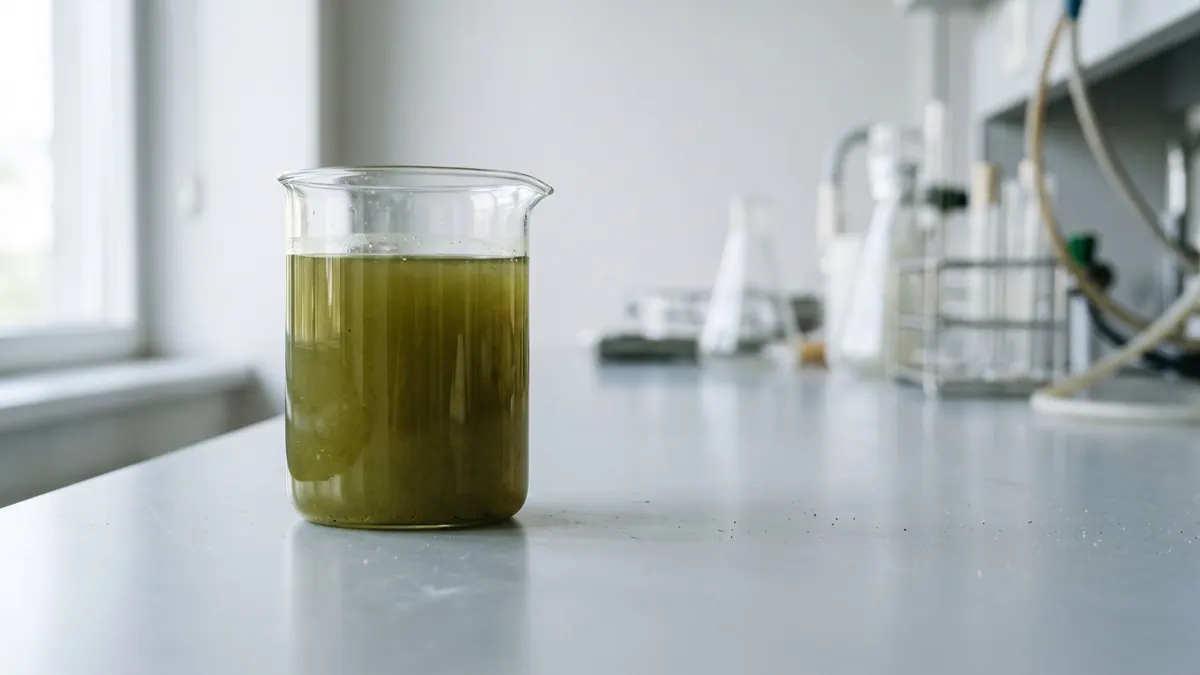
Nannochloropsis salina — BMP: 8 studies, weighted mean 417 m³ CH₄/t VS
417 m³ CH₄/t VS weighted mean from 8 studies
≈58 %
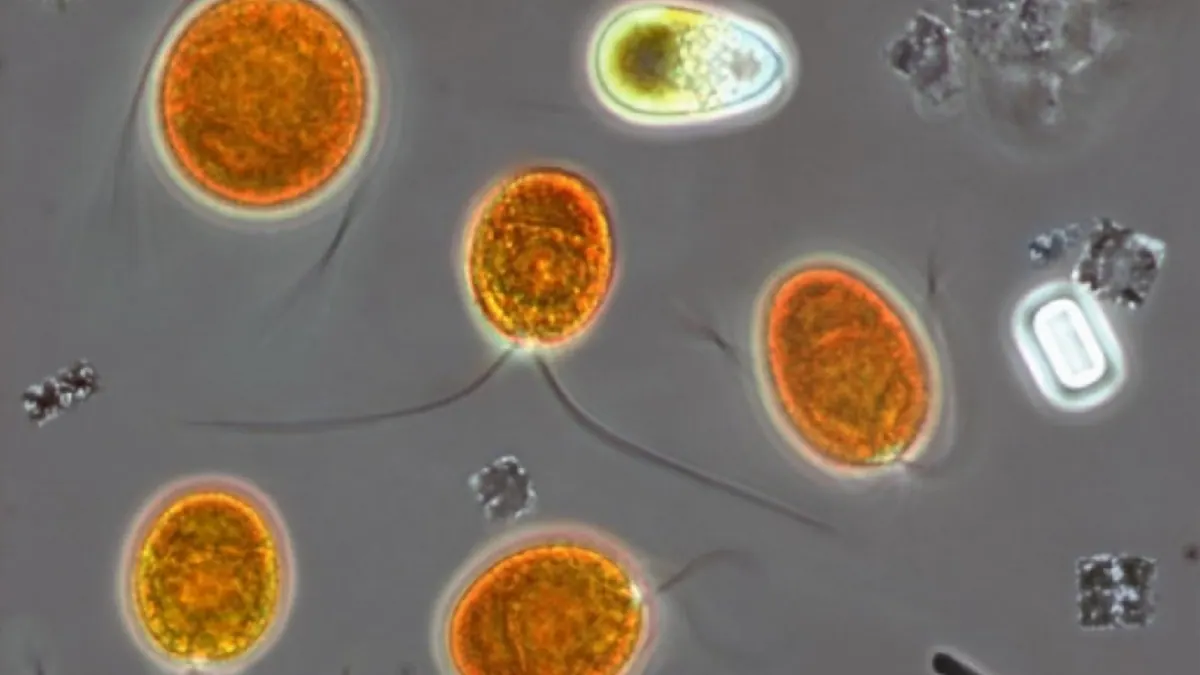
Dunaliella salina — BMP: 3 studies, weighted mean 221 m³ CH₄/t VS
221 m³ CH₄/t VS weighted mean from 3 studies
≈58 %
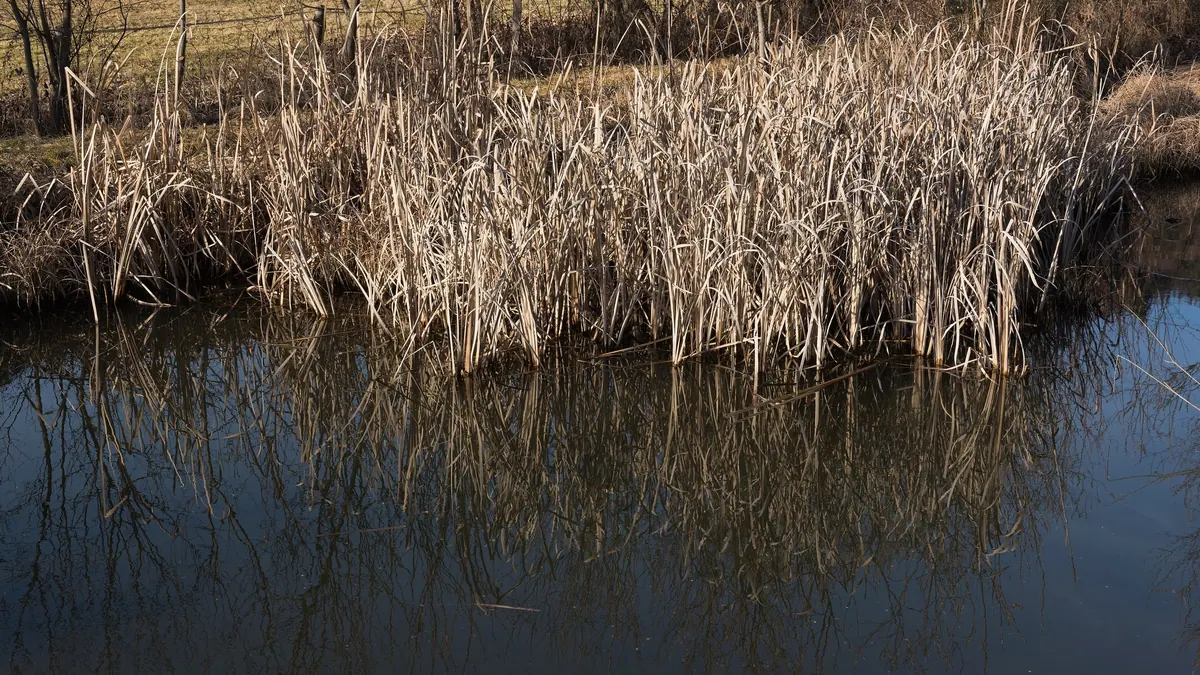
Cattail (Typha spp.) — BMP: 11 studies, weighted mean 154 m³ CH₄/t VS
154 m³ CH₄/t VS weighted mean from 11 studies
≈52 %
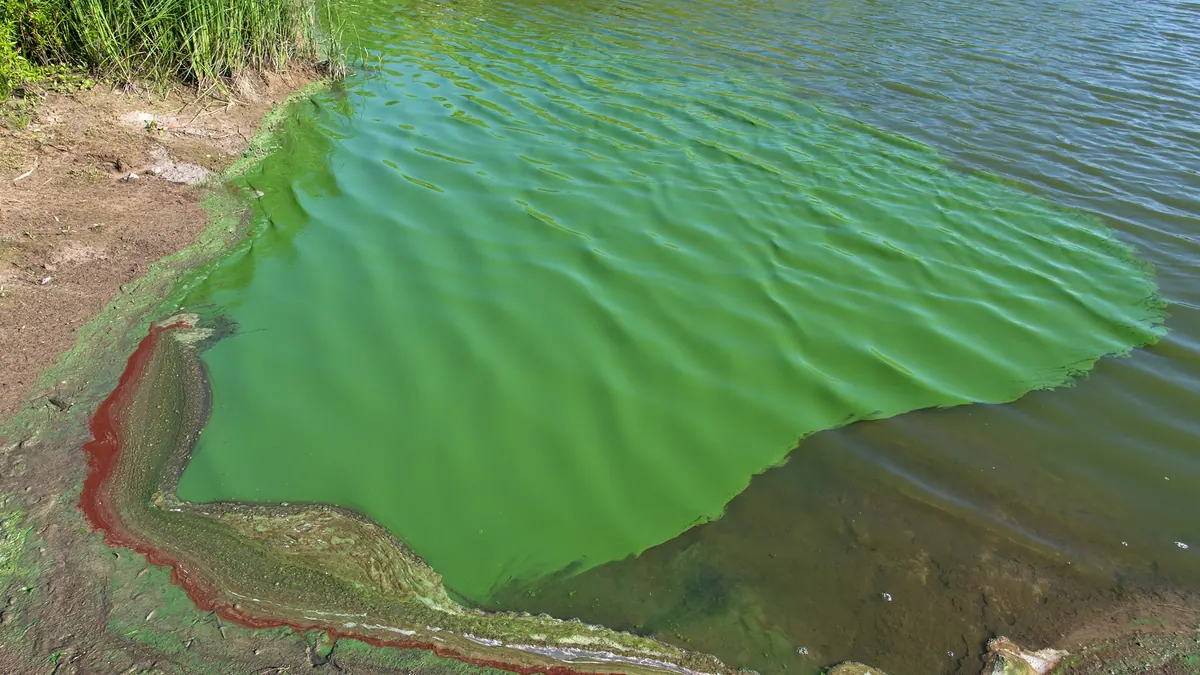
Cyanobacteria (Phormidium, Desertifilum, Anabaena, Nostoc) — BMP: 4 studies, weighted mean 152 m³ CH₄/t VS
152 m³ CH₄/t VS weighted mean from 4 studies
≈58 %