BiogasGuide
Ammonia in the digester: inhibition, thresholds and how to respond
Free ammonia (NH₃) inhibits methanogenesis. We explain the dependence on pH and temperature, show the calculation step by step and set out the remedial options.
Other language versions: polski.

Ammonia inhibits methane fermentation mainly in its unionised form (NH₃), which passes through cell membranes and disrupts the metabolism of methanogens, especially acetoclastic ones. The measure of risk is therefore not total ammonium nitrogen alone (TAN = NH₄⁺ + NH₃), but its free part, which depends on pH and temperature. In the literature inhibition of unadapted biomass begins at free NH₃ on the order of 0.1–0.2 g N/l and TAN above approx. 3 g N/l; after adaptation the process can be stable at considerably higher values.
Calculating free NH₃
The share of NH₃ in TAN: f = 1 / (1 + 10^(pKa − pH)), where pKa ≈ 0.09 + 2730 / T(K). For 38 °C pKa ≈ 8.86; for 55 °C ≈ 8.41.
Example: TAN = 3.5 g N/l, 38 °C:
| pH | f | NH₃-N [mg/l] |
|---|---|---|
| 7.3 | 0.027 | approx. 95 |
| 7.5 | 0.041 | approx. 145 |
| 7.8 | 0.079 | approx. 280 |
| 8.0 | 0.120 | approx. 420 |
The same biomass at 55 °C at pH 7.5 and the same TAN gives f ≈ 0.11, that is approx. 380 mg N/l — which is why thermophilic conditions are more prone to ammonia inhibition.
Symptoms
- A fall in biogas production and CH₄ content despite a constant feed rate.
- A rise in VFA, especially acetate and propionate; a rise in FOS/TAC.
- A rise in pH (ammonia is a base) — initially without a fall in pH, which masks the problem.
- A shift in the methanogen profile towards hydrogenotrophs.
A state of "stable inhibition" is characteristic: the process works at a lower level, with elevated VFA, but without collapse.
Sources of ammonia
| Substrate | Risk |
|---|---|
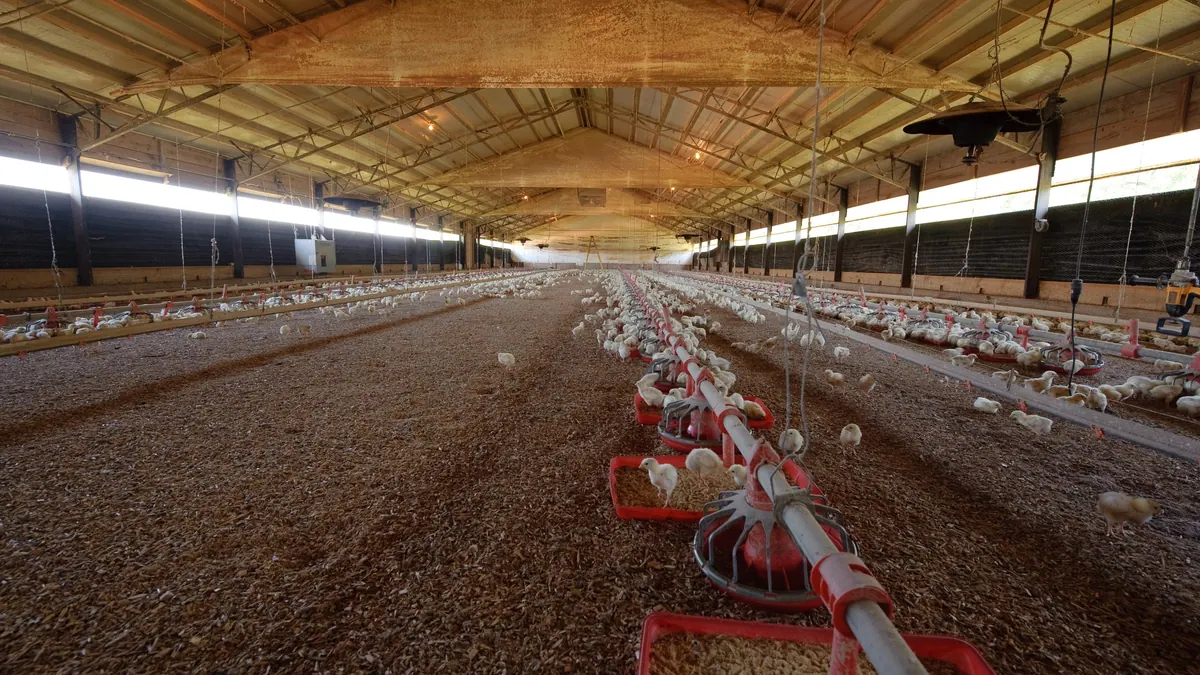
| Poultry droppings | very high |
| Pig slurry | high |
| Slaughterhouse waste, meals, blood | high (protein) |
| Kitchen waste | medium, depends on the share of proteins |
| Cattle slurry | moderate |
| Maize silage | low |
Additional nitrogen comes from digestate recirculation, if it is not diluted with water or low-nitrogen substrates.
Remedial measures
- Reduce the share of nitrogen substrates in the mix or replace them with carbon ones.
- Dilute the digester contents (water, cattle slurry, digestate with a lower TAN).
- Lower the temperature by a few degrees if possible (reduces f), aware of the fall in the rate of the process.
- Lower the pH in a controlled way — usually, however, it is better to remove the cause than to regulate chemically.
- Stripping/recovery of ammonia from the digestate (described in a separate article) and recirculation of the nitrogen-poor stream.
- Ensure adaptation: increase the nitrogen share gradually, over weeks.
- Additives: some studies indicate benefits from adding trace elements (e.g. Se, Co) or sorbent materials (zeolite, biochar), but the effect depends on conditions and requires checking at plant scale.
Prevention
Plan the mix with a nitrogen balance (see the article on C/N), measure TAN regularly (e.g. once a week), calculate free NH₃ from pH and temperature and set an alarm value specific to the plant. Introduce changes of mix with a large share of poultry droppings in advance, so that the biomass has time to adapt. Remember that ammonia is also an emissions problem when storing and applying digestate, as discussed in the articles on digestate.
Monitoring and documentation
Weekly measurement of TAN (distillation or cuvette tests) and of pH and temperature at the same point is recommended. From these data free NH₃ is calculated in a spreadsheet and compared with FOS/TAC and methane production. Such a chart makes it possible to catch growing inhibition before it becomes visible in the gas.
When the problem persists
If despite the measures TAN keeps rising and performance falls, consider changing the recipe: reducing the share of poultry droppings, separate treatment (stripping, separation with nitrogen recovery) or replacing part of the digester contents. Also check whether the high TAN does not result from excessive digestate recirculation. Introduce every change gradually, because abrupt dilution lowers the temperature and the biomass concentration.
Quick checklist when inhibition is suspected
- Measure TAN, pH and temperature; calculate free NH₃.
- Check VFA (acetate, propionate) and FOS/TAC.
- Compare with the feed history: was the share of manures or proteins recently increased?
- Reduce the feed of the source component and observe for 2–3 weeks.
- Only then consider costly investments (stripping, additional separation).
Sources
Questions and answers
Does high ammonium nitrogen always mean inhibition?
No. Adapted microorganisms work at concentrations that would be toxic for new biomass. What matters is free NH₃, the rate of change and the symptoms: a rise in VFA, a fall in CH₄ and in gas production.
Related articles