BiogasExplainer
Hydrogen sulphide in the digester: sources, inhibition of methanogenesis and iron dosing
Where H₂S in biogas comes from, how it inhibits methanogenesis, what its concentration depends on and how iron binds sulphides in the digester. Indicative values and pitfalls.
Other language versions: polski.
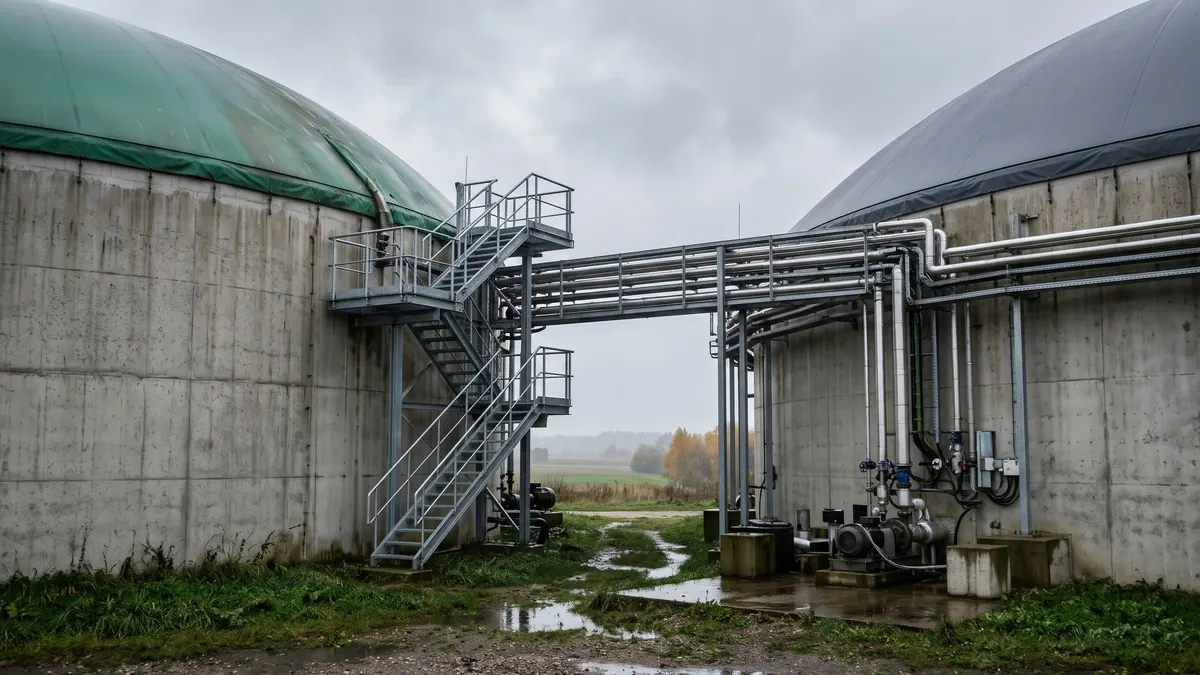
Hydrogen sulphide (H₂S) in biogas is formed mainly as a result of the reduction of sulphates by sulphate-reducing bacteria and the breakdown of proteins containing sulphur-containing amino acids (cysteine, methionine). In biogas from agricultural substrates its concentration is usually from several dozen to several thousand ppm, and with sulphur-rich substrates (e.g. stillage, whey, glycerol containing sulphates, poultry droppings, protein wastes) it may be higher. It is a toxic, corrosive gas, and in the digester also an inhibitor of methanogenesis.
Sources of sulphur in the mix
| Substrate | Risk of high H₂S |
|---|---|
| Maize silage | low |
| Cattle slurry | low–medium |
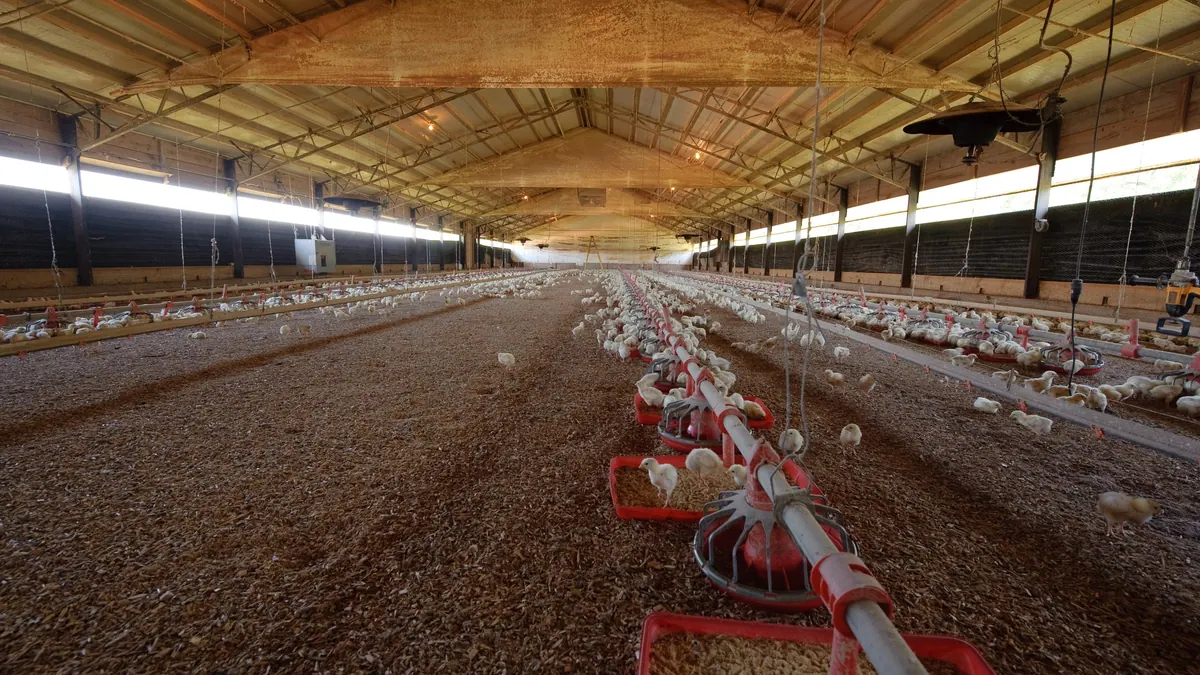
| Poultry droppings, meals | high (protein) |
| Distillery stillage, pomace | medium–high, depending on technology |
| Kitchen waste | medium |
| Additives containing sulphates (FeSO₄, gypsum, water with high sulphate hardness) | high |
Mechanism of inhibition
- Competition for substrate. Sulphate-reducing bacteria consume acetate and hydrogen, which then do not reach the methanogens, especially at a high sulphate-to-COD ratio.
- Sulphide toxicity. Dissolved unionised H₂S penetrates cells and disrupts metabolism. In the literature (Chen et al., 2008) the cited inhibition thresholds span a wide range, from several dozen to several hundred mg/l of sulphides, and depend on pH, adaptation and biomass composition.
- Binding of metals. Sulphides precipitate trace metals (Co, Ni, Zn, Cu) as insoluble sulphides, limiting their availability to microorganisms.
The share of the toxic form depends on pH: a lower pH means more H₂S, a higher one — more HS⁻ ions, which remain in solution.
Iron in the digester
Iron(II) ions bind sulphides into FeS, which precipitates as a black sludge. The following are used, among others:
- iron(II) or (III) chloride,
- iron hydroxide or oxides (in granulate form),
- iron(II) sulphate — usually less favourable, because it adds sulphates itself.
Advantages: a rapid fall in H₂S in the gas, protection of the engine and gas system, supplementation of the trace element Fe. Disadvantages: cost, additional sludge, possible change in pH (FeCl₃ acidifies), the risk of underestimating the dose and thus exceeding the engine's requirements. The dose is generally set empirically: after changes are introduced, H₂S in the gas is observed for several days.
Calculation example (with assumptions)
Let us assume: biogas production 1,200 m³/h, H₂S in the gas 1,500 ppm (0.15% vol.), H₂S density ≈ 1.54 kg/m³ under normal conditions. Mass of H₂S: 1,200 × 0.0015 × 1.54 ≈ 2.8 kg/h, approx. 66 kg/d. Conversion to sulphur: S makes up ~94% of the mass of H₂S, that is approx. 62 kg S/d, or approx. 1.9 kmol S/d. Stoichiometrically 1 mol of Fe binds 1 mol of S (FeS), so a minimum of approx. 1.9 kmol Fe/d is needed, that is approx. 108 kg Fe/d. In practice the dose is larger or different, because iron also reacts with phosphates and other components; this is a theoretical calculation, not a recipe.
Consequences for the plant
- Corrosion of metal parts, especially in the presence of oxygen and moisture (sulphuric acid).
- A drop in engine oil life, faster wear of spark plugs and valves.
- Toxic hazard — see the separate article on OHS.
- Fouling with sludge and of pumps (FeS).
Good practices
- Test the sulphur content of the substrates (total S analysis).
- Measure H₂S in the biogas continuously (analyser) and record the trend.
- Combine methods: iron in the digester + biological desulphurisation (air) + an activated carbon filter as the last stage.
- Avoid sulphate additives unless they are essential.
- Introduce changes of mix to sulphur-rich ones gradually and with gas monitoring.
Hydrogen sulphide is above all a challenge to the durability and safety of the plant, but in extreme cases also to the process itself; understanding the sources and the sulphur balance makes it possible to choose an economical, effective desulphurisation system.
How to assess the sulphur balance
To estimate the H₂S potential, add up the sulphur brought in by the substrates (total S analysis in dry matter) and compare it with the sulphur removed with the digestate and in the gas. Typically a considerable part of the sulphur remains in the digestate in organic form and in metal sulphides, and a smaller part ends up in the gas. Such a balance makes it possible to justify whether it is better to invest in correcting the mix (fewer sulphur substrates) or in treatment stages. Many plants use a multi-stage arrangement: iron dosing in the digester lowers the hydrogen sulphide load, biological desulphurisation in the gas space removes most of the rest, and an activated carbon filter protects the engine.
Measurement
Electrochemical and optical analysers give a continuous reading, but require calibration and sensor replacement at set intervals. Detector tubes are useful for ad hoc checks. Record H₂S by point: before and after desulphurisation, before the engine. The drop in concentration after a change in iron dose is itself the best proof of effectiveness.
Sources
Related articles