BiogasGuide
pH in the digester: which range is correct and what changes mean
In agricultural biogas plants pH is usually in the range 7.0–8.2. We explain the role of the buffer, the measurement, and why pH is a lagging indicator.
Other language versions: polski.
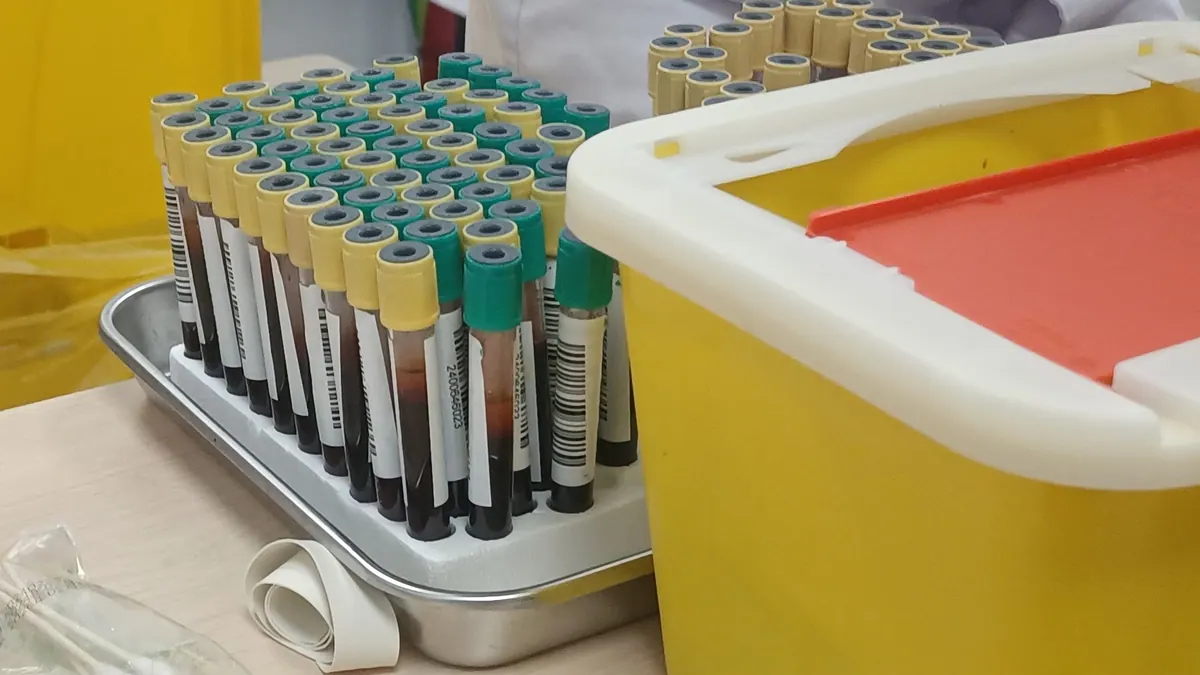

The correct pH in an agricultural biogas plant usually lies within 7.0–8.2, and methanogenic microorganisms work best at a pH of approx. 6.8–7.5. The pH value alone is not enough to assess the process: it is a lagging indicator, because the buffer (bicarbonates and ammonium) masks the build-up of acids for a long time. The state of the process is told only by the set: pH, FOS/TAC, fatty acids and gas composition.
Where the buffer comes from
Two main buffer systems operate in the digester:
- carbonate: CO₂ dissolved in the liquid and bicarbonates, bound with cations; their amount determines alkalinity (TAC),
- ammonium: ammonium nitrogen released from proteins and urea, which neutralises acids.
That is why plants running on slurry usually have a higher pH and greater alkalinity than plants running on maize silage alone, which have a small buffer reserve and lose stability faster.
Why pH reacts late
When acids enter the digester in an amount exceeding the capacity of the methanogens, bicarbonates neutralise them and the pH hardly changes. Only once alkalinity is exhausted does a fall follow. In practice this takes several days, and a drop in pH below approx. 6.8–7.0 already signals a serious disturbance. That is why FOS/TAC and the acid profile (VFA) are more sensitive indicators.
High pH — also not without risk
The free ammonia content depends on pH and temperature. For the same concentration of ammonium nitrogen (TAN), a rise in pH of 0.3 units can double the NH₃ concentration. A simplified example (pKa of NH₄⁺ approx. 8.86 at 38 °C): at TAN 3.5 g N/l and pH 7.5 free NH₃ is approx. 145 mg N/l, at pH 7.8 — approx. 280 mg N/l. Hence, with poultry slurry and similar substrates, a high pH is a signal for caution.
Indicative ranges
| pH | Interpretation (indicative) |
|---|---|
| < 6.5 | serious acidification, inhibition of methanogens |
| 6.5–7.0 | warning zone, check FOS/TAC and VFA |
| 7.0–8.0 | typical range |
| 8.0–8.3 | common at high TAN; check free NH₃ |
| > 8.3 | increased risk of ammonia inhibition |
Ranges depend on the substrate; the trend and a reference to the history of the given plant matter more than the absolute value.
How to measure
- Take the sample from the same point and at the same time of day.
- Measure as soon as possible after collection — escape of CO₂ raises the pH of the sample.
- Measure at a temperature close to that of the digester or with temperature compensation.
- Calibrate the electrode in buffers (usually 7.0 and 4.0 or 10.0) before series of measurements and clean it — fats and biofilm cause drift.
- Continuous probes installed in the digester require regular checks and comparison with a laboratory measurement.
Actions depending on the trend
- Falling pH: reduce or suspend the feed of easily degradable substrates, check FOS/TAC, consider adding a buffer (lime, sodium bicarbonate, ash — with caution) and increase the share of slurry.
- Rising pH: calculate free NH₃, limit nitrogen-rich substrates, dilute, and if necessary increase the share of carbon substrates.
- Fluctuations: look for causes in uneven feeding.
Correcting pH alone does not remove the cause; it is a stop-gap measure that buys time for a change of feeding or mix.
pH at the individual stages
Different groups of microorganisms have different optima: hydrolysis and acidogenesis work well at a pH of approx. 5.5–6.5, and methanogenesis at neutral pH. In two-stage systems the first digester deliberately runs at a lower pH. In single-stage systems the entire process must take place in a range suitable for methanogens, which is one of the reasons why easily degradable substrates must be fed carefully.
Corrective additives
Lime, sodium bicarbonate or other alkaline agents are used as a stop-gap. Their dose is set on the basis of TAC and the goal (e.g. raising alkalinity by a specified value), not "by eye". Excess calcium can cause carbonates to precipitate and scale to deposit on heat exchangers and pipes. These agents do not solve the problem at source; once the process has stabilised, the feeding or the mix composition must be changed.
A pH log in practice
Record pH together with the date, the time relative to feeding, the sample temperature, the dose and its composition. After a few months a profile of "normal" operation of the specific plant emerges, which is more valuable than any values from the literature. A deviation of 0.2–0.3 from this profile without a clear cause is worth treating as a reason to check FOS/TAC and gas composition.
Sources
Questions and answers
Is pH 8.0 in a digester a problem?
Not necessarily. In plants running on slurry and with high ammonium nitrogen, a pH of 7.8–8.2 is common. The risk relates mainly to free NH₃, which rises with pH and temperature; assess it together with TAN.
Related articles