

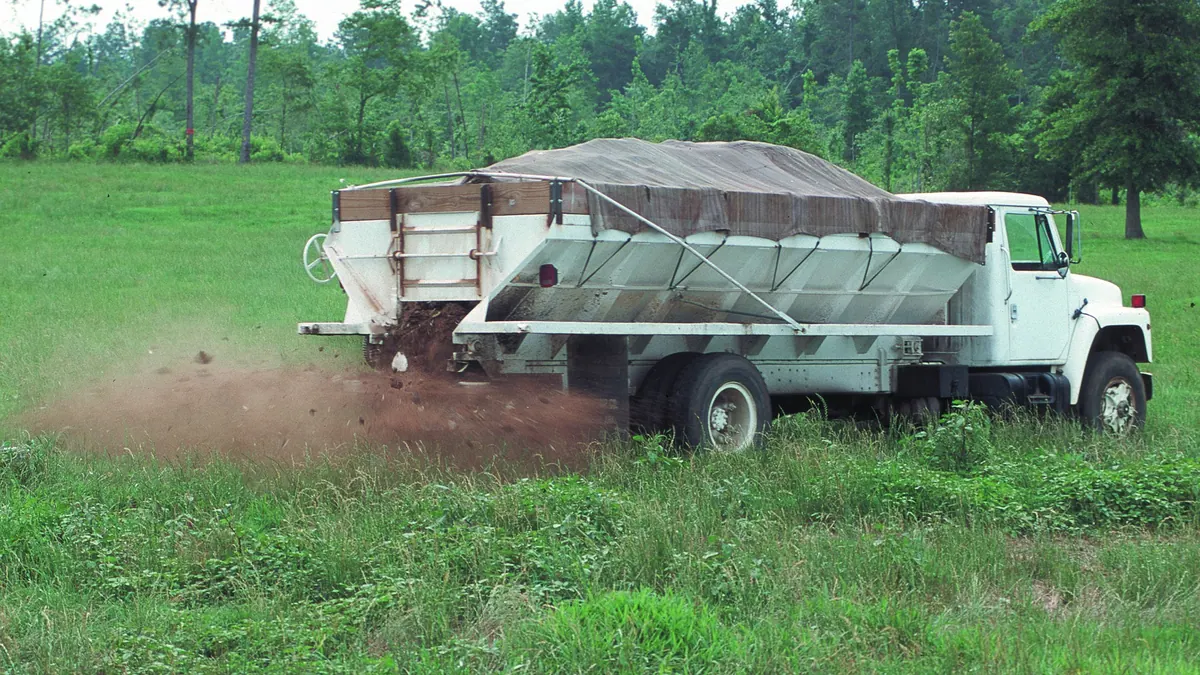
BMP testingAnimal excreta (slurry, manure, poultry litter)
Poultry manure — BMP: 13 studies, weighted mean 214 m³ CH₄/t VS
Poultry litter (chicken, turkey) has a high dry matter content and a lot of nitrogen, so it gives a good potential, but very easily leads to ammonia inhibition.
rating: neutralCH₄ ≈ 55 % (estimate)
Photo Photo by Bob Nichols, USDA Natural Resources Conservation Service. / Wikimedia Commons, public domain, source file; changes: cropping

- Weighted mean
- 214m³ CH₄/t VS
- Range
- 73–295m³ CH₄/t VS
- Records
- 13studies
- Publications
- 8sources
- Temperatures
- 35 °C, 36 °C, 37 °C, 38 °Cof the test
Methane in biogas
Medium methane content · ≈ 5.5 kWh/m³ of biogas
estimate from the substrate type The collected studies contain no measurement. The interval follows from the approximate composition (protein from total nitrogen (N 2.5 % DM × 6.25)) and the yields of compound groups according to FNR.
Rating for biogas plants
neutral — editorial rating for biogas plantsNo clear advantages — worth charging a fee for accepting it
Potential per tonne of fresh matter: high (98 m³ CH₄/t); process risk: protein / nitrogen, inhibitors, salt / sodium. Handling costs: sand, stones, shells.
Why? Rating factors
Potential per tonne +2
- +2potential 98 m³ CH₄/t fresh matter (BMP 214 × DM 60.3 % × VS 76 %)
Process stability −2
- −1protein / nitrogen: risk of ammonia inhibition at higher shares
- −0.5inhibitors: natural or residues (e.g. limonene, polyphenols, antibiotics, metals)
- −0.5salt / sodium: inhibition at high shares
Handling and costs −0.5
- −0.5sand, stones, shells — sediment in the digester
Total points: −0.5 · thresholds: ≥ 2.5 very good, ≥ 1 good, below — neutral; negative with cumulative process risk.
Add to the co-digestion calculator CSV data
BMP curves from 13 studies
Weighted mean Individual records
Dashed lines are a model curve (first-order kinetics, B(t) = B₀·(1 − e−kt)); the end point comes from the publication. All curves are model curves.
Cumulative methane production over the test [m³ CH₄/t VS]. The thick line is the weighted mean of all records (214); dots mark the end values given in the publications. Point at the chart to read values; click a legend item to hide or show a record.
Show the remaining records in the legend (1)
Records and sources
Download CSV| Source | BMP m³ CH₄/t VS | Temperature | Sample | Curve |
|---|---|---|---|---|
| Rahman et al. (2019) DOI | 254 | 35 °C · mesophilic | poultry droppings (PD) | end point (model curve) |
| Saha et al. (2025) DOI | 73 | 35 °C · mesophilic | poultry droppings (PD), 100% | end point (model curve) |
| Cu et al. (2014) DOI | 173 | 37 °C · mesophilic | chicken manure | end point (model curve) |
| Kafle i Chen (2016) DOI | 258 | 36 °C · mesophilic | chicken manure | end point (model curve) |
| Kouas et al. (2017) DOI | 286 | 35 °C · mesophilic | manure | end point (model curve) |
| Lallement et al. (2023) · 1 DOI | 173 | 38 °C · mesophilic | Turkey manure | end point (model curve) |
| Lallement et al. (2023) · 2 DOI | 186 | 38 °C · mesophilic | Poultry manure | end point (model curve) |
| Lallement et al. (2023) · 3 DOI | 211 | 38 °C · mesophilic | Poultry manure | end point (model curve) |
| Lallement et al. (2023) · 4 DOI | 217 | 38 °C · mesophilic | Poultry manure | end point (model curve) |
| Lallement et al. (2023) · 5 DOI | 264 | 38 °C · mesophilic | Poultry manure | end point (model curve) |
| Lallement et al. (2023) · 6 DOI | 274 | 38 °C · mesophilic | Poultry manure | end point (model curve) |
| Li et al. (2013) DOI | 295 | 37 °C · mesophilic | Chicken Manure | end point (model curve) |
| Pyykkönen et al. (2023) DOI | 150 | 37 °C · mesophilic | Chicken manure (CM) | end point (model curve) |
| Weighted mean | 214 | arithmetic mean 216, SD 64 | ||
Typical composition
- Dry matter (DM)
- 60.3% (range 25.9–75.9)
- Volatile solids (VS)
- 76 % DM (range 62–84)
- Nitrogen
- 2.5 % DM
- C/N ratio
- 14.3
Median and range of the determinations reported in the publications behind this substrate's BMP records (read from: MY-D); dry matter: 9 determinations, volatile solids: 7 determinations. C/N was calculated as the ratio of C and N content (% DM) from the same source.
Sources: Cu et al. (2014); Kafle et al. (2016); Lallement et al. (2023); Li et al. (2013).
The composition of the raw material varies between batches — for plant calculations use an analysis of your own sample. The calculator inserts typical values automatically.
Process properties
Advantages
- Methane potential in the Substraty.pl BMP dataset: weighted mean 213.7 m³ CH₄/t VS (SD 64.2; 13 records, 8 sources).
- High DM - a dense substrate (Abouelenien et al. 2010).
- Thermophilic co-digestion of litter with distillery stillage (thin stillage) improved yield up to 60% stillage (Sharma et al. 2013).
Drawbacks and risks
- Free ammonia from uric acid inhibits methanogenesis, especially under thermophilic conditions at high pH (Abouelenien et al. 2010; Sung and Liu 2003).
- An ammonia removal method using biogas recirculation kept the concentration below 2 g N/kg and enabled 195 m³ CH₄/t VS (Abouelenien et al. 2010).
- Sand/grit and salts settle in the tank (Salminen and Rintala 2002).
- In a mesophilic CSTR with chicken manure the biogas yield was good at TAN below 5000 mg/l, fell at approx. 10,000 mg/l (COD conversion from 68% to 20%), and at 16,000 mg/l the process stopped; after dilution and washing out the ammonia the biogas recovered (Niu et al. 2013).
Co-digestion — what to combine it with, what to watch out for
- combines well
Distillery stillage and vinasse
Stillage (acidic, carbon-rich) balances the alkalinity and N of the litter - optimum 60% stillage in the thermophilic study.[1]
- avoid
substrates: protein-rich — e.g. Food waste, Municipal sewage sludge (mixed), Organic fraction of municipal solid waste, Grass clippings, Waste activated sludge (secondary sludge)
Dosing
No source-based % of litter in a biogas plant. Use in a mix with carbon-rich substrates, monitor NH4-N; start with a low dose. For stillage in co-digestion with litter: improvement up to 60% (w/w), inhibition at 80% (Sharma et al. 2013).
Introduce gradually, starting with a small dose and monitoring the process (e.g. FOS/TAC, pH, gas composition).
Practical requirements
- ABP cat. 2 (Art. 9 of Reg. 1069/2009): manure, slurry and digestive tract content may be digested without prior sterilisation if the authority does not recognise a risk of spreading a serious transmissible disease (Art. 13(e)(ii)); in that case a minimum of 70 °C for a minimum of 60 min applies (Reg. 142/2011, Annex V Ch. III Section 1), and where they are the only material of animal origin in the installation, the authority may approve other requirements (Section 2 point 3).
- Provide for removal of sand and heavy contaminants: sand is often strongly bound to organic matter and is released only in the digester, and sediments reduce its usable capacity, so a scraper or bottom drain is needed (FNR 2010, Ch. 3).
- Ammonia removal by biogas recirculation kept its concentration below 2 g N/kg (Abouelenien et al. 2010).
Sources of the process data
- Sharma et al. (2013). Thermophilic anaerobic co-digestion of poultry litter and thin stillage. Bioresour. Technol.
- Rajagopal, Masse, Singh (2013). A critical review on inhibition of anaerobic digestion process by excess ammonia. Bioresour. Technol.
- Sung, Liu (2003). Ammonia inhibition on thermophilic anaerobic digestion. Chemosphere
- Abouelenien et al. (2010). Improved methane fermentation of chicken manure via ammonia removal by biogas recycle. Bioresour. Technol.
- Salminen, Rintala (2002). Anaerobic digestion of organic solid poultry slaughterhouse waste - a review. Bioresour. Technol.
- Rozporządzenie (WE) nr 1069/2009 określające przepisy sanitarne dotyczące produktów ubocznych pochodzenia zwierzęcego (art. 9, 10, 12–14, 24)
- Rozporządzenie Komisji (UE) nr 142/2011 wykonujące rozporządzenie (WE) nr 1069/2009 (zał. IV rozdz. III, zał. V rozdz. I i III)
- FNR (2010). Guía sobre el Biogás – Desde la producción hasta el uso (hiszp. wydanie „Leitfaden Biogas”, GIZ 2013)
- Niu et al. (2013). Mesophilic methane fermentation of chicken manure at a wide range of ammonia concentration: stability, inhibition and recovery. Bioresour. Technol.
The co-digestion calculator will assess a specific mixture containing this substrate.
What it is and where it comes from
Poultry litter is the droppings of laying hens, broilers, turkeys and other birds, mixed with bedding (sawdust, straw, husks) or collected from belts in cage farms. Poland is one of the largest poultry producers in the European Union, so litter is an available and energetically interesting raw material. The dataset includes chicken litter, turkey manure and poultry droppings from developing countries, in several variants of concentration and inoculum.
Properties relevant to digestion
The dry matter of litter is high, especially with bedding, and the nitrogen share very large, mainly in the form of uric acid, which under digestion conditions is converted into ammonia. Free ammonia is toxic to methanogenic archaea, and the risk rises at higher pH and temperature. The material also contains calcium and other salts as well as sand or grit fed to the birds, which settle in the tanks. Sawdust bedding adds lignin, lowering susceptibility to degradation, whereas litter from belts is richer in readily available components.
How to read the spread of results
The spread of results comes from differences in the type of birds, their feeding, the amount and type of bedding, and the age and storage of the litter (dried, composted, fresh). Methodology has a large influence, however: the substrate concentration in the test (in one study the highest result was obtained at a dry matter of 11%), adaptation of the inoculum to ammonia, substrate-to-inoculum ratio, temperature and duration. Too high a load causes inhibition and lowers the result, so a low result does not always mean a low potential of the material.
In biogas plant practice
Poultry litter is used in co-digestion at a limited share, together with materials of a high C/N ratio, such as silages, straw or plant waste. It is worth diluting it with water or slurry, monitoring ammonium nitrogen and pH, and, where necessary, using reactors operating at lower temperatures. Litter is a natural fertiliser on the farm, and in the context of ABP it is category 2 material, which may be used at a biogas plant under the conditions laid down in EU and national regulations.
Methodology in brief
BMP is the amount of methane obtained from volatile solids (VS) in a batch test, given in m³ CH₄ per tonne of VS (numerically the same as NmL CH₄/g VS in the publications) and converted to normal conditions (0 °C, 101.325 kPa). The weighted mean gives each publication a total weight of 1, split equally between its results for the substrate — a paper testing twenty varieties does not outweigh a paper with a single sample. In inter-laboratory programmes the unit is the laboratory (total weight 1), and within it the weight of a test grows with the number of bottles (replicates). Results after pretreatment (e.g. thermal, chemical, enzymatic) are shown separately and are not included in the mean.
Solid lines are curves measured in the tests. Where a publication gives only the final result, we draw a first-order kinetic model, B(t) = B₀·(1 − e−kt): only the end point comes from the publication, and the shape of the curve serves purely as visualisation — do not read the production on a particular day from it. For this substrate k = 0.393 d−1 was assumed (median of rate constants k reported in the sources and/or fitted to the mean measured curves).
The statistics describe the spread of published results — a descriptive compilation, not a meta-analysis or a guarantee of plant yield.
Bibliography
- Rahman, M.; Saha, C.K.; Feng, L.; Møller, H.B.; Alam, M. (2019). Anaerobic digestion of agro-industrial wastes of Bangladesh: Influence of total solids content. Engineering in Agriculture, Environment and Food 12(4), 484–493. DOI: 10.1016/j.eaef.2019.10.002 DOI
- Saha, C.K.; Nime, J.; Khatun, M.L.; Sharna, T.H.; Alam, M.M. (2025). Rice straw co-digestion potential with cow dung and poultry droppings for maximizing biogas production in Bangladesh. Heliyon 11(4), e42687. DOI: 10.1016/j.heliyon.2025.e42687 DOI
- Cu, T.T.T.; Nguyen, T.X.; Triolo, J.M.; Pedersen, L.; Le, V.D.; Le, P.D.; Sommer, S.G. (2014). Biogas Production from Vietnamese Animal Manure, Plant Residues and Organic Waste: Influence of Biomass Composition on Methane Yield. Asian-Australasian Journal of Animal Sciences 28(2), 280–289. DOI: 10.5713/ajas.14.0312 DOI
- Kafle, G.K.; Chen, L. (2016). Comparison on batch anaerobic digestion of five different livestock manures and prediction of biochemical methane potential (BMP) using different statistical models. Waste Management 48, 492–502. DOI: 10.1016/j.wasman.2015.10.021 DOI
- Kouas, M.; Torrijos, M.; Sousbie, P.; Steyer, J.P.; Sayadi, S.; Harmand, J. (2017). Robust assessment of both biochemical methane potential and degradation kinetics of solid residues in successive batches. Waste Management 70, 59–70. DOI: 10.1016/j.wasman.2017.09.001 DOI
- Lallement, A.; Peyrelasse, C.; Lagnet, C.; Barakat, A.; Schraauwers, B.; Maunas, S.; Monlau, F. (2023). A Detailed Database of the Chemical Properties and Methane Potential of Biomasses Covering a Large Range of Common Agricultural Biogas Plant Feedstocks. Waste 1(1), 195–227. DOI: 10.3390/waste1010014 DOI
- Li, Y.; Zhang, R.; Liu, G.; Chen, C.; He, Y.; Liu, X. (2013). Comparison of methane production potential, biodegradability, and kinetics of different organic substrates. Bioresource Technology 149, 565–569. DOI: 10.1016/j.biortech.2013.09.063 DOI
- Pyykkönen, V.; Winquist, E.; Seppänen, A.M.; Vainio, M.; Virkkunen, E.; Koppelmäki, K.; Rasi, S. (2023). Anaerobic Digestion of Solid Agricultural Biomass in Leach-Bed Reactors. Bioengineering 10(4), 433. DOI: 10.3390/bioengineering10040433 DOI
All sources of the site: bibliography.
Other substrates in the group “Animal excreta (slurry, manure, poultry litter)”
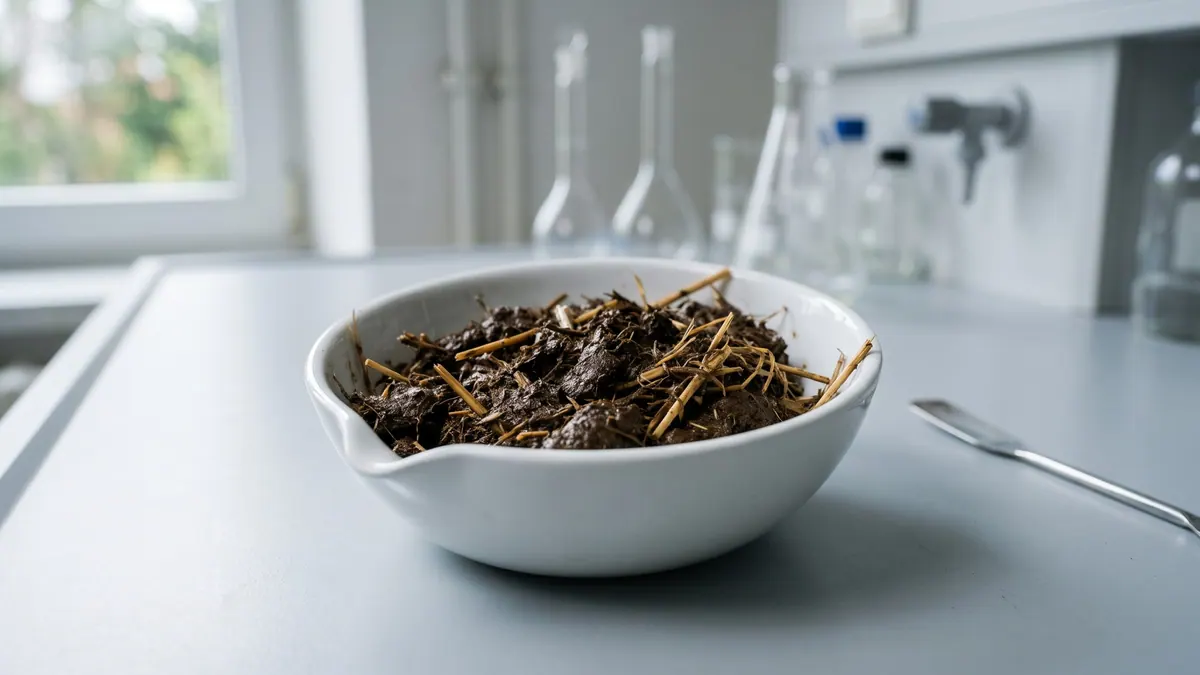
Pig manure (solid) — BMP: 5 studies, weighted mean 293 m³ CH₄/t VS
293 m³ CH₄/t VS weighted mean from 5 studies
good — editorial rating for biogas plants≈54 %
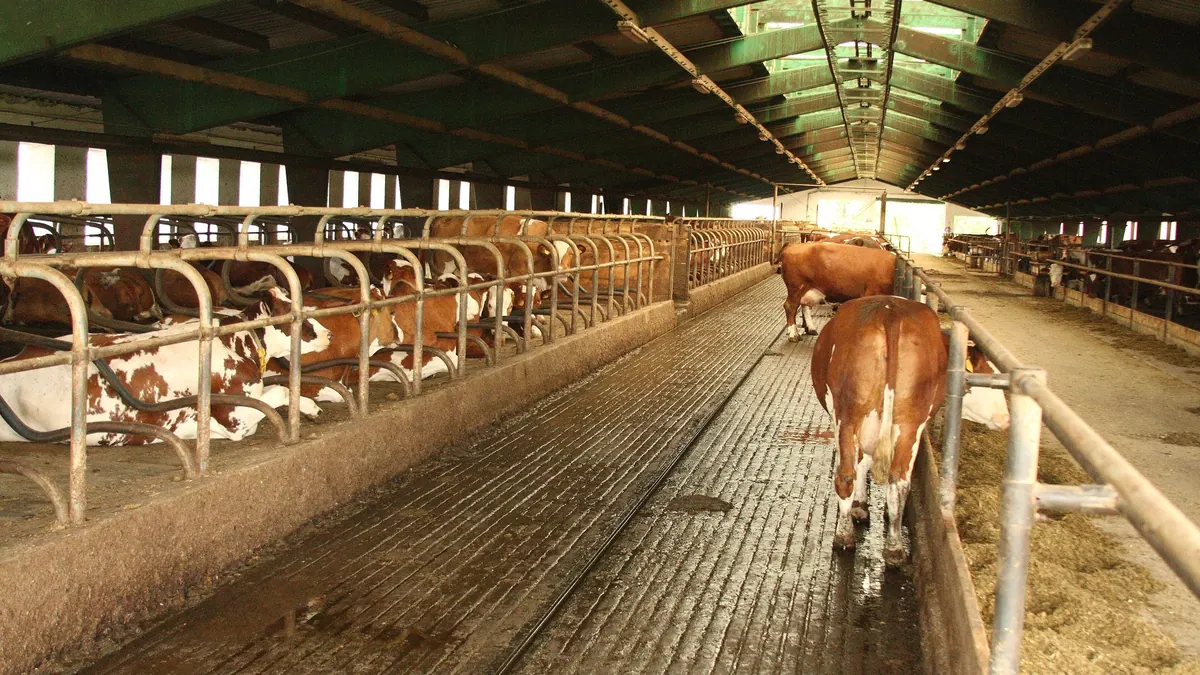
Cattle slurry — BMP: 14 studies, weighted mean 236 m³ CH₄/t VS
236 m³ CH₄/t VS weighted mean from 14 studies
very good — editorial rating for biogas plants≈54 %
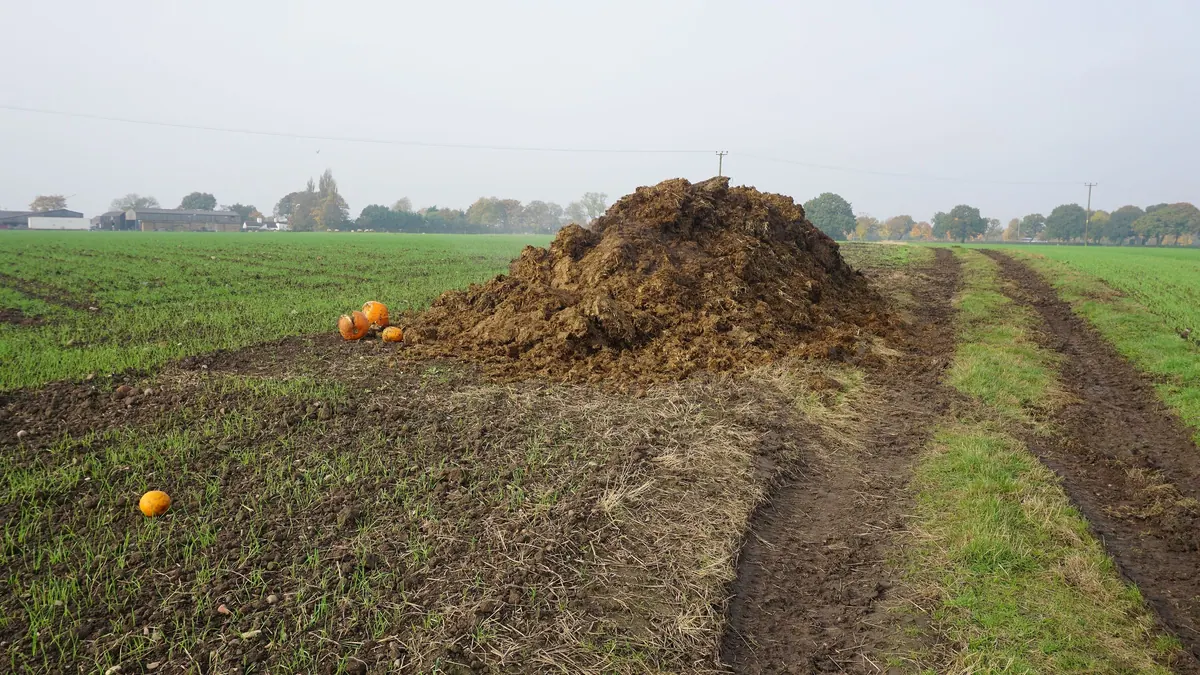
Mixed/unspecified manure — BMP: 5 studies, weighted mean 289 m³ CH₄/t VS
289 m³ CH₄/t VS weighted mean from 5 studies
good — editorial rating for biogas plants≈53 %
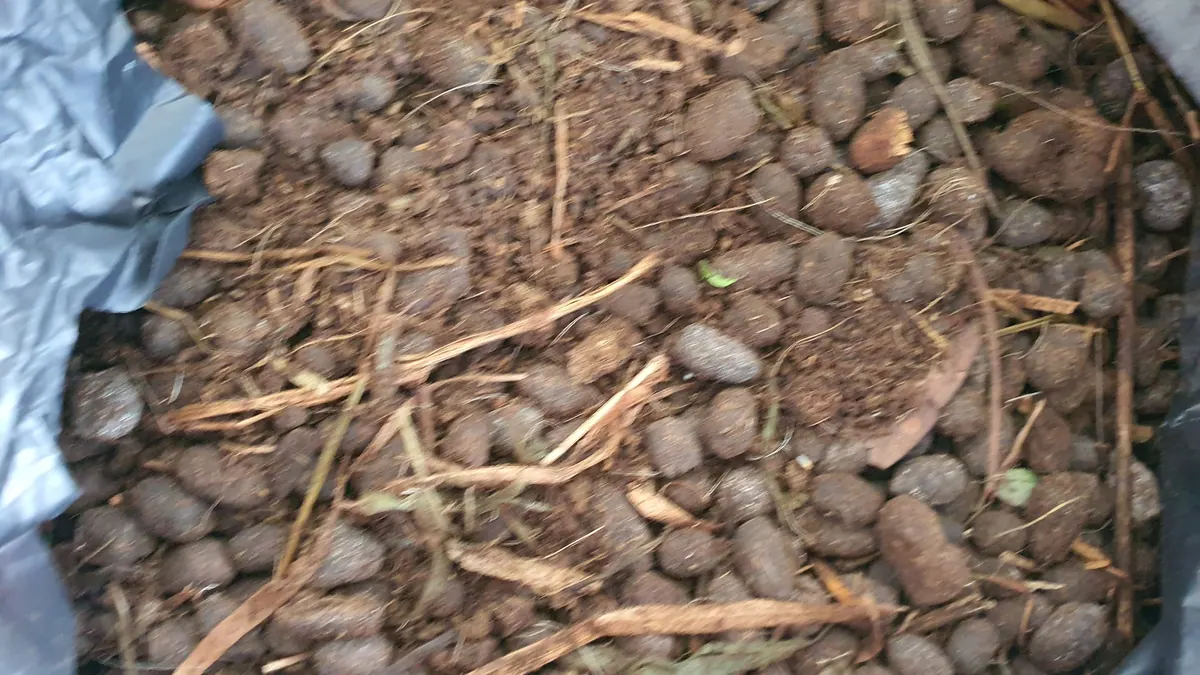
Goat manure — BMP: 2 studies, weighted mean 157 m³ CH₄/t VS
157 m³ CH₄/t VS weighted mean from 2 studies
good — editorial rating for biogas plants≈54 %