Emissions and climateExplainer
ILUC, energy crops and biogas sustainability criteria in RED
Indirect land use change (ILUC) is the risk that energy crops displace food production. We explain how RED treats food and feed crops, waste and residues, and intermediate crops.
Other language versions: polski.
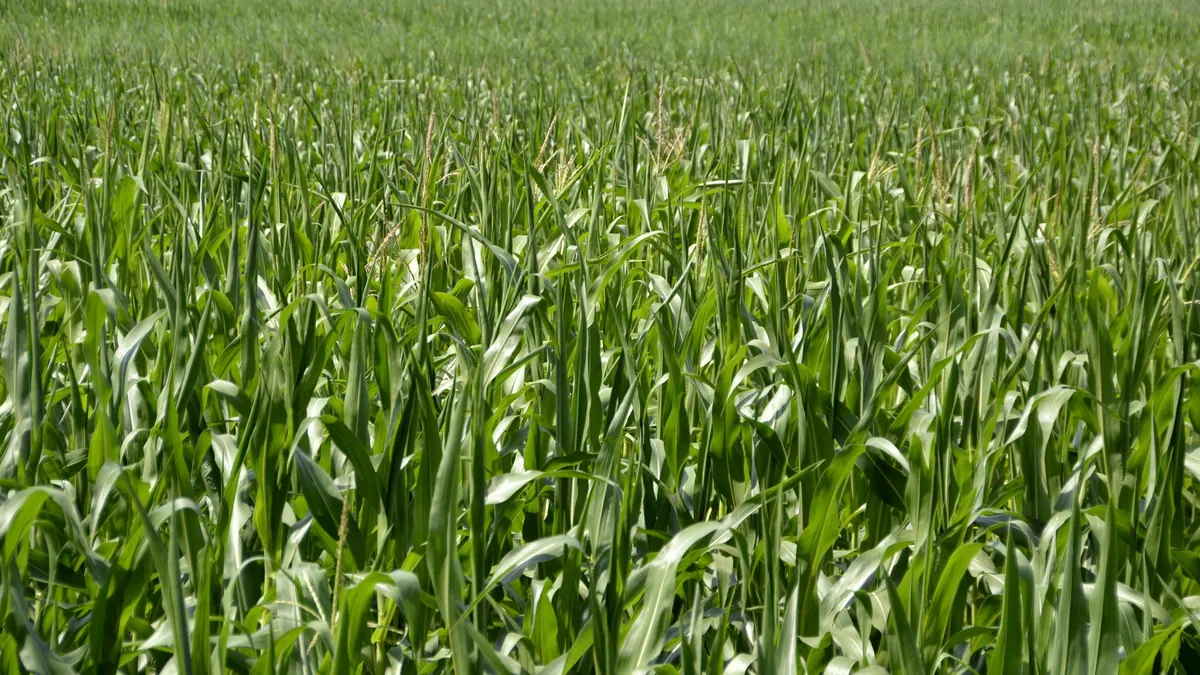

Indirect land use change (ILUC) is a phenomenon in which growing energy crops on existing fields displaces food or feed production, and the demand for it is met by bringing new crops into cultivation elsewhere, e.g. at the expense of forests or grassland. Converting such land releases carbon, which can cancel out the climate benefits of bioenergy. The RED II and RED III directives respond to this risk by limiting the share of biofuels from food and feed crops and promoting feedstocks from waste and residues. For biogas this means rewarding slurry, biowaste and sewage sludge and taking a cautious approach to dedicated crops.
How ILUC works
Direct land use change (LUC) occurs when we convert, for example, forest into a field for an energy crop. ILUC is a market effect: increased demand for a feedstock shifts prices and causes agriculture to expand elsewhere. It cannot be measured directly, so it is estimated with economic models, around which there is scientific debate. For biofuels from food crops, ILUC estimates can be significant, which is why regulations adopted a precautionary approach in the form of limits.
How RED approaches it
- Limits for food and feed crops. In transport, the share of biofuels from such crops is limited; RED II set the limit at the 2020 share increased by 1 percentage point and no more than 7% of final energy consumption in transport. Member States may apply lower limits.
- Advanced feedstocks (Annex IX). Part A includes, among others, algae, the biomass fraction of municipal waste, biowaste, straw, manure and sewage sludge; part B – used cooking oil and animal fats of specified categories. Biofuels from these feedstocks are given preferences (including multipliers when counting towards targets).
- High ILUC-risk biofuels. A gradual phase-out has been set for feedstocks with clear expansion onto land with high carbon stocks.
- Agricultural and land criteria. Agricultural biomass must come from land that does not have high biodiversity value or large carbon stocks, and must meet the principles of good agricultural practice.
What this means for biogas plants
- Waste and manure – the safest category, free of ILUC risk.
- Energy crops (silage maize) – can be used, but in the GHG balance they bear emissions from cultivation, and in some systems their share in support or in counting towards targets is limited. National regulations may additionally limit the share of such substrates.
- Intermediate crops and second crops – grown between main crops or after them, they do not displace food production; if well planned, they can improve soil fertility.
- Agricultural residues (straw) – require a balance with the need to maintain soil organic matter.
Worked example (illustrative)
A biogas plant has 5000 ha of fields around it and needs 40,000 t of silage a year. At a yield of 40 t/ha of fresh matter, this requires 1000 ha, i.e. 20% of the land in the catchment area. If 800 ha come from existing fields where cereals for feed were previously grown, part of the demand for feed will be shifted elsewhere – the ILUC effect depends on market elasticity. If instead 600 ha were intermediate crops (30 t/ha) = 18,000 t, and the rest were waste and slurry, the ILUC risk would be significantly lower. The numbers are illustrative and serve to illustrate the calculation.
Practical conclusions
- When planning the feedstock base, increase the share of waste, manure and intermediate crops.
- Document the origin of crops and compliance with the land criteria.
- Check national limits for substrates and the conditions of support.
- Carry out a GHG balance that includes cultivation.
- Communicate locally how the biogas plant affects land use.
The role of RED III
The RED III directive (EU) 2023/2413 maintained the logic of limiting biomass from food and feed crops and strengthened the requirements for the sustainable sourcing of biomass, including forest biomass, and also extended the list of criteria to cover smaller plants. The practical conclusion for biogas producers is that documentation of feedstock origin will be increasingly important, and the regulatory risk for plants based on main crops is growing.
Summary
ILUC is an issue that shapes policy towards biomass. For biogas the best response is to rely on waste, manure and intermediate crops and to keep transparent documentation of feedstock origin.
Sources
Related articles