Waste and circular economyExplainer
3D printing filament from plastic bottle caps: the idea, limitations and benefits
PP and HDPE caps can be shredded and processed into filament in an extruder, but the material is hard to print with. We discuss the educational value, technical limitations and the EU context.
Other language versions: polski.
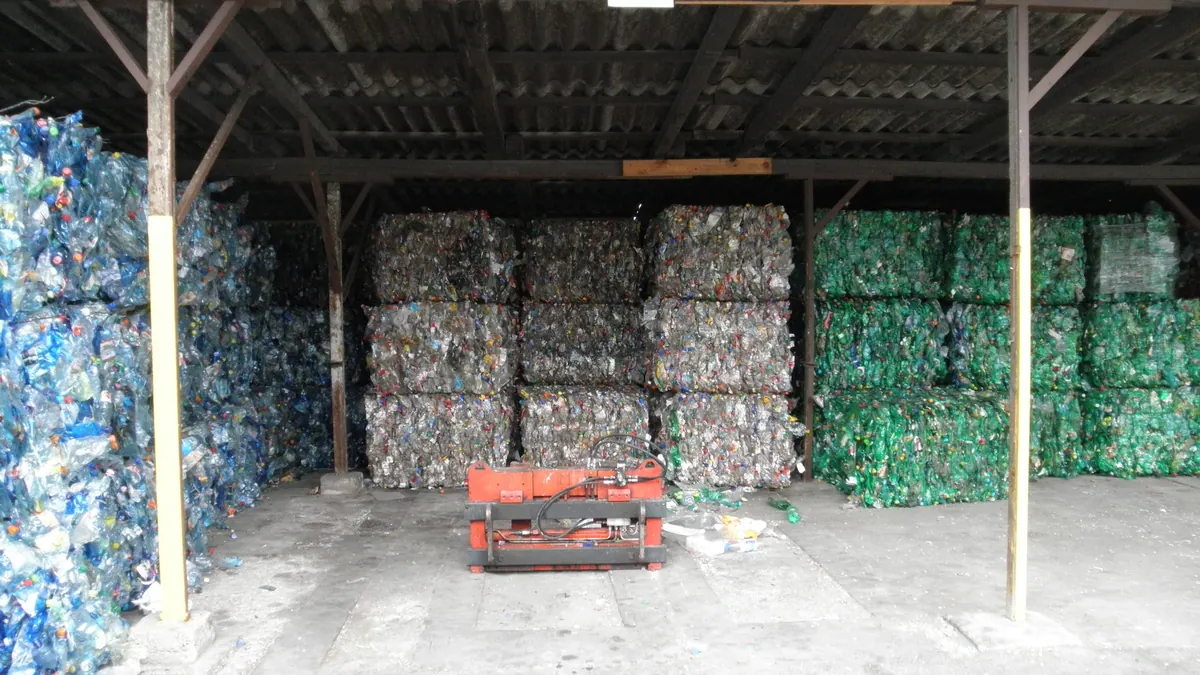

Bottle caps, made most often of polypropylene or high-density polyethylene, can be shredded and processed into 3D printing filament, but the material is demanding to print with, so the most valuable aspects of the idea are education and showing the closed loop. The idea combines environmental, educational and potentially economic benefits, but it requires a realistic assessment of the technical limitations.
Why caps
Caps are small, so they often "slip through" sorting processes and end up in mixed waste or, worse, in the environment. At the same time they are made of plastics (PP, HDPE) with good recycling properties and relatively uniform within a single type of cap. Cap collections run by schools and organisations make it possible to obtain a cleaner and more uniform stream than mixed waste. From 3 July 2024, Directive (EU) 2019/904 requires plastic caps and lids to remain attached to beverage containers of up to 3 l during their intended use, which will change how caps circulate in future.
From cap to filament: the process
A typical process comprises: collection, sorting by plastic type and colour, washing and drying, shredding in a shredder, and then extrusion in an extruder into filament of constant diameter (usually 1.75 mm). Constant diameter and the absence of contaminants are important, because any defect or contamination can clog the printer nozzle. Small devices are available for educational use or small-scale production; their prices and parameters should be checked with the manufacturers.
Technical limitations
PP and HDPE are among the plastics that are difficult to print with in FDM. They have high shrinkage, which leads to warping and poor adhesion of the first layer to the bed, and in addition they require suitable temperatures and a suitable build surface. For this reason most hobbyist printing is based on other plastics (PLA, PETG), and PP and HDPE are more often processed by injection moulding or pressing in moulds. This does not mean that 3D printing from caps is impossible; it requires experience and a suitable set-up, and quality and repeatability can be lower than with dedicated granules.
Environmental dimension
Every kilogram of plastic waste redirected to reuse reduces the amount of waste sent to landfill or incineration. On the scale of a single school or town the effect is small; on the scale of many communities it grows. At the same time, it should be remembered that the actual environmental balance depends on the energy used for drying, shredding and extrusion, and on how the finished filament is used.
Educational value
The strongest argument for projects of this kind is education. Pupils and students see how waste becomes a raw material, and learn the basics of plastics processing and 3D printing. Such projects teach thinking in terms of the circular economy, in which the waste of one process is the raw material of another. An analogy can be drawn with a biogas plant: organic waste becomes energy and fertiliser.
Conclusions
- Cap filament makes sense as an educational project and a local initiative, less so as a large-scale business.
- Before investing in equipment, it is worth checking the printability of the material in simple tests.
- Clean, separate collection is a condition of quality; school and community collections have an advantage over mixed waste.
- General context: Recycling and landfilling rates for municipal waste.
How to start a school project
For a school or club the most realistic course is: collecting caps and sorting them by colour and plastic type (markings 2 – HDPE and 5 – PP), washing and drying, and then shredding together in a simple shredder. The shredded material can be used to make items in moulds (for example coasters, handles, decorative elements) or, using an extruder, short batches of filament for testing. It is worth agreeing work safety with the equipment supplier: heated parts, shredder noise and fume emissions during melting require ventilation and health and safety rules.
Costs and scale
Home or school filament production makes sense mainly as an educational project, because the cost of equipment and working time usually exceeds the price of filaments available on the market. What gains is not the financial balance but the pupils' skills and the community's awareness of waste.
Sources
Questions and answers
Can 3D printer filament be made from bottle caps?
Caps can be shredded and filament extruded from them, but PP and HDPE are difficult to print using FDM technology (they shrink and adhere poorly to the bed). Educational uses and other processing techniques work better.
Related articles