Market and investmentAnalysis
United Kingdom: CfD for biogas and biomass in AR4 and AR5 — price caps and no contracts
In AR4 and AR5 of the British contracts for difference, the caps for anaerobic digestion were 128 and 136 GBP/MWh (2012 prices), but no AD or biomass CHP project received a contract.
Other language versions: polski.
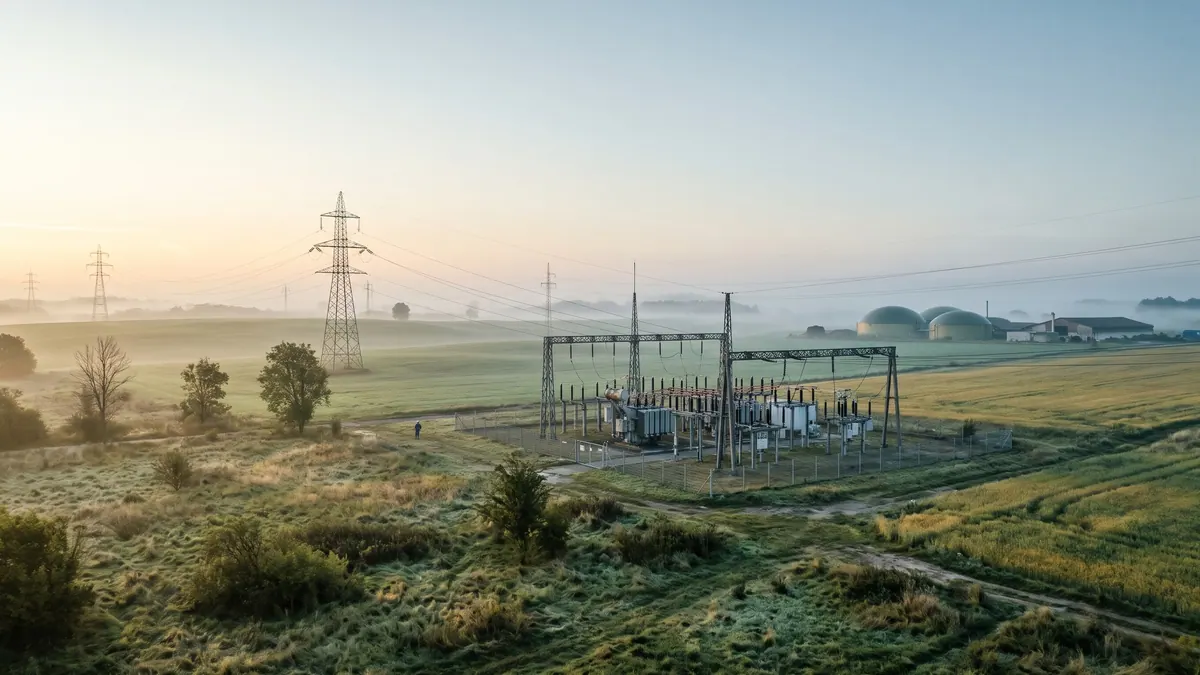
British Contracts for Difference (CfD) provide separate price caps for anaerobic digestion, biomass with cogeneration and landfill gas, but in the two most recent rounds, AR4 (July 2022) and AR5 (September 2023), no anaerobic digestion project and no dedicated biomass CHP project received a contract. Below we set out the caps from the official documents and the results of the rounds.
How CfD works
In a contract for difference the generator receives the difference between the strike price set in the auction and the market reference price of energy. When the market price is lower than the strike price, the state pays the difference; when it is higher, the generator returns the surplus. The generator therefore has predictable revenue instead of selling energy at a variable price.
Before each round the government publishes Administrative Strike Prices (ASP). These are the maximum rates that a project of a given technology can obtain. Bids above the ASP do not qualify for the auction, and the actual strike price results from the auction and may be lower than the ASP. Prices are given in 2012 values and are indexed by an inflation measure when the contract is concluded, so in nominal terms the amounts are higher than in the tables.
Technology pots
Technologies are divided into pots with separate budgets. In AR4 pot 1 included, among others, waste-to-energy with CHP, landfill gas, sewage gas, onshore wind and photovoltaics. Pot 2 grouped less mature technologies: advanced conversion technologies (ACT), anaerobic digestion above 5 MW and dedicated biomass with CHP, as well as floating offshore wind and others. Pot 3 was offshore wind.
ASP caps in AR4 and AR5
In 2012 prices, in GBP/MWh:
| Technology | AR4 | AR5 |
|---|---|---|
| Advanced conversion technologies (ACT) | 190 | 182 |
| Anaerobic digestion (>5 MW) | 128 | 136 |
| Dedicated biomass with CHP | 163 | 162 |
| Waste-to-energy with CHP | 121 | 116 |
| Sewage gas | 151 | 148 |
| Landfill gas | 62 | 62 |
- AR4
- AR5
The changes are small: anaerobic digestion gained 8 GBP/MWh, while the other technologies in the table became slightly cheaper in ASP terms or stayed at the same level (landfill gas). The differences between technologies are, however, large: the cap for AD is more than twice as high as for landfill gas, which reflects the higher construction and operating costs of biogas plants. In AR5 pot 2 was to apply to the delivery years 2026/27 and 2027/28, and pot 1 to the years 2025/26–2027/28.
What won in AR4
The official AR4 results of 7 July 2022 covered 93 projects, a total of 10,792 MW. Of the combustion-related technologies, one waste-to-energy CHP project received a contract: 30 MW at 45.99 GBP/MWh (2012 prices). No AD, ACT or biomass CHP project appeared among the winners; this is also confirmed by the law firm Slaughter and May.
What won in AR5
The AR5 results were published on 8 September 2023. In pot 2 only tidal stream (53.04 MW at 198 GBP/MWh) and geothermal (12 MW at 119 GBP/MWh) received contracts, 65.04 MW in total. Neither AD, nor ACT, nor biomass with CHP, waste-to-energy with CHP, landfill gas or sewage gas appear in the list of results.
Scale of prices: biogas versus wind
The difference in scale is visible when we compare the caps with the market prices of the auctions. In AR4 offshore wind reached 37.35 GBP/MWh in 2012 prices, and photovoltaics 45.99 GBP/MWh. The AD cap from AR5 (136 GBP/MWh) is more than three times higher than the cap for offshore wind in the same round (44 GBP/MWh). Within a pot, technologies compete for a shared budget, and bids are assessed on price.
The prices in the tables are given in 2012 values. For budget purposes the government publishes a CPI inflator; in the AR4 budget notice, for example, a factor of 1.2056 was given for converting the budget from 2011/12 prices to October 2021 prices.
Interpretation
Anaerobic digestion and biomass have separate caps in CfD, but in practice they compete for contracts with projects that can offer much lower prices. For the biogas industry this means that CfD is today rather a theoretical option. Current support for biogas is biomethane under the GGSS (see GGSS review 2023) and the settlement of energy exports under the Smart Export Guarantee (post on SEG). More about the AR4 round itself in a separate post.
For an investor from Poland there is a methodological lesson: the ASP cap is not a guaranteed price but a ceiling, and without a competitive bid there is no contract. Polish renewable auctions work on a similar maximum price logic, although the details differ from the British ones.
Sources
Questions and answers
Did AD and biomass with CHP win any contract in AR4 or AR5?
According to the official results, no, in neither AR4 nor AR5. In AR4 one energy-from-waste project with CHP received a contract, and in AR5 other sources won in the technologies of pots 1 and 2.
What is the ASP in CfD auctions?
The Administrative Strike Price is the maximum strike price that a project of a given technology can obtain in a round. Bids above the ASP are not eligible, and the strike price set in the auction may be lower than the ASP.
Related articles