BiogasEvent
Agricultural biogas plants act finally passed: capacity limits, faster decisions, siting resolution
On 13 July 2023 the Sejm accepted the Senate's amendments to the act on facilitations for agricultural biogas plants. The act sets capacity limits (3.5 MW electrical), shortens land development decisions to 65 days and introduces a siting resolution.
Other language versions: polski.
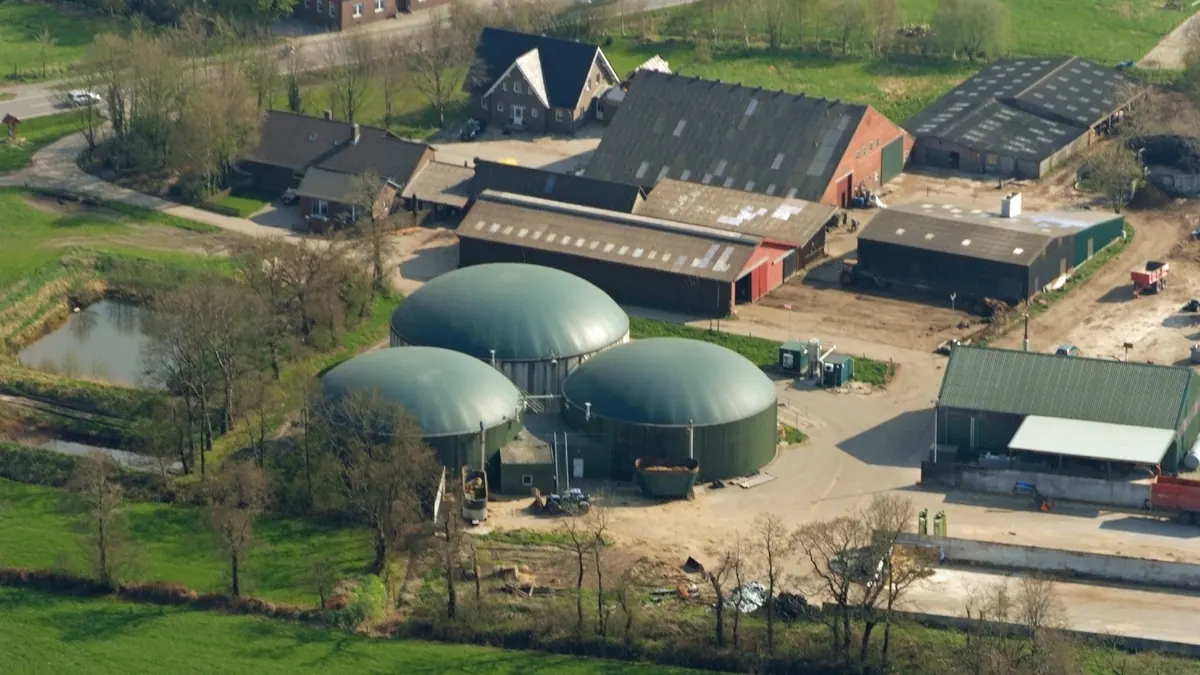

On 13 July 2023 the Sejm accepted the Senate's amendments to the act on facilitating the preparation and implementation of investments in agricultural biogas plants, and on their operation. This concluded the parliamentary work. The act creates a separate pathway for agricultural biogas plants carried out by qualifying entities – farmers, producer groups, cooperatives, selected agri-food enterprises – and provides for capacity limits and shortened procedures. It now goes to the President, who has 21 days to decide.
What is changing
The most important solutions of the act:
| Area | Solution |
|---|---|
| Who can benefit | nine categories of entities, including farmers, producer groups and organisations, cooperatives, universities, energy cluster coordinators |
| Capacity limits | up to 3.5 MW electrical, 10.5 MW thermal, 14 million m³ of biogas and 8.4 million m³ of biomethane per year |
| Feedstocks | agricultural products and by-products (including manure), residues from food processing; detailed list in the regulation |
| Land development decisions (WZ) | 65 days instead of 90; limited circle of parties to the proceedings |
| Local plans | in areas of agricultural and production development, permission for biogas plants of up to 1 MW electrical, 3 MW thermal, 4 million m³ of biogas or 2.4 million m³ of biomethane |
| Connection | grid connection conditions for installations of up to 2 MW within 90 days |
| Agricultural land | exemption from protection of up to 1 ha for buildings and yards |
| Larger installations | until 31 December 2025, a siting resolution of the municipal council (60 days, 21 days of consultation) |
The act contains restrictions and oversight: for five years the installation is to be used exclusively for the production of biogas, energy or biomethane by an eligible entity, a transfer contrary to this rule is void, and the loss of eligibility must be reported to the National Support Centre for Agriculture (KOWR) within 30 days. It also amends the acts on fertilisers (digestate), on waste (substrates as by-products), on renewable energy sources (the definition of agricultural biogas) and on biocomponents.
Significance for the industry in Poland
For farmers, the act is a chance to build small and medium-sized biogas plants without years of siting disputes. For the large-installation industry – the capacity ceilings and the requirement of a link to a farm mean that the facilitations will not cover the largest industrial projects, although these can use the siting resolution. Changes to the act on fertilisers will put the trade in digestate in order and give farmers greater legal certainty.
What to pay attention to
Investors should verify whether they meet the criteria of an eligible entity, whether the planned installation falls within the limits (taking into account the aggregation of the capacity of installations in a municipality) and whether the feedstocks correspond to the list in the regulation. It is also important to check the local plan and the declarations required in the proceedings.
What next
After the President's signature the act will be published and will enter into force after 30 days. The agriculture ministry is to issue a regulation with the list of substrates. The industry is also counting on swift rules on biomethane in the Act on Renewable Energy Sources.
Sources
Related articles