Market and investmentAnalysis
Austria: what does a biogas and biomass electricity generator receive? An overview of the EAG, rates and tenders
The Austrian EAG market premium gives biogas generators 29.02 ct/kWh, and biomass generators from 8.61 to 25.76 ct/kWh, for 20 years. We describe the rates, tenders and changes since 2022.
Other language versions: polski.
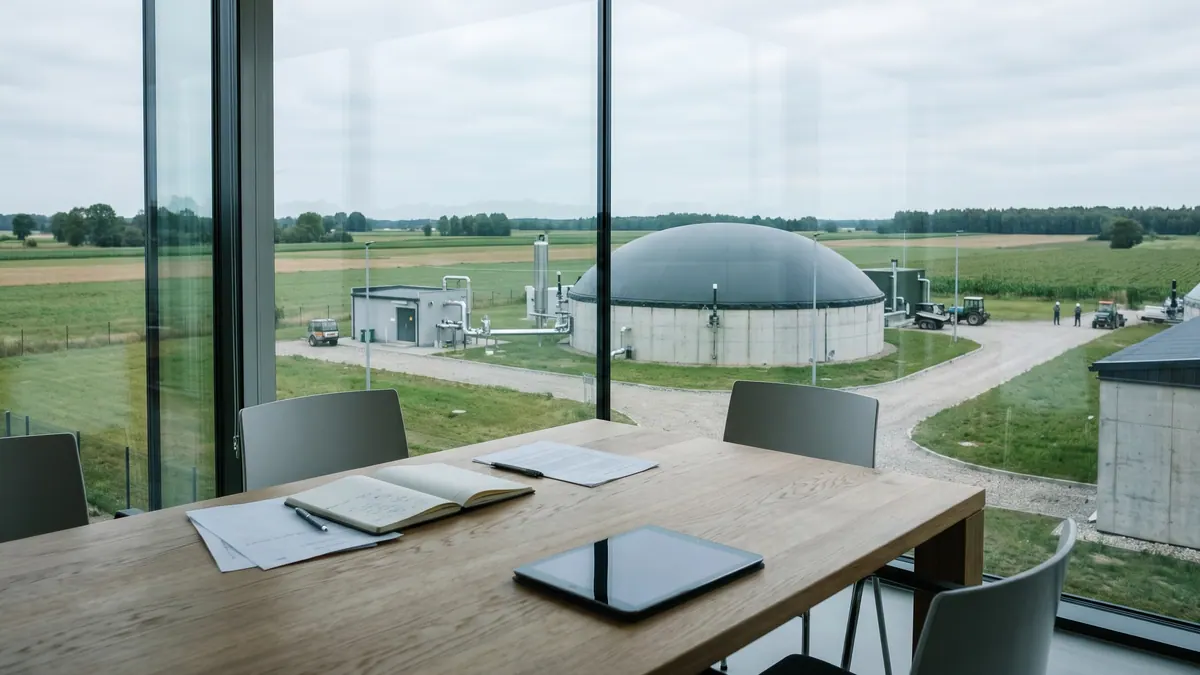
An Austrian generator of electricity from biogas today receives a market premium calculated from an applicable value of 29.02 ct/kWh for a new installation and 22.60 ct/kWh for an existing one, and a biomass generator from 8.61 to 25.76 ct/kWh, depending on the category. Support is granted for 20 years from commissioning, and the basis is the Renewable Energy Expansion Act (EAG) of 2021 and the accompanying market premium ordinance.
Mechanism: the market premium
The generator sells electricity on the market and receives a premium from the state settlement body. It is the difference between the applicable value and the reference market price; for biomass and biogas the reference is the average exchange price of the given month, calculated by the regulator E-Control. When the difference is negative, the premium is zero — the generator does not hand back the surplus. The payment is made monthly, based on the quantity of energy fed into the grid.
The applicable value is determined in two ways:
- tender — one of the routes for new and repowered biomass installations; the bid is the applicable value, limited by a cap;
- ordinance — for biogas, for follow-up premiums (continued support for existing installations after their first support period ends) and for new and repowered biomass installations applying for a premium outside the tender. The value on the day of application applies.
Rates over successive periods
- Biogas, new
- Biogas, existing (follow-up premium)
- New biomass, above 50 kWel
In 2022 biomass had a range of values from 7.85 to 22.91 ct/kWh, depending on the capacity and type of installation. In 2024 the rates were raised (details), and from 2026 they were lowered again (details).
Biomass: tenders and values
| Category 2026–2027 | Value |
|---|---|
| New, pure biomass up to 50 kWel | 25.76 ct/kWh |
| New, pure biomass above 50 kWel | 24.27 ct/kWh |
| New, waste and bark | 21.06 ct/kWh |
| Repowering, pure biomass | 21.94 ct/kWh |
| Follow-up premium up to 500 kWel | 12.63 ct/kWh |
| Follow-up premium above 500 kWel | 11.32 ct/kWh |
| Repowering, waste and bark | 18.95 ct/kWh |
| Follow-up premium, waste and bark up to 500 kWel | 10.52 ct/kWh |
| Follow-up premium, waste and bark above 500 kWel | 8.61 ct/kWh |
| Follow-up premium, extraction-condensing turbines above 500 kWel | 14.57 ct/kWh (pure biomass), 11.42 ct/kWh (waste and bark) |
The values in the table apply to premiums granted on application; in parallel, new and repowered installations can take part in the tender. Bid caps in the tender: 18.41 ct/kWh for new and 16.63 ct/kWh for repowered installations. Tenders are small — 7500 kWel — and held once a year; in 2024 the volume was twice as high (15,000 kWel). This is a fundamental difference from Germany, where hundreds of megawatts are decided in a single round (see EEG 2021).
Who this is for
- New small biogas plants — support on application, within the limits of the annual pool (in 2024–2025: 1500 kWel for biogas).
- Biomass combined heat and power plants — higher rates for the smallest units (up to 50 kWel), which the legislator justifies by higher investment and operating costs and by local production of heat and electricity.
- Existing installations after 2021 — a follow-up premium, the level of which depends on capacity and fuel; in the latest change it was cut the most for small installations (up to 500 kWel).
How to understand the rate changes
After the increase in 2024, the 2026 amendment lowers most values: biogas for new installations by 3.81 ct/kWh, the follow-up premium for biogas by 1.23 ct/kWh, and the bid cap for new biomass by 0.91 ct/kWh. The ordinance does not change the construction of the system: a 20-year market premium still applies, and it still distinguishes between new, repowered and existing installations and the type of fuel (pure biomass or waste, bark and sawdust). Austria updates the values every two years, on the basis of expert reports, and each application is settled at the rate on the day it is submitted, so the timing of the application has real significance for revenue over the next two decades.
Calculation example
If the monthly reference market price were 10 ct/kWh (an illustrative value, not a forecast), the premium for a new biogas plant with an applicable value of 29.02 ct/kWh would be 19.02 ct/kWh, and the generator's total revenue, together with sales on the market, 29.02 ct/kWh. At a market price of 30 ct/kWh the premium would fall to zero and the generator would keep the entire market price.
Comparison with the market
The values are clearly higher than typical wholesale prices, but what matters for the generator is the difference: the premium is paid only when the market is lower. When market prices are close to the applicable value the premium falls to zero, so the generator benefits from higher prices. 29.02 ct/kWh is about PLN 1230/MWh (exchange rate about PLN 4.24 per euro, indicative, January 2026). Austrian volumes are small: the annual pool of premiums granted on application for biogas was only 1500 kWel in 2024–2025, and the biomass tender 7500 kWel. The German system is judged by hundreds of megawatts in one round, and the Austrian one by individual power plants.
The values for 2026–2027 are based on the third EAG expert report prepared by the Austrian Energy Agency on behalf of the ministry.
Sources
Related articles