Emissions and climateExplainer
K-ETS: how the Korean emissions trading system works and what Phase 4 (2026–2030) changes
K-ETS has operated since 2015 and covers more than 77% of the country's emissions. Phase 4 (2026–2030) increases the share of auctioning, especially in the power sector: from 15% in 2026 to 50% in 2030.
Other language versions: polski.
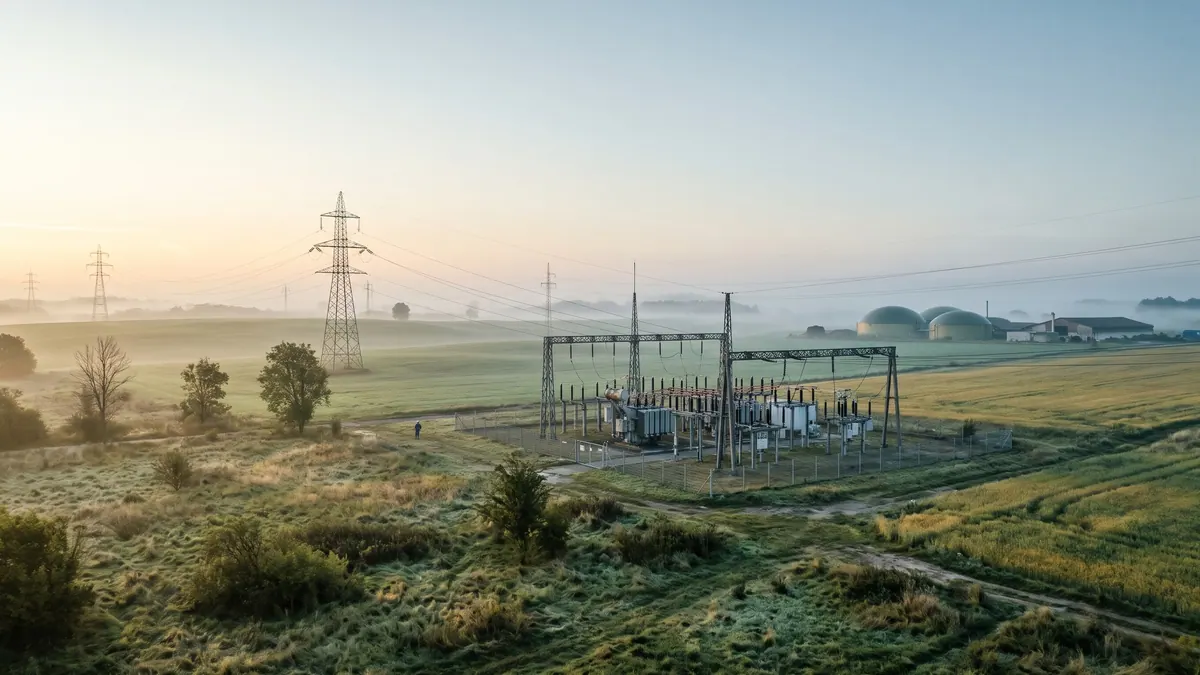
The Korean emissions trading system (K-ETS) has operated since 2015 and is the first nationwide mandatory system of its kind in East Asia. Phase 4 (2026–2030) is now under way, in which the share of allowances sold at auction rises – especially in the power sector – from 15% in 2026 to 50% in 2030.
Phases of the system
Phase 1 covered 2015–2017, Phase 2 – 2018–2020, Phase 3 – 2021–2025 and Phase 4 – 2026–2030. According to ICAP, in 2023 the system covered 77.75% of Korea's greenhouse gas emissions and in 2025 it covered 813 entities. The sectors are: power, industry, buildings, waste, transport, domestic aviation and shipping (from compliance year 2025).
Who is subject to the system
The system includes companies with total annual emissions of at least 125,000 t CO₂eq, with at least one installation above 25,000 t. This means that small agricultural biogas plants are usually not covered, whereas large waste processing plants, incinerators and landfills may be.
Auctions and prices
Regular auctions began in 2019; in 2025, 3.33% of the pool was allocated to auctions, and in Phase 4 about 11% (excluding reserves). In the power sector the auction share rises from 15% in 2026 to 50% in 2030, while in the other sectors it is 15%. In 2025 the average auction price was 9956 won (6.99 USD), and on the secondary market 9393 won (6.60 USD). Since the system started, auction revenue has reached 1.55 trillion won, including 189.2 billion won in 2025.
Phase 4 in figures
The allocation plan approved on 11 November 2025 provides for about 2.1 billion free allowances and about 260 million auctioned, as well as 85 million in the market stability reserve (K-MSR) and about 89 million in the reserve for new entrants. The total cap for 2026–2030 is, according to ICAP, 2.5373 billion t CO₂eq. A new linear reduction factor was introduced, different for the power sector and for the other sectors. Sectors at risk of carbon leakage (steel, non-ferrous metals, petrochemicals, cement, semiconductors; about 95% of industrial emissions) retain 100% free allocation. The plan also contains sectoral targets: the power, transport, buildings and waste sectors are to cut emissions by more than 50% by 2035 relative to 2018, and the power sector by 69–75%.
Offsets
In Phases 3 and 4 offsets are limited to 5% of an entity's obligation (in Phases 1 and 2 – up to 10%, of which in Phase 2 up to 5% could be international credits). In Phase 4, domestic credits from projects started after December 2016 and international credits compliant with Article 6 of the Paris Agreement are admitted.
What this means for renewable gases
- Methane from waste. Since the waste sector is covered and the system includes methane, emissions reduction has value for entities subject to the system.
- Biogas as a renewable source. Generating energy from biogas reduces fossil fuel consumption in the power sector, where allowance costs are rising.
- Price. At a price of about 7 USD per allowance, the price incentive is much lower than in the EU ETS, so K-ETS on its own does not finance biogas plants.
Comparison with the EU
The K-ETS auction price (an average of 9956 won, about 7 USD in 2025) is clearly lower than in the EU ETS, but the direction is the same: a gradually reduced pool and a growing share of auctioning.
How allocation works
In Phase 4 the allocation rules were simplified to two categories: the power sector and other sectors. Benchmark-based allocation was extended to semiconductors, displays and non-ferrous metals and to fuel use in all sectors, and the benchmark factor will be gradually tightened (from the weighted average of the best 37% of entities to the best 20%). The quantitative stability reserve K-MSR is part of the total cap, and its details were to be clarified in the first half of 2026 after public consultation. Additional auction revenue is to support companies' decarbonisation.
Legal changes in 2025
ICAP notes that the amendments to the K-ETS act adopted in October 2025 strengthen the stability and transparency of the market, and the allocation plan of November 2025 increases the share of auctioning and market stabilisation measures. Since 2021, domestic financial intermediaries and other third parties have been able to take part in auctions.
What this means for renewable gas investors
Because the system covers the gases CO₂, CH₄, N₂O, HFC, PFC and SF₆ and the waste sector, methane reduction at covered entities has value under K-ETS. At current prices, however, support for biogas rests mainly on the biogas act (separate articles) rather than on the allowance market.
Sources
Questions and answers
Does the K-ETS cover waste and biogas plants?
ICAP lists waste among the sectors covered by the scheme. Whether a specific installation is subject to the K-ETS depends on emission thresholds (entity: at least 125,000 t CO₂eq per year and at least one installation above 25,000 t).
Related articles