BiomethaneEvent
Beca, Firstgas and Fonterra report: biogas could cover about 20% of New Zealand's gas use by 2050
A Beca report prepared with Firstgas and Fonterra indicates that renewable gas could replace nearly 20% of national gas use by 2050 and avoid about 4% of energy emissions.
Other language versions: polski.
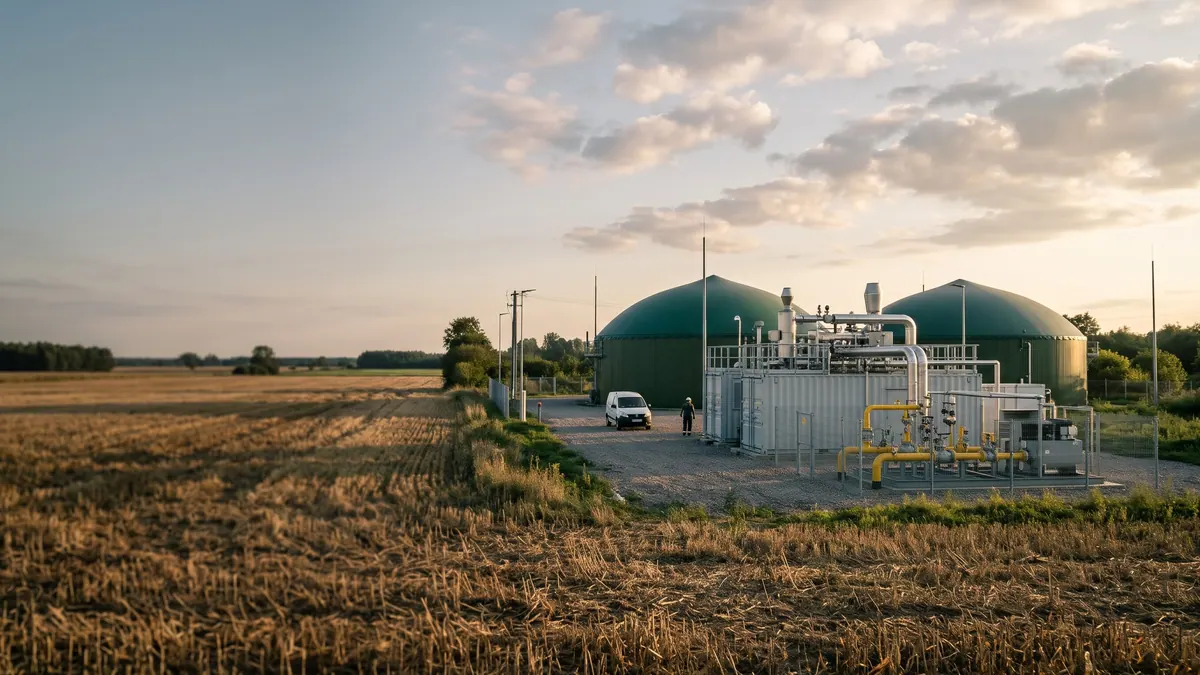
The report “Biogas and Biomethane in NZ”, produced by the firm Beca together with the gas network operator Firstgas and the dairy cooperative Fonterra and co-funded by the agency EECA, indicates that upgraded biogas could replace nearly 20% of gas use in New Zealand by 2050. According to the authors, this would avoid about 4% of national energy-related emissions. The information was reported on 7 July 2021 by, among others, RNZ and Carbon News.
Where the feedstock comes from
According to RNZ and summaries of the report, the feedstock is organic waste from kitchens and farms, i.e. among other things manure from cowsheds and food waste. The report summary lists as the largest sources dairy manure (5–6.8 PJ a year), dairy and meat industry wastewater (2.6 PJ) and separately collected food waste (1.5 PJ). The gas can flow through the existing network, without replacing customers' appliances.
Economics over time
Eleanor Grant of Beca, a co-author of the report, said that about 10% of this gas can be produced, cleaned and sold economically today, at current gas prices and with readily available feedstocks. A further 30–40% would become available in the following decades as natural gas prices rise, driven by prices in the ETS and by gas shortages. The quoted statement does not specify the base of these percentages (technical potential or gas use), so they should not be added to the target of about 20%. According to Beca, widespread anaerobic digestion would be enough to supply zero-emission fuel to all residential customers and three quarters of commercial customers, which she says is equivalent to taking 415,000 petrol cars off the road.
The role of Firstgas
The chief executive of Firstgas Group, Paul Goodeve, stressed the need for cooperation between industry and local and central government in shaping policy and removing barriers, so that biogas can realise its full potential. Renewable gas is compatible with existing infrastructure and does not require replacing appliances.
What this means for Poland
The structure of the potential – manure, industrial wastewater, food waste – resembles the Polish assumptions for biomethane. The difference is that in New Zealand dairy farming plays the key role, whereas in Poland it is agriculture and the food industry in a more varied mix. A shared conclusion is the principle: first identify the volume of feedstock near the gas network, then design the plants.
Sources
Related articles