Biogas drying: condensation, cooling and adsorption upstream of the engine
Biogas from the digester is saturated with water vapour. We explain how much water it carries, how pipelines with drainage, chillers and adsorption dryers work, and how to match drying to the engine.
Other language versions: polski.

Biogas leaving the digester is saturated with water vapour, and at mesophilic temperature its share reaches a few per cent by volume; after cooling the water condenses, carrying with it dissolved H₂S, CO₂, NH₃ and acids. Drying protects the pipelines, blowers, desulphuriser and engine from corrosion and flooding. The simplest method is a sloping pipeline with condensate wells; more precise control is provided by a chiller (to about 3–5 °C) with reheating of the gas, and the most demanding applications (upgrading) use adsorption drying.
How much water biogas carries
The water vapour content of saturated gas depends on temperature. Approximately (atmospheric pressure):
| Gas temperature | Water content (approximate) |
|---|---|
| 38 °C | approx. 6.5% vol., approx. 45–50 g/m³ |
| 20 °C | approx. 2.3% vol., approx. 17 g/m³ |
| 5 °C | approx. 0.86% vol., approx. 7 g/m³ |
Example of the quantity of condensate
Assumptions: 1,200 m³/h of biogas saturated at 38 °C, cooled to 5 °C. The difference in water content is about 45 − 7 ≈ 38 g/m³ (approximate values assumed). Quantity of condensate: 1,200 × 0.038 ≈ 46 kg/h, or about 1.1 m³ per day. Such a quantity requires proper discharge (the condensate contains contaminants), and it must not freeze in the drain or block the trap.
Drying methods
| Method | Principle | Application | Notes |
|---|---|---|---|
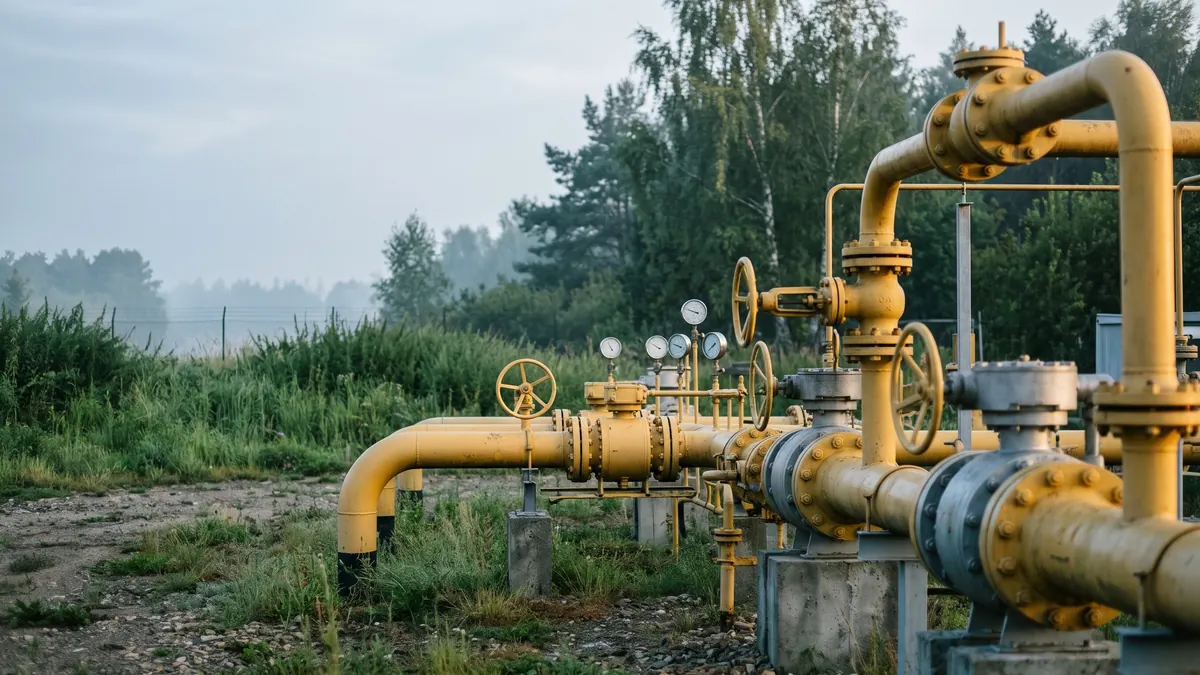
| Cooling in the pipeline (ground) | cooling in the soil, condensate to wells | first stage, every system | requires a gradient (at least a dozen or so per mille) and wells |
| Chiller (heat exchanger) | cooling to about 3–5 °C, then reheating | before carbon desulphurisation, before the engine | stable dew point; requires energy, a drain |
| Adsorption (silica gel, molecular sieves) | adsorption of vapour on a sorbent, regeneration with heat or air | low dew point | higher cost, used in upgrading |
| Absorption in glycol | water is bound in the liquid | large flows | encountered in the gas industry |
Why reheat after cooling
After cooling, the gas is saturated at a low temperature. When it reaches a warm environment, the relative humidity falls; heating by a few to a dozen or so degrees reduces the relative humidity below the threshold recommended by sorbent and engine manufacturers. This reduces the risk of condensation in the pipelines when the ambient temperature drops, as long as the temperature of the gas and the pipeline remains above the dew point (heating does not change the dew point itself).
Principles of installation design
- Pipeline gradient towards the condensate wells (at least a few to a dozen or so per mille is commonly recommended) and no water "pockets".
- Wells with traps of a height that protects against over- and under-pressure, heated or placed below the frost line.
- Corrosion-resistant materials (PE, stainless steel, PVC for condensate).
- Insulation of above-ground pipelines, to limit condensation in random places.
- Sensors for water level in the wells and an alarm.
- Service access and procedures for safe emptying (the condensate contains H₂S).
Typical problems
| Problem | Cause | Solution |
|---|---|---|
| Flooding of the blower | water in the pipe, no well | add drainage, check the gradient |
| Frozen trap | low temperature | heating, insulation, glycol |
| Breakdown of the sorbent | wet gas to the filter | drying before the filter |
| Too high humidity before the engine | no reheating after cooling | add a heater |
| Corrosion | acidic condensate | materials, regular inspection |
Condensate — what to do with it
Condensate is most often returned to the digester or the digestate tank, provided the plant has such a solution, because it contains nutrients and has a small volume. The solution must comply with the design (protection against gas escaping) and local regulations.
Control and requirements
For the engine, the manufacturer's requirements for relative humidity, temperature and gas contaminant content are key; record them and compare them with measurements. The dew point required for biomethane upgrading is much lower, which determines the type of drying system.
Effect on the engine and upgrading
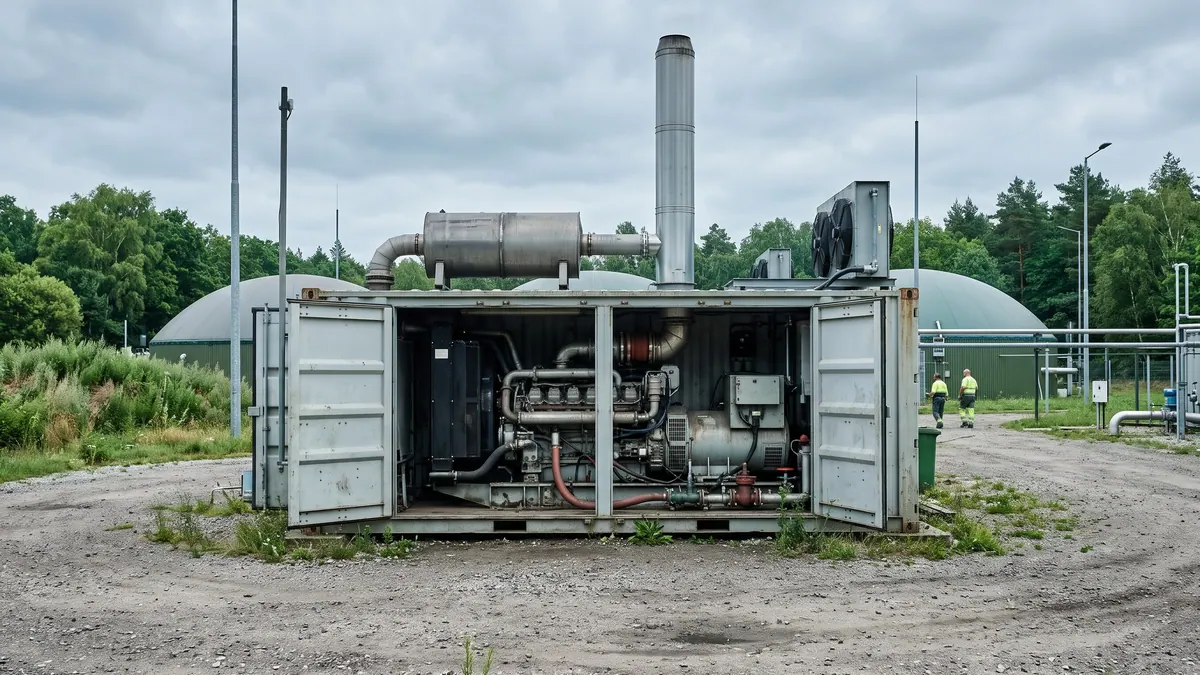
Gas engines are sensitive to water droplets and to wet gas containing acidic compounds: deposits form in the intake system, and corrosion and oil consumption increase. Manufacturers specify the maximum relative humidity and gas temperature before the engine. In upgrading plants (membranes, PSA, scrubbers) the dew point requirements are stricter and usually call for multi-stage drying.
Operating tips
- Once a week, check the condensate drains and the condition of the traps.
- After winter, inspect the pipelines for sags in which water pockets may have formed.
- Measure the temperature and humidity of the gas before the engine; record the trend.
- In the event of marked weather changes, check that the chiller and heater maintain the set values.
- Consider dew point meters at critical points.
Sources
Related articles