Market and investmentAnalysis
CAPEX and OPEX of a biomethane plant: cost structure and the factors that change it
What does an investment in a biomethane plant and its operating costs consist of? We show the structure of CAPEX and OPEX and a calculation example without invented prices, with explicit assumptions.
Other language versions: polski.
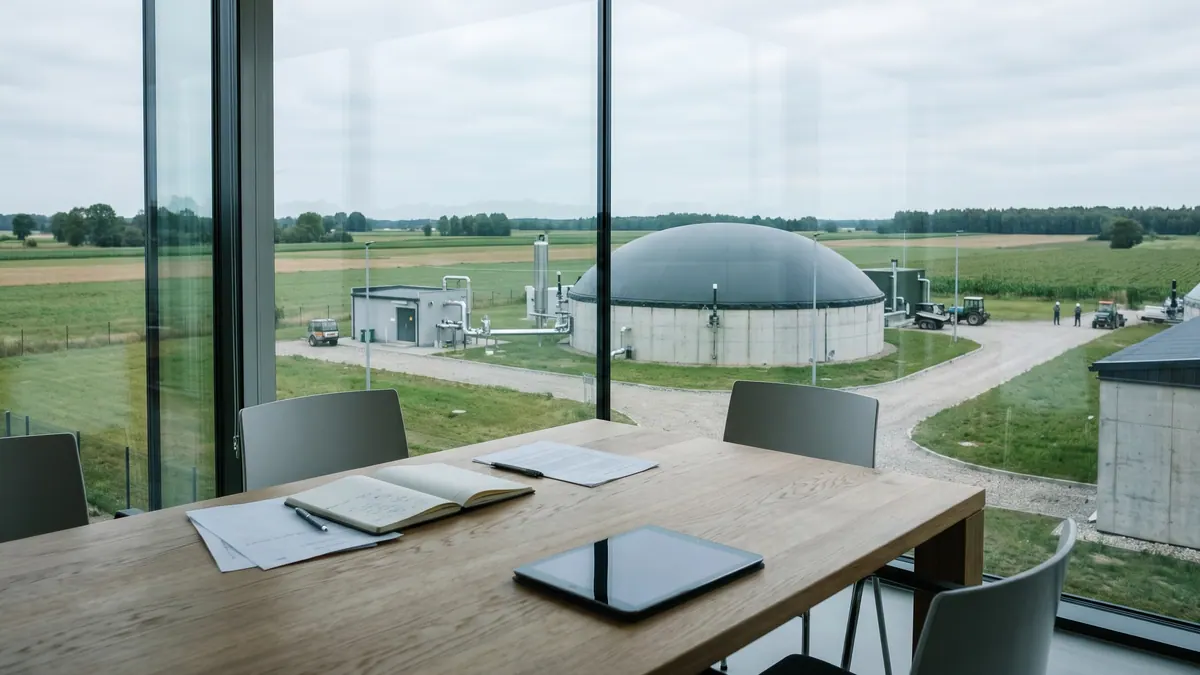
An investment in a biomethane plant consists of four cost blocks: the biogas part (digesters, substrate and digestate stores, feeding, mixing), upgrading, the injection station with a grid connection, and common costs (land, design, permits, supervision, commissioning, reserves). Operating costs include substrates, energy, service, materials and personnel. In this article we do not give specific amounts from the market, because prices depend strongly on scale, date and contract conditions; we show the cost structure and a method of calculation that an investor can fill in with their own offers.
CAPEX structure
| Block | Example elements |
|---|---|
| Biogas part | digesters, digestate tanks, mixing system, feeding, silo storage, separation |
| Upgrading | pre-treatment, CO₂ separation, compressors, drying, off-gas afterburning |
| Injection station and connection | chromatograph, gas meter, odorisation, regulation, connection pipeline |
| Common elements | land, roads, fencing, electrics, automation, flare, health and safety |
| Soft costs | design, permits, consultancy, financing, reserve |
For an installation converted from an existing CHP biogas plant (retrofit) the biogas part already exists, so CAPEX is limited to upgrading, the station and the connection, and modernisation.
OPEX structure
- Substrates: purchase of silage, wastes, slurry; transport; storage. The largest item in installations based on purchased substrates.
- Energy and heat: electricity for upgrading, agitators and pumps; heat for heating the digesters (after the CHP is switched off it has to be obtained from other sources).
- Service and materials: replacement of membranes or sorbent, filters, activated carbon, parts, oil, odorant.
- Personnel and management.
- Insurance, taxes, fees.
- Digestate management: transport, application or separation and treatment.
- Connection and distribution fees, if applicable.
- Certification and audits.
Worked example with explicit assumptions
To show the calculation, we adopt hypothetical values; they are not market prices.
- Production: 500 m³/h of biomethane, 8000 h/year → 4 million m³ ≈ 40 GWh/year (at 10 kWh/m³).
- Assumed total CAPEX: K = PLN 60 million (assumption).
- Assumed annual OPEX: PLN 12 million (substrates 7, energy 1.5, service 1.5, other 2).
- Assumed settlement period: 15 years, discount rate 8%.
Annual capital instalment (annuity): K × r / (1 − (1 + r)^−n). For r = 8%, n = 15: the factor is ≈ 0.1168, so the instalment is ≈ PLN 7.0 million. Total annual cost: 12 + 7.0 = PLN 19.0 million. Divided by 40 GWh this gives about PLN 475/MWh, i.e. about PLN 4.75/m³ approximately (within the assumptions). If revenue from gas, guarantees of origin and other instruments is lower, the project is not profitable; if higher, a margin arises. Changing the assumptions by 10% in substrate prices or CAPEX changes the result by a dozen or so PLN/MWh, which illustrates the sensitivity.
Sensitivity factors
- Substrate price. For agricultural installations based on silage it can decide profitability; waste feedstocks can provide gate-fee revenue (a fee for acceptance).
- Availability. A fall from 8000 to 7000 h increases the fixed cost per unit of gas by a dozen or so per cent.
- Methane losses. Every per cent is a loss of revenue.
- Cost of capital. The interest rate and financing structure.
- Price of gas and support instruments. Needs to be secured with agreements.
- Connection. Costs depend on distance and pressure; sometimes they exceed the cost of upgrading.
Scale
Unit costs fall with scale: upgrading of 250 m³/h is relatively more expensive per m³ than of 1000 m³/h, and the injection station has fixed costs. On the other hand, large installations need more substrates, which increases transport costs and supply risk.
The verification rule
Do not trust averaged values: demand offers with a defined delivery boundary, guarantees (methane losses, energy consumption, availability) and a service price for 10–15 years. Market prices in this industry change depending on the availability of components, exchange rates and construction costs.
Advances, reserves and financing costs
Besides technical items it is worth including financing costs during construction (capitalised interest), a contingency reserve (often at the level of several to a dozen or so per cent of CAPEX), working capital for purchasing substrates before the first revenue, and bank fees and insurance. Neglecting these items is one of the typical causes of liquidity problems in the first months of operation.
Summary
The economics of a biomethane plant are sensitive to several parameters: the cost of substrates, methane losses, availability and the selling price. Before reaching for indicators from reports, build your own model with supplier offers and agreed connection conditions.
Sources
Related articles