Waste and circular economyAnalysis
China and straw: a utilisation rate of 86–90% and the relaxation of the burning ban. What the data say
Sources give straw utilisation in China of 86–90%, but the method of calculation is often unclear. Some provinces, such as Hunan, are moving away from a total burning ban, and in 2025 the central level also softened its approach.
Other language versions: polski.
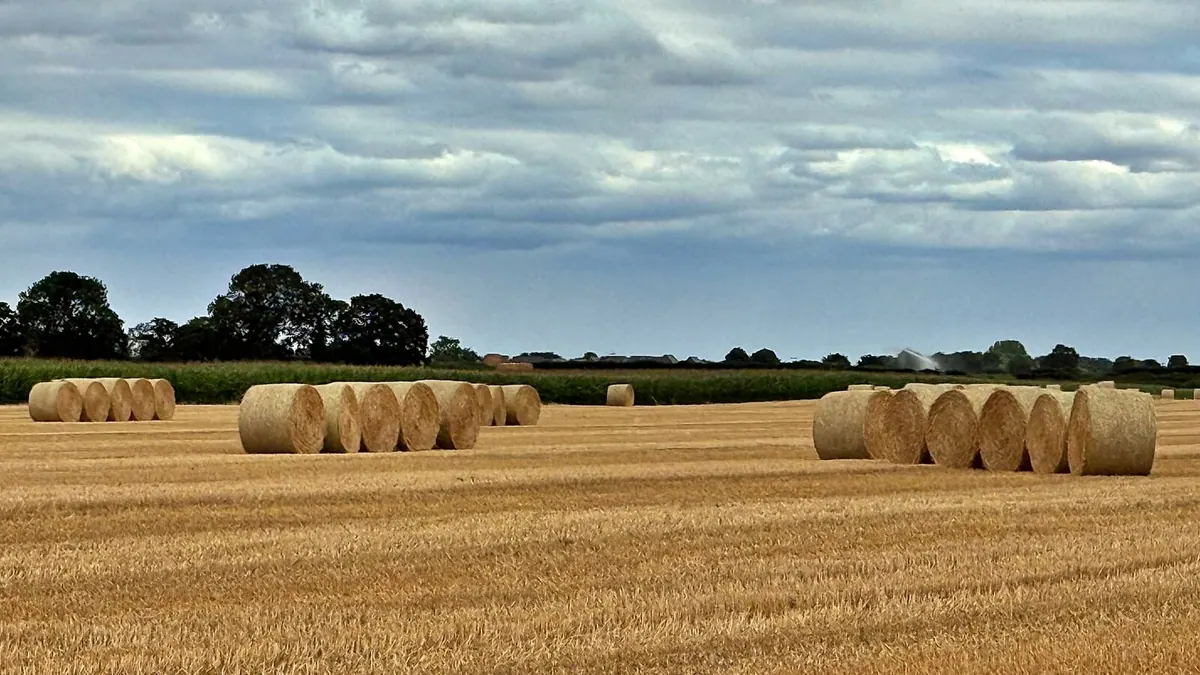

According to a Chinese researcher quoted by Dialogue Earth, China produced 865 million t of straw in 2022, of which 88% was managed. Other sources indicate a “comprehensive utilisation” rate of 86–90%, but the figures differ and the method of calculation remains unclear. At the same time some provinces, e.g. Hunan, are moving away from a total ban on burning straw in fields, and since 2025 central policy has also been shifting towards “limited” burning.
Divergent indicators
A slide by a World Bank representative (materials from an ADB event in April 2023) states that the rate reached 90% in 2022, with 662 million t of straw utilised; on the same slide a chart with values of 86.7, 88.1, 89.8 and 90.1% has no clearly labelled years. Materials presented at the UN-CSAM forum speak of a result above 88% in 2024. Dialogue Earth in turn cites Yao Zonglu of the Chinese Academy of Agricultural Sciences (88% of 865 million t in 2022) and the 2023 plan for further improving air quality, according to which the rate remained at 86%. Because the years and definitions are not uniform, it makes sense to speak of a range of 86–90% in 2022–2024. We did not check the agriculture ministry's bulletin, which is the primary source. Dialogue Earth also notes that after nearly 25 years of controls, over 10% of straw is not reused and some of it is burned.
What “utilisation” means
According to UN-CSAM materials, straw used as fertiliser accounts for more than half of all straw production, followed by feed and energy; the most common method is returning straw to the fields. Dialogue Earth adds that most straw is chopped and returned to the soil, and a significant part of the rest goes to feed or fuel. The rate does not specify how efficiently or how beneficially for the environment the straw is used. Farmers, as Dialogue Earth writes, do not object to recycling straw as long as it does not increase labour and costs, does not worsen the next crop and does not intensify pests and diseases; it also stresses that the gap between harvest and sowing lasts only a week to two weeks.
Straw burning: the ban and its relaxation
Burning straw in fields has been subject to a central ban since 1999, enforced most strictly near Beijing; in some regions every fire point detected by satellites means a deduction of 100,000 yuan from the local authorities' budget. Dialogue Earth describes the evolution of policy: in 2023 the agriculture and environment ministries carried out a survey in eight provinces, which concluded that the ban should remain, but with an emphasis on recycling and raising the value of straw; Hunan, Guangxi and Yunnan already allowed burning in specified cases. The Central Committee's No. 1 document for 2025 spoke of defining the scope of the ban precisely in accordance with the law, which the agriculture ministry interpreted as the end of the nationwide ban in favour of “limited” burning. The new Ecological and Environmental Code (adopted on 12 March 2026) contains, according to Dialogue Earth, a requirement for “scientific and precise” organisation and management of straw burning.
Hunan Today (23/10/2024) describes how some cities in the province have moved from a full ban to burning limited by zones: Jinshi (under Changde) completely bans burning in some areas, in Taojiang county (Yiyang) 15 townships were divided into ban and limited-burning zones, and Yiyang and Zhangjiajie also apply bans and limited zones. The ecology bureau in Changde stated that under the full ban every fire point detected by satellite meant a deduction of 100,000 yuan, which burdened agriculture and local authorities.
What about biogas
Straw is a valuable substrate for biogas plants, but requires size reduction, and the seasonality of harvests makes year-round feeding difficult. An example of co-digestion of straw with slurry is the study from Jiangxi (see the post on rice straw and slurry). Pretreatment — chemical or biological — improves the yield but raises the cost. Biogas is not, however, the main route for managing straw: according to UN-CSAM, fertiliser, feed and energy (together) are the main ways of using it.
Why the figures on straw can be misleading
The sources we cite do not explain the method of calculating the rate, and give different years and values (86%, 88%, 90%). The discrepancy may therefore result from different base years and definitions, but we cannot settle that. In international comparisons it matters whether utilisation includes leaving the straw in the field (returning it to the soil), which UN-CSAM lists as the most common method, or only straw that has been collected and passed to buyers.
Conclusions for planning biogas plants
Dialogue Earth describes how moving straw from a 3 mu (0.2 ha) field takes two strong workers three days, and rural areas lack labour; this limits the collection of straw for any installation. In Changde, in the burning-ban zones, straw transfer points are planned for every 20,000 mu of farmland, along with specialised companies and the use of straw as a solid fuel (Hunan Today). Planning a large straw-based biogas plant therefore requires contracts with many farmers and checking who will deliver the feedstock and when.
The climate perspective
According to Dialogue Earth, studies from 2020 showed that every additional ten burning points within 50 km of the county centre meant a 7.62% rise in PM2.5 concentration and a 1.56% rise in mortality, and a 2025 study (156 city-level units, 2015–2020) showed a rise in pollutant concentrations for three days after a fire. On the other hand, the same text shows the cost: the ban increased problems with pests and diseases, which forced greater use of fertilisers and chemicals; delegate Cao Xiaogeng stated that returning straw to the soil increases the occurrence of pests and diseases by 9.5%. Dialogue Earth also cites the example of the city of Guigang (Guangxi), where four years of orderly burning did not worsen air quality.
How to follow the policy
It is worth watching announcements from the ecology and agriculture ministries, satellite data on field fires and provincial decisions, e.g. Hunan's 2025 ruling that straw attacked by pests or diseases may in some cases be burned.
What this means for Poland/Europe
Chinese utilisation figures are worth reading critically, because “utilisation” of straw mostly means returning it to the soil, not energy. When planning biogas plants, one should verify the real availability of straw within the delivery radius and its competing uses (bedding, feed, organic fertilisation).
Sources
- Dialogue Earth (Liu Lican, 15.04.2026) — The relaxation of China's straw burning ban
- Hunan Today — From Total Ban to Controlled Zones: Hunan's Straw Burning Policy Triggers Attention (23.10.2024)
- UN-CSAM — Experiences in Promoting Integrated Straw Management in China
- Bank Światowy (W. Cao), materiały wydarzenia ADB — Measures to control agricultural burning in PRC: from ban of burning to comprehensive utilization (kwiecień 2023)
Related articles