Waste and circular economyEvent
China: waste sorting has started in 237 cities. In 46 key cities 54% of residential compounds are covered
The Ministry of Housing and Urban-Rural Development reported that waste sorting has started in 237 Chinese cities; in the 46 key cities it covers 77,000 residential compounds and 49 million households.
Other language versions: polski.
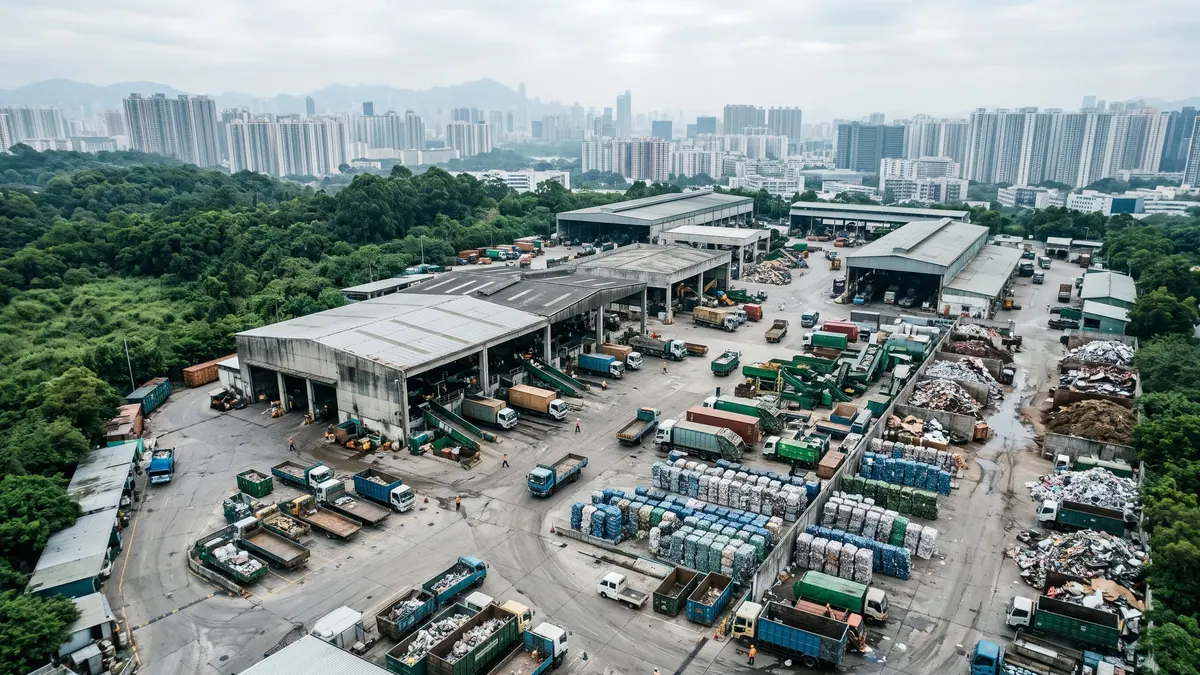
At the beginning of 2020 China's Ministry of Housing and Urban-Rural Development announced that municipal waste sorting had been launched in 237 cities across the country. Data published on 6 January 2020 by the Xinhua agency show that, after its start in Shanghai, the programme has moved beyond the pilot cities.
Figures from the 46 key cities
In the group of 46 large cities covered by the earlier government plan, sorting has been introduced in 77,000 residential compounds, i.e. 53.9% of the total, and is used by 49 million households. Thirty of these cities have already adopted local rules or ordinances. In 18 cities — among them Shanghai, Xiamen, Hangzhou, Ningbo, Guangzhou and Shenzhen — sorting practices cover over 70% of residential compounds.
Infrastructure in the key cities
A joint plan of the ministry and the National Development and Reform Commission (NDRC) assumes that by the end of 2020 rules, standards and a management system for sorting will be in place. As early as June 2019 the ministry had stated at a press conference (28 June) that the 46 key cities were to complete the pilot programme by the end of 2020 and build a system covering all stages: from collection, through transport, to processing. 21.3 billion yuan was allocated to building additional facilities in these cities. At that time the cities had about 5000 vehicles for kitchen waste and about 1000 for hazardous waste.
What “covered by sorting” means
The statistic concerns the availability of the system, not its effectiveness: a compound is “covered” when sorting rules have been introduced in it, but the figure alone does not show how clean the separated stream is or what share of the waste reaches the right facility. The quality of the system is therefore decided by the later links: separate transport and the processing capacity of the end-use facilities for kitchen waste, and thus also for anaerobic digestion.
What this means for Poland/Europe
The Chinese programme is an example of rolling out sorting “from the top”, with a list of priority cities and reporting of the percentage of compounds covered. Poland already has an obligation to separate biowaste, but comparable public indicators of coverage and stream purity are lacking — such data would make it easier to plan biogas plants for biowaste.
Sources
Related articles