BiogasEvent
NFOŚiGW selects 41 cogeneration projects, including agricultural biogas plants
The Fund granted co-financing to 41 projects under measure 1.6.1 of the Infrastructure and Environment Operational Programme (POIiŚ). Among them are four agricultural biogas plants with a capacity of up to 500 kW and biomass installations.
Other language versions: polski.
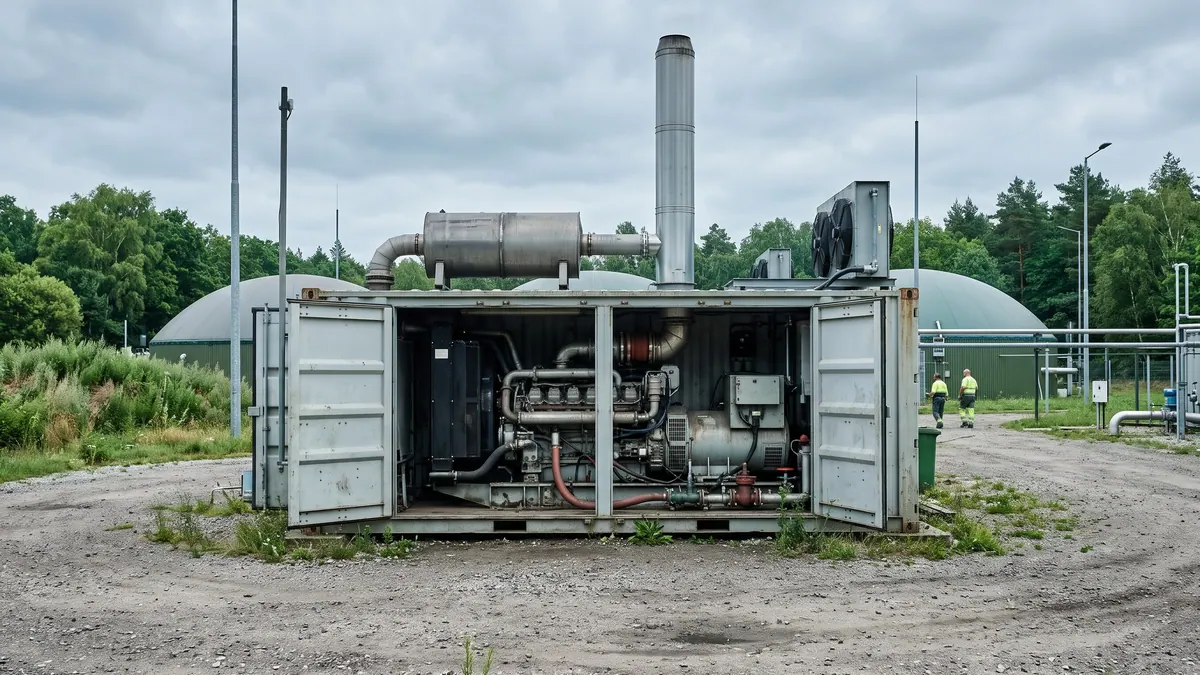
On 13 January 2020 the National Fund for Environmental Protection and Water Management (NFOŚiGW) selected 41 projects that will receive co-financing for the construction of high-efficiency cogeneration sources. The funds come from the Infrastructure and Environment Operational Programme (POIiŚ) 2014–2020, measure 1.6 (Reducing the emissions of the economy), sub-measure 1.6.1. Although natural gas projects dominate, the list also includes biomass installations and four agricultural biogas plants.
What was co-financed
The co-financing concerns cogeneration, that is, the simultaneous production of electricity and heat in a single process. Among projects based on renewable sources, NFOŚiGW listed, among others:
| Beneficiary | Location | Technology |
|---|---|---|
| GALAAUTO | Dzikowiec | agricultural biogas plant up to 500 kW |
| Bioenergia Dzikowiec | Dzikowiec | agricultural biogas plant up to 500 kW |
| Pol-Ferm | Lutol | agricultural biogas plant 0.499 MWe |
| Metropolis Energia II | Iłowiec Wielki | biogas plant up to 500 kWe |
The list also included biomass projects, for example in Runowo Pomorskie, Lublin, Wyszków and Wiele, as well as a cogeneration module supporting a geothermal-biomass heating plant in Sieradz. Among the natural gas projects, one can mention trigeneration in Oława and a cogeneration unit in Ostrów Wielkopolski.
Why small agricultural biogas plants
A capacity of around 500 kW is not accidental. For years the Act on Renewable Energy Sources has favoured installations below this threshold: they can benefit from fixed tariffs, have easier procedures and lower licensing requirements. For many farms and agricultural companies this is the optimal scale, because it allows them to use slurry, manure and agricultural residues without building large infrastructure.
Significance for the market
Co-financing from EU funds lowers the cost of the investment and shortens the payback. At the same time it shows that the pace of building new biogas plants in Poland remained moderate for years, and the market relied on a few proven models: a grant plus the sale of energy in the auction or tariff system, or the use of heat from cogeneration. In subsequent years new programmes appeared, including ones dedicated to agricultural investments, as well as plans to build biomethane plants.
What next
Beneficiaries were obliged to carry out the projects within the deadlines specified in the co-financing agreements. What remained key to profitability were energy prices, access to substrates and the ability to sell heat — factors susceptible to changes in fuel and energy prices.
How to read such lists
The results of a call should be treated as a forecast of investments, not a guarantee of them: after co-financing is awarded, the beneficiary must conclude an agreement, obtain permits and close its own financing. Some projects from similar lists drop out of implementation, so the real dynamics of the biogas market only show in the statistics of commissioned installations kept by the National Support Centre for Agriculture (KOWR) and the Energy Regulatory Office (URE).
Why cogeneration
Cogeneration makes it possible to use the energy of biogas twice: to produce electricity and to generate heat. For an agricultural biogas plant the heat recipient may be its own farm, a dryer, a greenhouse or a local network. That is why programmes supporting high-efficiency cogeneration so readily cover small biogas plants, and their energy efficiency depends to a large extent on whether the heat can be used throughout the year.
Sources
Related articles