Waste and circular economyExplainer
Depackaging: expired food in packaging and the regulations for biogas plants
Depackaging separates expired food from packaging before digestion. We explain waste codes, the permit, the BDO, UPPZ and the effect of contaminants on digestate quality.
Other language versions: polski.
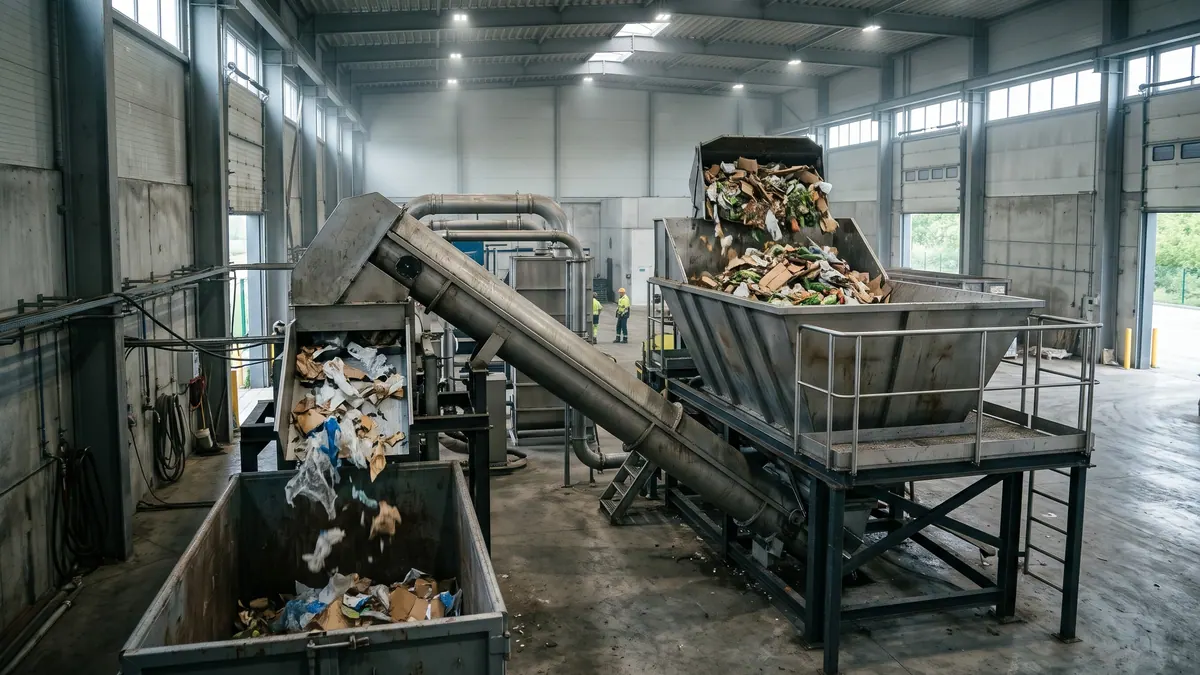
Depackaging is the mechanical separation of expired or defective food from packaging, after which the organic fraction (slurry) goes to digestion and the packaging goes for further management. From a legal point of view it is waste processing, which requires a permit, records in the BDO and — where the food contains products of animal origin — plant approval and hygienisation. The quality of the digestate depends to a large extent on how thoroughly depackaging has been carried out.
Where such waste comes from and how to classify it
Packaged food unfit for consumption comes from production (rejects, expired batches), retail and wholesale trade, and catering. It is classified according to the waste catalogue (Minister of Climate regulation of 2 January 2020); the code depends on the source, and the final permitted codes are indicated by the installation's permit. Codes encountered include:
| Code | Name (abbreviated) |
|---|---|
| 02 02 03 | materials unsuitable for consumption or processing (from products of animal origin) |
| 02 03 04 | materials unsuitable for consumption or processing (from plant products) |
| 02 05 01 | waste from the dairy industry — unsuitable materials and products |
| 02 06 01 | baking and confectionery — unsuitable materials and products |
| 16 03 06 | organic waste other than hazardous from off-specification production |
| 20 01 08 | biodegradable kitchen waste |
The fractions recovered after separation have their own codes: plastic packaging (15 01 02), metal (15 01 04), glass (15 01 07), and residues from mechanical treatment — codes from group 19 12 (e.g. 19 12 12). Digestate has the codes 19 06 04, 19 06 05 and 19 06 06.
Legal requirements for the installation
- A waste processing permit (or an integrated permit), which lists the permitted waste codes, quantities and processes. The depackaging process is usually described as preparation for further recovery, and digestion as organic recycling; the final R process designations are indicated by the decision.
- BDO — registration, quantitative records and waste transfer cards; waste may be passed only to authorised entities.
- UPPZ — food of animal origin that is no longer intended for consumption for commercial reasons or because of packaging defects (provided these defects pose no risk to humans or animals) is category 3 material (Article 10(f) of Regulation 1069/2009). The plant must be approved by the county veterinary officer, and the material undergoes standard hygienisation (Commission Regulation (EU) No 142/2011, annex V): 70°C for 60 minutes with particles up to 12 mm, subject to exceptions and other parameters approved by the competent authority.
- No hazardous contaminants — on receipt, waste is checked to ensure that it contains no hazardous agents, e.g. disinfectants or chemicals in packaging.
An agricultural biogas plant within the meaning of the Act on renewable energy sources may use only substrates falling within the definition of agricultural biogas (including agricultural products, animal excrement and waste or residues from the processing of agricultural products). Expired food from retail is therefore directed rather to a rendering biogas plant operating under a waste permit.
How depackaging works
Most commonly, packaging is torn open or shredded and the light fraction is separated from the heavy one in a dry or wet system (with the addition of water or process liquid), with metals and glass being captured. Particles going to hygienisation may not exceed 12 mm. Bear in mind that part of the organic matter stays in the reject, so overly aggressive separation reduces the biogas yield, and overly gentle separation leaves plastic in the digestate.
Impact on digestate
- Macroscopic contaminants (pieces of film, glass, metal) reduce the quality of digestate and make it harder to use as a fertiliser; requirements for contaminants in fertilisers are set by separate provisions.
- Fats and preservatives in food can inhibit digestion if dosing is too abrupt.
- The legal status of digestate from such feedstock is usually waste (codes 19 06 xx), so agricultural use requires meeting the conditions of R10 recovery and soil tests, or a permitted fertiliser route.
Checks on receipt and after depackaging
- At the gate: compare the document with the code and a visual assessment of the delivery; reject batches with hazardous waste, a large amount of glass or chemicals.
- Receipt register: date, quantity, code, supplier, document number.
- After depackaging: monitor the content of contaminants in the slurry (e.g. by sample checks), because it is an indicator of separation efficiency.
- Reject: weigh it, record it in the BDO, pass it to an authorised recipient; consider storing the light and heavy fractions separately.
What about the costs
Depackaging increases the cost of processing compared with clean biowaste: machines, energy and water consumption, disposal of the reject and maintenance (abrasion by glass and metal) are added. That is why such waste is accepted for a fee (gate fee), which is meant to cover these costs, and profitability depends on the quality of deliveries. The energy surplus of food with a high content of fats and sugars often compensates for the costs — provided the process is stable.
Alternatives to depackaging
If the supplier unpacks the goods itself (e.g. a production plant) and passes on a clean organic fraction, the installation does not need to invest in a separation line. Such an arrangement lowers costs, but requires discipline on the supplier's side and clear provisions in the contract on permissible contaminants. Good practice is also a periodic audit of deliveries: taking samples and assessing the share of contaminants in successive batches.
Common mistakes
- Accepting codes outside the permit.
- No checks of packaging containing hazardous substances.
- No separation of category 3 material from other streams without documentation.
- Treating the reject as "clean" packaging waste without records.
- Underestimating the cost of managing the reject.
This text is for information purposes only and does not constitute legal advice; before an investment or formal decision, check the current wording of the provisions and consult a lawyer or the competent authority.
Sources
Questions and answers
Is packaging waste after depackaging?
Yes. Packaging fractions (e.g. plastics, metals, glass) are separate wastes with their own codes and must be handed over to an authorised recipient; they are recorded in BDO (the waste database).
Related articles