Waste and circular economyExplainer
Food waste: shop obligations, the PLN 0.1 per kg fee and the route of waste to biogas
Shops over 250 m² where food accounts for at least half of turnover must hand food over to non-governmental organisations and pay the food waste fee. We explain the rules, deadlines and the fate of food that cannot be saved.
Other language versions: polski.

The Act on Counteracting Food Waste of 19 July 2019 obliges food sellers — shops with a sales area over 250 m² in which food accounts for at least 50% of revenue — to hand over surpluses free of charge to non-governmental organisations, to run educational campaigns and to pay a food waste fee (PLN 0.1 per kg). Food that nevertheless becomes waste should go to recovery, in line with the waste hierarchy; for biowaste this means, among others, composting plants and biogas plants.
What “food waste” means
The Act defines it more narrowly than in everyday usage: it is the withdrawal from the distribution stage of food that meets the requirements of food law, e.g. because of an approaching use-by date, a best-before date or defects in the appearance of the product or packaging, and its designation for disposal as waste. Food that does not meet safety requirements is not “wasted” in this sense.
Seller’s obligations
- Agreement with a non-governmental organisation (written or electronic form, on pain of nullity) on handing over free of charge food that meets the requirements of food law and is not intended for sale. Alcoholic beverages above the specified alcohol thresholds are excluded. The agreement specifies, among other things, the time and manner of handing over, the division of collection and distribution costs, the cases of refusal to collect and the term of the agreement. After termination a new agreement must be concluded within 14 days, unless there is another one.
- Educational and information campaign in the shop at least once a year, for at least two consecutive weeks, on each day of operation, jointly with a non-governmental organisation; up to 20% of the funds from the fee may be spent on it.
- Food waste fee: a rate of PLN 0.1 per kg, the base being 90% of the mass of wasted food, calculated at the end of the year. The fee can be reduced by the costs of the campaign and by the costs of performing the agreement (e.g. transport and distribution). It is not paid if it does not exceed PLN 300.
- Payment deadline: by 30 April of the following year to the account of the non-governmental organisation with which there is an agreement (where there are several organisations, the fee is divided in proportion to the food collected). With no agreement — payment to the account of the voivodeship environmental protection and water management fund.
- Report on wasted food to the voivodeship fund by 31 March of the following year (total mass, fee due). Information on the amount of the fee or the value of food handed over is included in the financial statements and on the website, if the seller has one.
Example of calculating the fee
Suppose (an illustrative example) that a shop wasted 10,000 kg of food within the meaning of the Act in a year. The fee base is 90% of the mass, that is 9,000 kg. At a rate of PLN 0.1 per kg the fee is PLN 900. If the seller incurred documented costs of the educational campaign and of performing the agreement (e.g. transport and distribution) totalling at least PLN 900, the fee after reduction falls to zero. Where the whole fee does not exceed PLN 300, it is not paid at all.
Food seller’s calendar
| Deadline | Obligation |
|---|---|
| during the year | educational campaign (min. 2 weeks), handing over food |
| 31 March | report on wasted food to the voivodeship fund; the non-governmental organisation provides information on the use of funds from the fee |
| 30 April | payment of the fee (non-governmental organisation or fund) |
Penalties
- no agreement with a non-governmental organisation: a financial penalty of PLN 5000 — not imposed if the seller shows that it was not possible to conclude such an agreement in the county;
- failure to pay the fee, payment of an incomplete amount or payment after the deadline: a penalty of PLN 500 to PLN 10,000;
- failure to submit the report: a fine under the petty offences procedure.
Financial penalties are imposed by decision of the voivodeship environmental protection inspector; in setting the amount the inspector takes into account, among other things, the quantity of wasted food, the amount of the incomplete fee and the number of days of delay.
What next for food that did not reach those in need
The Act does not decide the further fate of spoiled food — that is the domain of the waste rules. The hierarchy (Article 17 of the Act on Waste) says first prevent, then re-use, then recycle, including organic recycling. In practice:
- food waste from retail has its own codes in the catalogue (e.g. expired or unfit-for-consumption food products, kitchen waste capable of biodegradation); how it is managed depends on whether it contains products of animal origin and whether it is in packaging;
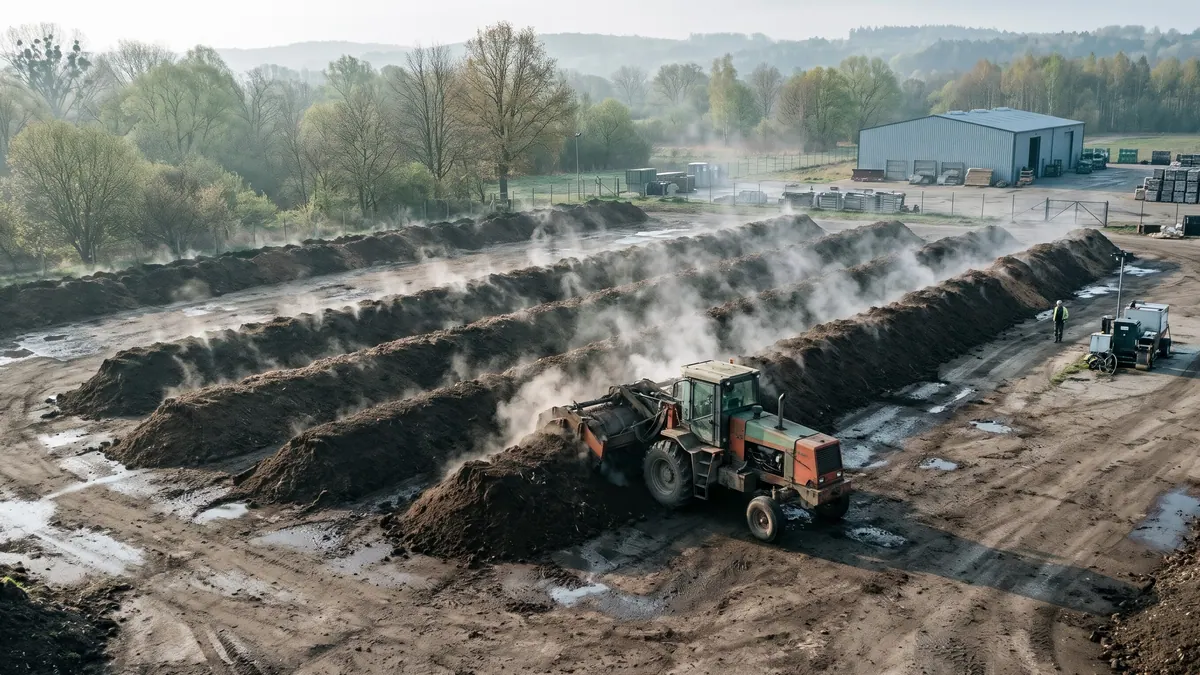
- biogas plants and composting plants receiving such waste need the appropriate permit or authorisation, installations for unpacking (depackaging) and — for products of animal origin — compliance with sanitary requirements, including hygienisation;
- the supplier and the recipient keep records in BDO (KPO, KEO).
From a biogas perspective, the more effective the prevention and the handing over of food to people, the less valuable substrate there is — and that is fine: it is an outcome consistent with the hierarchy.
Common shop mistakes
- no agreement, or an agreement without the required provisions;
- calculating the fee on 100% of the mass instead of 90%;
- omitting the report to the voivodeship fund;
- wrong codes and no records when handing over waste;
- a campaign shorter than two weeks, or without cooperation with the organisation.
What to do first
- Check whether your shop meets the thresholds (250 m² and 50% of revenue from food).
- Conclude an agreement with a non-governmental organisation of the required scope.
- Measure the mass of wasted food and plan out when the report and the fee will be due.
- Arrange collection of food waste to a specialised installation.
This text is for information only and does not constitute legal advice; before an investment or formal decision, check the current wording of the regulations and consult a lawyer or the competent authority.
Sources
Questions and answers
Does the act apply to small neighbourhood shops?
No. A food seller within the meaning of the act is an entity operating a retail or wholesale trade unit with a sales area above 250 m², in which revenue from food sales makes up at least 50% of revenue from the sale of all goods.
What happens to food that does not reach a non-governmental organisation?
It becomes waste and goes on to further management in line with the waste hierarchy. For food waste this often means organic recycling (composting or fermentation), and for products of animal origin, meeting sanitary requirements.
Related articles