Technology and operationAnalysis
ORC at a biogas plant: how much electricity can be recovered from waste heat
An ORC module converts low-temperature heat into electricity with low efficiency. We explain the operating principle, realistic yields, costs and when it makes sense.
Other language versions: polski.
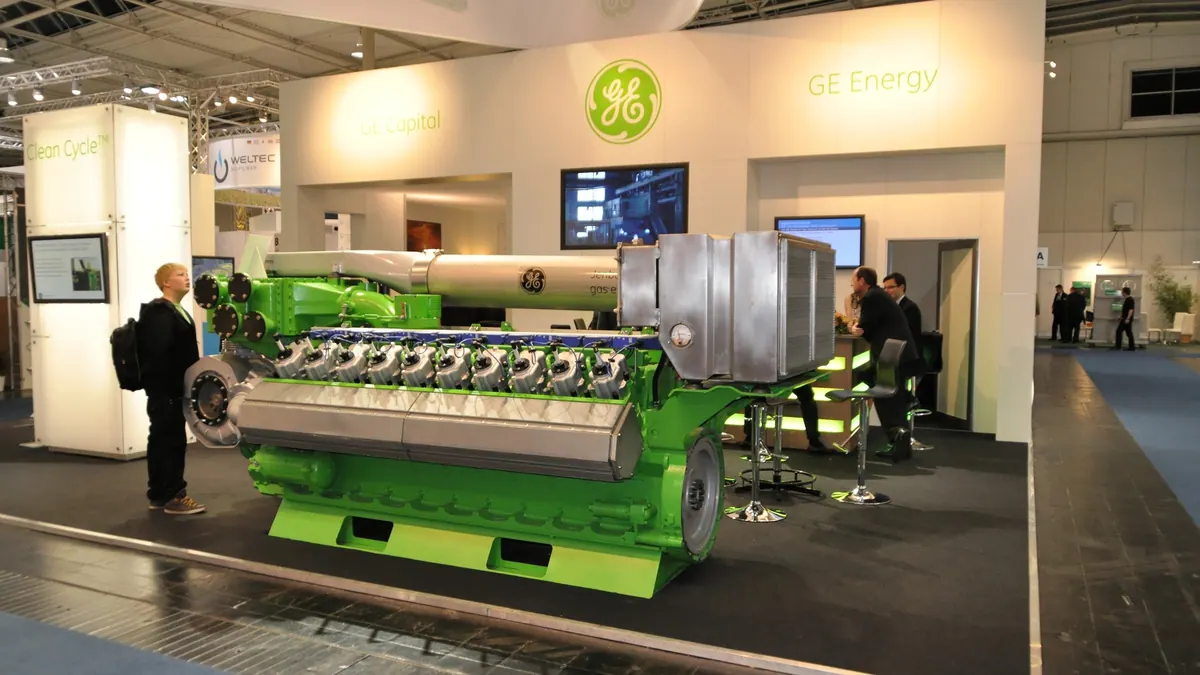

ORC (Organic Rankine Cycle) is a thermodynamic cycle in which, instead of water, an organic fluid with a low boiling point circulates, which makes it possible to generate electricity from heat at a temperature of the order of 80–300 °C. For heat from a biogas unit, an ORC module usually recovers a few to a dozen or so per cent of the thermal energy as electricity — that is, for a surplus of 300–400 kW of heat this gives of the order of several dozen kW of electrical power. It makes sense only when the heat cannot be sold more cheaply and easily.
Operating principle
The fluid (e.g. hydrocarbons, fluorocarbons, silicone oils — depending on the manufacturer) is evaporated in a heat exchanger by waste heat, expands in a turbine or expander driving a generator, then condenses in a condenser cooled by air or water and returns to the pump. Efficiency follows from the limits of the second law of thermodynamics: the lower the temperature difference between the source and the cooling, the lower the efficiency (the Carnot limit). With a 90 °C source and 25 °C cooling the theoretical limit is about 18%, and practical efficiency is much lower.
Heat sources at a biogas plant
| Source | Temperature | Notes |
|---|---|---|
| Engine cooling water | approx. 80–95 °C | low ORC efficiency, large thermal power |
| Exhaust gas | up to several hundred °C at the engine outlet | better efficiency, risk of corrosion and deposits, requires an oil exchanger |
| Combination of circuits | depending on the system | higher yield, more complicated installation |
Modules dedicated to biogas plants often work on hot water or thermal oil heated by the exhaust gas.
Calculation example
Assumptions: a 500 kW el. unit, surplus heat to the ORC 300 kW, net ORC efficiency 8%, availability 7,500 h/year.
- net electrical power: 300 × 0.08 = 24 kW,
- annual production: 24 × 7,500 = 180 MWh,
- at a hypothetical energy selling price (e.g. PLN 400/MWh) revenue would be PLN 72 thousand/year; at PLN 800/MWh — PLN 144 thousand.
The result shows that the outlay on the module (of the order of hundreds of thousands to more than a million zlotys at such scales) pays back only with sufficiently high energy prices or support and low servicing costs. The prices in the example are hypothetical; the assessment should be based on your own prices and conditions.
Advantages and disadvantages
| Advantages | Disadvantages |
|---|---|
| Additional electricity without fuel consumption | low efficiency, high unit cost |
| Independence from heat consumers | own consumption (pumps, condenser fans) |
| Continuous operation, few moving parts | requires a stable heat source and cooling |
| Reduction of heat losses in winter and summer | in summer output falls at high air temperature |
When ORC makes sense
- no local heat consumers (or small sales),
- a high electricity price or an available support scheme,
- stable cogeneration operation (>7,500 h/year),
- the possibility of cooling with low-temperature water.
Where a cheaper use of heat is possible (drying, heating), it usually wins.
Operational issues
- working fluids: a safety assessment (flammability, toxicity, GWP) and the legal requirements for the fluid,
- protection against pressure rises and leaks,
- servicing: replacement of seals, turbine inspection, cleanliness of exchangers,
- integration with the biogas plant's automation and availability of remote monitoring,
- grid connection rules for the additional capacity (formalities).
Questions for the supplier
- What is the net efficiency under design and annual-average conditions?
- What heat temperatures and flows are required?
- What are the warranty and servicing costs?
- What references are there for similar installations?
- How does the module behave at part load?
A sound analysis requires comparing scenarios: heat sales, drying, ORC, no investment. Only a comparison of cash flows with a realistic yield shows whether ORC is justified. A simplified indicator: the cost of a kilowatt-hour produced by ORC over the whole life, compared with the selling or purchase price of energy.
ORC and other ways of using exhaust gas
The engine exhaust can also be used to produce process steam or thermal oil for a dryer. This option gives higher energy use than ORC, provided there is a process consumer. ORC is chosen when the heat is "useless" in another sense. It is also worth considering whether, instead of ORC, it would be better to invest in higher electrical efficiency of the unit itself (a larger engine, better mixture cooling).
Financial risks
The greatest risk is assuming too optimistic an efficiency and availability of the module. Demand a guaranteed yield and specify the method of measurement in the contract. Take into account the fall in performance on hot days, the cost of replacing the fluid, of maintaining the exchangers and the forecast energy prices over the whole repayment period. If the support scheme for energy from biogas has a limited duration, assess the cash flows also after it expires.
Sizing the module
An ORC module is sized for the constant surplus of heat, not the peak. One that is too large will work below the optimum, one that is too small will not use the potential. Typically the module covers the heat available for most of the year after deducting the plant's own needs for heating the digesters. Because in winter own needs rise, the surplus for the ORC is then the smallest — and this means that actual annual production is sometimes lower than the product of nominal capacity and the number of hours.
Summary of the decision
ORC is a good option for installations with a large, constant surplus of heat and no local consumers. For most agricultural biogas plants the priorities should be: improving electrical efficiency, selling or using the heat, and only then ORC as a supplement.
Sources
Related articles