Waste and circular economyEvent
The European Parliament approves the revision of the waste directive: food targets and EPR for textiles
On 9 September 2025 the European Parliament approved the Council's position on the revision of the Waste Framework Directive. Directive (EU) 2025/1892 introduces binding food waste reduction targets and EPR for textiles.
Other language versions: polski.
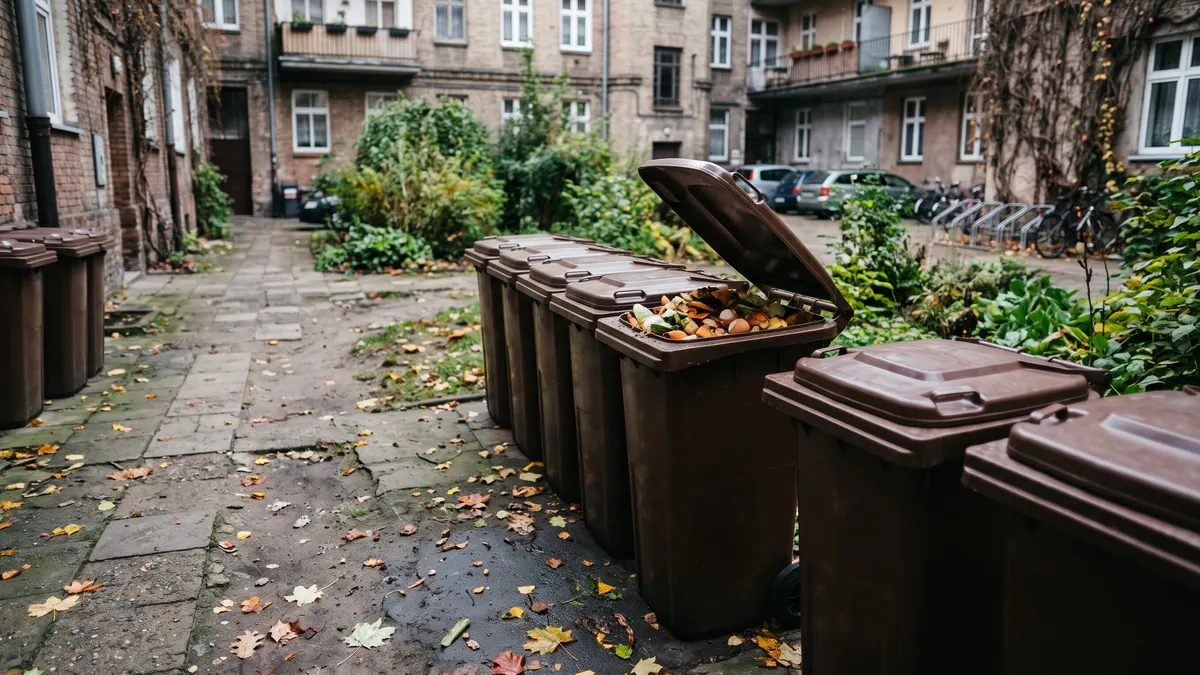
The European Parliament approved on 9 September 2025 the Council's position on the targeted revision of the Waste Framework Directive, completing the legislative procedure. Directive (EU) 2025/1892 is dated 10 September 2025; it will enter into force after publication in the Official Journal of the EU. For the bio-waste economy the most important elements are the binding food waste reduction targets.
Course of the procedure
The Commission presented its proposal in 2023, Parliament adopted its first-reading position on 13 March 2024 (514 votes for), and after the elections negotiations with the Council began. A provisional agreement was reached in early 2025, the Council adopted its first-reading position on 23 June 2025, and Parliament approved it on 9 September, which closed the procedure. Member States have about 20 months for transposition.
What the directive contains
The most important elements:
- Food waste targets by 2030 – according to the adopted text, among others a 30% reduction per capita in retail, catering, food services and households compared with the 2021–2023 average, and a separate, lower target for processing and manufacturing.
- Extended producer responsibility for textiles and footwear – one mandatory EPR scheme in each country, financing collection and processing. According to the adopted text (Article 22a(14) of Directive 2008/98/EC as amended) the schemes are to be established by 17 April 2028, that is within about 30 months of entry into force.
- Retention of the waste hierarchy and strengthening of prevention.
Impact on the bio-waste market
Reducing food waste will decrease the volume of some streams (for example unsold food from retail), but will increase the importance of unavoidable residues – peelings, processing waste, kitchen scraps – which must be managed anyway. For operators of waste-processing biogas plants this means the need to secure supplies in the long term and to diversify sources. At the same time, better separate collection of food improves substrate quality and biogas yield.
Significance for the industry in Poland
Poland is obliged to introduce the targets into national law and to build an EPR scheme for textiles, which coincides in time with the implementation of the PPWR and the deposit system. Municipalities and municipal companies should plan changes to the fee and collection system; companies in the food industry – reporting and prevention measures. For local governments building bio-waste fermentation installations based on NFOŚiGW programmes, it is important that feasibility studies take into account the decline in the quantity of some fractions.
What next
National transposing acts (a deadline of about 20 months from entry into force, that is around mid-2027) and implementing acts setting out the methodology for measuring food waste will be key. For plant operators it is time to review feedstock agreements.
Sources
Related articles