Market and investmentAnalysis
Biomethane in France: the tariff model and the road to Europe's leading position according to EBA
France has the most biomethane plants in Europe and, according to reports on the EBA report, has overtaken Germany in production. We discuss the role of feed-in tariffs, agriculture and the gas grid.
Other language versions: polski.
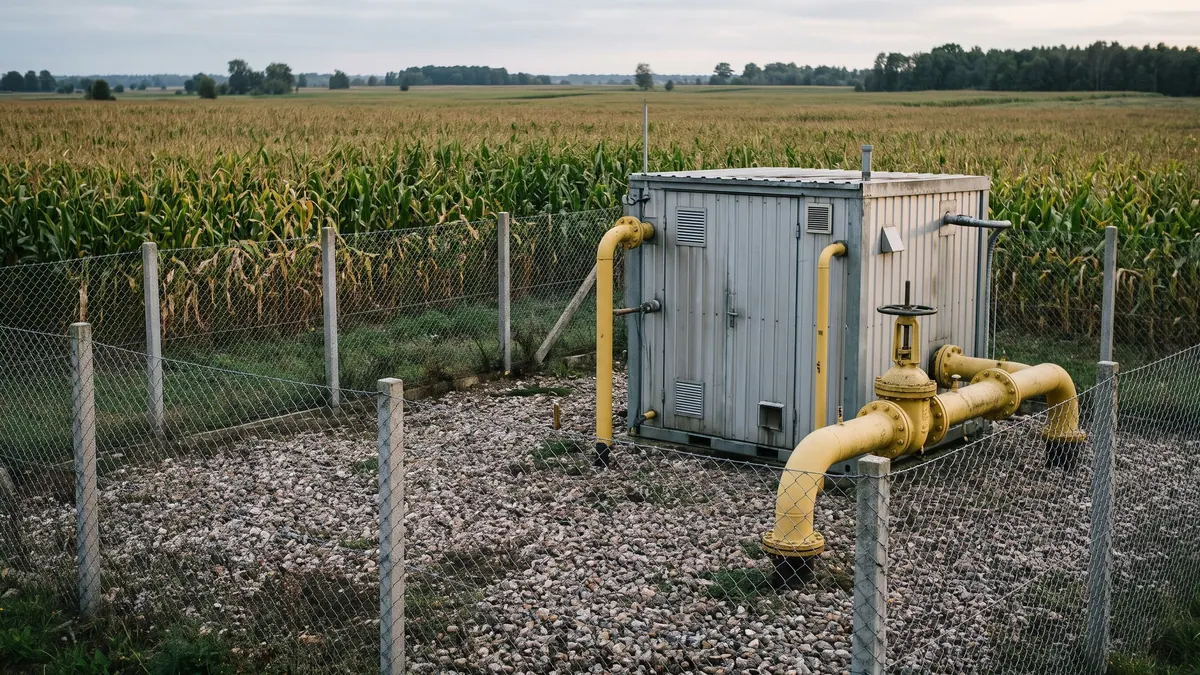
In recent years France has become the largest biomethane producer in Europe by number of plants, and according to reports based on the report of the European Biogas Association (Statistical Report 2025, data for 2024) it has also overtaken Germany in production volume, with about three times as many plants. Growth was driven by feed-in tariffs for biomethane injected into the grid under long-term contracts, orderly grid connection procedures and a very high share of agriculture in projects. The French model is often cited as an example for countries where biomethane is at an early stage.
Scale in Europe (context)
The summaries of the EBA report show that in 2024 biomethane production in Europe reached about 5.2 billion m³, of which about 4.3 billion m³ in the EU-27, and installed production capacity at the beginning of 2025 reached about 7 billion m³ per year. The EBA/GIE biomethane map (data from June 2025) shows the number of plants in Europe rising from 1548 to 1678 over the year. The average plant size is about 483 m³/h. These figures come from secondary reports on the report; the full document is available from EBA.
Success factors in France
- Tariff for injected biomethane. The producer receives a fixed price per MWh for over a dozen years (multi-year contracts), with a mechanism depending on plant size and type of substrates. This allows a bank to finance the project with predictable revenue.
- Right to connection and simplified procedures. Grid operators carry out capacity analyses and network expansion, and spread the costs according to the adopted rules.
- Many small and medium-sized agricultural producers. Plants often operate in a collective model (several farmers) and use manure, slurry and crop residues, including intermediate crops.
- Policy targets. Energy strategies provided for a significant share of renewable gases in gas consumption.
- Regulations on mass balance and guarantees of origin. They allow green attributes to be traded.
Tariff rules (in general)
The tariff mechanism is based on a base price depending on plant capacity, with premiums or adjustments for the type of substrates and an indexation mechanism. The parameters have been updated many times, and in recent years additional instruments have been introduced, including a biogas production certificate mechanism. Detailed rates and rules change, so they must be checked in current French legal acts and operator documents.
Worked example (illustrative only)
Suppose a plant with a capacity of 250 m³/h of biomethane (about 2.0 million m³ per year, 20 GWh) and a hypothetical tariff of 110 EUR/MWh for 15 years. Annual revenue is 2.2 million EUR. With operating costs of 1.3 million EUR (substrates, energy, servicing), 0.9 million EUR remains for debt service and profit. With CAPEX of 9 million EUR and debt of 70% (6.3 million EUR, 12 years, 5%), the annual instalment is about 0.71 million EUR, DSCR ≈ 1.27. The figures are assumed and do not reflect actual parameters; they illustrate how the tariff gives the bank a basis for assessment.
Lessons for Poland
- Predictable, long-term revenue is key to financing small and medium-sized plants.
- Connection procedures and rules for sharing network costs determine the pace of development.
- A collective model involving farmers makes the supply of substrates easier.
- Regulatory stability is required, because changes to tariffs affect investment decisions.
Limitations
Rapid growth can strain networks and the support budget, and also increase competition for substrates. The French experience also includes discussions about the use of crops for energy purposes and about restrictions on main crops.
The role of grid operators
French distribution operators publish public maps of connection potential and plan network expansion with biomethane in mind, and reverse compression mechanisms (“rebours”) allow surpluses to be passed to the higher-level network. As a result, producers can inject gas in summer too. This approach, in which the operator actively prepares the network to receive renewable gases, is considered one of the elements of the rapid growth in the number of plants.
Summary
The French example shows that stable tariffs, clear connection rules and collective agricultural projects can quickly build a biomethane market. The data on scale come from reports on the EBA report, and the details of the support system are worth checking in current sources.
Sources
Related articles