BiomethaneEvent
REGATRACE report: Germany, the United Kingdom and the Netherlands lead biomethane production in Europe
A report of the REGATRACE project, whose renewable gas work was coordinated by the EBA, compared biomethane markets in Europe: from 10 TWh in Germany to approx. 1.2 TWh in France.
Other language versions: polski.
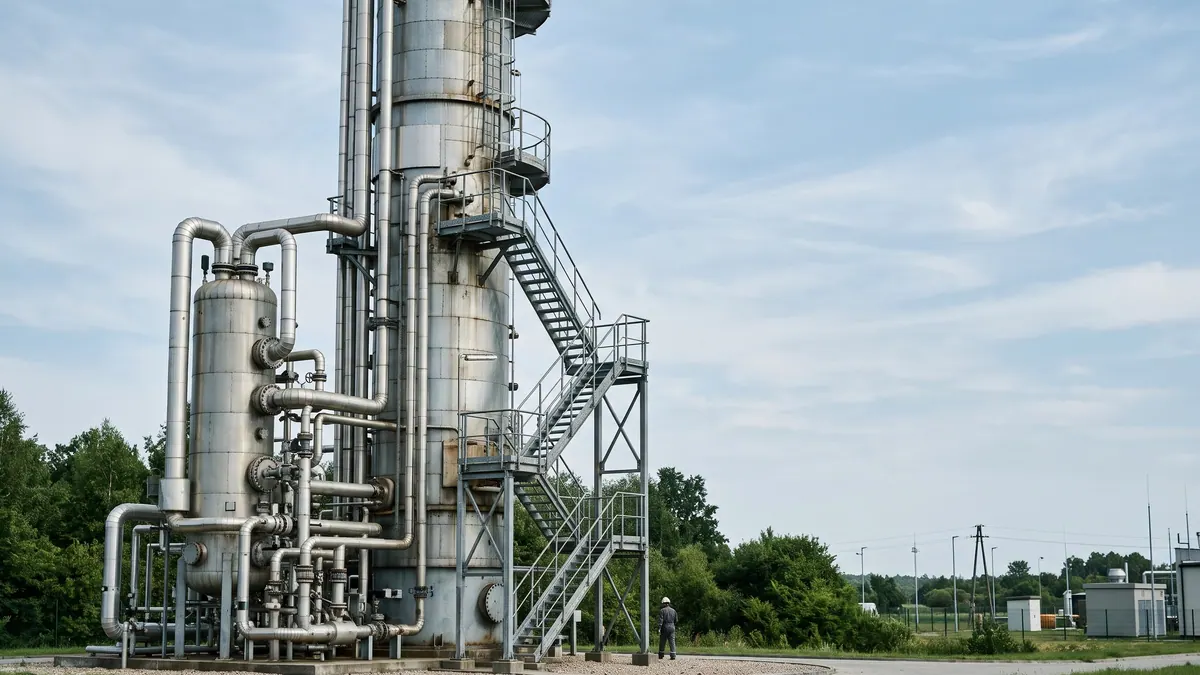
The REGATRACE project, funded under the Horizon 2020 programme, published an overview of the state of renewable gas use in Europe. Trade media discussed it on 26 May 2020. The report, whose work was coordinated by the European Biogas Association (EBA), showed that the biomethane market is highly diverse: alongside Germany, which produced around 10 TWh per year, there were countries producing barely a fraction of that amount.
Ranking of producers
The data in the report mostly concern 2018:
| Country | Biomethane production |
|---|---|
| Germany | approx. 10,018 GWh (2018) |
| United Kingdom | 3,300 GWh (2018) |
| Netherlands | 2,226 GWh (2018) |
| Denmark | 1,425 GWh (2017) |
| Sweden | 1,281 GWh (2018) |
| France | approx. 1,207 GWh |
The report draws attention to the different ratios of production to consumption. Denmark and Germany produced more biomethane than they consumed on the domestic market, and the surpluses were exported or stored. Sweden consumed about twice as much as it produced, which points to demand in transport.
Support systems
The most commonly used instrument is the guaranteed tariff (feed-in tariff), followed by premiums (feed-in premium) and tax relief. Quota systems and investment grants are used less often. Germany and the Netherlands use market mechanisms based on fuel supplier obligations arising from the Renewable Energy Directive. A survey of potential buyers showed that the most important factor is reducing greenhouse gas emissions, followed by production cost, the origin of the gas and security of supply.
Significance for Poland
REGATRACE also included Poland among the countries in which the project carried out activities supporting market development. In 2020 our country did not yet have regulation for biomethane injected into the grid, and production was marginal. The report was a point of reference for the Polish industry: it showed that support systems, simplified grid connection and a market for certificates or guarantees of origin are essential for the development of production.
What next
The project was to run for the following years, and within its framework market analyses, tools for investors and training materials were being prepared. For the reader of the compendium the conclusions are simple: where the biomethane market developed quickly, it was accompanied by clear regulation, stable support and access to the grid. The lack of any one of these elements holds back investment.
How to read these figures
Values in gigawatt-hours are not fully comparable with the number of installations, because the scale of individual plants varies greatly: in Germany and the Netherlands large units dominate, while in France and Denmark there are both agricultural and larger ones. The report also showed that a country's position is determined not only by its feedstock resources but also by policy: countries with stable support and simple connection rules record faster capacity growth.
Conclusions for new markets
The examples from the report show that countries starting to develop biomethane have several paths to choose from. They can rely on guaranteed tariffs, as in the United Kingdom and France, on fuel supplier obligations, as in Germany and the Netherlands, or on tax incentives, as in Sweden. Each has consequences for public costs and for the pace of capacity growth, so decisions should be preceded by an analysis of national conditions.
Sources
Related articles