Waste and circular economyEvent
European Parliament adopts its position on food and textile waste
On 13 March 2024 the European Parliament backed (514 votes in favour) its position on the revision of the Waste Framework Directive: binding food waste targets and extended producer responsibility for textiles.
Other language versions: polski.

On 13 March 2024 the European Parliament adopted at first reading its position on the targeted revision of the Waste Framework Directive: 514 MEPs voted in favour, 20 were against and 91 abstained. For the biogas industry, the most important element is the binding food waste reduction targets, because less food waste also means less substrate – but better-sorted substrate.
What Parliament adopted
The 2023 revision concerned two areas: food waste and textiles. Parliament backed binding targets for reducing food waste by 2030 (more ambitious, in its own position, than the Commission's proposal) and the introduction of mandatory extended producer responsibility (EPR) schemes for textiles and footwear. Parliament also proposed a shorter deadline for setting up EPR schemes for textiles: 18 months instead of the 30 proposed by the Commission.
In its proposal the Commission also included an obligation for separate collection of textiles from 2025 – a deadline resulting from earlier EU law.
Why this matters for biogas and biowaste
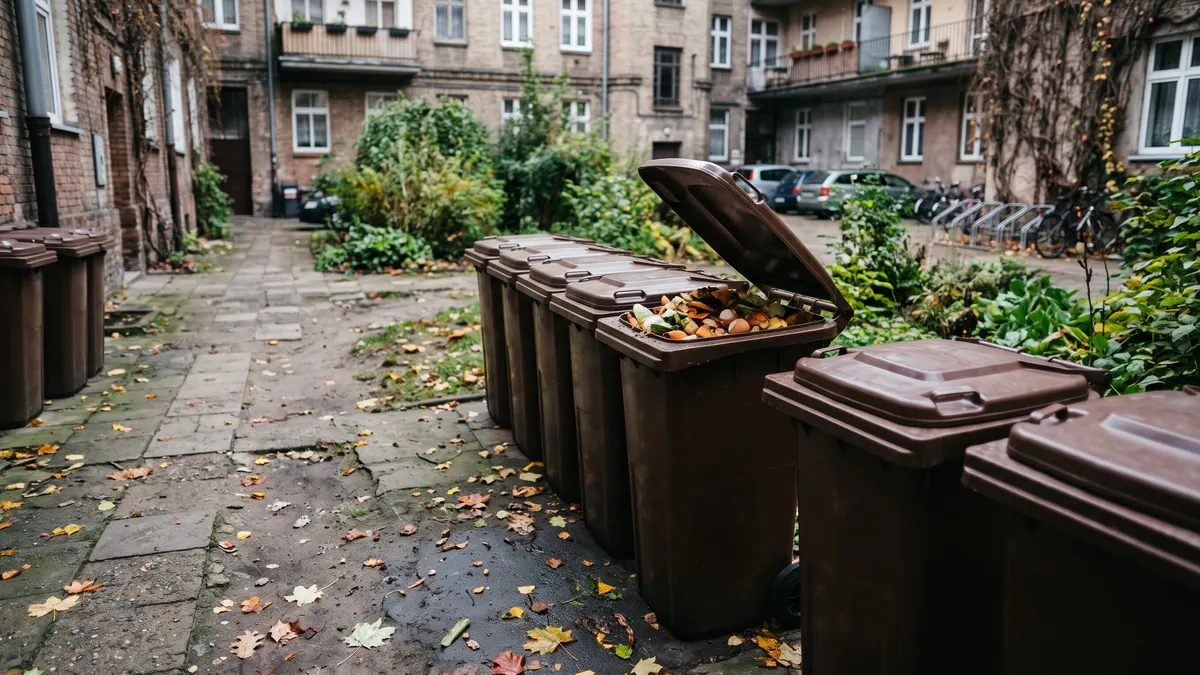
Food waste is one of the main streams for waste-treatment biogas plants. The reduction targets mean that the stream of "avoidable" waste (e.g. unsold food) will shrink, while the remainder – peelings, kitchen waste, processing residues – will still need to be managed. The waste hierarchy places prevention above organic recycling, so operators should plan feedstock contracts on the assumption that in the long term the volume of some fractions will fall.
Significance for the industry in Poland
Poland has an obligation to collect biowaste separately, but the quality of that collection varies, and contaminants (films, plastics) increase the costs of depackaging and pretreatment in biogas plants. The revision of the directive will require Poland to set pathways for reducing food waste and to build an EPR system for textiles – after the transposition deadline.
What next
After the vote in Parliament, negotiations with the Council will begin, and the final shape of the targets and deadlines will be the result of a compromise. Operators of biowaste installations should follow this process, because both volumes and quality requirements for food waste depend on it.
Why it is worth following
For companies collecting and processing biowaste, the revision of the framework directive means two parallel processes. The first is reducing the generation of food waste, which will shrink volumes in some segments, e.g. waste from retail. The second is improving the quality of separate collection – and for biogas plants this is more important than quantity alone, because contaminants require costly separation and reduce biogas yield. Biowaste supply contracts should therefore be structured with clauses on quality, and not only on quantity.
At the time Parliament voted, it was not yet known how the negotiations with the Council would end.
Sources
Related articles