Flanders: VEKA publishes onrendabele top and banding factor for biogas plants commissioned from 2025
The VEKA report for projects starting from 1 January 2025 gives an onrendabele top of 67.8–103 EUR/MWh for biogas plants, but the banding factor has been capped at 0.56.
Other language versions: polski.
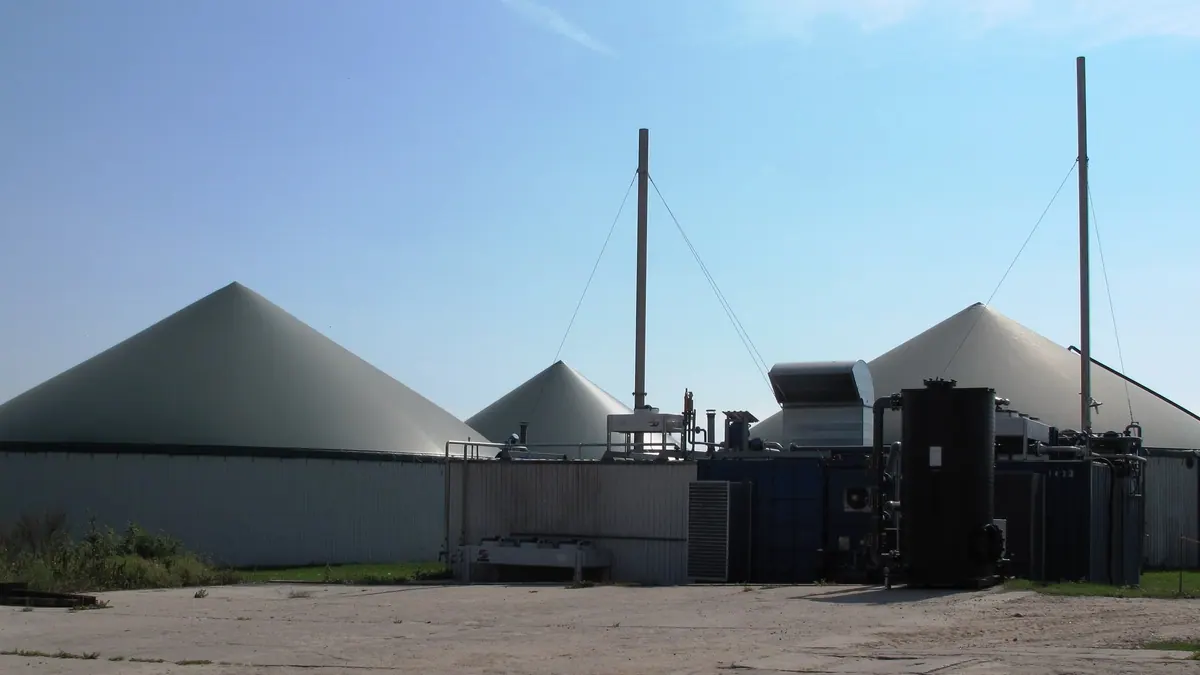

The Flemish agency VEKA has published a report with calculations of the onrendabele top (OT) and banding factor (Bf) for renewable energy projects with a start date from 1 January 2025. For new biogas plants the onrendabele top is 67.8–103 EUR/MWh depending on the category, but the banding factor is capped at the maximum of 0.56 laid down in the Energiebesluit. This means that for new Flemish biogas projects, certificate support is lower than the calculated cost gap.
How support is calculated
Flanders supports renewable energy with green certificates (groenestroomcertificaten, GSC). For every 1,000 kWh of energy produced, the generator receives a number of certificates equal to the Bf. The banding factor is the quotient of the onrendabele top, i.e. the part of revenue that an investment lacks to achieve the required return, and the banding divisor. For green energy the divisor is 97 EUR/MWh (the reference value of one certificate). VEKA calculates these values at least once a year for each representative project category.
Results for biogas
The report for projects from 2025 gives three biogas categories:
| Category | OT (EUR/MWh) | Bf before cap | Bf after cap |
|---|---|---|---|
| 5/1 — up to 5 MWe, manure, agricultural streams and other OBA (organic-biological substances or waste) | 67.8 | 0.699 | 0.560 |
| 6/1 — up to 5 MWe, bio-waste digestion at an existing composting facility | 71.5 | 0.737 | 0.560 |
| 10/1 — above 5 up to 20 MWe | 103 | 1.06 | 0.560 |
The values apply both to projects with citizen participation (variants "a") and without it (variants "b"). The cap follows from Article 6.2/1.1 of the Energiebesluit, which sets the maximum banding factor at 0.56 for green energy from biogas and 1.00 for qualifying cogeneration on biogas.
What this means in euro
Multiplying 0.56 by the divisor of 97 gives about 54 EUR/MWh. This is an indicative value, resulting from the definition of Bf, not from an official table. Compared with the calculated OT, it means that the cost gap is only partly covered: about 13.5 EUR/MWh remains uncovered for category 5/1 (67.8 − 54.3) and about 49 EUR/MWh for category 10/1 (103 − 54.3).
Scope of the report
The report contains separate categories for qualifying cogeneration on biogas. It excludes landfill gas plants, installations digesting wastewater and sewage sludge, and bio-waste digestion at an existing composting facility from category 5/1 (the latter has its own category 6/1). The reference installations are internal combustion engines running on 100% biogas with capacities of 2,500 kWe, 1,300 kWe and 7,000 kWe. The report assumes an economic lifetime of 15 years.
When it takes effect
The report applies to projects with a start date from 1 January 2025; the values are ultimately set by the Flemish minister by ministerial decision (ministerieel besluit).
Sources
Questions and answers
What is the bandingfactor?
It is the ratio of the onrendabele top (the unprofitable part of the investment, in EUR/MWh) to the banding divisor; it determines how many certificates are received per 1000 kWh of energy.
Related articles