Market and investmentAnalysis
Slovenia: electricity from biogas and biomass — how the support scheme run by Borzen works
In Slovenia electricity from renewables and cogeneration is supported by a scheme managed by Borzen: guaranteed purchase or an operating premium. Biogas receives on average about EUR 151/MWh.
Other language versions: polski.
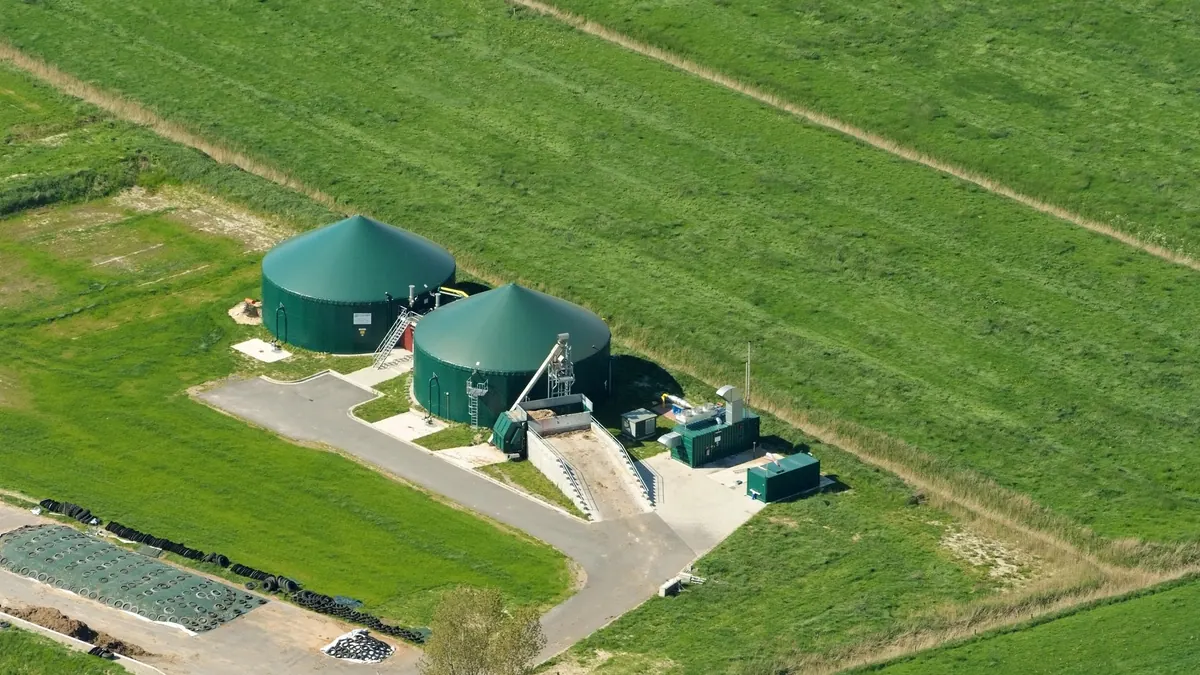

The Slovenian support scheme for electricity from renewables and high-efficiency cogeneration is run by the company Borzen, and a producer can receive support in the form of guaranteed purchase (zagotovljen odkup, ZO) or an operating premium (obratovalna podpora, OP). In January–September 2025 biogas produced 53.51 GWh in this scheme and received EUR 8.10 million, which gives an average of about EUR 151/MWh.
Who runs the scheme and how it is structured
Borzen manages the scheme through its RES/CHP Support Centre. The basis is the act on the promotion of renewable energy sources and the decree on support for electricity from renewables and high-efficiency cogeneration. The mechanism is state aid: purchase prices higher than market prices are meant to enable investment in electricity production from renewables.
Generators have a choice of two forms:
- guaranteed purchase (ZO) — Borzen buys electricity at a fixed annual price;
- operating premium (OP) — the generator sells electricity on the market, and Borzen tops up the difference to a set rate; according to the 2022 EurObserv'ER summary, for power plants with a capacity above 1 MW only this form is available (status as of 2022).
The exact rates for individual technologies depend on capacity and year of commissioning and are set in Borzen documents.
Data for 2025
In the report for the first three quarters of 2025 the scheme covered 3103 power plants with a total capacity of 485.51 MWe, and total production was 659.31 GWh with support of EUR 79.36 million. Average support is EUR 120.36/MWh, compared with EUR 189.05/MWh in the same period of 2024. The fall is linked to a growing share of fossil-fuel combined heat and power plants, whose production rose from 70.72 to 319.94 GWh and which receive low unit support.
| Type | Production Jan–Sep 2025 | Support Jan–Sep 2025 | Share of production | Share of support |
|---|---|---|---|---|
| Biogas | 53.51 GWh | EUR 8.10 million | 8.1% | 10.2% |
| Photovoltaics | 196.87 GWh | EUR 48.28 million | 29.9% | 60.8% |
| Fossil-fuel cogeneration | 319.94 GWh | EUR 11.72 million | 48.5% | 14.8% |
| Other technologies (the difference to the total; incl. hydro, wood biomass) | 88.99 GWh | EUR 11.26 million | 13.5% | 14.2% |
| Scheme total | 659.31 GWh | EUR 79.36 million | 100% | 100% |
Biogas is thus a relatively small part of the scheme, but unit support (about EUR 151/MWh) is higher than the average for the whole scheme, and production from biogas increased by 8.6% compared with the previous year.
Unit support by technology
From the report data one can calculate average support per MWh for the three largest groups: biogas about EUR 151/MWh (EUR 8.10 million for 53.51 GWh), photovoltaics about EUR 245/MWh (EUR 48.28 million for 196.87 GWh) and fossil-fuel cogeneration about EUR 37/MWh (EUR 11.72 million for 319.94 GWh). The differences reflect the age of installations, the type of support and the level of rates. For biogas, support is paid for actual production: the 8.6% increase compared with the first three quarters of 2024 does not settle whether it results from better utilisation of existing installations or from new capacity; the summary does not give the year-on-year change in biogas capacity. Wood biomass power plants increased production by 17.6% (Jan–Sep 2025 against Jan–Sep 2024).
Average support for the whole scheme fell from EUR 189.05/MWh in January–September 2024 to EUR 120.36/MWh in the same period of 2025, whereas for biogas unit support remains clearly above the average.
Comparison with the region
Against the regional background: the German average from the biomass tender of October 2025 is 18.11 ct/kWh, i.e. about EUR 181/MWh (Germany: the tender of 1 October 2025), and the Austrian applicable value for biogas is 29.02 ct/kWh, i.e. EUR 290/MWh (Austria: overview). The comparison is approximate, because the Slovenian value is the average actual support paid out in the scheme, not a rate from a bid.
Shares in payouts allow one to judge the relative generosity of the scheme: biogas has 10.2% of support against 8.1% of production (a ratio of about 1.26). Photovoltaics has 60.8% against 29.9% (about 2.03). Fossil-fuel cogeneration has 14.8% against 48.5% (about 0.31). Biogas is thus supported above its production weight, but much less than solar energy.
How to read the numbers
Average support calculated as the quotient of payouts and production (EUR 8.10 million divided by 53.51 GWh) covers all biogas plants in the scheme, including installations of different ages, capacities and forms of support. It does not indicate the rate for a new installation. Biogas at EUR 151/MWh is about PLN 640/MWh at a rate of about PLN 4.25 per euro (indicative, 2025). Description of the latest report: Borzen: biogas in the third quarter of 2025.
Sources
Related articles