Law and regulationExplainer
Netherlands: SDE++ and electricity from biogas and biomass — cogeneration, heat and slurry mono-digestion
SDE++ supports biogas in cogeneration only with an electrical efficiency of at least 20%, and biomass combustion only for heat; slurry mono-digestion has separate capacity thresholds.
Other language versions: polski.
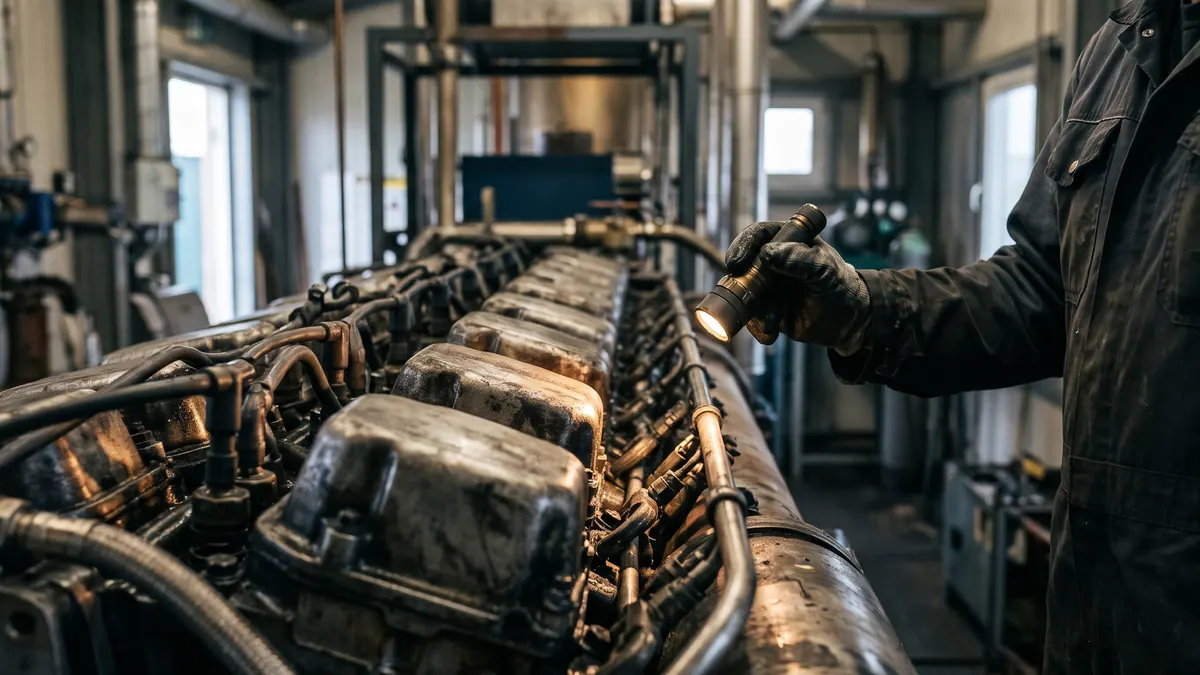
The Dutch SDE++ scheme does not support biomass in a general way: the conditions depend on the technology. All-substrate digestion (allesvergisting) can receive a subsidy for heat or for electricity and heat, provided the cogeneration unit has a nominal electrical efficiency of at least 20%. For biomass combustion the subsidy covers heat only, and electricity must not be generated from it.
How the subsidy works
SDE++ (Stimulering Duurzame Energieproductie en Klimaattransitie) covers the unprofitable part of a project. For renewable gas, RVO describes this as the requested amount minus the average market price of gas, adjusted every year. The base amounts (basisbedragen) result from annual PBL recommendations; the recommendations for the 2026 round were published on 13 February 2026. Applications are submitted in annual rounds: in 2025 the application window ran from 7 October to 6 November. We write about Dutch green gas, its subsidies and Vertogas certificates in the article Green gas in the Netherlands: SDE++, Vertogas and the target of 2 bcm.
All-substrate digestion
According to RVO, a subsidy can be obtained for heat, or for electricity and heat from cogeneration (WKK), and the nominal electrical efficiency of the WKK unit must be at least 20%. The installation's capacity is taken to be the sum of its electrical and thermal capacity. Installations of 2 MW or more must meet the RED sustainability criteria and certification.
In practice this means that the capacity counted for the subsidy includes both the electrical and the thermal part: an engine with 1 MW of electrical and 1.1 MW of thermal capacity counts as a 2.1 MW installation (a calculation example by Substraty.pl). The 20% efficiency threshold is low for gas engines fed with biogas, whose electrical efficiency usually clearly exceeds it, so in practice it mainly excludes systems that primarily produce heat and a small amount of electricity incidentally. The design of the scheme thus rewards the use of heat, and electricity from biogas is not an end in itself.
Slurry mono-digestion
In mono-digestion (monomestvergisting) only animal slurry may be used, without any co-products. New installations are divided into three capacity categories: up to 110 kW, from 110 to 1500 kW and above 1500 kW. The same minimum electrical efficiency of 20% applies to WKK units. Existing installations of up to 1500 kW may apply for an extension of operation after at least 9 years of the subsidy period have elapsed.
Biomass combustion
The subsidy covers only the heat produced. RVO reminds applicants: "U mag met de geproduceerde warmte geen elektriciteit opwekken" — electricity must not be generated from this heat. At least 97% of the fuel energy must be biogenic. In units burning wood pellets, at most 15% of grade A wood pellets and 25% of biorefinery residue streams may be used.
Wastewater treatment plants
For installations at wastewater treatment plants (RWZI), a subsidy for additional biogas can be obtained if biogas production increases by at least 25% compared with the previous level. Biomass gasification is described in SDE++ separately from digestion, not in the same category. RVO lists three types of digestion: all-substrate digestion, slurry mono-digestion and digestion of sludge from RWZI.
Green gas instead of electricity
Separate rules apply to converting existing cogeneration into green gas production: the subsidy is granted only if the gas is fed into the gas grid, and gas used in a private network is not supported. The gas must meet the grid operator's quality requirements. Guarantees of origin (GvO) from VertiCer cannot be used in parallel with ERE certificates and the SDE subsidy for the same production.
What follows from this
For a producer of electricity from biogas in the Netherlands, three parameters matter: the electrical efficiency of the WKK, the type of substrate and the size of the installation. For solid biomass, combustion does not open the way to a subsidy for electricity. This distinguishes SDE++ from schemes that pay for every MWh of electricity regardless of technology. The base amounts for individual categories change every year with the PBL recommendation, so before an investment decision you need to check the values from the current round, not from previous years.
Sources
Questions and answers
Can you get a subsidy for electricity from biogas under SDE++?
Yes, for cogeneration in all-feedstock digestion and in slurry mono-digestion, if its nominal electrical efficiency is at least 20%.
Related articles