Market and investmentAnalysis
Green gas in the Netherlands: SDE++ subsidies, Vertogas certificates and a 2 billion m³ target in 2030
The Netherlands is building a green gas market by combining SDE++ production subsidies with the Vertogas certificate system. We describe the mechanisms, the role of manure digestion and lessons for Poland, without citing uncertain statistics.
Other language versions: polski.
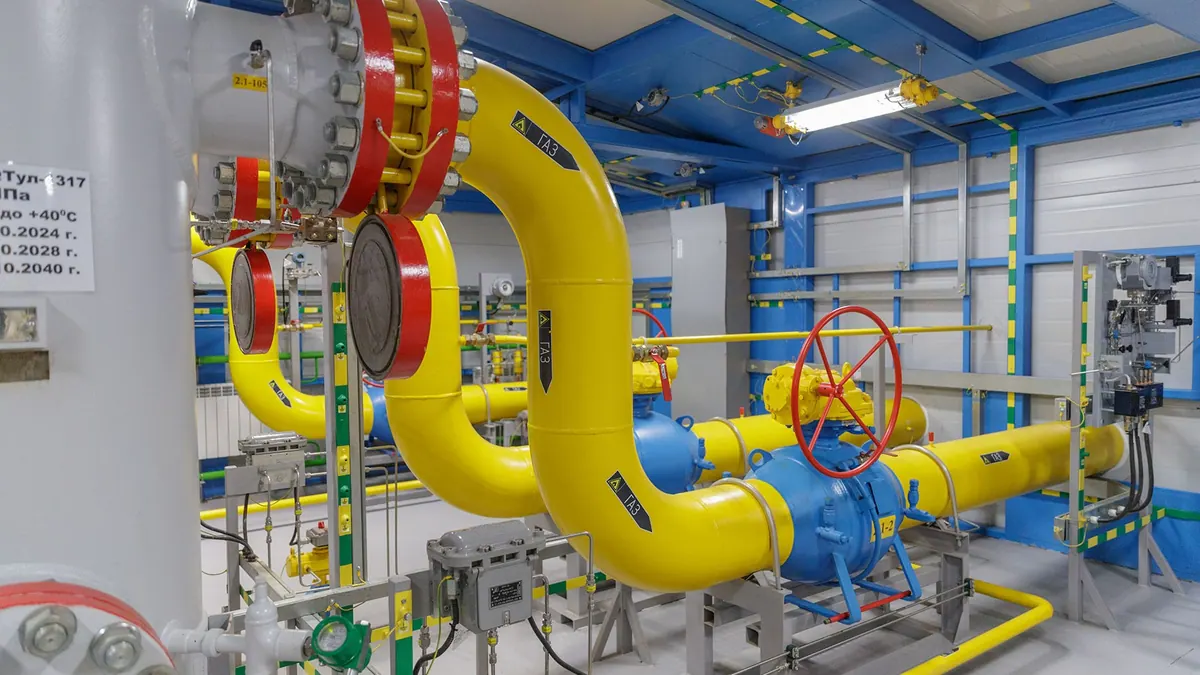

In the Netherlands, green gas (groen gas) is biomethane injected into the grid, supported by production subsidies under the SDE++ programme, and the origin of the gas is confirmed by the Vertogas certificate system. The 2019 climate agreement assumes a substantial increase in green gas production by 2030, and a target in the order of 2 billion m³ a year appears in the documents. The Dutch model is an example of a market in which financial support (SDE++) and certification (Vertogas) work as mutually complementary mechanisms. Subsidy parameters and budgets change every year, so below we discuss the rules rather than specific rates.
SDE++: a premium on top of the market price
The SDE++ programme (Stimulering Duurzame Energieproductie en Klimaattransitie) pays the producer a premium that covers the difference between the cost of production (a base amount set for a technology category) and the market price of energy. The premium is paid for many years (usually over a dozen), and its amount changes with the market price (which reduces the risk of overcompensation). Support is awarded in rounds with a limited budget, in which projects compete on price; unlike a feed-in tariff, this requires participating in the call. Separate categories depending on feedstock and scale are provided for biomethane.
Vertogas and guarantees of origin
Vertogas, a certification system operating within the Dutch transmission system operator, issues certificates confirming that a given quantity of gas comes from renewable sources. Certificates are transferred between parties and cancelled when consumption is declared. The system is linked to European registers, which enables cross-border trade. Buyers declaring consumption of green gas (industry, sellers, heating plants) purchase certificates independently of the physical gas.
Agriculture and substrates
Many Dutch plants use manure in co-digestion with residues from agriculture and the food industry. Dutch agriculture is highly intensive, and the government seeks to reduce nitrogen and methane emissions, so biogas is part of the strategy. Digestate management is subject to strict nitrogen limits, which requires solutions such as separation and processing of fertilisers.
Worked example (illustrative)
The base subsidy amount for a project is 12 EUR/GJ (an assumption), the reference market price of gas is 40 EUR/MWh = 11.1 EUR/GJ. The premium is the difference 12 − 11.1 = 0.9 EUR/GJ (and when market prices are higher the premium falls to zero). The producer also has revenue from certificates (in the case of green gas sold to buyers declaring consumption). If the market price falls to 25 EUR/MWh (6.9 EUR/GJ), the premium rises to 5.1 EUR/GJ. The example shows the stabilising function of SDE++, but specific numbers depend on the category and the round.
Lessons for Poland
- A variable premium on top of the market price secures the project without overpaying from the budget when prices are high.
- The certificate system must work with European registers in order to protect against double counting.
- Calls with a limited budget require projects to be prepared (permits, connection) before the competition.
- Nitrogen management is just as important as energy.
Risks
- uncertainty about the results of calls,
- changes to the programme's rules,
- grid constraints,
- nitrogen limits and digestate management costs,
- competition for substrates.
Significance for buyers
Dutch industrial customers and energy suppliers buy green gas certificates in order to declare emission reductions. By separating the attribute from the physical gas, the producer can sell the gas on the wholesale market and the certificates separately, which increases commercial flexibility. At the same time the system requires strict control so that the same quantity is not sold twice or counted towards two regulatory targets.
What this means for projects
For the investor the following are important: the subsidy call deadline, the requirement to hold permits and connection conditions at the time of applying, the ability to meet substrate conditions and a calculation of the production cost against the base amount for the category. Investors in other countries ask themselves the same questions, but in the Netherlands the outcome of the competition decides whether the project goes ahead.
A comparative view
Unlike a fixed tariff, as in France, the Dutch model requires winning a competition and carries outcome risk, but the variable premium protects the public budget. Both concepts have advantages, and the choice between them depends on policy priorities: speed of development and simplicity, or control of support costs.
Summary
Dutch green gas rests on two pillars: a subsidy on top of the market price and certificates of origin. It is a model that emphasises cost competition and transparency, and its parameters should be followed continuously, because they change from year to year.
Sources
Related articles