Law and regulationEvent
The government adopted a draft amendment to the RES Act: auctions to 2027, licences up to 1 MW
The Council of Ministers adopted a draft amendment to the RES Act extending the auction system to the end of 2027 and FIT/FIP to mid-2024, and raising the licence threshold from 0.5 to 1 MW.
Other language versions: polski.
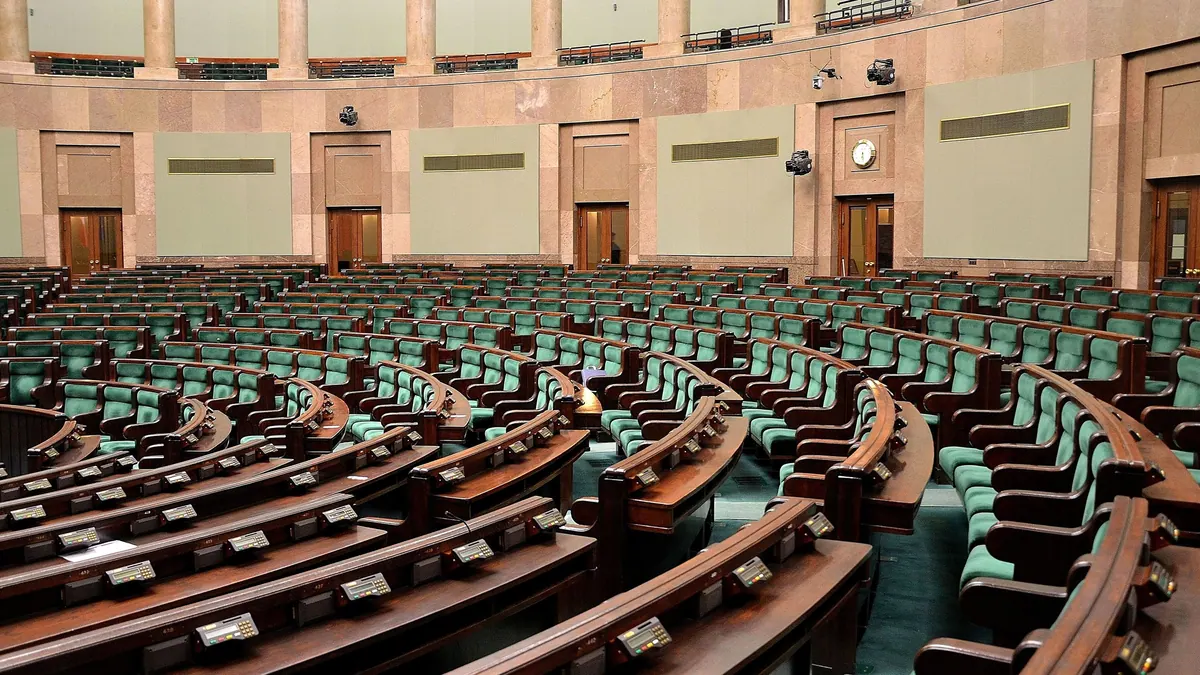

On 13 April 2021, the Council of Ministers adopted a draft amendment to the Act on Renewable Energy Sources (designated UDT-107), prepared by the Ministry of Climate and Environment. The draft extends the period in which the auction system can be used to 31 December 2027, and the systems of guaranteed tariffs and premiums (FIT/FIP) to 30 June 2024. It also raises the threshold above which an energy generator needs a licence.
Key changes
The draft, which went to the Sejm, contains the following solutions:
| Area | Change |
|---|---|
| Auction system | extension of the aid period from 30 June 2021 to 31 December 2027 |
| FIT/FIP | limit of 30 June 2024 resulting from changes to the EU GBER regulation |
| Auction volumes | set by a regulation of the Council of Ministers for 2022–2027; they may be increased but not reduced |
| Licences | threshold for small installations from 500 kW to 1,000 kW; generators holding licences will be entered in the Energy Regulatory Office (URE) register within 90 days |
| Spatial planning | capacity threshold for installations that can be sited without inclusion in the land use study, from 100 kW to 500 kW; for photovoltaics on agricultural land of classes V, VI and wasteland – to 1,000 kW |
| KOWR land | priority for state energy groups in leasing land for RES projects |
Support for generators requires notification to and approval by the European Commission, because it constitutes state aid.
What it means for biogas
The draft contains a definition of installed capacity for biogas plants and agricultural biogas plants: it will be the rated active power of the generating set stated on the nameplate, and if there is none – as determined by an accredited body. This matters for membership of auction baskets and for the licensing and registration thresholds. Raising the licence threshold to 1 MW simplifies formalities for most agricultural biogas plants, which have small capacities.
In the context of the earlier talks between the government and the industry, which began with the letter of intent of October 2020, the amendment fulfils one of the announcements – extending the existing support schemes. It does not, however, contain regulations for biomethane, which were the subject of separate work.
Significance for investors
The most important thing for the industry is the restoration of a planning horizon. The expiry of approval for the auction system at the end of 2021 would have meant no possibility of taking part in auctions for new installations. The extension to 2027 makes it possible to plan investments for several years, provided the European Commission approves the programme and the government sets the auction volumes. The removal of some formalities reduces the costs of small projects.
What next
The draft was to go to the Sejm. The Commission's position on compliance with state aid rules was also key, as were the auction volumes the government would set for 2022–2027. For investors this meant the need to stay ready to submit bids as soon as the dates are published.
Sources
Related articles