BiogasAnalysis
Africa Biogas Partnership Programme in Kenya and the region: how many biodigesters were built and on what terms
The ABPP programme (SNV, Hivos and the Dutch Ministry of Foreign Affairs) covered Ethiopia, Kenya, Tanzania, Uganda and Burkina Faso. The figures given by the organisers differ; we explain what follows from them.
Other language versions: polski.
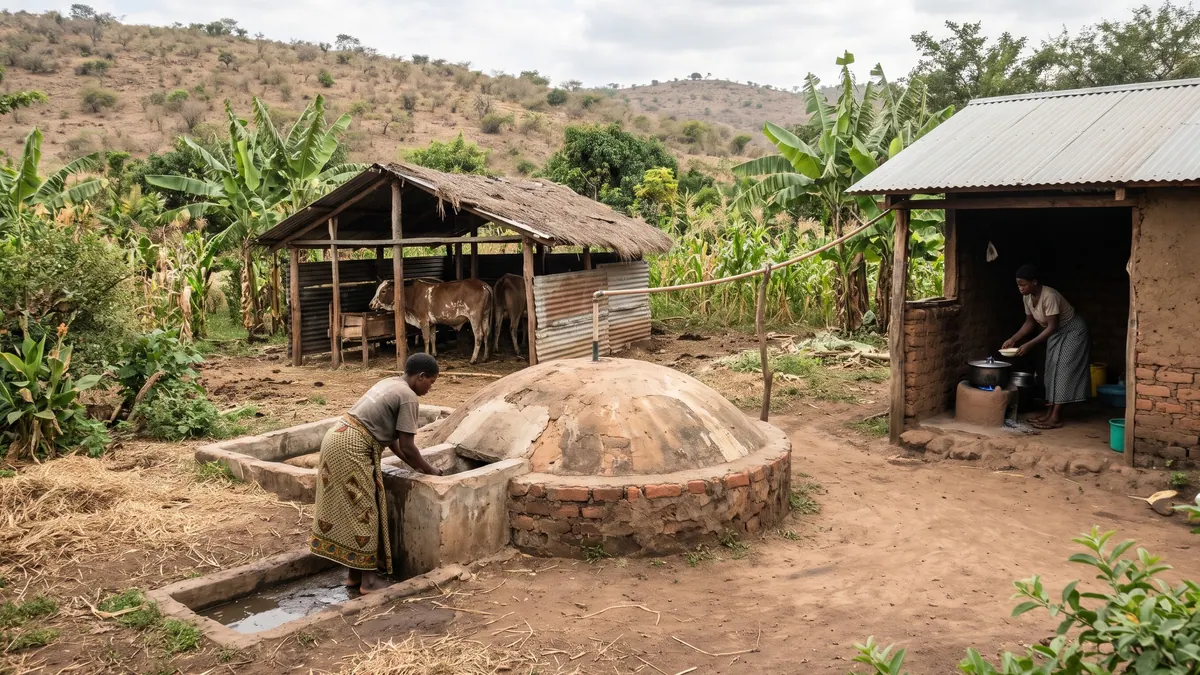
The Africa Biogas Partnership Programme (ABPP) is the largest organised household biodigester programme in East and West Africa: according to the 2020 SNV brochure, SNV and Hivos together with national programmes built more than 65 thousand installations in it. Below we put in order the available data on the programme and show where the discrepancies between the figures given by the organisers come from.
Programme structure
ABPP is a public-private partnership between Hivos, SNV and the Directorate-General for International Cooperation (DGIS) of the Dutch Ministry of Foreign Affairs. Hivos acts as fund manager, and SNV is responsible for capacity development and knowledge management. The programme supports national biogas programmes in five countries: Ethiopia, Kenya, Tanzania (Tanzania Domestic Biogas Programme, TDBP), Uganda and Burkina Faso (PNB-BF). According to the review by Clemens et al., ABPP was established in 2009. Besides DGIS it was later also financed by, among others, ENDEV-RBF and the governments of Burkina Faso and Ethiopia. The SNV page marks the programme as completed, and Hivos reports that the funding period has ended. The aim was to build a market for commercially viable household biodigesters, in which local enterprises, non-governmental organisations and governments take part.
The numbers: what is certain and what is not
The organisations running the programme give different figures, and they do not follow directly from the same definitions and dates:
| Indicator | Source | Value |
|---|---|---|
| Biodigesters (total) | SNV, project page | "more than 50 thousand" |
| Biodigesters (total) | SNV, 2020 brochure | "more than 65 thousand" |
| Beneficiaries | SNV, project page | "more than 250 thousand"; 320 thousand people by June 2018 |
| Beneficiaries | SNV, 2020 brochure | 325 thousand people |
| Biodigesters, phase 2 (2014–2019) | Hivos | 60 thousand |
| Land fertilised with digestate, phase 2 | Hivos | more than 300 thousand ha (yield increase 20–30%) |
| Construction companies, phase 2 | Hivos | 90 |
| Biodigesters in Kenya, Tanzania and Uganda 2009–2017 | Clemens et al. (2018) | more than 27 thousand |
The fairest conclusion is this: the latest available SNV brochure speaks of more than 65 thousand installations in five countries, older summaries of more than 50 thousand, and Hivos describes 60 thousand in phase 2 alone. National figures (including for Kenya) should be taken from the reports of the specific national programmes; the three East African countries covered by the scientific review amount, according to it, to more than 27 thousand installations by 2017, half of them in Kenya.
Phase 2 and carbon credits
Hivos describes phase 2 as the period 2014–2019 with a budget of EUR 88 million, including EUR 60 million of household contributions and EUR 3 million of carbon credit revenue. Among the results of phase 2 it counts 90 construction companies, 4.2 thousand jobs and the involvement of 45 credit institutions that grant loans for purchasing a biodigester. The logic of climate finance is as follows: each biodigester replaces part of the firewood (less felling, lower emissions and less smoke in the kitchen), and the documented reductions are sold to investors, which partly finances subsidies for installations and servicing. Carbon credits, however, made up a small part of the phase 2 budget, so the main source of money was households.
Why the programme matters also for the European industry
- A market model instead of grants alone: local masons and enterprises, quality control and credit for customers.
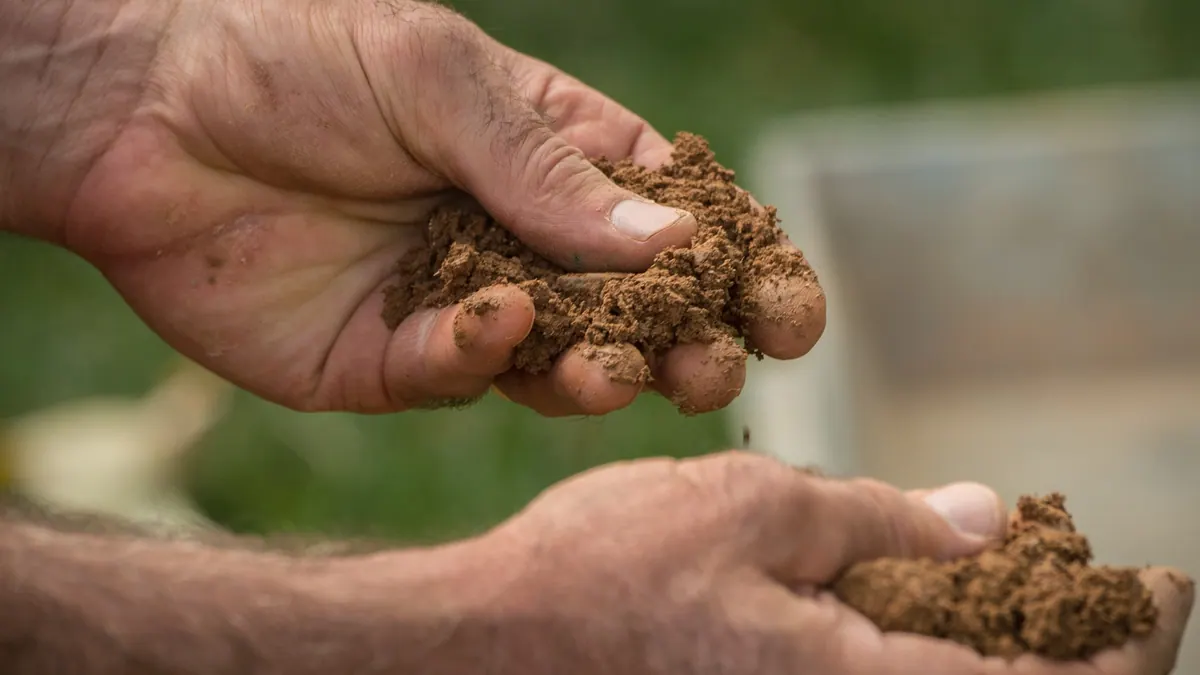
- Digestate (bioslurry) treated as a product: Hivos reports that the digestate fertilised more than 300 thousand ha. See Bioslurry from household biodigesters in East Africa.
- Durability of operation: the scientific review notes that in 2016, 27% of the biodigesters built in 2009–2013 were not working, so the programme launched call centres and repair campaigns. See also Rwanda: biogas in prisons and schools: an installation that does not work does not produce emission reductions.
- Dependence on subsidies: data from Tanzania show that after subsidies end, sales can fall sharply (Tanzania: what happened after the subsidies ended).
The figures are therefore worth reading critically, and programmes should be judged by the durability of the installations, not solely by the number of units built.
What a typical household biodigester looks like
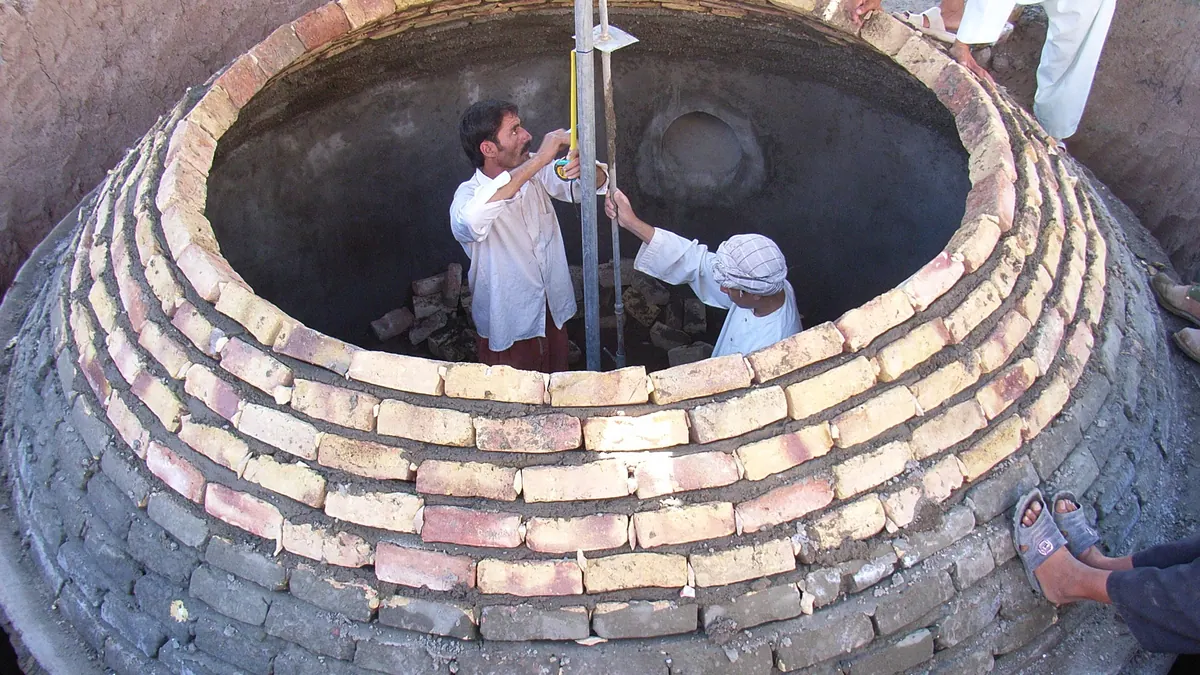
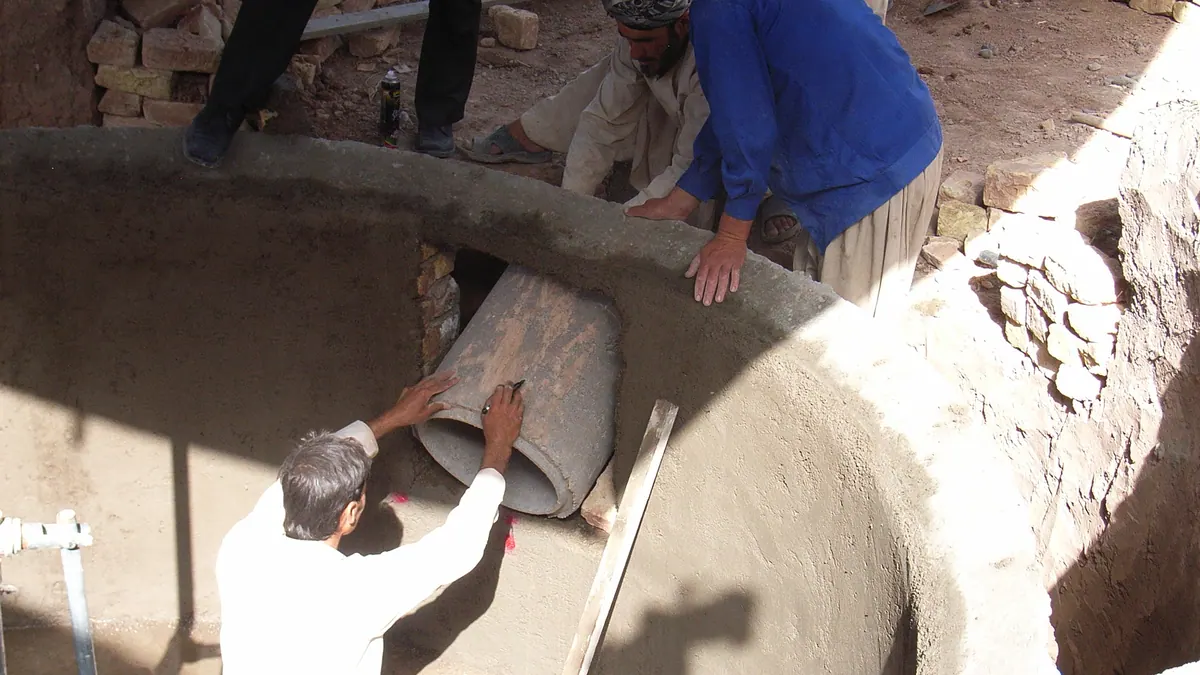
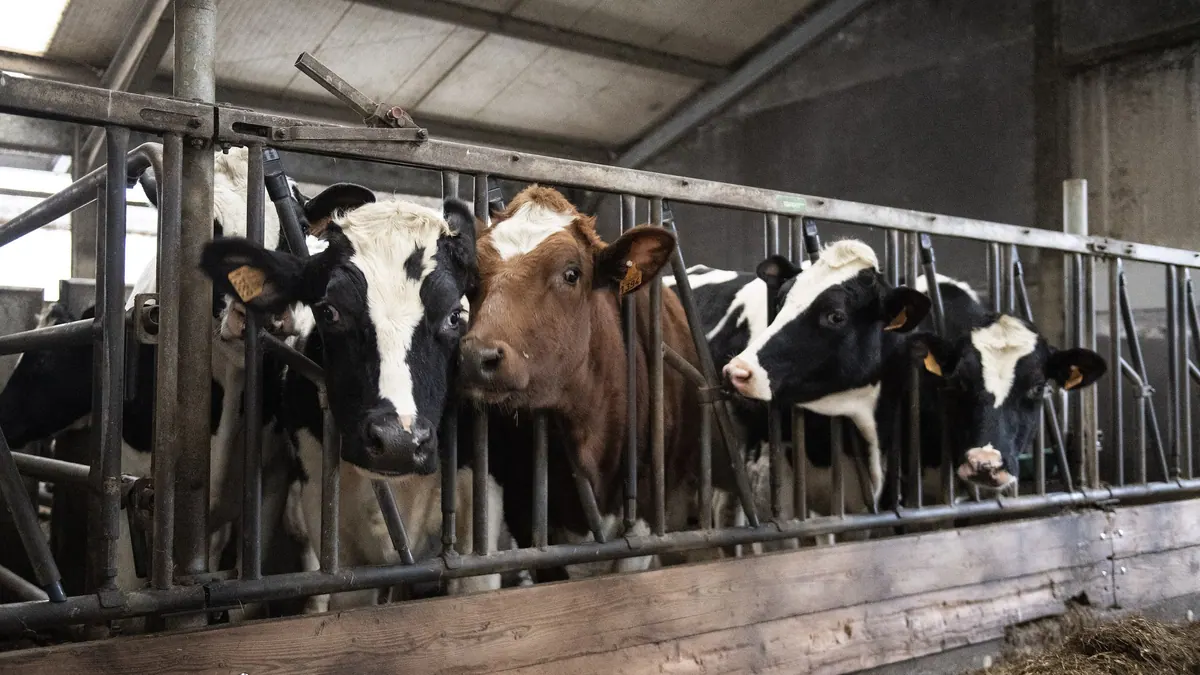
A household biodigester is usually an underground chamber with a volume of several cubic metres, fed daily with cattle manure diluted with water. The gas collects in the dome and is piped to the kitchen, where it fuels a burner. That is why the programmes targeted households with constant access to manure. According to Hivos, 38 thousand women save on average 2.5 hours a day that they previously spent collecting firewood or scrubbing soot-blackened pots. The scientific review reports that half of the users in Kenya cook exclusively on biogas, while in Uganda and Tanzania combining biogas with other fuels (fuel stacking) is more common, which makes it harder to achieve health and environmental benefits.
The role of masons and entrepreneurs
An important feature of ABPP was the training of local master builders. Hivos cites 90 construction enterprises in phase 2. Thanks to this the programme had a chance of continuing after subsidies ended, because contractors with competence and a brand remained on the market. The review by Clemens et al. points out, however, that a high initial cost, limited access to credit and a lack of maintenance remain barriers, especially after the withdrawal of the investment subsidy; the programme therefore developed cheaper, modified fixed-dome designs. Where subsidies disappeared, contractors lost customers (see the article on Tanzania).
How to read programme claims
The number of biodigesters built is easy to count, but it does not say how many of them are still working. For assessing effectiveness, what is key are user monitoring reports, the results of technical inspections and data on the use of gas and digestate. When programmes give numbers of beneficiaries, they usually multiply the number of installations by the average household size, which is an estimate, not a measurement.
Sources
- Africa Biogas Partnership Programme (ABPP) — SNV
- Africa Biogas Partnership Programme — Hivos
- Africa Biogas Partnership Programme — broszura SNV/Hivos (maj 2020)
- Clemens et al., Africa Biogas Partnership Program: A Review of Clean Cooking Implementation through Market Development in East Africa — Energy for Sustainable Development (2018)
Questions and answers
How many biodigesters did ABPP build?
The 2020 SNV brochure gives "over 65,000" biodigesters in five countries; an older SNV project page says "over 50,000", and Hivos 60,000 in phase 2 alone (2014–2019). The differences result from different dates and reporting periods.
Related articles