Market and investmentAnalysis
Tanzania: what happened to the biodigester market after the TDBP subsidies ended
The TDBP programme built 12 thousand biodigesters, but an account from one of the master builders shows a sharp fall in orders after subsidies expired at the end of 2014. Lessons for designing support.
Other language versions: polski.
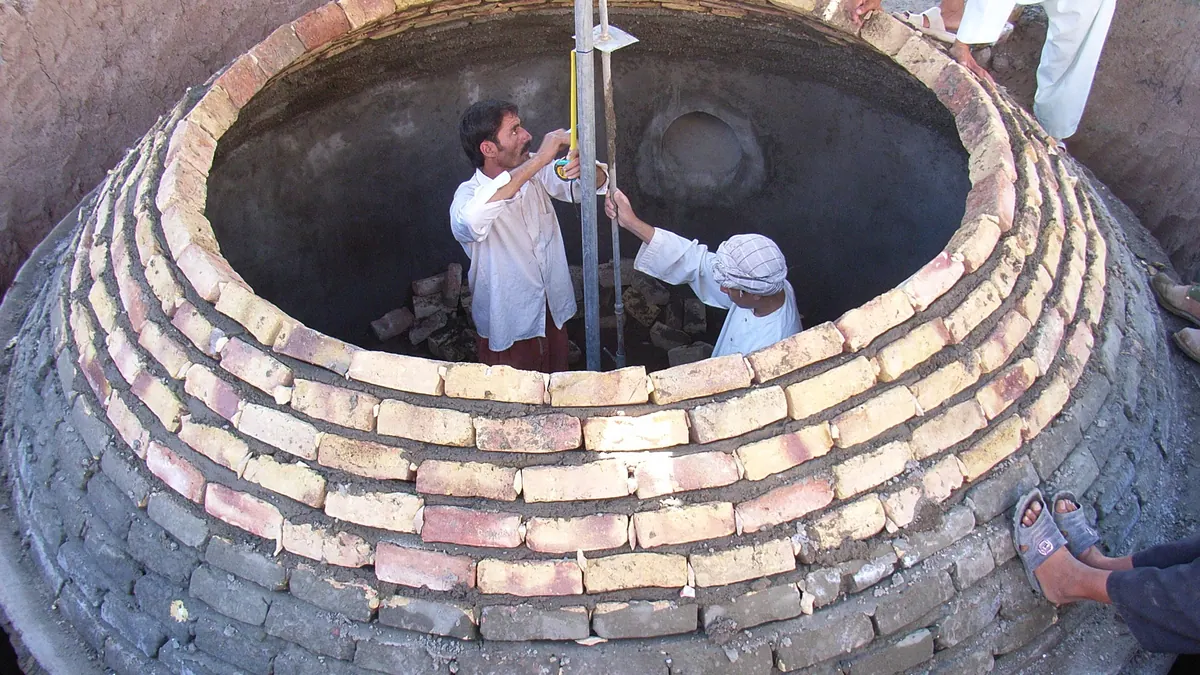

The Tanzania Domestic Biogas Programme (TDBP) is an example of a programme that quickly built a base of more than ten thousand household biodigesters and then ran into the question of what happens to the market once subsidies expire. The available accounts are partly anecdotal, but they illustrate a problem that occurs in almost every renewable energy funding programme.
The programme and its results
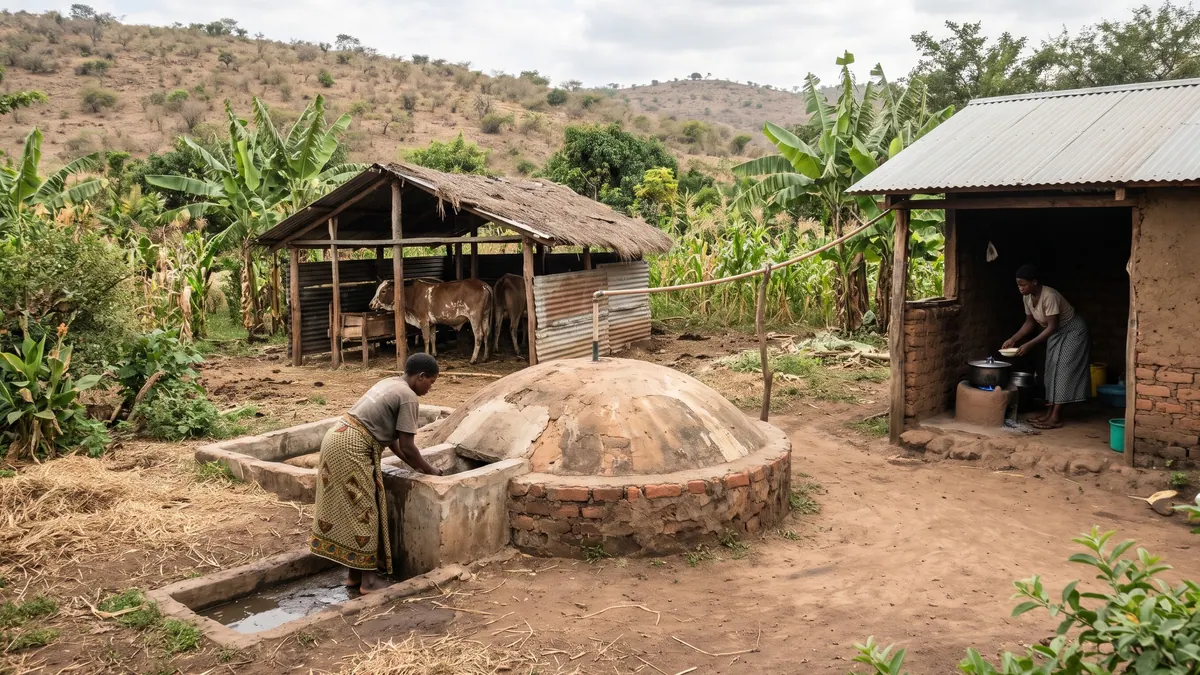
According to SNV the TDBP programme began operating in 2009 as part of the Africa Biogas Partnership Programme; Bioenergy News wrote about its official inauguration on 26 March 2011 (activity began in 2009) and a budget of EUR 16 million for 12 thousand installations. An SNV announcement of 22 February 2016 spoke of the implementation of 12 thousand biodigesters, used by more than 70 thousand people, which corresponded to the target set. The programme had a continuation: the construction of a further 10 thousand installations in 2016–2017 was planned, and the Rural Energy Agency (REA), with the backing of the Norwegian embassy, allocated about USD 1.6 million to this, mainly for investment rebates for households, passed on through the companies building the biogas plants. ABPP contributed more than USD 3 million at the time. According to SNV, more than 60 construction companies arose under TDBP.
What happened after the subsidies ended
In August 2017 SNV published an account from one of the master builders (masons trained in the programme). It shows that the number of customers fell after TDBP stopped subsidising construction at the end of 2014: from 165 installations in 2013 and 201 in 2014 to 20 in 2015 and only 6 in 2016. These are the data of one contractor, not of the whole programme, so they must not be generalised to the entire market. They do, however, illustrate the mechanism: when the price of an installation for a household rises by the amount of the subsidy, some potential customers give up.
Why this happens
- A high initial cost compared with household income; a biodigester saves fuel costs only in subsequent years.
- A lack of credit for rural households to buy an installation.
- Uncertainty about operation: potential customers see neighbours with non-working installations (cf. Rwanda: biogas in prisons and schools).
- The disappearance of marketing and training, which the programme financed and the market does not take over in full.
Lessons for designers of support
- A subsidy should be declining, not disappear abruptly, so that the market can adjust.
- Credit financing, e.g. through microfinance, complements the subsidy and builds lasting demand.
- After-sales service and warranties increase the confidence of potential customers.
- Revenue from additional products (fertiliser from bioslurry, carbon credits) can partly replace the subsidy. More on the regional programme: ABPP in Kenya and the region.
The analogy with Poland is clear: grant programmes for agricultural biogas plants (e.g. from the National Fund for Environmental Protection and Water Management, NFOŚiGW) trigger investments, but their durability depends on whether the economics also work after the call for applications ends.
The mechanics of the subsidy market
A household considering buying a biodigester compares two costs: the initial investment and its existing spending on firewood or charcoal. A digester costs the equivalent of many months of a small household's income, and the savings appear gradually. A subsidy shortens the payback period, and its removal lengthens it, which for many families means giving up. In addition, the customer must have a constant supply of manure, which limits the circle of potential buyers.
What could help
The experience of household programmes in Africa points to several solutions: a gradual reduction of the subsidy, a link with microcredit, financing from the carbon market, and certification of masons, which reduces the risk of a failed installation. None of them works on its own. Trust is also key: if several installations in a village do not work, further orders will not appear, regardless of the price.
A note on the data
The figures described (165, 201, 20 and 6 installations) come from the account of one contractor and do not represent the whole country. They should be treated as an illustration of the phenomenon, not as market statistics.
What the programme data show
The 2016 SNV announcement speaks of achieving the target of 12 thousand installations, which proves that with support a market can be built quickly. The announcement of a further 10 thousand installations in 2016–2017 shows that the government and partners considered the model worth continuing. The scientific review of ABPP (Clemens et al., 2018) notes, however, that in Tanzania the investment subsidy was reinstated in 2015, so the fall in orders at one contractor does not describe the whole period after 2014. For a full assessment we lack publicly available, complete national data on sales after the end of support.
Summary
The TDBP programme is thus an example of success in building a base of installations and a warning against changing the support conditions too abruptly. When designing subsidies, also in Europe, it is worth allowing for a transition period and monitoring not only the number of first installations but also the interest of subsequent customers after the bonus expires.
Sources
- 10,000 biogas plants to be installed in Tanzania with support from the Government & Norwegian Embassy — SNV
- A young man's journey to becoming a successful biogas master mason — SNV
- TDBP launched in Tanzania — Bioenergy News (2011)
- Clemens et al., Africa Biogas Partnership Program: A Review of Clean Cooking Implementation through Market Development in East Africa — Energy for Sustainable Development (2018)
Questions and answers
Are subsidies for biodigesters necessary?
Subsidies help to kick-start the market, but data from Tanzania show that once they end, sales can fall sharply if cheap credit and after-sales support are lacking.
Related articles