BiogasAnalysis
Mexico: biodigesters in agriculture — FIRCO support and the UNAM assessment (345 installations, 82% operating)
An overview of Mexican agricultural biodigesters based on an assessment prepared at UNAM (data from around 2010): 345 confirmed installations, and the role of the CDM and FIRCO support.
Other language versions: polski.
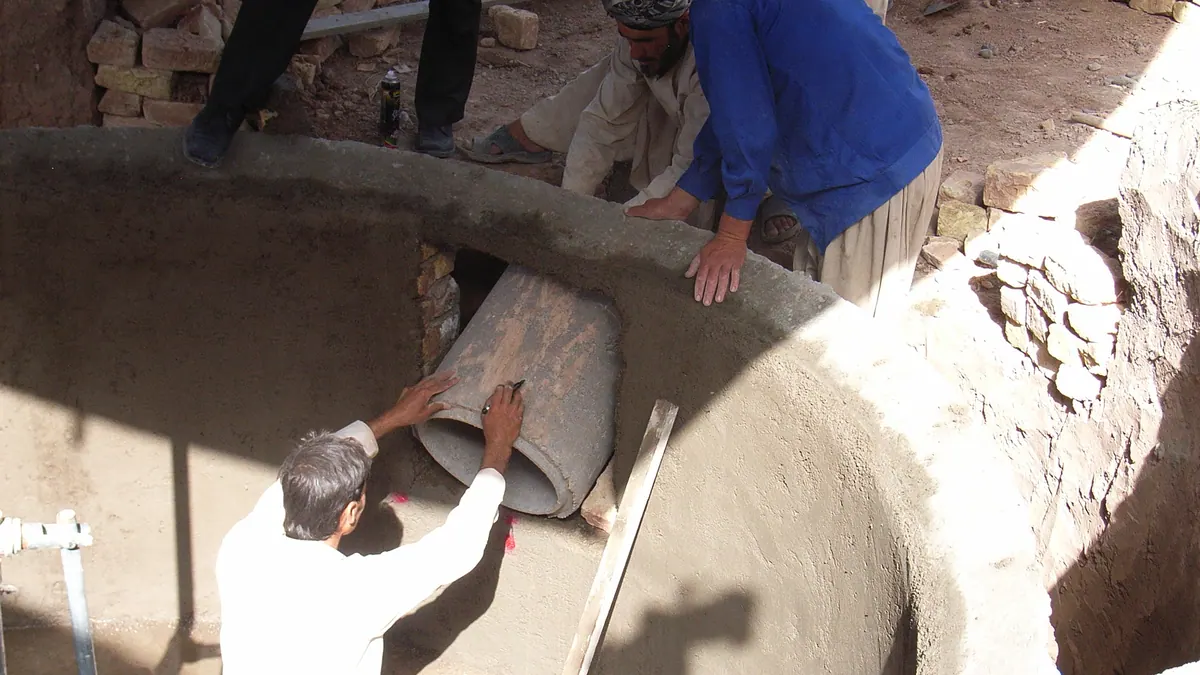

Mexican agriculture uses biodigesters mainly thanks to two mechanisms: the market for emission reduction units under the Clean Development Mechanism (CDM), and support programmes run by FIRCO (Fideicomiso de Riesgo Compartido) and the Ministry of Agriculture (SAGARPA). An assessment prepared at the National Autonomous University of Mexico (UNAM), based on data from around 2010, confirmed the existence of 345 biodigesters, of which 268 were delivered under the CDM scheme and the remaining 77 with public support: 73 with FIRCO involvement and 4 under the Methane to Markets (M2M) initiative.
What the assessment found
The study covered the states of Coahuila, Durango, Guanajuato, Jalisco, Michoacán, Nuevo León, Puebla, Querétaro, Sonora, Veracruz and Yucatán, and pig farms and dairy herds, with pig farms predominating. Of the 345 confirmed installations, 82% are built and operating. The clearly predominant technology is lagoons (94%), followed by modular installations (4%) and biobags and ferrocement (1% each).
Why mainly pigs rather than dairy cattle
The authors of the assessment state that most of the installations examined (317) operate on pig farms. They justify this by the fact that formal farms with more than 500 animals have sufficient livestock and sufficient volume and quality of excreta, a baseline is easy to calculate for them (a secondary lagoon exists), and investments are usually profitable. In dairy herds, implementation is harder because the floors in the cowsheds are mostly earthen, so the collected excreta contain impurities that can disrupt the operation of the biodigester. From a comparison of the number of installations with the number of formal farms, the authors conclude that the potential for developing the technology is over 90% in the pig sector and over 95% in the dairy sector, while medium and small pig farms were not yet covered by such systems.
The role of the CDM
The assessment stresses that most biodigesters were built under the CDM scheme, in which development companies – AgCert, Ecosecurities, Cantor CO2 and Grupo Porcícola Mexicano – contributed the entire investment. They registered 563 biodigester projects with the CDM Executive Board, but owing to a lack of funds and difficulties in calculating the baseline (especially in dairy barns), only 268 of them were built in the states studied. The remaining installations, built or under construction, benefited from FIRCO support, and several pilot projects were created under M2M.
Public support
According to the assessment, in 2008–2009 FIRCO supported 175 biodigester-related projects, mostly on pig farms, and some included the purchase of engine-generator sets; in 2008 the implementation of 45 biodigesters was supported, and in 2009 – 100, in addition to 9 renewable energy projects (the assessment does not break down the remainder of the 175 projects). According to 3tres3 (26 January 2011), SAGARPA, through FIRCO, allocated MXN 300 million over three years for the installation of 305 biodigesters on 305 farms. Because producers added two pesos for every peso of federal grant, the total investment was expected to reach MXN 900 million.
Quality of construction and equipment
The assessment indicates that of the 16 elements with which a properly functioning biodigester should be equipped, only eight were present in all 345 installations (including concrete structures, pipes, a geomembrane and an anchoring system). The other elements were present less often: a biogas burner – in 97% (333 installations), a moisture filter – in 95% (327), a biogas flow meter – in 91% (315), safety signs – in 86%, a secondary lagoon – in 84%, a fence – in 82%, a mixing pit – in 64% (220) and a system for mixing and removing sludge – in 59% (203). Biogas measurements came from only 121 systems burning methane. The general conclusion: co-financing of investment is not enough without support for operation and monitoring.
What we do not know
We have not established how the number of installations has changed since then or what FIRCO support rules currently apply; they should be checked in FIRCO's current operating rules and in announcements from the Secretaría de Agricultura y Desarrollo Rural. The figures from the UNAM assessment and 3tres3 relate to the period of about 2008–2011.
What this means for Poland and Europe
The Mexican example shows that mass investment support for small biogas plants must go hand in hand with servicing and a monitoring system. In Poland this lesson matters when designing programmes for small agricultural biogas plants, where inadequate servicing can nullify the effect of the co-financing.
Sources
Related articles