Market and investmentAnalysis
REIPPPP in South Africa: where landfill gas and biomass fitted into the auction programme
In South Africa's main renewable energy auction programme bioenergy appeared only marginally: in window 3 a landfill gas bidder (18 MW) and a biomass bidder (16 MW) were selected. What does this say about the market?
Other language versions: polski.

REIPPPP, South Africa's main renewable energy auction programme, supported mainly wind, photovoltaics and concentrated solar power for a decade; bioenergy occupied a small niche in it. In the third bidding window, with results announced in October 2013, one preferred landfill gas bidder and one biomass bidder were selected. Analysing this episode helps to understand why in South Africa biogas is developing mainly outside auctions, in industrial and agricultural ventures.
What REIPPPP is
The programme was launched to increase the share of renewables in the country's energy mix by purchasing energy from independent power producers (IPPs) in competitive tenders. It is run by the IPP Office, a joint unit of the energy ministry (DMRE), the National Treasury and the Development Bank of Southern Africa (DBSA). The evaluation criteria combined the price per kWh with local development elements (jobs, the share of local subcontractors), and successive bidding windows brought ever lower prices for wind and PV.
Bioenergy in window 3
In the third window 17 preferred bidders were selected; among them two bioenergy ones (description according to Engineering News):
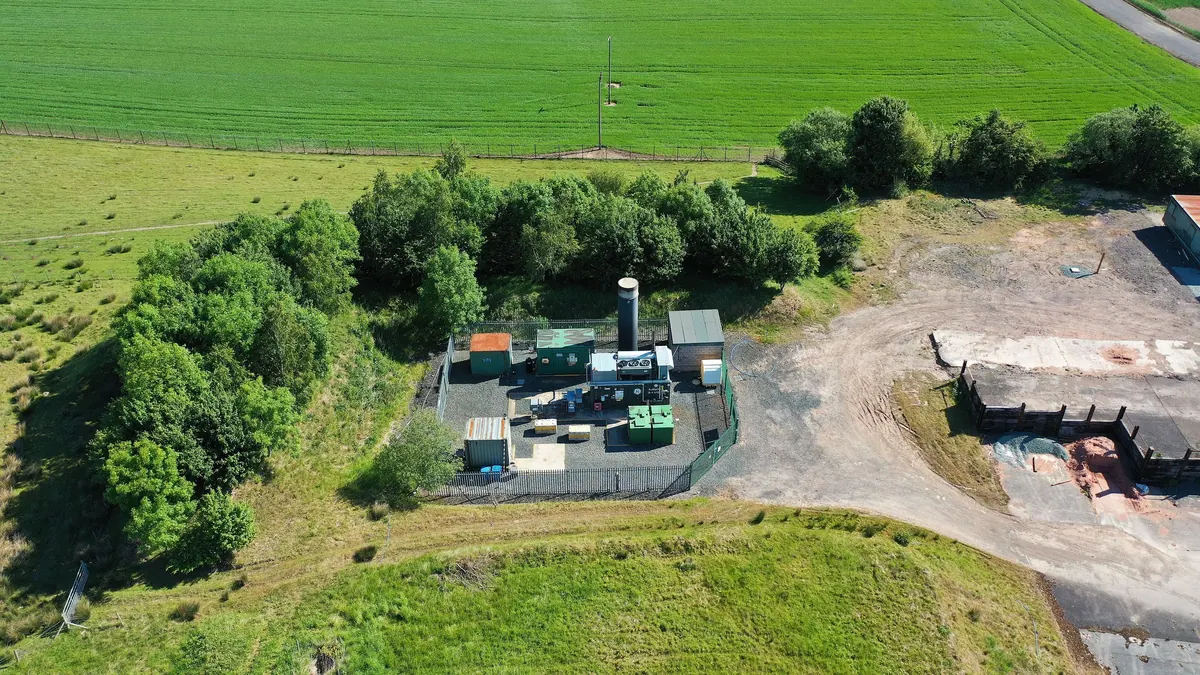
- Landfill gas: one preferred bidder, 18 MW, in Johannesburg. A consortium led by the biogas specialist Ener-G Systems was to invest about 230 million rand in five landfill gas power plants in the capital of Gauteng province. Engineering News describes this as the first and only landfill gas project selected in the programme; the first and largest facility (about 5 MW) was to start up at the end of 2016.
- Biomass: the Mkuze project with a capacity of 16 MW (16.5 MW in the original announcement), developed by Building Energy with the Charl Senekal Trust, the largest private sugar producer in South Africa. It is to burn sugar cane tops and leaves, and the capital expenditure will be about 1 billion rand. This is the combustion of solid biomass, not digestion.
Outside window 3 we did not find any further selected landfill gas or biomass projects in the main programme; current summaries are provided by the IPP Office. One possible explanation is that in a simple comparison of price per kWh bioenergy loses to wind and PV, but this is our interpretation, not a conclusion from official reports.
Why biogas does not win auctions on price
Price auctions favour technologies with the lowest unit cost of energy. A biogas plant usually has higher operating costs (substrate, staff), but it can supply dispatchable, round-the-clock capacity, which PV and wind cannot provide on their own. The value of this feature is not always taken into account in the auction criteria. A similar dilemma applies to Polish renewable energy auctions: agricultural biogas plants compete for support in separate baskets, not directly with PV and wind.
Conclusions
- Landfill gas is the easiest start, because the substrate "is already there" and the recovery technology is mature. The condition is well-designed landfills with gas control.
- Solid biomass requires a stable supply chain; in REIPPPP it was a single project.
- Outside auctions bilateral contracts with industrial customers appear. We describe an example in the article Bio2Watt in Bronkhorstspruit.
- The source of current figures (allocations, project status) should be the official IPP Office website, not secondary summaries, which on this subject can be inconsistent.
How landfill gas works as an energy source
In a landfill containing organic waste, anaerobic decomposition takes place and produces a gas that usually contains about half methane and half carbon dioxide. To use it, the landfill is equipped with degassing wells and a network of pipes under vacuum, which draw the gas to a station and then direct it to gas engines. The key factors are: good capping of the landfill (limits methane escape), the age of the waste (gas production falls over time after a cell is closed) and gas quality (siloxanes and hydrogen sulphide require cleaning). We describe Polish conditions in the article Landfill gas in cogeneration: installation, cleaning, support and pitfalls.
What this example teaches
Five small landfill gas power plants in one city is a technically sensible solution, because a large city usually has several landfills and cells, each with a different gas production. From the investor's point of view it is important that revenue from energy must cover the plant's costs and loan repayment throughout the term of the agreement, even though gas yield declines over time. This explains why such projects are usually calculated over a dozen or so years.
A note on project status
Selecting a preferred bidder in an auction is not the same as commissioning a power plant: between selecting the bidder and financial close and grid connection there usually pass years, and some projects do not materialise. We have not confirmed the current status of either window 3 project. Data on implementation should be checked in the official IPP Office summaries.
Sources
- IPP Office — Independent Power Producers Procurement Programme (oficjalna strona programu)
- Renewable Energy Independent Power Producer Procurement Programme — third window, South Africa — Engineering News
- Preferred bidders announced in REIPPPP Bid Window 5 — Crown Publications (4.11.2021) (aktualizacja)
Questions and answers
Does REIPPPP finance biogas plants?
The programme is not solely for biogas. It was an auction-based programme for purchasing renewable energy from independent producers; bioenergy (landfill gas and biomass) received only small allocations in it in window 3.
Related articles