Waste-to-energyGuide
Landfill gas in cogeneration: installation, cleaning, support and pitfalls
How to design the use of landfill gas in gas engines: from wells and cleaning, through capacity selection, to renewable energy support and the risk of declining yield after the landfill closes.
Other language versions: polski.
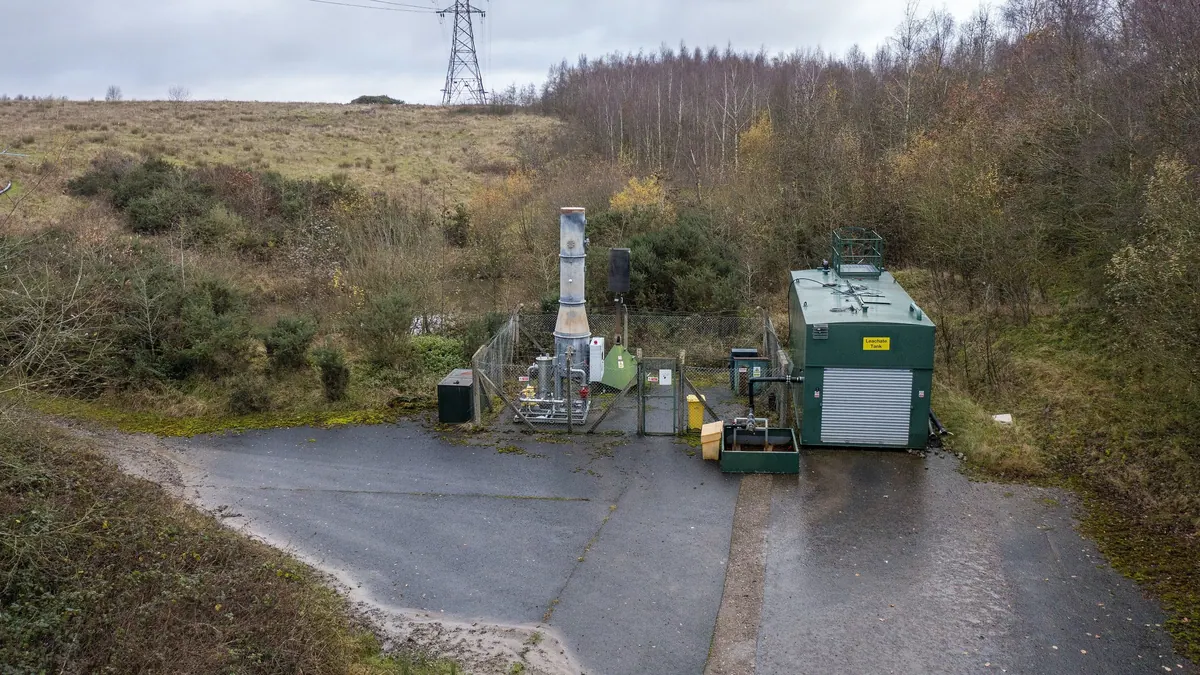

Landfill gas can be used in a gas engine or turbine to generate electricity and heat, but the profitability of such a project depends above all on the quantity and quality of the gas throughout the operating period. In Polish law it is biogas, so the energy from it can count as energy from renewable sources.
Step 1: estimating the gas resource
Before choosing an engine, establish how much gas you can actually obtain:
- Waste data — the quantity, type and age of the deposited waste, the share of the biodegradable fraction; a forecast of further landfilling.
- Forecast model — first-order models describing the decay of gas generation over time.
- Trial measurements — the yield of existing wells, gas composition, pressures.
- Capture efficiency — the actual quantity of gas collected is usually much lower than the theoretical one, especially with a leaky cover.
Designing the capacity "for peak production" is the most common mistake. It is safer to match the capacity to the level that the gas will provide for most of the operating period, and to cover fluctuations with additional modules or a flare.
Step 2: the collection system
Yield depends on the density and layout of the wells, the tightness of the cover and correct regulation of the vacuum. Too strong suction draws in air and lowers the methane concentration; too weak leaves gas in the waste body. It is worth taking care of:
- drainage of pipelines and separation of condensate,
- regulation of each well individually,
- automatic measurement of CH₄, CO₂ and O₂ in the main stream,
- a flare able to take the entire stream in the event of engine failure.
Step 3: gas cleaning
The raw gas contains components harmful to engines:
| Impurity | Effect | Typical solution |
|---|---|---|
| Water vapour, condensate | corrosion, disruption of operation | cooling, drying, heating |
| H₂S | corrosion, acidification of the oil | activated carbon, adsorbers, scrubbers |
| Siloxanes | silica deposits, engine wear | activated carbon, deep cooling |
| Chlorine and fluorine compounds | corrosion | activated carbon, adjusting the oil change frequency |
| Dust | wear | filters |
Engine suppliers specify permissible concentrations of these components; exceeding them ends in loss of the warranty. The costs of replacing the filtration medium and of more frequent servicing should be included in the calculation, because landfill gas is much more demanding than agricultural biogas.
Step 4: system selection and heat
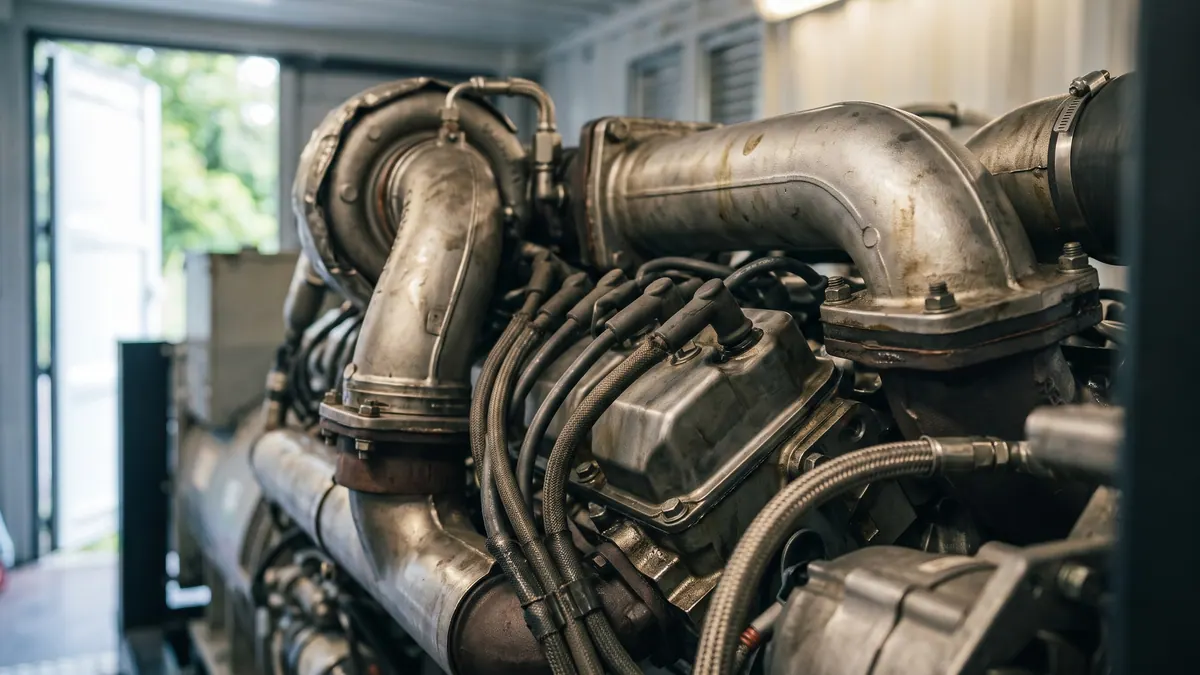
Engines with a capacity of a few hundred kilowatts up to about 1–2 MW are typical, because modules allow the capacity to be adjusted to the variable quantity of gas. The engine must be adapted to gas of lower calorific value and to its fluctuations. The waste heat from the engines usually has no customers in the vicinity of the landfill; sometimes it is used for own needs (heating of buildings, evaporation of leachate), and the quantity of heat sold is often small. The economic calculation is therefore based mainly on electricity.
Step 5: formalities and support
The installation requires, among other things:
- amendment or supplementation of the landfill's environmental and emissions permits,
- a notification of, or permit for, construction and grid connection conditions,
- checking whether a licence or an entry in the register of generators at URE is necessary,
- explosion protection (explosion hazard zones) and health and safety procedures.
As regards support: the Act of 20 February 2015 on Renewable Energy Sources covers biogas, including that obtained from waste landfills. Depending on the capacity of the installation, its start-up date and the solutions in force in a given year, it is possible to use auctions, tariff systems or subsidies to the energy price; older installations could use certificates of origin. The conditions have changed many times, so they must be checked in the current Act and in URE announcements. It is also possible to consider guarantees of origin and settlement of energy for the landfill's own needs.
Pitfalls that recur in projects
- An overstated gas forecast. Consequence: engines run at part load or stand idle.
- No reserve for the flare. Consequence: in the event of engine failure the gas must be vented or burned as an emergency measure, which breaches the permit conditions.
- Underestimating the cost of cleaning — especially of siloxanes.
- Declining yield after the landfill closes. The quantity of gas decreases over time, and long-term contracts with the energy supplier or with the lessee do not provide for such variability.
- Conflict of interest between the landfill operator and the investor — who is responsible for gas quality, who for reclamation, who bears the cost of replacing wells.
- Underestimating the explosion risk in technical rooms.
Checklist before the investment decision
- A gas forecast for at least 10–15 years with a sensitivity analysis.
- An analysis of gas composition (H₂S, siloxanes, Cl, F) from several seasons.
- Contracted grid connection or energy offtake.
- An agreed division of responsibility between the landfill operator and the investor.
- A financial model with a "low gas" variant.
- A plan for the declining period: relocation or shutdown of modules, flare-only operation.
The use of landfill gas can be a good way to reduce emissions and obtain revenue from a resource that is generated anyway. It does, however, require a realistic approach to the quantity of gas and its quality.
Organisation of work and responsibility
Before starting the project, agree in the contract who owns the rights to the gas, who maintains the wells, who bears the costs of failures and what happens after the contract ends. The landfill operator is responsible for compliance with the permit, and the investor for the energy installation; the boundary of responsibility must be clear, because a failure in one part affects the other. It is also worth agreeing settlement rules for when gas production falls below the level assumed in the calculation.
This text is for information purposes only and does not constitute legal advice; before an investment or formal decision, check the current wording of the legislation and consult a lawyer or the competent authority.
Sources
Questions and answers
Is landfill gas a renewable energy source?
In Polish law, biogas is defined as gas obtained from biomass, including from landfills, so energy from it is energy from renewable sources (RES). The availability of support depends on capacity and commissioning date.
What happens to energy output after a landfill closes?
The amount of gas declines over time as the organic matter is depleted. The installation must be designed modularly so that engine capacity can be reduced or the engines relocated.
Related articles