Law and regulationGuide
Connecting a biogas plant to the electricity grid: conditions, advance payment, contract, stages
Connecting a biogas plant to the grid begins with an application for connection conditions and an advance payment of PLN 30/kW. We describe the deadlines, documents, contract, charges and rules for capacity curtailment.
Other language versions: polski.
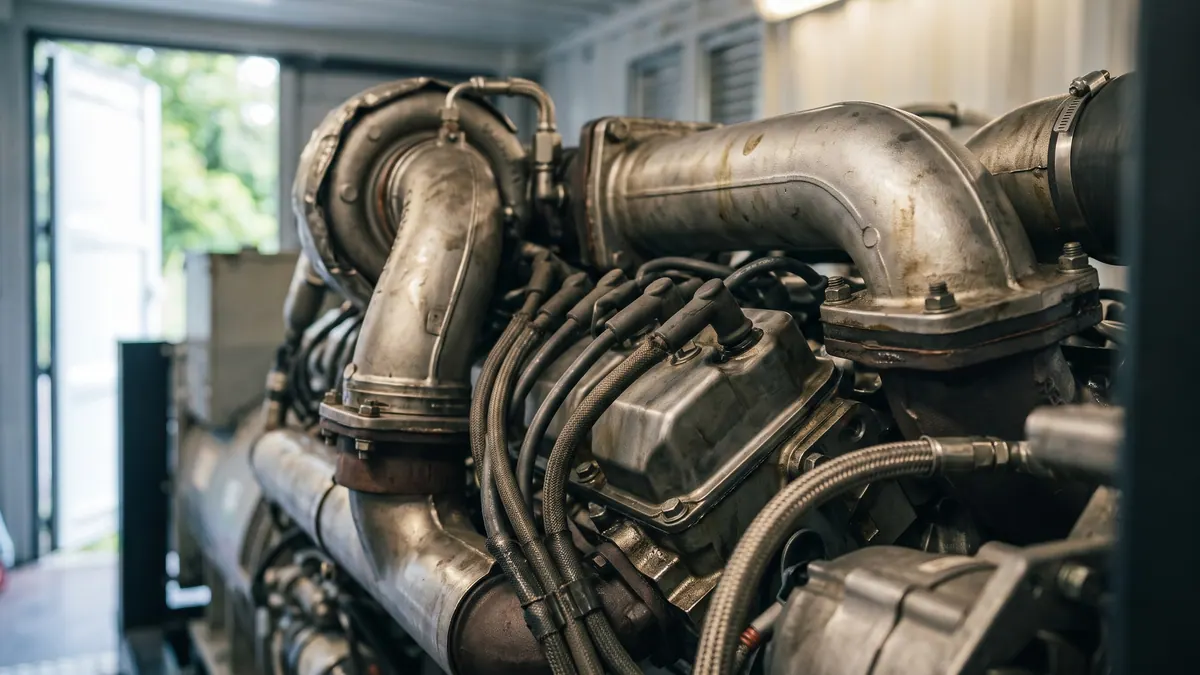
Connecting a biogas plant to the electricity grid requires, in turn: an application for connection conditions with an advance payment, obtaining the conditions, concluding a connection contract, building the connection and commissioning. The basis is Article 7 of the Energy Law, which gives renewable installations priority if technical and economic conditions for connection exist. The entry describes the position as of January 2024; later, significant changes are summarised in the update.
Stage 1: the application and the advance
The application for determining connection conditions is submitted to the operator of the grid to which the installation is to be connected (usually the distribution system operator). When connecting a source to a grid with a voltage higher than 1 kV, the applicant pays an advance: PLN 30 for each kilowatt of connection capacity, no more than PLN 3 million, within 14 days of submitting the application – otherwise the application will be left unexamined. The advance is credited towards the connection charge, and any excess is refunded with interest. The deadline for issuing the conditions runs from the day the advance is paid.
The application is accompanied, among other things, by:
- an extract and map from the local development plan or a decision on development conditions, if required,
- a document confirming the legal title to the property,
- technical data of the installation (installed and connection capacity, voltage, diagram).
For sources connected directly to a grid above 1 kV, an expert opinion on the effect on the power system is prepared, except for a generating unit with a total installed capacity of up to 2 MW.
Stage 2: connection conditions
| Situation | Deadline for issuing conditions |
|---|---|
| Agricultural biogas plant of up to 2 MW meeting the conditions of the special act of 13 July 2023 | 90 days |
| Facility with a source or energy store connected to a grid above 1 kV (connection group III) | 120 days |
| Connection groups I and II | 150 days |
An applicant submitting an application to connect an agricultural biogas plant of up to 2 MW informs the operator that the conditions of the special act are met. The conditions are valid for two years from delivery and constitute a conditional commitment of the operator to conclude a contract. Where there is not enough capacity in the grid, the operator indicates the available capacity or the deadline and scope of the necessary expansion. A refusal to connect a renewable installation requires notifying the President of URE and the applicant, stating the reasons.
A special solution is provided for biogas plants with a biogas store: in the application a declaration can be submitted of an undertaking to unconditionally curtail the power fed into the grid at specified times of day and year. The contract must then contain the rules of curtailment and must not prevent the delivery of energy at guaranteed power for at least 12 hours per day without payment of compensation. It is a way to obtain a connection despite limited grid capacity.
Stage 3: the connection contract
The contract contains, among other things, the deadline for completing the connection, the charge, the point of demarcation of grid ownership, the scope of works, the schedule, the connection capacity and liability for delays. For renewable installations two additional elements are mandatory: a deadline for the first delivery of energy to the grid not longer than 48 months from conclusion of the contract, and a provision that failure to meet it is grounds for terminating the contract. The operator must also set out in the conditions the expected schedule of connection with the stages of grid expansion.
The charge and building the connection
A source pays for connection to the grid according to the actual outlays incurred in carrying out the connection. The exception: renewable installations with an installed electrical capacity of no more than 5 MW pay half of the charge determined on the basis of actual outlays. The construction and expansion of grid sections is ensured by the operator, which also enables other businesses to carry out the works in accordance with the rules of competition.
Typical mistakes
- Submitting the application without an established legal title or without an extract from the plan.
- Underestimating connection capacity relative to the target expansion.
- Failure to pay the advance within 14 days.
- Overlooking the 48-month deadline – a delay in environmental or building decisions may endanger the contract.
- Starting talks on capacity curtailment too late.
What to do first
- Check the information on available connection capacity (the operator has an obligation to prepare it; it is usually available on its website).
- Establish whether the installation meets the conditions of the special act for agricultural biogas plants (shorter deadline for conditions).
- Collect the plan or WZ, legal title and technical data.
- Reserve funds for the advance and the connection charge.
- Plan the schedule of the environmental decision, building permit and construction so as to fit within 48 months.
Connection capacity and joint connection
When connecting a source, the connection capacity may be less than or equal to the installed electrical capacity, which makes it possible to order a smaller connection than the capacity of the generating sets if the installation will not operate at full power simultaneously with export to the grid. If the connection capacity is lower than the sum of the installed capacities, the contract must describe the technical protection against exceeding it, and the cost of the devices is borne by the connected entity, while the operator supervises their operation. In a grid with a voltage above 1 kV, two or more renewable installations (for example a biogas plant and photovoltaics) can be connected at one connection point, and a single set of conditions is issued and a single contract concluded for all of them. This solution is sometimes cheaper than separate connections, but requires agreements between the owners of the installations.
This text is for information only and does not constitute legal advice; before an investment or formal decision, check the current wording of the legislation and consult a lawyer or the relevant authority.
Sources
Questions and answers
Can a biogas plant agree to power curtailment in exchange for faster connection?
Yes. For installations with a biogas store, the application may include a declaration of unconditional power curtailment at set times of the day and year, and the agreement must guarantee the ability to deliver power for at least 12 hours a day without compensation.
Is the connection advance payment refundable?
Under the legal situation at the beginning of 2024, the advance was credited towards the connection fee; if it exceeded the fee, the difference was refunded with statutory interest. After the 2026 changes, a non-refundable fee for processing the application is added.