LDAR at a biogas plant: a leak detection and repair programme step by step
LDAR (Leak Detection and Repair) is a cyclical programme for detecting and repairing leaks. We show how to implement it at a biogas plant: inventory, tools, repair thresholds, documentation and costs.
Other language versions: polski.

LDAR (Leak Detection and Repair) is a programme of cyclical detection and repair of leaks in an installation, borrowed from the oil and gas and petrochemical industries, which helps to reduce methane losses at biogas plants. The programme consists of four steps: an inventory of potential leak sources, inspection using appropriate tools, repair of detected leaks within a set deadline, and documentation. Because in installations a few points usually account for most of the losses, even simple quarterly inspections can significantly reduce emissions.
Step 1: inventory
Draw up a list and diagram of the points from which biogas or methane may escape:
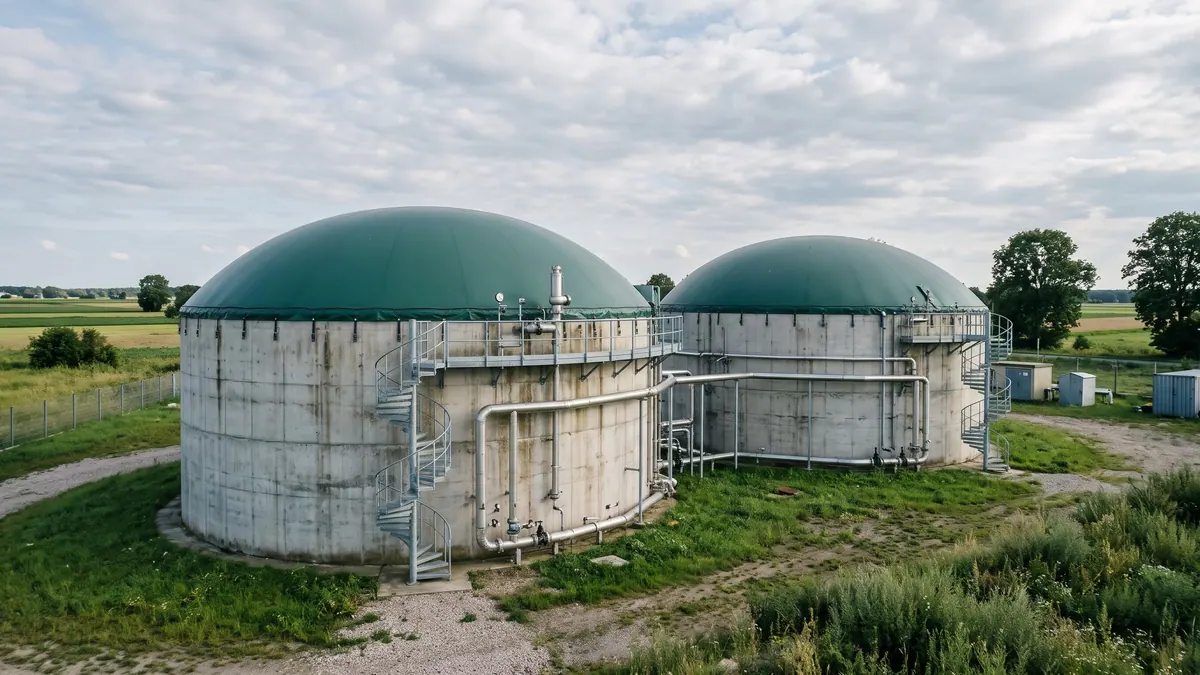
- safety valves and pressure-vacuum relief valves of digesters, tanks and gas stores,
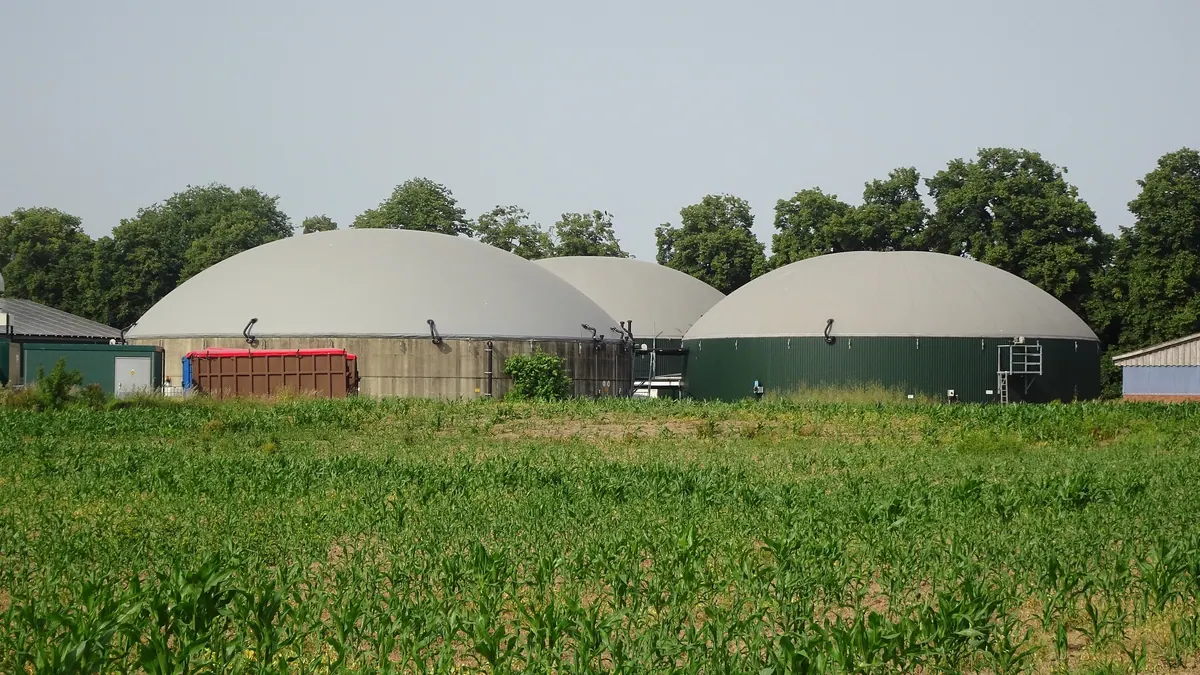
- membrane roofs of biogas and digestate tanks (joints, fixings, mechanical damage),
- flanges, threaded connections, valves, drain traps, condensate manholes,
- compressors, blowers, boosters,
- the desulphurisation and upgrading system, the injection station,
- the flare (possibly flame extinction),
- CHP exhaust outlets and the oxidiser,
- open tanks and their covers.
Give each point a number, a location and a risk category (e.g. high for safety valves and membranes).
Step 2: tools
| Tool | Application | Notes |
|---|---|---|
| Optical gas imaging (OGI) camera | rapid detection of leaks over a large area | requires training, weather limitations |
| Portable detector (FID, semiconductor or laser analyser) | measuring concentration at the source | Ex-rated versions |
| Foaming solution | confirming a leak at connections | simple, cheap |
| Fixed sensors | continuous monitoring in containers and rooms | alarm and shut-off |
| Remote measurements (drone, plume analyser) | overall inspection of the installation | used as a supporting campaign |
The essential value of OGI cameras is that they make it possible to see the gas plume and to identify leak points from a distance; the camera does not measure concentration, so the size of the leak is confirmed with a detector.
Step 3: frequency and thresholds
The frequency of inspections is set on the basis of risk: e.g. monthly for safety valves and membrane roofs, quarterly for the other components, and a full campaign once a year. The threshold at which a leak is deemed to require repair is defined in the programme: it may be any confirmed leakage or a concentration above an adopted level at the detector. The repair deadline for large leaks should be short (days); for small ones, an agreed schedule (e.g. until the next shutdown).
Step 4: repair and verification
After repair (tightening, replacing a gasket, replacing a valve, repairing a membrane), a retest is carried out. The results are recorded in a register: date, point, method, result, person, action, closure date. If a leak recurs, the causes are analysed (gasket material, vibration, corrosion).
Safety
Work around biogas installations takes place in explosion hazard zones (ATEX). Use Ex-rated equipment, apply work permits and hydrogen sulphide protection procedures. Before repairs, observe isolation and purging rules, and when in doubt – stop work.
Example of effect and cost
Assumptions: a biogas plant with a production of 2.2 million m³ CH₄ per year; initial losses of 3% (66 thousand m³), of which 60% come from three leaks. The LDAR programme costs PLN 35 thousand per year (leased camera, training, working time – an assumption) and eliminates these leaks, so losses fall to about 1.2% (26.4 thousand m³). The 39.6 thousand m³ recovered is about 396 MWh, or at a price of PLN 200/MWh about PLN 79 thousand per year, plus avoided emissions of about 28 t CH₄ (about 790 t CO₂e at GWP₁₀₀ = 28). The values are illustrative, but they show that the programme usually pays back quickly.
Documentation and use of data
The LDAR register is useful in certification (demonstrating care for methane emissions), in discussions with the insurer and the bank, and in analysing servicing costs. It is worth analysing which types of components fail most often and ordering appropriate replacements.
The most common sources to check first
In practice the largest leaks are found at safety valves that do not close tightly after opening, at roof membrane connections, at condensate valves and around compressor flanges. Digestate tanks without a cover also require a separate assessment. The first inspection campaign usually reveals several such points, and repairing them gives an immediate effect, which is the best motivation for maintaining the programme.
Summary
A well-organised LDAR is cheap, easy to implement and effective. The key elements are regularity, short repair deadlines and keeping a register.
Sources
Related articles