Technology and operationExplainer
Biogas storage and the double-membrane roof: construction, capacity, valves and safety
The double-membrane roof is the most common biogas store. How it is built, how to choose its capacity, how over- and under-pressure valves work and what to look for during inspections.
Other language versions: polski.
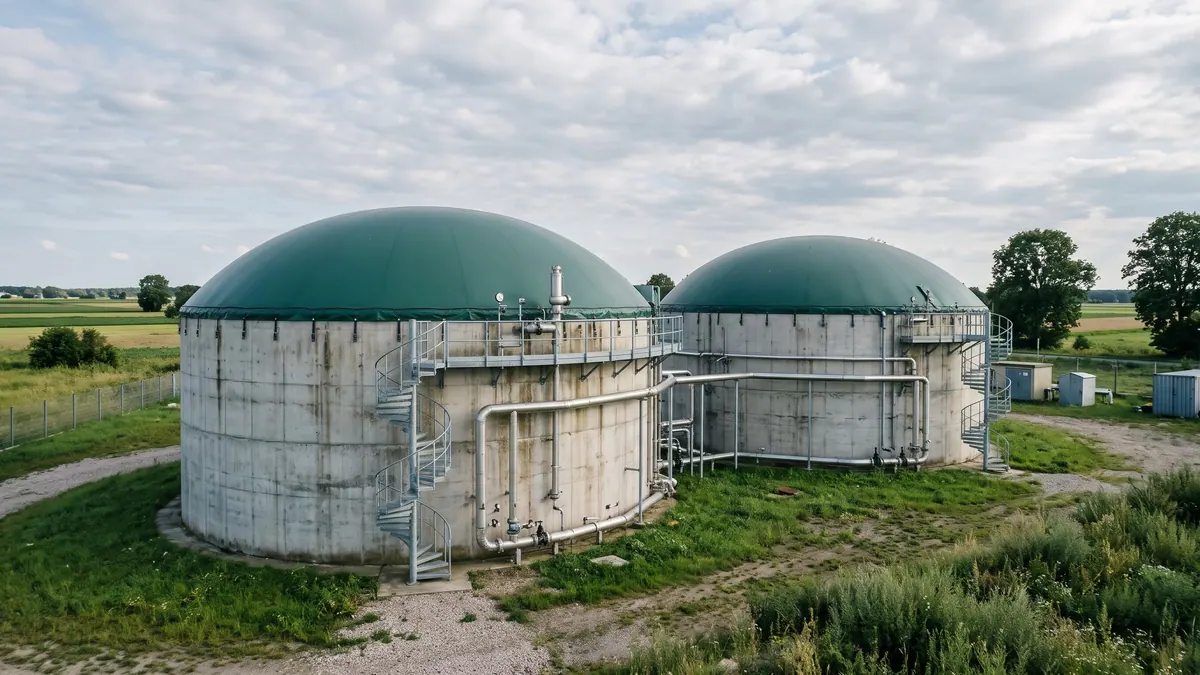
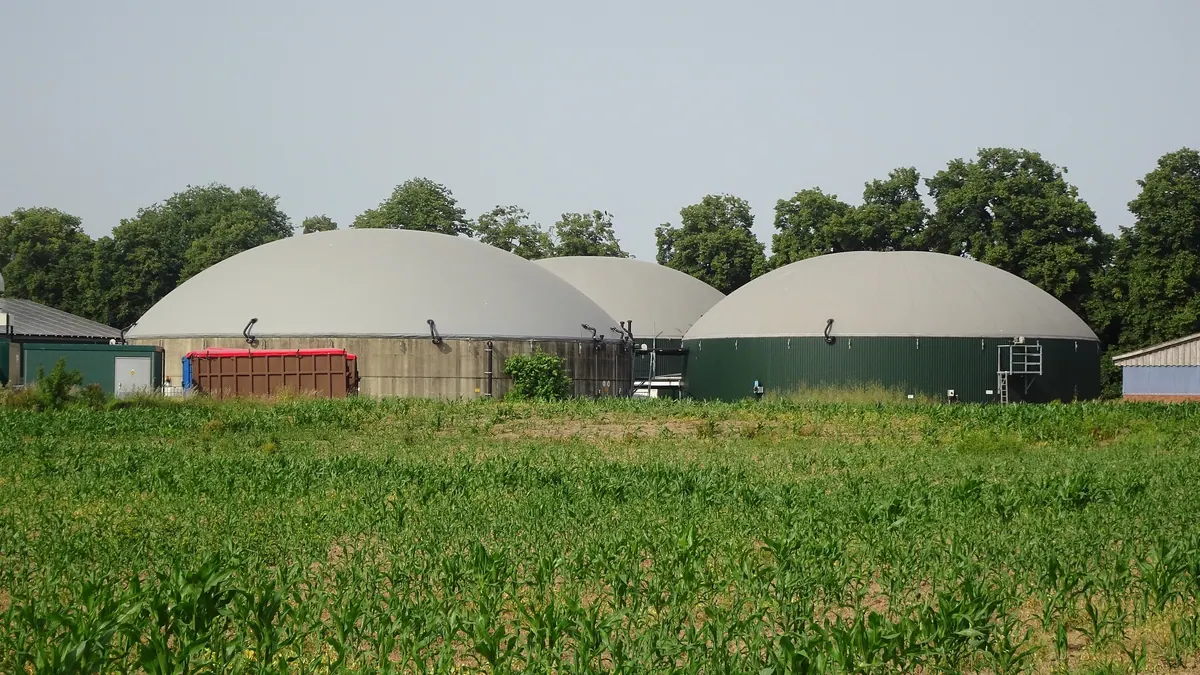
The biogas store at an agricultural biogas plant most often takes the form of a membrane roof above the digester: an inner gas membrane separates the biogas from the air, while an outer protective membrane, kept in the shape of a dome by a blower, shields it from wind, rain and radiation. This construction is cheap and convenient, but it requires rigorous supervision: membranes wear out, valves have to be checked, and the space above the tank needs to be classified for explosion-hazard zones.
Construction of a double-membrane roof
| Element | Function |
|---|---|
| Inner (gas) membrane | resistant to biogas, H₂S and moisture; rises or falls with the amount of gas |
| Outer (protective) membrane | a dome shielding against external conditions, maintains the shape |
| Air blower | constant pressure in the space between the membranes |
| Over- and under-pressure valve (hydraulic or mechanical safeguard) | protects against gas pressure being exceeded |
| Level / ultrasonic sensor | measures the fill level of the store |
| Perimeter fixing | seal to the tank wall |
| Gas lines and condensate | gas take-off and discharge of condensate |
How it works
When gas production exceeds consumption, the inner membrane rises and air from the inter-membrane space is pushed out. When gas is drawn off, the membrane falls. The blower maintains the air pressure so that the outer dome keeps its shape and its resistance to wind. The pressure in the system is low – of the order of a few millibars – so gas pipelines and gas blowers require separate sizing.
Storage capacity
The store should even out the differences between production and CHP consumption and provide time to react in the event of a failure.
Example: biogas production 1,200 m³/h. We assume a buffer of 4 hours: 4,800 m³. A roof of that capacity above a digester with a diameter of about 25 m needs a considerable dome height; separate gas tanks or roofs over several digesters are often used. The actual usable capacity is smaller than the nominal one, because the whole range cannot be used without the risk of the membrane contacting the agitators or the wall. Also allow a margin for fluctuations in atmospheric pressure and temperature (in winter the gas contracts, in summer it expands).
Safety valves
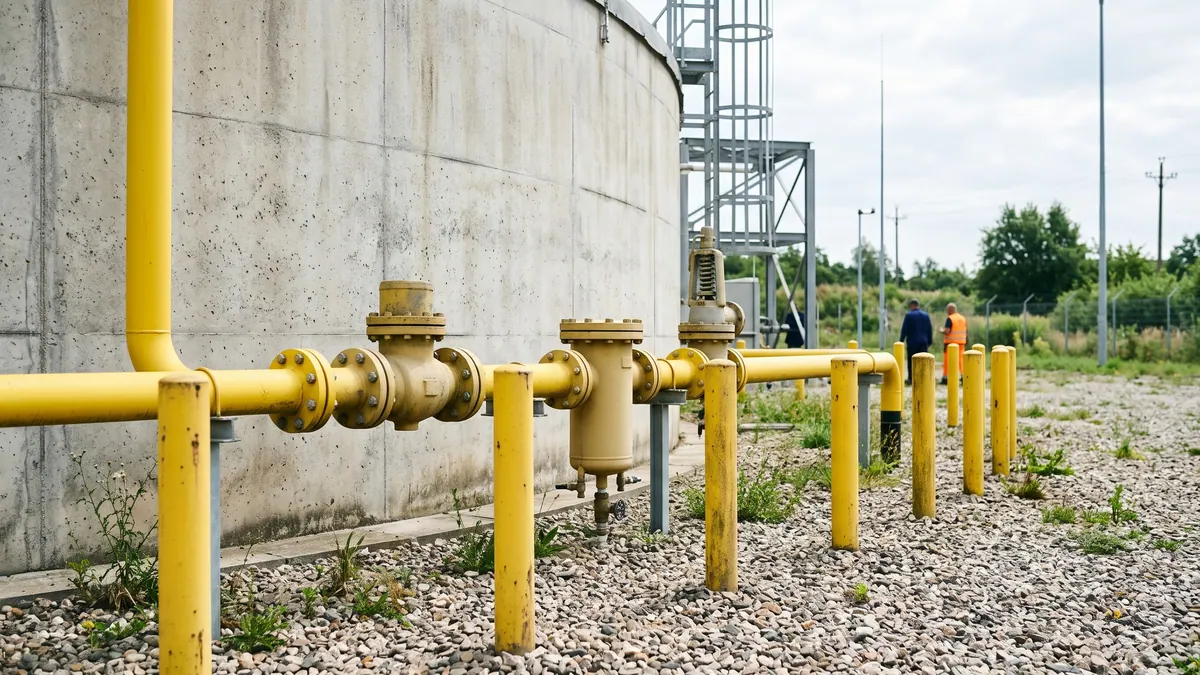
- The over-pressure valve opens when the gas pressure exceeds the permitted level and safely discharges the gas to the atmosphere (at a location of low hazard).
- The under-pressure valve admits air when the pressure falls, protecting the membranes from being sucked in, but it increases the risk of forming an explosive mixture; its operation is therefore treated as an emergency event.
- Valves can be of hydraulic design (with a sealing liquid — which in winter requires an antifreeze liquid or heating) or mechanical.
Valves should be checked regularly (liquid level, fouling, corrosion), and the markings of the gas discharge points should be consistent with the hazard-zone documentation.
Typical problems
| Problem | Cause | Action |
|---|---|---|
| Slow sinking of the roof | leak, escape of gas | check with a detector, repair the membrane |
| Water condensing between the membranes | leak, humid air | drying, check the blower |
| Flooding with foam | foaming in the digester | reduce the load, see the article on foaming |
| Mechanical damage | agitator, tools, sharp elements | inspection, safeguards |
| Membrane ageing | UV, H₂S, temperature | inspection, replacement as recommended by the manufacturer |
| Liquid freezing in the valve | low temperature | non-freezing liquid, heating |
Inspections
- Daily: check the fill level, pressure and detector readings.
- Monthly: check the blower, valves and air filters.
- Every six months: visual inspection of the membranes from the outside, check of the fixings and seals.
- Annually: tightness, check of the safeguards and documentation, review of the detection system.
Occupational safety
Going onto the roof or close to it requires fall protection, a gas detector and a procedure issued by the site manager. The space between the membranes and the surroundings of the valves are areas classified for explosion hazard; electrical equipment must carry the appropriate marking. In the event of a gas leak, ignition sources should be disconnected and the emergency plan implemented.
Alternatives
Separate gas tanks (e.g. low-pressure steel ones, or membrane ones within a building) are used in larger plants or where a large buffer is required. The choice depends on economics, regulations and local conditions.
Example: the effect of temperature on volume
A store containing 3,000 m³ of biogas at 10 °C, after warming to 30 °C, increases its volume by a factor of (273.15 + 30)/(273.15 + 10) ≈ 1.07, or by about 7% (about 210 m³ at constant pressure). On a sunny summer day the roof may therefore rise unexpectedly, and in winter fall without any change in gas production. For this reason the algorithms controlling CHP and flare operation should take account of the fill dynamics, not only instantaneous values.
Documentation and training
The roof operating manual should contain: the permitted pressure and fill ranges, the procedure for an upper- and lower-level alarm, a list of service contacts and the rules of access to the roof. Employees should know the location of the valves and shut-offs and undergo periodic training and emergency-plan drills.