Technology and operationExplainer
Explosion hazard zones at a biogas plant: how to classify zones 0, 1 and 2
Zones 0, 1 and 2 define how often an explosive atmosphere occurs. We explain the classification principles, typical places at a biogas plant, and the role of ventilation and marking.
Other language versions: polski.
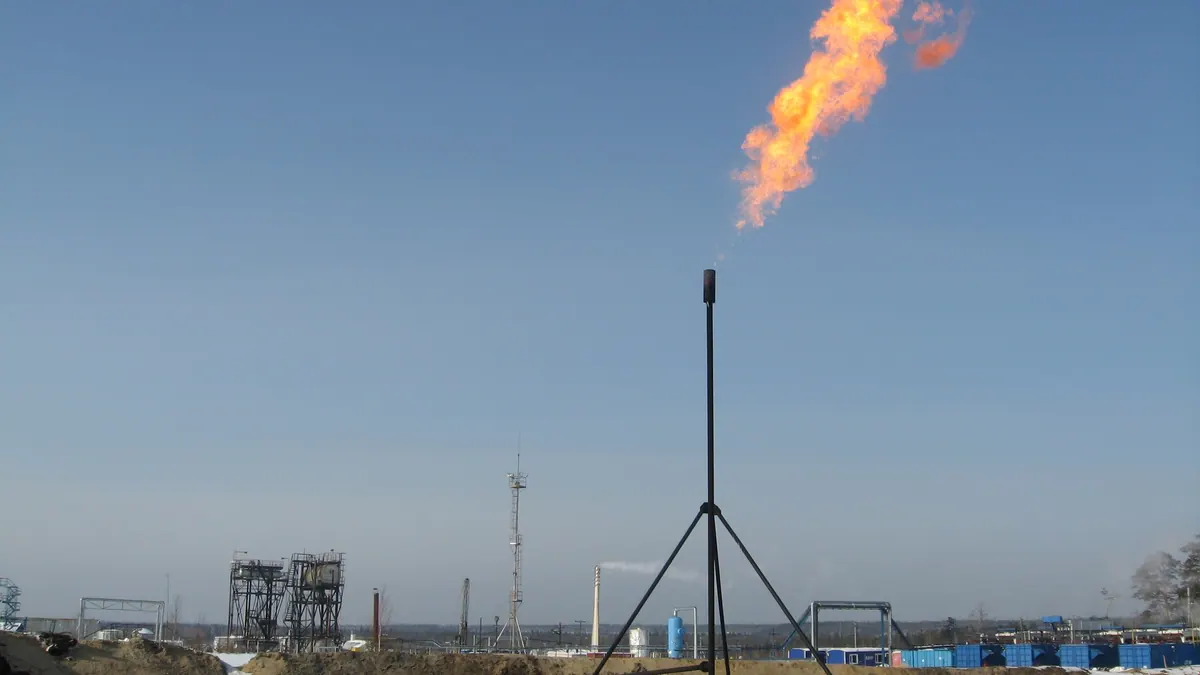
An explosion hazard zone is a space in which an explosive atmosphere may occur, and its number says how often and for how long. For gases, zone 0 means an explosive atmosphere present continuously, frequently or for long periods, zone 1 — likely during normal operation, and zone 2 — not normally present, and if it does appear, only briefly. For combustible dusts, zones 20, 21 and 22 are used respectively. Classification results from Directive 1999/92/EC and is the basis for selecting equipment.
How classification is done
The procedure in brief:
- Identification of combustible substances — biogas (methane), possibly H₂, dust of dried digestate, feed dust.
- Identification of release sources — valves, seals, flanges, vents, safety valves, sampling points.
- Grade of release — continuous, primary (expected in normal operation), secondary (only in a failure).
- Ventilation — natural or mechanical, its effectiveness and availability.
- Determining the extent of the zone: the distance from the source depends on the amount of gas, the pressure, the terrain layout and ventilation.
For this purpose harmonised standards and industry guidelines are used; their numbers and requirements should be known to a qualified designer. Do not adopt zone radii "from internet tables" without verification for the specific plant.
Typical places at a biogas plant (indicative)
| Place | Typical classification (indicative) | Notes |
|---|---|---|
| Interior of a biogas tank (above the liquid) | depends on conditions — the gas is usually oxygen-free, but start-up or ingress of air is possible | analysis of non-steady states necessary |
| Space between the roof membranes | usually zone 1 or 2 | depending on the construction |
| Areas around safety valves and vents | zone 1 or 2 within a specified radius | extent according to calculations |
| Blower and desulphuriser room | zone 2 or 1 | depends on ventilation and gas-tightness |
| CHP container | usually a room with no zone, with detection and ventilation, but the gas connection requires analysis | depending on the design |
| Flare | the area around the start-up system | extents depend on the design |
| Digestate dryer | dust zones 20/21/22 | separate analysis |
The above is an example of the kinds of places, not a ready classification. The zone is determined by the documentation of the plant.
The role of ventilation
Ventilation shortens the time an explosive atmosphere is present and reduces the extent of the zone. Good natural ventilation (open spaces, suitable openings) can lower the classification from 1 to 2, and in some cases allows the area to be regarded as non-hazardous. Mechanical ventilation must be reliable and protected (e.g. a standby fan, flow monitoring); its failure should trigger an alarm and protective measures.
Marking and documentation
Entrances to zones should have warning signs (an "EX" triangle) in line with the regulations. Drawings of the zones, with extents in three dimensions, are part of the explosion protection document. In practice site plans available to service staff and the fire brigade are also useful.
Consequences for equipment
| Zone | Required equipment category (gas) |
|---|---|
| 0 | category 1G |
| 1 | category 2G or 1G |
| 2 | category 3G or higher |
Electrical and non-electrical equipment (e.g. mechanical valves with sparking elements) must correspond to the category. Hand tools, clothing and footwear, on the other hand, are selected for non-sparking and antistatic properties.
Mistakes and pitfalls
- copying the classification from another plant without taking differences into account,
- no analysis of non-steady states (start-up, maintenance, ventilation failure),
- underestimating dust in the dryer,
- changing the configuration (a new valve, a new connection) without updating the zones,
- unmarked zones in places accessible to outsiders.
What to do after changing the plant
Every modernisation (an additional digester, a new desulphuriser, a change of connection) requires a review of the classification. Commission it from a suitably qualified person and document the date and scope of changes. A classification that does not correspond to reality is worse than none, because it gives a false sense of security.
An example of reasoning for a safety valve
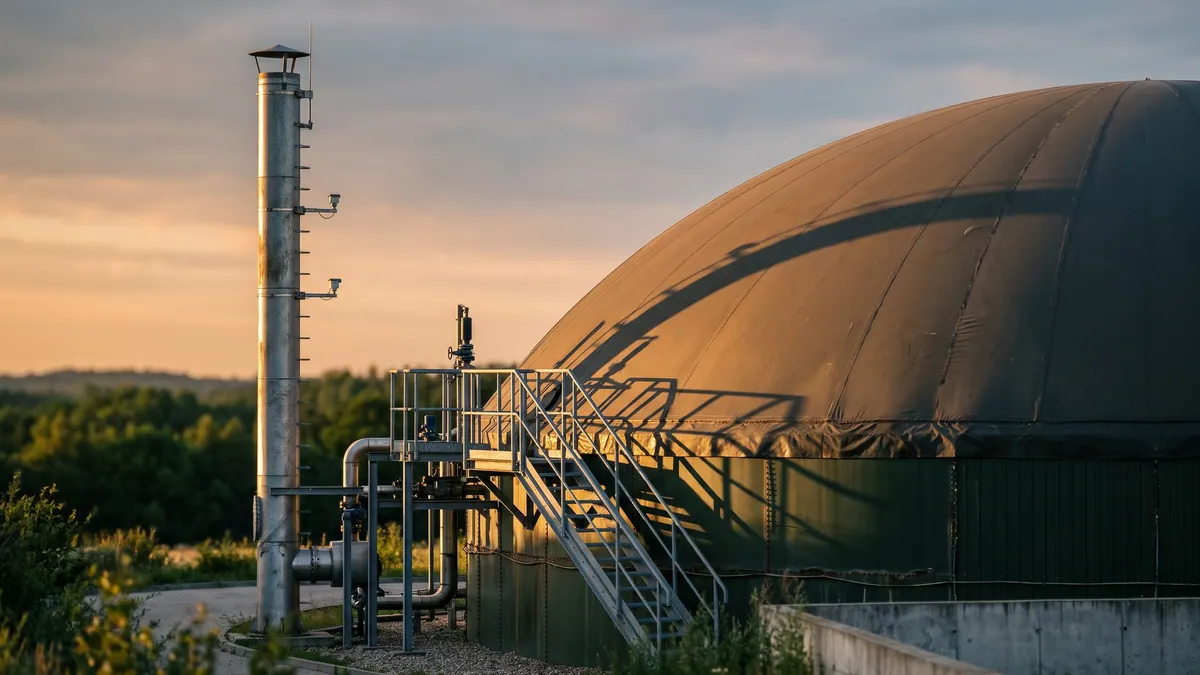
The safety valve of a membrane roof opens rarely and briefly, so the grade of release is secondary, and the zone around it is usually zone 2 with a specified radius; in the immediate vicinity of the outlet opening, where gas flows out on actuation, it may be zone 1. If natural ventilation is good (open space, outlet pointing upwards), the extent tends to be limited. By contrast, the same device placed in an enclosure without airflow may require a broader classification. This shows that the zone is determined not by the name of the device but by its location, pressure, flow and ventilation.
Who may classify
Classification should be carried out by a person with knowledge of explosion protection, preferably with experience of biogas plants. The operator bears responsibility for its correctness and currency, even if external services are used.
Zones and real-world practice
A good classification is useful only if the crew understands it. So, in addition to the documentation, it is worth preparing a simple map with colours and extents, placed in the control room and at the entrances. At training show on site where the zone ends and explain what may be brought in: an Ex telephone, an Ex torch, non-sparking tools. This makes it easier to enforce the rules without constant supervision.