Biogas plant emergency plan: gas leak, fire, overflow and power failure
How to write an emergency plan that works at three in the morning: scenarios, responsibilities, alerting, gas shut-off and drills. A table of scenarios with actions.
Other language versions: polski.
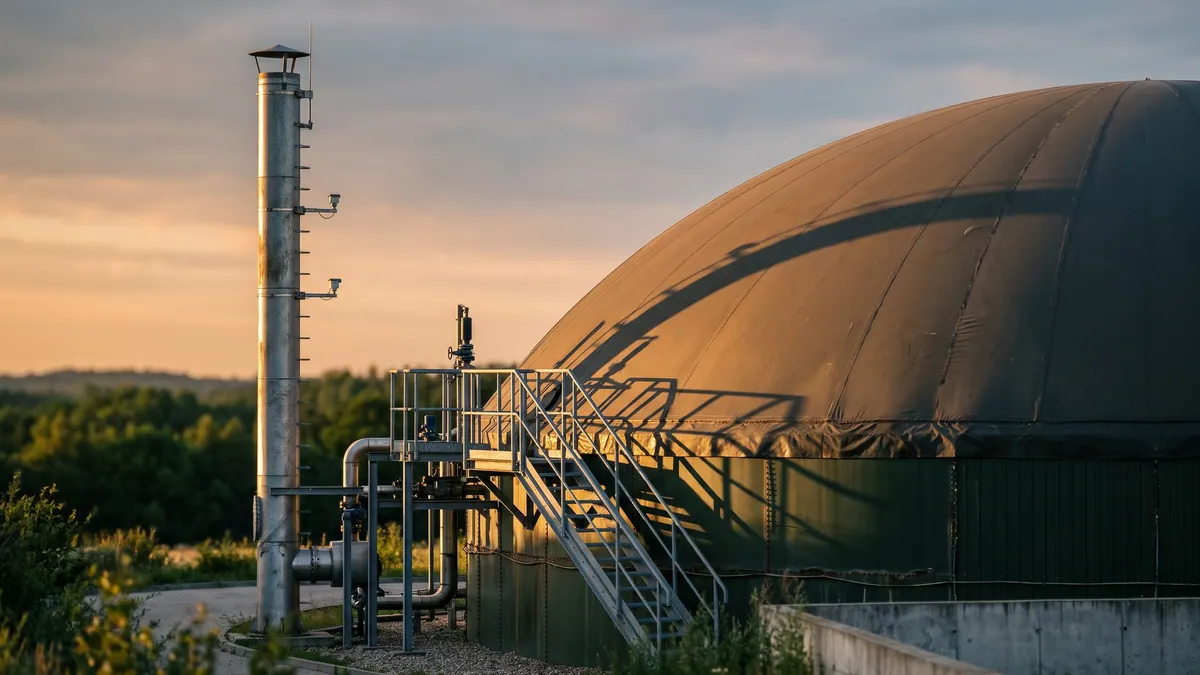
A biogas plant emergency plan is a short, practical document that says what to do in the first minutes after an event occurs: who evacuates people, who cuts off the gas and power, who calls 112 and what they tell the dispatcher. It should cover at least gas leaks, fire, overflow or loss of tightness of a tank, power failure, failure of gas offtake and incidents involving people (H₂S, a fall). An effective plan is short, and the crew knows it.
Elements of the plan
- Contact list: emergency numbers, the manager, CHP service provider, grid operator, insurer, environmental protection inspectorate and neighbours in the risk zone.
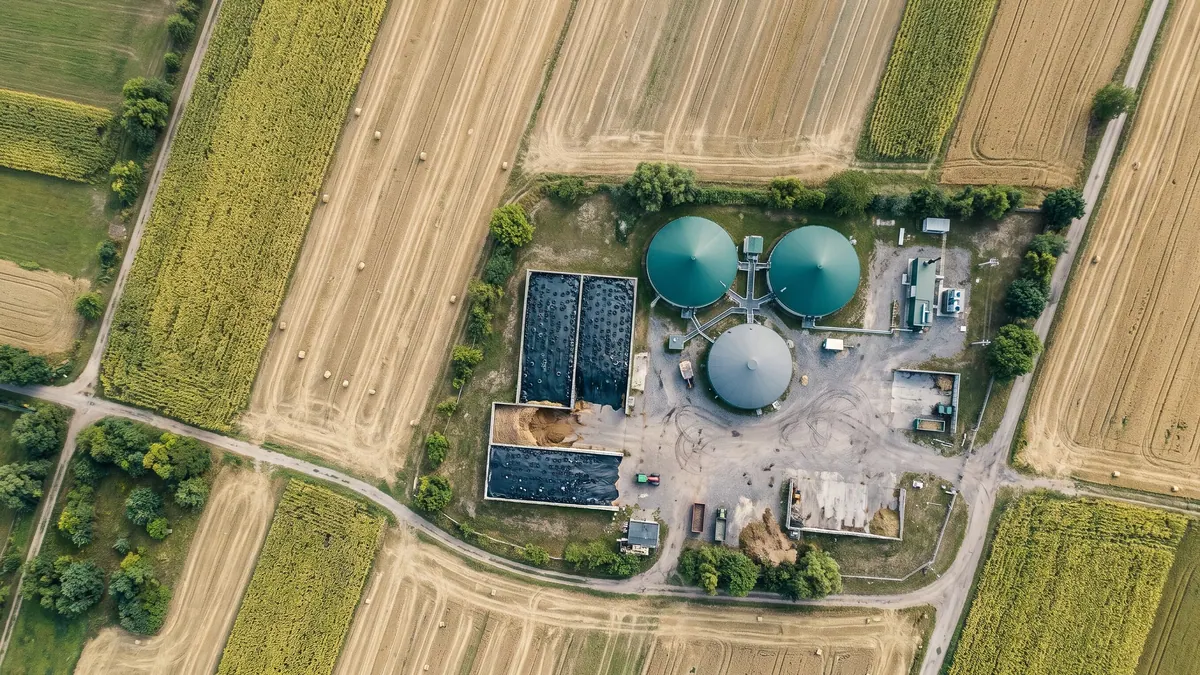
- Site map: tanks, gas valves, the main power switch, hydrants, access roads, the assembly point.
- Roles: the incident commander, the person who cuts off utilities, the person who contacts the emergency services, the person who leads the evacuation.
- Scenarios with a clear order of actions.
- Rules for reporting incidents in line with the regulations and the conditions of the permits.
- Schedule of drills and updates.
Scenarios and actions
| Event | First actions | Further actions |
|---|---|---|
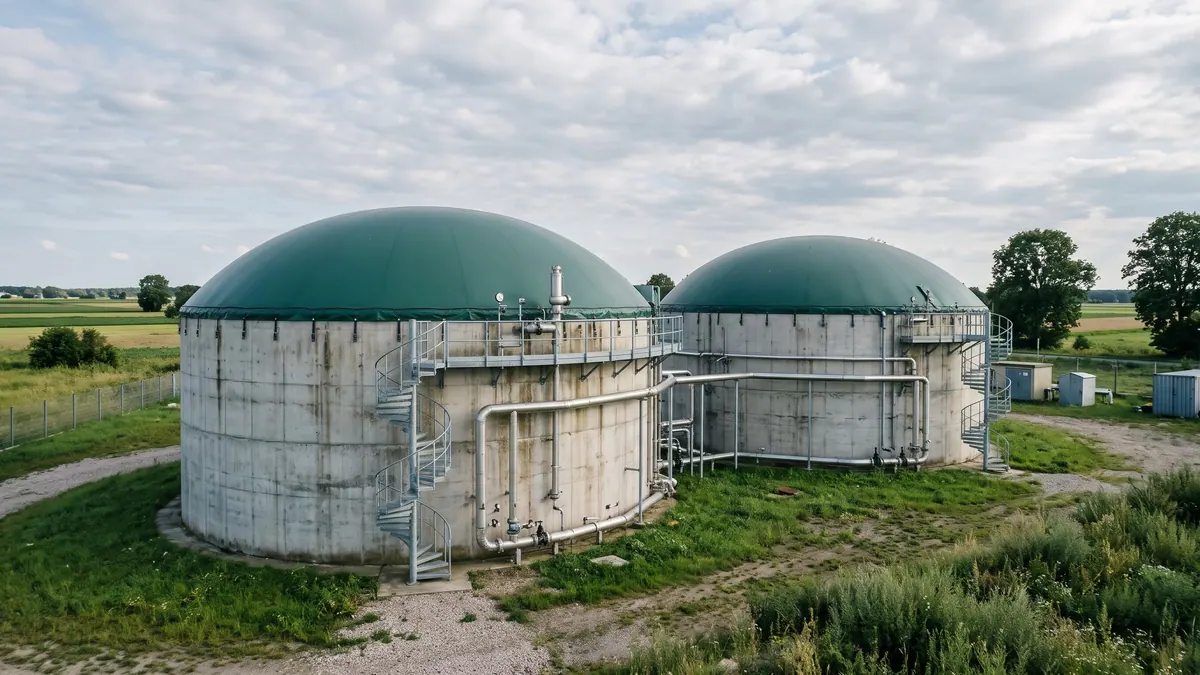
| Biogas leak (smell, detector alarm) | ban on ignition sources, switching off equipment that is not Ex-rated, evacuation from the zone | closing the valves, ventilation, locating the leak, notifying the manager and, if the leak is large, 112 |
| Fire | alarm, evacuation, 112 | cutting off gas and power, extinguishing only if safe, meeting the emergency services and handing over the plan |
| Overflow or failure of a digestate tank | stopping the pumps, closing the valves | containing the spill (bunding, covering with soil, pumping out), protecting watercourses, notifying the authorities |
| Power failure | switching to emergency power (if available) | checking the flare and safety valves, reducing feeding, assessing the state of mixing |
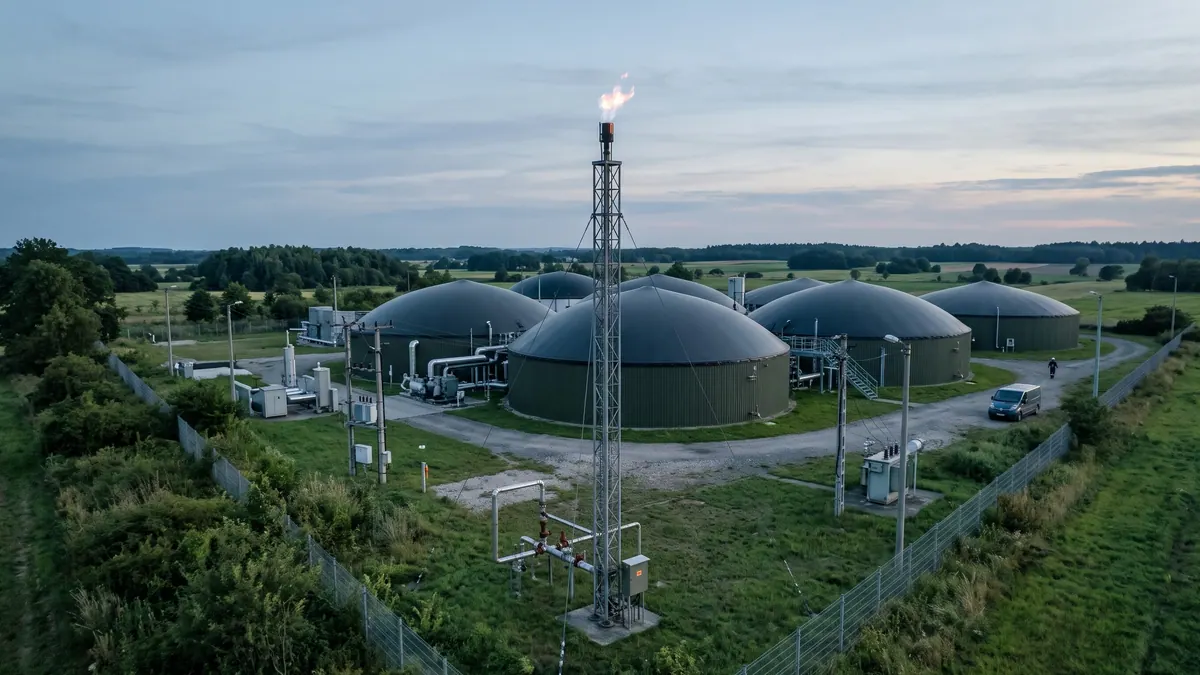
| Failure of gas offtake (the CHP is down) | automatic or manual routing of gas to the flare | looking for the cause, checking the level of the gas store, reducing feeding |
| Suspected H₂S poisoning | calling for help, not entering without protection | rescue only with breathing apparatus, medical assistance |
| Damage to the membrane roof | reducing feeding, securing the area | reporting to the service provider, possible emptying |
Communication
Under stress people forget details, so write down a ready-made message for the dispatcher: the name of the site, the exact address (or coordinates), the type of event, the number of casualties, the type of substance (biogas — methane, hydrogen sulphide), the access route and the meeting point. The emergency number 112 is uniform across the EU. Provide a backup means of communication in case power or coverage fails.
Cutting off utilities
Gas valves and the main electrical switch should be marked, accessible from a safe place and tested. It happens that cutting off power switches off ventilation or detection; in the plan, define what remains powered from a UPS or generator. Similarly, in a fire it must be decided whether to keep the water pumps running.
Cooperation with the emergency services
Invite the local fire brigade unit for a visit and drills, show the explosion hazard zones and the location of tanks and valves. Hand over a copy of the simplified plan. During a real operation, appoint a person who will meet the services at the gate and pass on up-to-date information (where the fire is, how much gas, who is inside).
Drills
- at least once a year a full drill with evacuation,
- short situational exercises for shifts,
- testing the operation of alarms and detectors,
- debriefing: what worked, what needs improving,
- updating the plan within a month.
Typical mistakes
- a plan that is too extensive, which nobody reads,
- outdated telephone numbers,
- inaccessible keys to the valves,
- no assembly point outside the hazard zone,
- assuming that all events will occur during working hours.
The plan does not replace training or equipment, but it puts them in order: a well-written one becomes a common language of the crew, the emergency services and the owner.
Example: a power failure at night
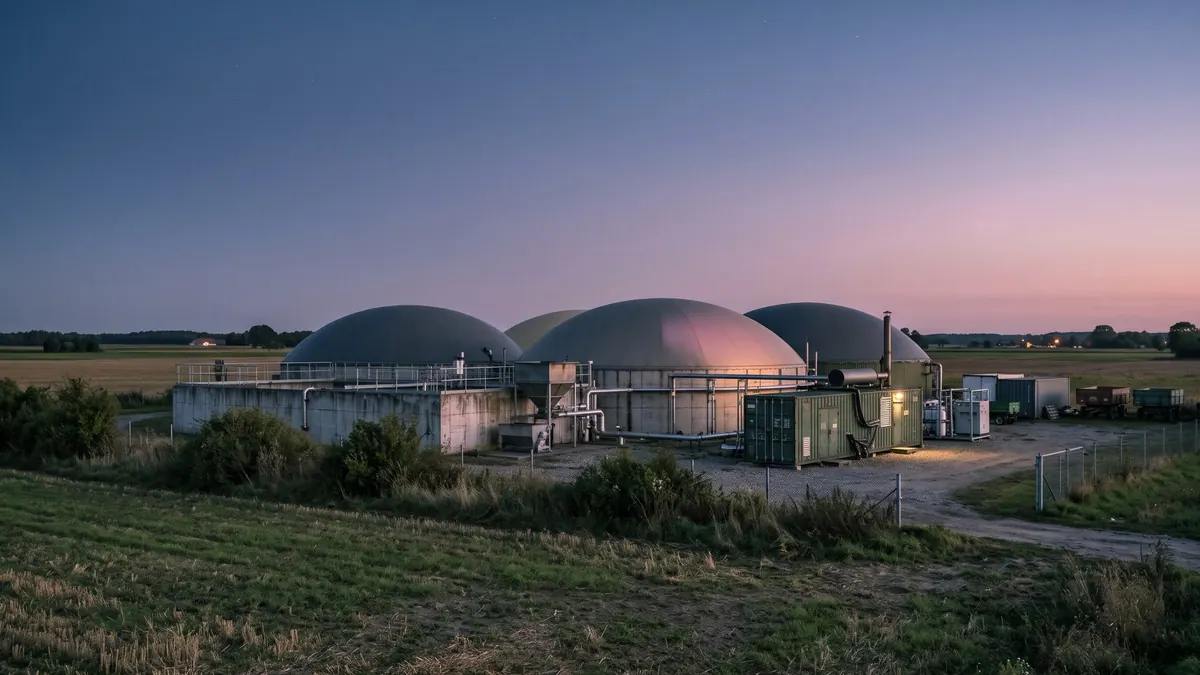
Imagine a grid outage at 2:00. The agitators stop, the gas blowers stop working and the CHP goes into a fault state. The plan should specify: who receives the alarm (an SMS from the monitoring system), who drives to the site and how quickly, which equipment is kept running by the generator (gas detection, flare, controls), what actions are taken in the first hour (checking the level of the gas store, suspending feeding), and what is done in the event of a longer failure (backup power for the agitators, a reduced dose). Such a minute-by-minute breakdown helps avoid improvisation.
Event register
Record all events and near-misses, including those without damage. Their analysis points to weak spots before a serious failure occurs.
What should be in the emergency box
At the entrance to the site it is worth keeping a locked, marked box containing: the current plan, the contact list, the site plan, Ex torches, keys to the valves, high-visibility vests and a first-aid kit. Check its contents every quarter. A small but important element is naming the person who checks it and signs the report.