Technology and operationExplainer
The flare at a biogas plant: construction, requirements and safe operation
The flare burns surplus biogas when the CHP is not running. How an open one differs from an enclosed one, how to size the capacity, what safeguards are needed and why avoiding flaring is also a climate issue.
Other language versions: polski.
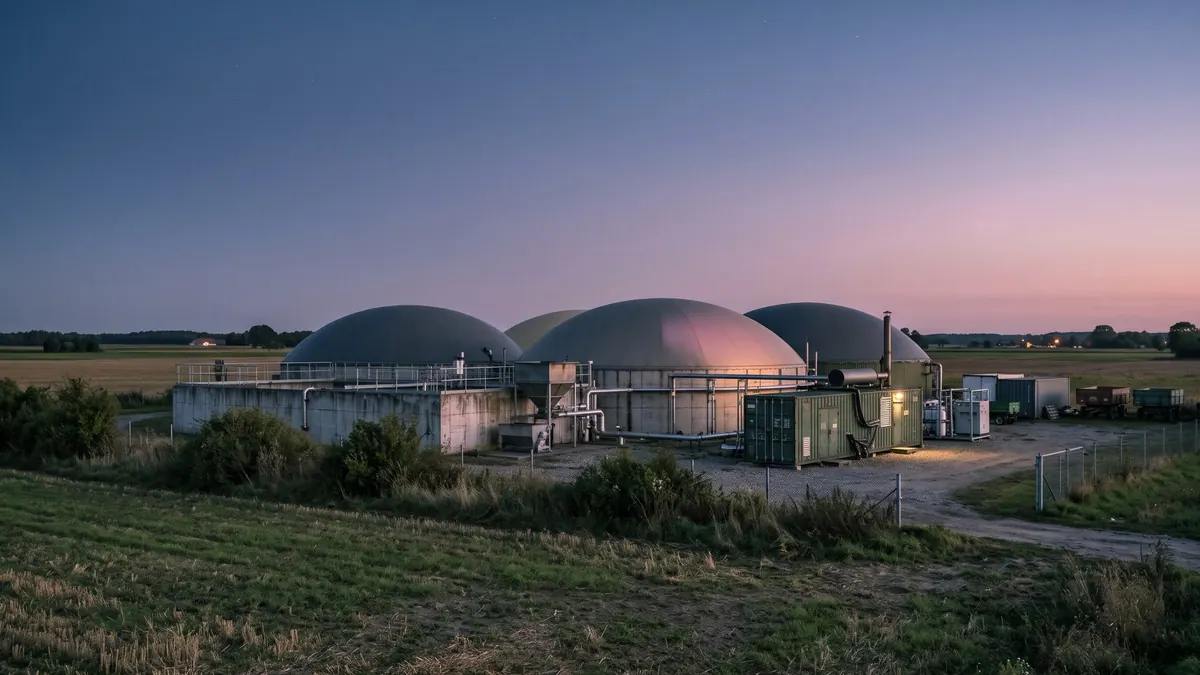
The flare at a biogas plant is a safety and environmental protection device that burns surplus biogas when it cannot be used in the CHP or the gas storage: in the event of an engine failure, an inspection, start-up, high pressure or poor gas quality. Combustion converts methane into CO₂, whose global warming potential is many times lower; releasing methane into the air is not only a loss of energy but also a serious climate problem. The flare capacity is chosen for the maximum, not the average, gas production.
Types of flare
| Type | Construction | Advantages | Disadvantages |
|---|---|---|---|
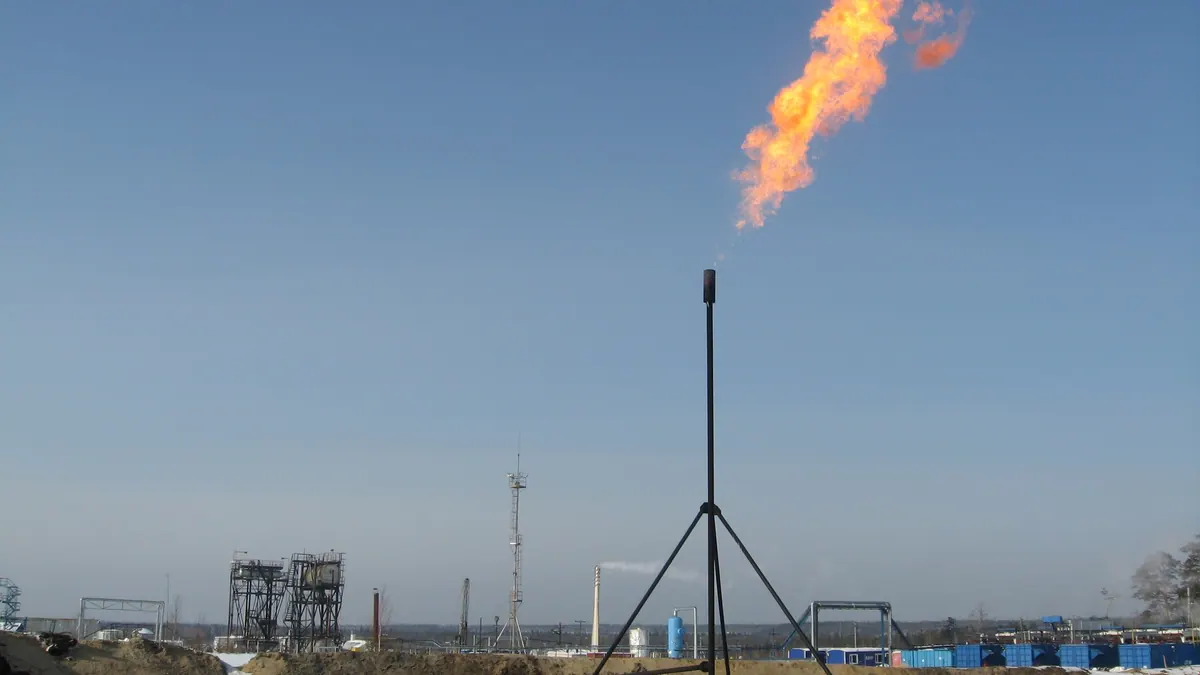
| Open | burner on a boom, visible flame | cheap, simple | wind-dependent, less stable combustion, noise and visible flame |
| Enclosed (high-temperature) | burner in an insulated shell, controlled air supply | stable temperature, better combustion, temperature measurement, lower visibility | higher cost, more complex |
In an enclosed flare the combustion temperature in the shell usually reaches about 850–1200 °C (depending on design and requirements), and the residence time of the gas in the combustion zone is extended. For installations located close to buildings or in sensitive areas, an enclosed flare is usually the preferred solution.
Elements of the system
- A shut-off valve with an actuator (it closes on loss of power or flame).
- A control valve/blower — deliver gas at the pressure required by the burner.
- Automatic ignition (spark igniter, pilot burner).
- A flame sensor (UV or thermocouple) and temperature control.
- A flame arrestor preventing the flame from flashing back into the pipeline.
- A controller integrated with the biogas plant's automation system.
- Drainage and a condensate separator upstream of the flare.
Capacity selection — an example
Assumptions: a biogas plant with a maximum production of 1,200 m³/h of gas; unforeseen peaks must also be allowed for (e.g. an increase in output after a change of mix, foaming) — let us assume a margin of 10–20%. The flare should have an operating range up to about 1,300–1,450 m³/h. The lower operating range (turndown) also matters: the flare must burn stably at low flow, usually from a dozen or so per cent of nominal. The methane in the gas must be above the lower flame-sustaining limit (dependent on design, often about 25–30% CH₄); gas with a very low CH₄ content may require auxiliary gas.
Location and safety
- the distance from tanks, buildings, power lines and the plot boundary in line with the design and fire regulations,
- an explosion-hazard zone around the pipelines supplying gas,
- protection against access by unauthorised persons,
- signage and an instruction on how to proceed.
Flare operation and the climate
Every flare start-up is a loss of energy and an emission of CO₂. If the flare operates often or for a long time, it is worth checking the causes: CHP failure rate, too small a gas storage, an inappropriate control strategy, overproduction caused by too large a feed. Reducing the number of outages and increasing the buffer often pays back faster than expected.
Typical problems
| Problem | Cause | Action |
|---|---|---|
| No ignition | dampness, igniter failure | inspection, replacement of electrodes |
| Flame going out | low CH₄, wind (open flare) | enclosed flare, support gas |
| Corrosion | H₂S, condensate | materials, drainage |
| False alarms | dirty sensors | cleaning, calibration |
| Frozen condensate | winter | heating, insulation |
Inspections
Check of the ignition and shut-off functions (a periodic test in accordance with the DTR, often once every few months), valves, flame sensors, flame arrestor, tightness, the condition of the shell and the burner. The results are entered in the site logbook. Good practice is tests in the presence of the service engineer and a simulation of power loss, to verify that the valve closes by itself.
Checklist
- Is the flare sized for maximum flow with a margin?
- Does it have automatic ignition, flame control and a fail-safe shut-off valve?
- Is the flame arrestor installed and inspected?
- Is the drainage protected against freezing?
- Is the flare included in the hazard-zone documentation and the emergency plan?
- Are operating time and the quantity of gas burned recorded?
The flare and regulations and permits
The requirements for the flare follow from the design documentation, fire regulations, the conditions of the environmental decision and the building permit. Because the scope and details depend on the location and the capacity of the installation, the scope of obligations should be established with the designer and the authorities. In the European Union increasing weight is given to reducing methane emissions, which also applies to flares as an element minimising losses; operators should follow changes in regulations and reporting requirements.
Choosing an operating strategy
The flare should not be a way of regulating production. If gas is burned every day, it is a sign that the gas balance is unbalanced: production too high relative to CHP capacity, a store that is too small, or failure-related outages. The solution may be an additional unit, increased gas storage capacity, upgrading part of the stream or a change in the substrate mix. Each of these measures should be compared in terms of costs and benefits.