Entering a tank or digester: rules for work in confined spaces
The inside of a digester, a digestate tank or a manhole is a confined space in which people die. The procedure step by step: permit, ventilation, measurements, standby person, rescue.
Other language versions: polski.
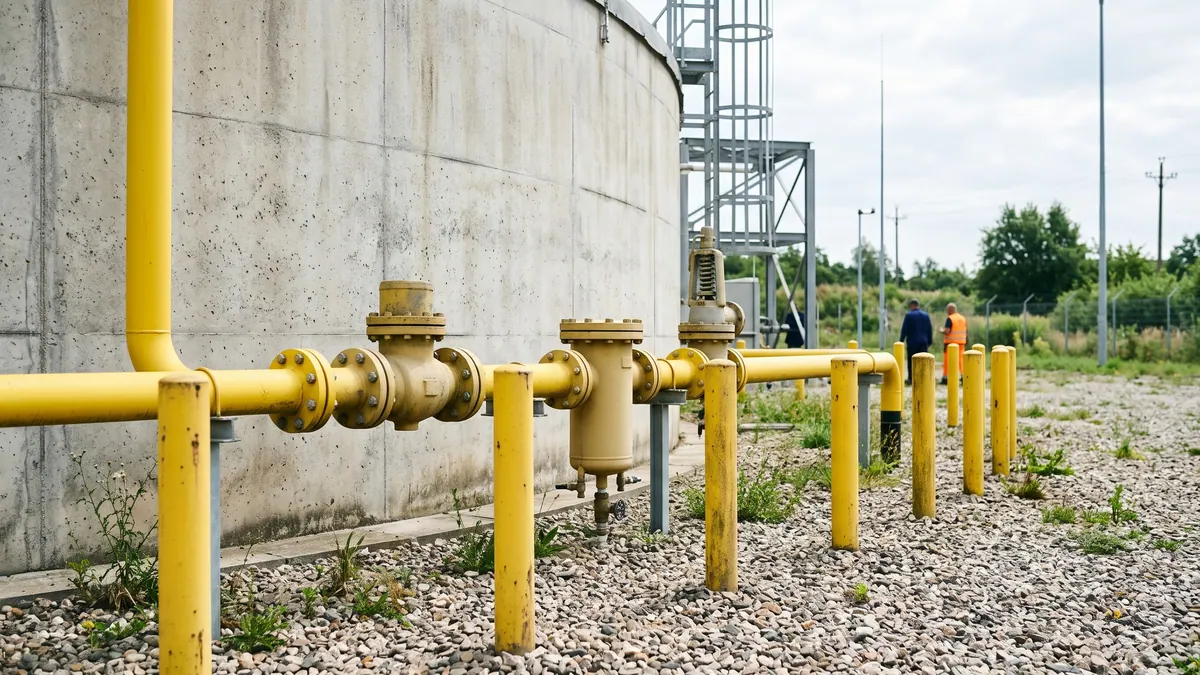
Entering a digester, a digestate tank, a manhole or another closed tank is work in a confined space and requires a written permit, isolation of the tank from the installation, degassing and ventilation, atmosphere measurement before entry and during the work, a standby person outside and a ready rescue plan. In such places oxygen may be lacking, hydrogen sulphide, methane, carbon dioxide and carbon monoxide may be present, and gas can be released from the sediment once it is disturbed. The vast majority of tragedies connected with such work result from omitting one of these steps.
Why it is so dangerous
| Hazard | Effect |
|---|---|
| Oxygen deficiency (displacement by CO₂, CH₄, nitrogen) | loss of consciousness without warning, death within a few minutes |
| Hydrogen sulphide | paralysis of the sense of smell, poisoning, death (see the article on H₂S) |
| Methane | explosion at a concentration of 5–15% in the presence of a spark |
| Carbon dioxide | breathlessness, loss of consciousness at high concentrations |
| Carbon monoxide (after hot work, from exhaust gases) | poisoning |
| Sediments and sludge | a mechanical trap, release of gas when disturbed |
| Moving parts (agitators) | impacts, crushing |
| Work at height | falls |
Preparation step by step
- Decision and risk assessment. Is entry necessary? Can the work be done from the outside (a camera, an arm, a cleaning robot, remote removal of sediment)?
- Work permit signed by the manager, with a description of the scope, the persons, the time and the protective measures.
- Isolation from the installation. Gate valves may leak; blanking plates or other double isolation are used, in line with the lock-out/tag-out (LOTO) principle for pumps, agitators and drives.
- Emptying and degassing. The slurry is emptied and the sediments are removed according to the plan; the biogas is routed to the flare or safely dispersed.
- Mechanical ventilation for a time sufficient to exchange several volumes of air, using Ex-rated fans if flammable gas may be present.
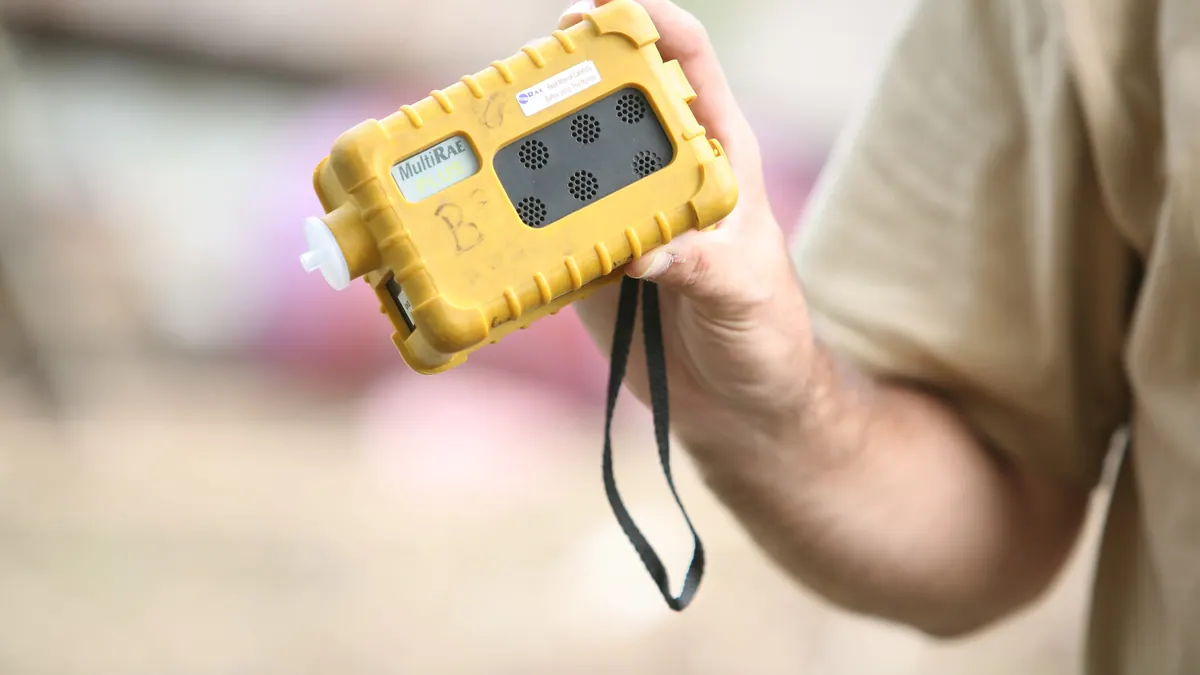
- Atmosphere measurement with a multi-parameter meter (O₂, LEL/CH₄, H₂S, CO) at different levels, because gases stratify; record the results.
- Equipment check: harnesses, ropes, winch, breathing apparatus, Ex lighting, communication.
Entry and work
- The person entering is trained and medically fit for work in difficult conditions, wearing a harness with a safety line.
- Outside there is always a standby person who does not leave the post, observes the person entering and maintains communication.
- A personal detector operates continuously; an alarm means leaving immediately.
- Tools and lighting must be rated for the explosion hazard zone.
- Hot work inside requires separate rules (removal of residual gas, LEL measurement, ventilation, fire supervision).
- Working time is limited, with breaks; heat and humidity can be exhausting.
Rescue
The rescue plan should be ready before entry. It includes: the method of retrieving the casualty (a winch from outside, a tripod), breathing apparatus for the rescuers, calling the services (112) and informing them that the space contains gas. The standby person does not go inside; they call for help and operate the winch. A rescuer without self-contained breathing apparatus becomes a victim themselves.
After completion
Exit, closing the permit, counting persons and tools (nothing may be left in the tank), checking the condition of the tank, removing the blanking plates and locks only on the manager's signature, a repeat tightness check, and for a digester — the refilling and start-up procedure.
Typical mistakes
- valves instead of blanking plates,
- no measurement at the bottom of the tank,
- a standby person busy with other tasks,
- no breathing apparatus at the workstation,
- work by subcontractors without training,
- no rescue plan and no retrieval equipment.
Checklist before entry
- The permit is signed.
- The tank is isolated with blanking plates and the drives are locked.
- Ventilation has been running for at least the set time.
- Measurements: O₂ in the safe range, CH₄ below the threshold, H₂S and CO below the occupational exposure limit (NDS).
- The standby person is in place, communication checked.
- Rescue equipment ready.
- The services informed (if necessary).
The best entry into a tank is one that has been avoided thanks to the design: inspection openings, a remote sediment removal system and the ability to clean from the outside significantly reduce the number of hazardous entries.
Training and competence
Persons entering, standing by and managing the work should undergo practical training: recognising hazards, operating detectors and breathing apparatus, using harnesses and a winch, alarm procedures. Training should be repeated periodically and documented; it is worth carrying out a trial rescue drill with a manikin, because only then do problems with access, communication and retrieval come to light. Subcontractors must receive the same information and go through the same briefing as the in-house crew.
Alternatives to entry
Increasingly, cleaning work is done without people entering: with hydraulic equipment, sediment pumps, remote-controlled excavators or robots. When designing a new tank, it is worth providing additional inspection openings, a floor with a directional slope and points for collecting sediments. The cost of such solutions is usually small compared with the consequences of an accident and the cost of insurance.
Sources
Questions and answers
Is it enough to open the tank and wait for it to air out?
No. The tank must be isolated from the plant, ventilation must be forced, and before entry and during work the concentrations of oxygen, methane, H₂S and CO must be measured (and, if necessary, also CO₂). Sludge on the bottom can release gas when disturbed.