BiogasAnalysis
Bio2Watt in Bronkhorstspruit: a feedlot manure biogas plant that powers a BMW factory
The first commercial cattle manure biogas plant in South Africa, about 4.4–4.6 MW, started up in October 2015 and sells electricity to the BMW factory in Rosslyn. What does it mean for the market?
Other language versions: polski.
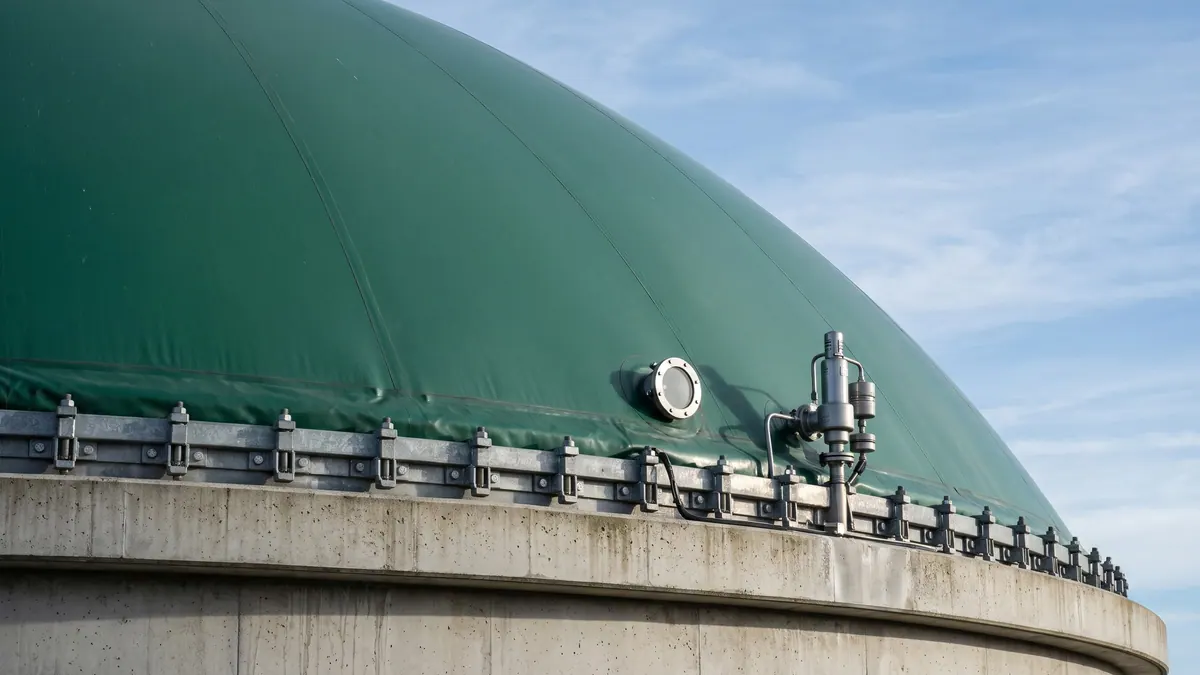
The Bio2Watt biogas plant in Bronkhorstspruit near Pretoria is described as the first commercial installation in South Africa to convert cattle manure into electricity on a scale of several megawatts. The first electricity flowed from it on 10 October 2015 to the BMW factory in Rosslyn. Several years after start-up it is a useful case study: it shows how a small, independent biogas installation can function in a country where the energy market has for decades been run by one dominant operator.
Installation parameters
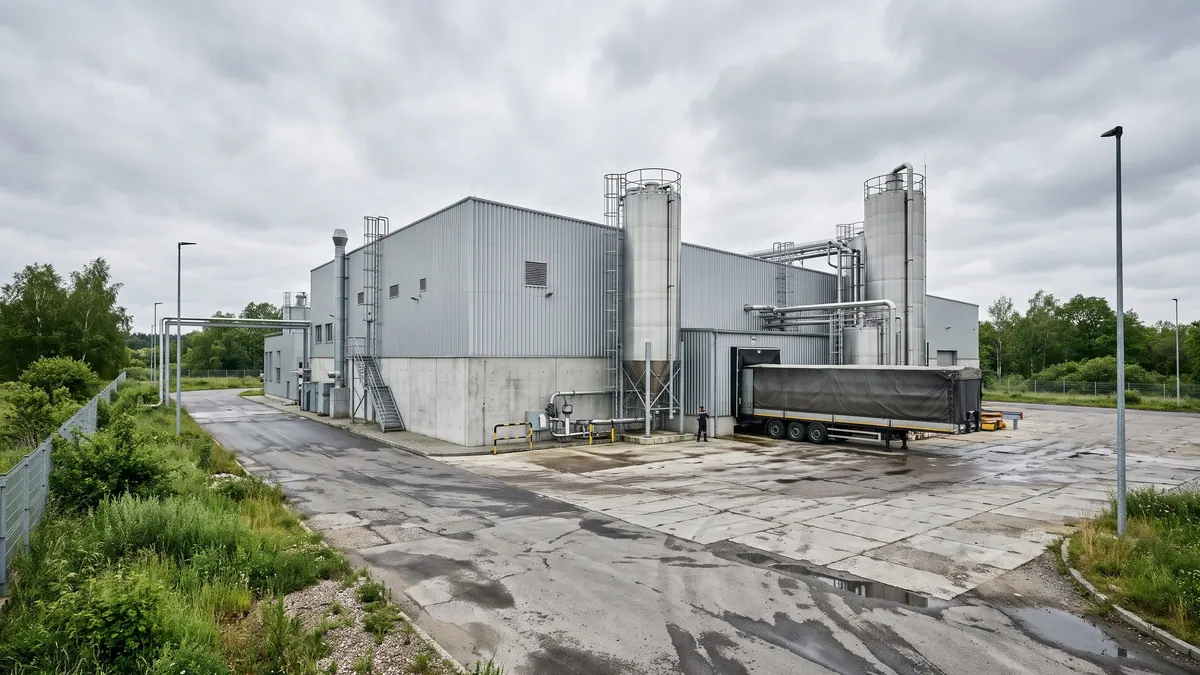
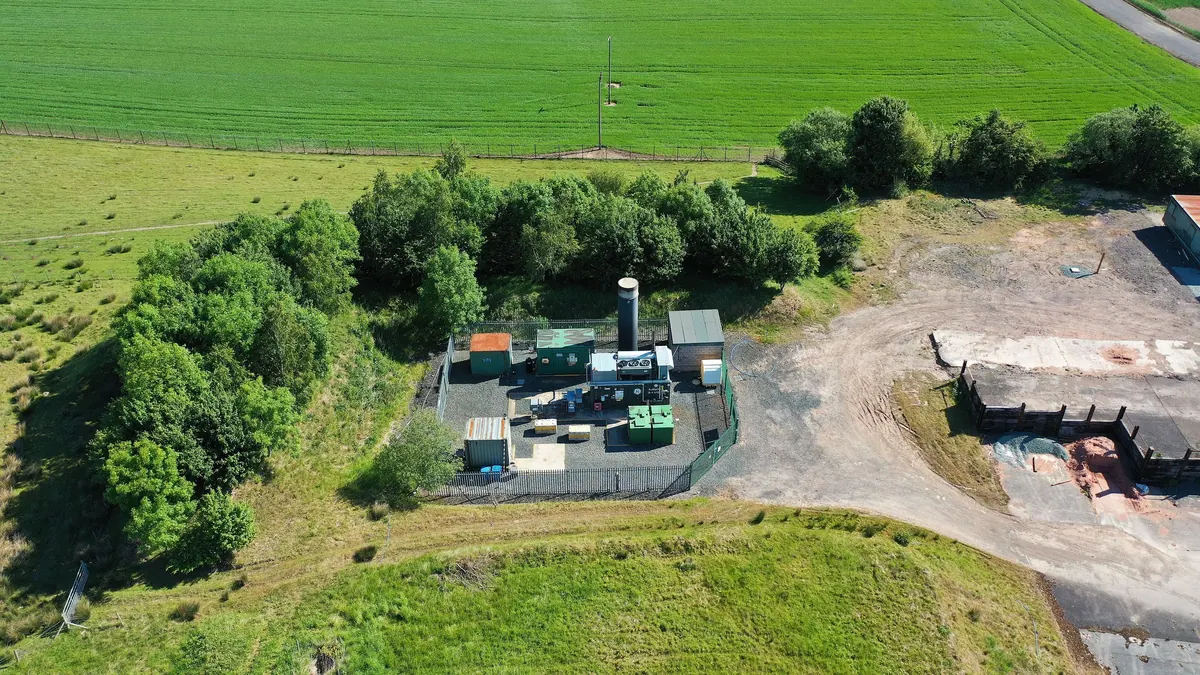
The biogas plant stands next to the Beefcor cattle feedlot near Bronkhorstspruit, east of Pretoria. Engineering News (2015) reported that the key feedstock is manure from a farm that keeps about 20 thousand cattle and 12 thousand sheep. The installation consists of two parallel lines, each with a primary and a secondary digester, and the retention time is 35 days; according to the design the biogas contains 55–65% methane. The capacity was given as 4.4 MW (reports from before start-up) and 4.6 MW (July 2016). The project was delivered on a turnkey basis by Bosch Projects, which holds the exclusive licence for the Danish ComBigaS technology, and its sister company Bosch Munitech received a five-year operating contract. In July 2016 day-to-day operation was already handled by Anaergia Africa.
Feedlot manure is a stable and quantitatively predictable feedstock for a biogas plant, because the animals stay in one place all year round. It has, however, a relatively low methane potential per tonne of fresh matter, so supplementing it with higher-yielding waste is a typical way of stabilising production. The general principles of selecting such a mix are described in the article Co-digestion: planning the substrate mix of a biogas plant.
Business model: electricity for a specific customer
The most interesting element of the project is the offtake agreement. The energy goes to a designated industrial customer, BMW Rosslyn, under a 10-year renewable energy power purchase agreement (PPA); the first electricity was delivered on 10 October 2015. BMW communicated that renewable energy from the biogas plant is to cover 25–30% of the factory's demand. According to Engineering News, BMW agreed to pay a premium for clean energy in return for a predictable price path, and the project obtained a licence from the City of Tshwane for wheeling energy through the municipal grid to the factory.
The road to this point was costly: Engineering News reported that legal costs came to about 8 million rand against an assumed 2 million, and that the legal documentation ran to more than 1500 pages. The project partners listed included BMW, the City of Tshwane, Beefcor, IDC and Norfund. This is an important lesson for investors in other countries: generating the biogas itself can be easier than obtaining the permits and transmission terms.
What follows from this
- Manure from large farms is a real feedstock base, but profitability depends on supplementing it with higher-yielding substrates and on resolving the use of the digestate.
- A direct agreement with an industrial customer can replace a support scheme if the customer has its own climate goals.
- Operational management matters: the change of operator in 2016 shows that in the first years of operation, operating competence is key, not just the technology itself.
- A scale of 4–5 MW is similar to the larger agricultural biogas plants in Europe, so the transfer of experience (including from Poland) is possible.
For Polish manure-based operators the comparison of settlement models is particularly interesting: in Poland revenue comes mainly from renewable energy auctions and the support system, in South Africa from a bilateral contract. Both, however, require a stable supply of substrate and efficient operation.
Digestate and closing the nutrient loop
A manure biogas plant has one more product, often underrated: digestate, which contains nitrogen and phosphorus from the manure. Engineering News (2015) reported that the solid and liquid fractions of the digestate are to be sold as fertiliser. In feedlot conditions, where manure arises in one place and the fields are far away, the logistics of the digestate are a significant cost. The solution is often separation into a solid fraction, which is cheaper to transport further, and a liquid one, applied closer by. These issues are described in the article Digestate separation: technologies, fractions, balance.
Risks of such projects
- Dependence on a single substrate supplier: the feedlot may reduce its herd or change its husbandry technology.
- Dependence on a single energy customer: a 10-year agreement secures revenue, but a change in the factory's needs affects the economics.
- Connection and transmission: transmitting energy to the customer through the municipal grid requires the consent of its operator, and a new line (here 13 km to the Eskom substation) is an additional cost.
Why it is worth knowing
The installation described remains one of the few well-documented examples of a commercial biogas plant running on animal manure in Southern Africa. It provides a reference point for assessing subsequent projects: their scale, contract structures and requirements for the operator. In international comparisons, however, one should remember the differences in rules on digestate, grid connections and energy charges.
Sources
Questions and answers
What is the capacity of the Bio2Watt biogas plant?
Engineering News wrote in 2015 about 4.4 MW, and in July 2016 about 4.6 MW (four engines of 1.15 MW each give 4.6 MW). We found no official explanation of the difference.
Related articles